@poorbjorn There is nuances in this debate, there is books you can listen too and there is books you can only understand by reading them deliberately and thoughtfully
🚀 NebX Exciting Giveaway with Gate Wallet 🚀
We’re thrilled to team up with Gate Wallet @GateWeb3Wallet for a special giveaway event! 🎉
Don’t miss your chance to win incredible prizes and dive into the excitement with Gate Wallet! 🔥
🗓 Event Period: Sep 14th ~ Oct 5th
🎁 Rewards: 2000 XCOIN per person
📰 Learn more:https://t.co/fguaEQRYIR
The end of exploration is just the beginning of new discoveries—Join NebX! 🪐
#gatewallet #Giveaway #web3 #airdorp
New vid : Follow & Comment "1". 1 will win a $3,000 NEO Tokyo s2. (Must like/follow/share) 3 will win $500 in Bytes.
Alt seasons will start any day now. These are the coins and sectors I think will TURBO pump + a little memeage.
https://t.co/tmzQNuBDlp
Giving away 5 Adult VeeFriends Crewneck Sweatshirts 🥳
To enter, retweet the tweet BELOW by 5 PM EST.
To redeem, the winner must have an active and up-to-date https://t.co/rOWbZ69aSh account. We’ll randomly pick winners using @TWPicker! No purchase is necessary. (value $49, shipping and handling included). Anyone found to use multiple accounts to enter will be ineligible. Multiple entries in a single day will not be accepted and can lead to disqualification.
Good luck!🐈⬛
@Torchitwyatt @alqatawni @ReichmanShmuel Muslims pays zakat each year (2.5%) , we pay it from the money we gather and that sit still with no investment and the jews that live in Muslim countries ( dhemmi) pays a fees, they pay it from their gathered wealth, it is always less then zakat
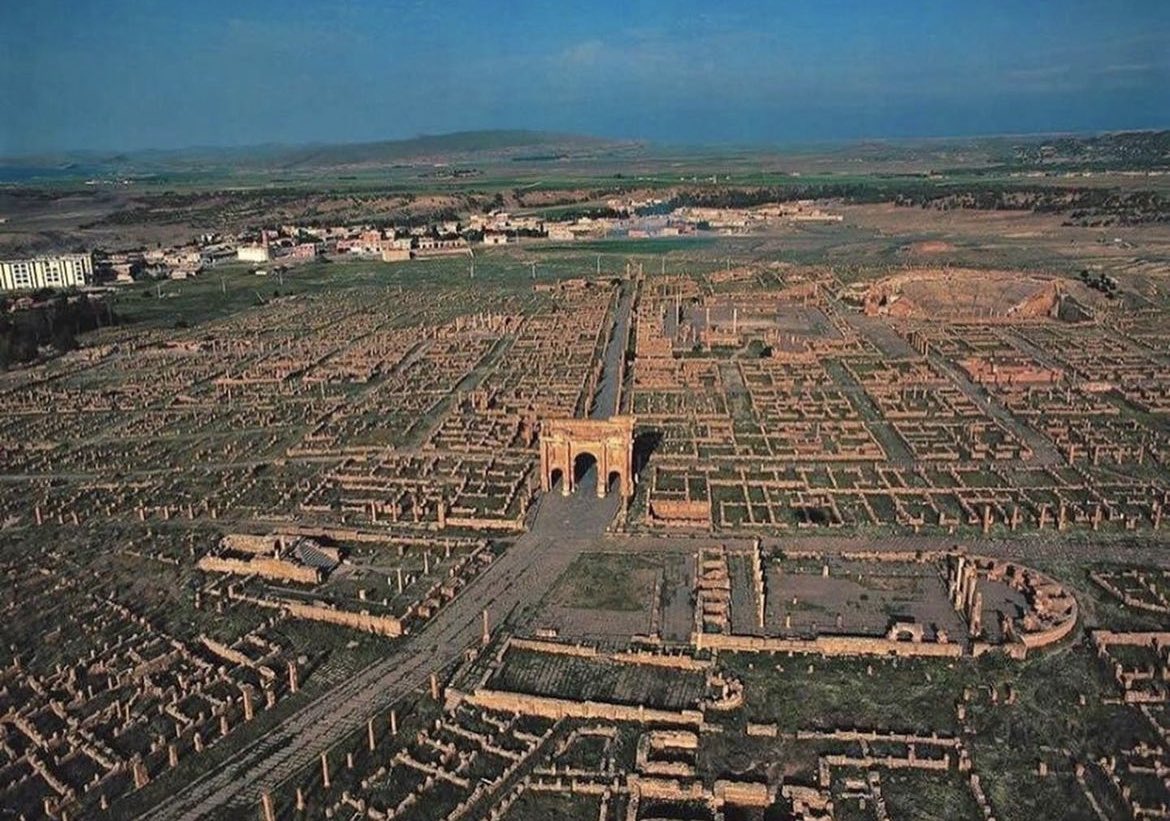
The ancient Roman city of Timgad, often referred to as "Pompeii of North Africa," is a remarkable historical site that tells a captivating story of civilization, abandonment, and rediscovery. Founded by Emperor Trajan in the year 100 AD, Timgad was strategically located in the North African province of Numidia, modern-day Algeria.
This meticulously planned city followed the typical Roman grid pattern, with well-organized streets, public buildings, and residential areas. Its architecture and urban design showcased the grandeur of Roman engineering and culture. Timgad thrived as a vibrant center for trade, culture, and administration, serving as a testament to the Roman Empire's influence in North Africa.
However, Timgad's fate took a dramatic turn in the 7th century. The decline of the Roman Empire and the expansion of the Islamic Caliphate led to the city's abandonment. Over time, the encroaching Sahara desert buried Timgad under layers of sand, gradually erasing its existence from the collective memory.
For nearly a millennium, Timgad lay hidden beneath the shifting sands, seemingly lost to history. It wasn't until the early 19th century that this ancient city reemerged from its sandy tomb. The French military officer and archaeologist, Charles de Foucauld, played a crucial role in its rediscovery in 1881.
Excavations uncovered the remarkably well-preserved remains of Timgad, offering a glimpse into the daily life, culture, and architecture of the Roman era. The city's theater, triumphal arch, forum, temples, and private homes painted a vivid picture of the past, making it a UNESCO World Heritage Site in 1982.