The Senate Banking Committee advanced the Digital Asset Market Clarity Act to the full Senate floor. After years of regulatory ambiguity, that's a meaningful development for the industry.
The bill establishes what compliance looks like for digital asset intermediaries, AML obligations under the Bank Secrecy Act, defined SEC and CFTC jurisdictional boundaries, and a regulatory sandbox framework for AI tools operating in financial contexts. That clarity has been missing, and its absence has been a genuine friction point for institutional adoption.
What the legislation opens up, though, is a harder question: how does the industry actually operationalize these requirements at scale?
Compliance tooling built for traditional financial infrastructure carries assumptions that don't survive contact with crypto rails: private ledgers, identifiable intermediaries, centralized custody. Working around those assumptions isn't a workaround problem. The infrastructure has to be rethought from the ground up.
The gap between a compliance mandate and the infrastructure to meet it is where the real work begins. That's true in every regulated industry that has gone through a framework shift, and digital assets won't be different.
The Clarity Act marks progress on the regulatory side. The operational build is just getting started.
Crypto mfs really said ‘code is law’ until physics entered the chat.
The “harvest now, decrypt later” point is the real psychological damage here: Attackers don’t need quantum capability today to start collecting vulnerable encrypted data now.
This means the timeline discourse is already behind.
This is one of those rare topics where the boring infrastructure people are probably the sanest people in the room.
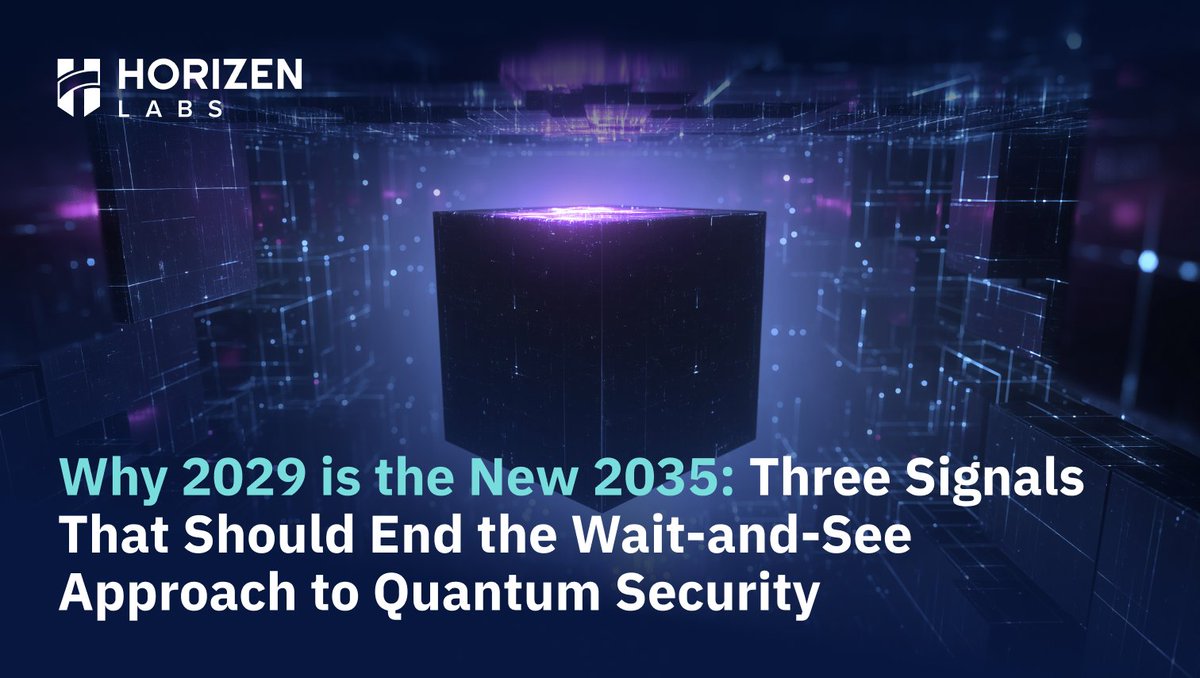
The industry's quantum security planning is built on a number that no longer holds.
Most organizations have anchored their cryptographic migration to NIST's 2035 deadline. That was a reasonable starting point in 2022. It isn't anymore.
This spring, four separate signals converged in the span of five weeks, and read together, they describe an industry that has run out of reasons to wait.
On March 25, Google moved its own internal post-quantum cryptography deadline to 2029, citing faster-than-expected progress in quantum hardware and error correction. When Google sets an internal deadline, that is an operational decision made by people with direct visibility into where the hardware is heading.
Just days later, Oratomic published research showing a fault-tolerant quantum computer capable of running Shor's algorithm could be built with as few as 10,000 qubits. Prior estimates ran north of a million. That reduction in resource requirements compresses timelines that 2035-based planning assumed were fixed.
Then Scott Aaronson, a co-author of the @Coinbase advisory board's quantum security paper, and the researcher who spent two decades as the field's most prominent skeptic, wrote publicly that the most reputable people in quantum hardware are now telling him a cryptographically relevant machine ought to be possible by around 2029. When that particular person stops hedging, it is worth noting.
The threat is not abstract. It sits on-chain today.
Roughly 6.9 million $BTC are held in UTXOs with public keys visible in clear text. @Ethereum's entire validator layer runs on BLS signatures - a primitive with no quantum-resistant equivalent at current production performance. Every major proof-of-stake chain is at a different stage of acknowledging this. None has finished.
And these aren't migration problems in the conventional sense. They're redesign problems. Validator key migration requires consensus-protocol changes, not just primitive swaps. Every chain will eventually face a binary choice on dormant assets, flag day, or permanent honeypot. Wallets, custodians, and key management systems can't wait for chains to decide which post-quantum scheme they're adopting.
Planning against 2029 means none of this can be deferred.
The work is more than research. It's engineering, governance, and honest accounting of where the risk actually lives. The organizations that start that work now are the ones that won't be making decisions under pressure in three years.
If you care about where verification is headed, be in this room.
Feb 26. 16:00 UTC. Discord Townhall.
🏗️ Real builder updates from @thriveprotocol
✅ @KurierXYZ momentum
🫡 ProofPoints evolving
No fluff. Just what’s shipping and what it means.
Event Link → https://t.co/C9H8hJhPQ8
Join Discord → https://t.co/gtDmPBUYAB
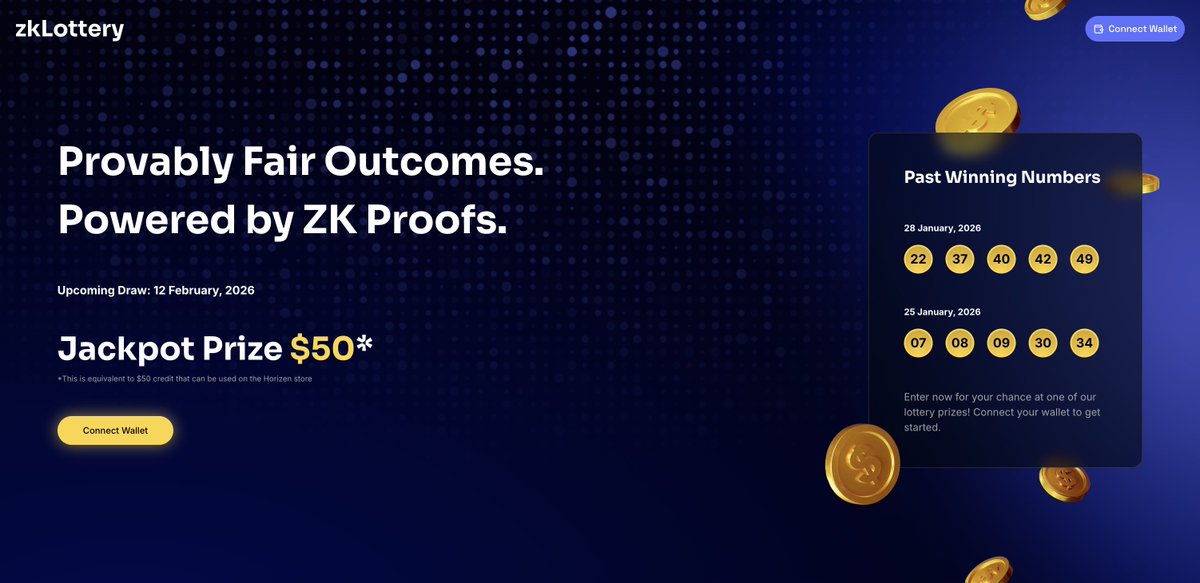
What if a lottery draw could be verified?
Not trusted. Not assumed. Verified.
Tomorrow:
🎟 Match all 5 numbers → $50 @HorizenLabs swag credit
🎟 Match 4 numbers → $25 credit
Multiple winners are possible.
Provably fair. Powered by zk proofs.
Meet @KurierXYZ, our new REST API that simplifies ZK proof submission and verification.
⚪️Optimistic verification
⚪️On-chain submission to @ZKVProtocol or @base
⚪️Simple integration, serious performance
Try it out now👇
We’re excited to welcome @TactizenMMO to the growing Horizen ecosystem 💛
Tactizen is a Horizen @thriveprotocol grant recipient building a player-driven nation simulation game.
Tactizen blends economic systems, democratic governance, diplomacy, and battle into a persistent online world where players create the story - not the developers.
Built by a longtime Horizen community OG, Tactizen reflects what Horizen is all about: empowering builders who've believed in Horizen early and are now creating ambitious, living worlds.
Play free now: https://t.co/Ttz1kDyhuc
A privacy coin rally is easy to dismiss as “just price action.”
But the better read is simpler: the market demands privacy.
The constraint is also real: black-box finance won’t be allowed at scale.
That’s why the next phase isn’t “privacy coins vs. the world,” it’s privacy infrastructure - systems that keep sensitive data protected while still enabling auditability and compliance via tools like selective disclosure.
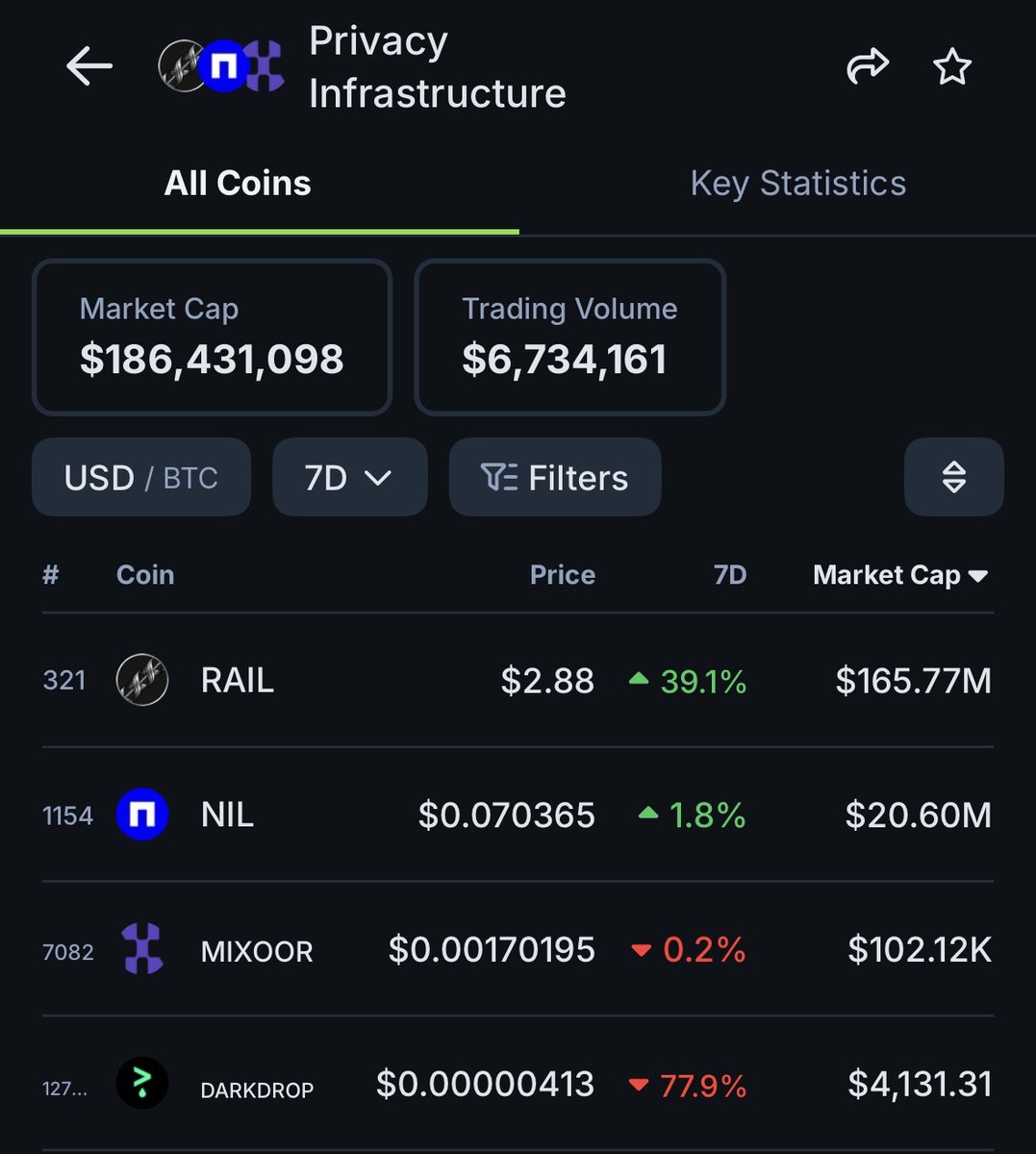
NEW Category: Privacy Infrastructure
With privacy coins like $XMR and $DASH trending recently, a wave of privacy infrastructure protocols has emerged.
To improve token discovery, we’ve added a category that better represents their utility.
Check it out: https://t.co/4GUV7HRjS2