1/ Introducing SOURCE (Simulation of Opioid Use, Response, Consequences, and Effects), a response to the @theNASEM's call to develop a system-based model of the #opioid crisis
Hot off the press in PNAS:
https://t.co/cjFTXFYtGu
A key point we emphasize: cuts to lifesaving services may not make deaths rise right away. They may instead slow the decline, making emerging harm harder to see.
The national opioid overdose death trend in the US turned downward, and there’s been plenty of speculation about why. Our new letter in @JAMAPsych uses our SOURCE model to explain the shift
https://t.co/doNTQwrCz0
The SOURCE model, published a few years ago in @pnas, had already projected a decline driven by two forces: a steadily shrinking population at risk and a plateau in overdose mortality as fentanyl’s rapid rise stabilized.
(Original SOURCE study: https://t.co/D8NS1otwf6)
Recent US #opioid overdose deaths have declined 41%, mainly due to a shrinking at-risk population and plateauing mortality rates.
Continued surveillance is needed to predict and prevent harm.
https://t.co/esY2r73jIp
I recently launched the Best Paper in Health Data & Systems Science Award to recognize the strongest mentee paper from the past 2 years in our lab. Grateful for the energy and curiosity people bring to the lab! Learn more here: https://t.co/Q39P7kH2Ig
Using 1M+ forensic lab reports, our new study traces a decade of changes in substances found w fentanyl. We show xylazine’s sharp rise past heroin, identify when/where multi-drug combinations appeared and offer a granular view of how these patterns shifted https://t.co/4dZnPIO1Q8
New perspective: Hospitals face cyber threats shaped by human decisions under pressure, but collecting behavioral data is often limited. Synthetic behavioral data + simulation may offer a way to explore these patterns, though it needs careful evaluation: https://t.co/DCFsRWaUmg
Our research shows that while cutting NIH funding may appear to save money in the short term, it can trigger a chain of effects that increase long-term healthcare costs and slow the development of new treatments and public health solutions. https://t.co/jHbHKCflrh
Delighted to welcome Dr. Songul Cinaroglu, Associate Professor of Health Care Management at Hacettepe University in Turkey, to our lab this year as a Fulbright Visiting Scholar.
The sad irony: funders want to include community members with no grant-writing background, but their applications are so demanding that even seasoned applicants struggle
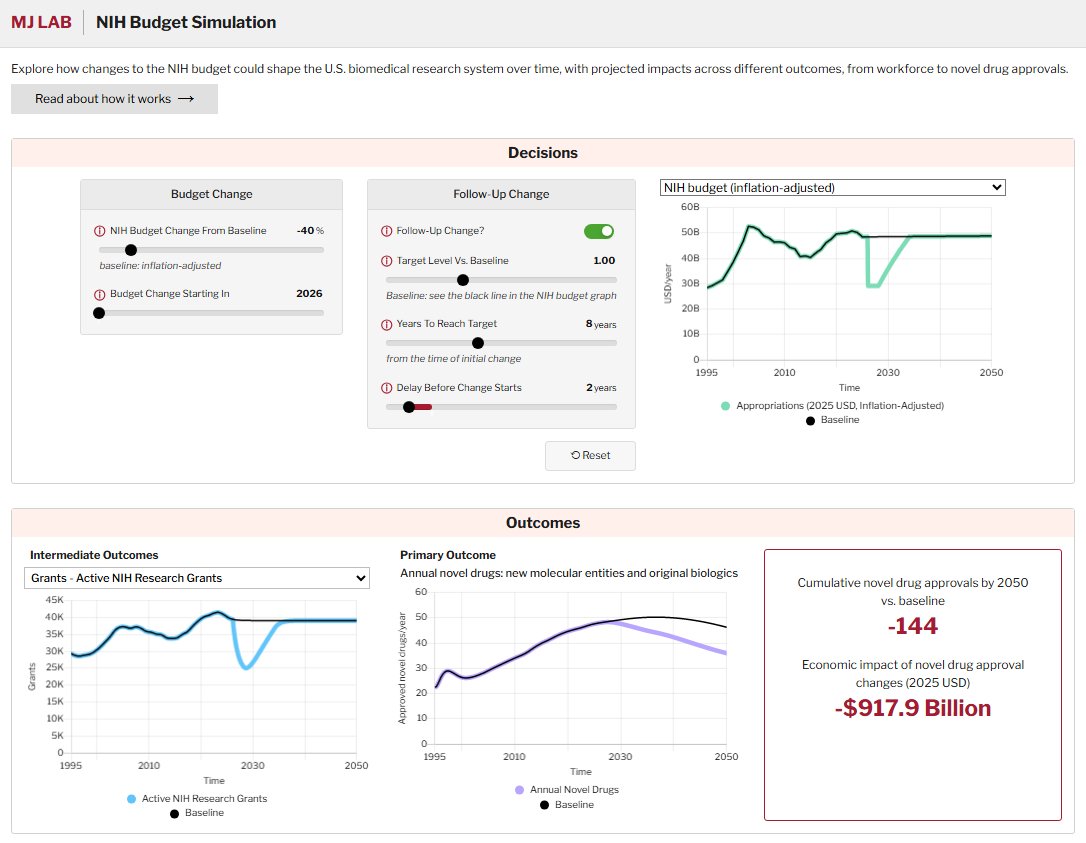
What happens when research funding gets cut (not just a little, but a lot)? Try our simulator to find out.
Our model BRIDGE quantifies the impact of NIH budget cuts in the US, built on 47 datasets (1995-2024) and projecting effects over 25 years.
https://t.co/UIyZi3iSZG
Potential effects of cuts to the @NIH
1) slow future innovations
2) shrink the future biomedical workforce
3) increased health care expenditures
4) missed opportunities for disease prevention, further increasing health care expenditures.
https://t.co/hl1GHalXeN
"Reducing NIH budget doesn’t just mean fewer grants; it means fewer trainees entering the pipeline, slower progress on treatments, more reliance on expensive late-stage care and weakened capacity for public health."
https://t.co/q1d2m3iCOI via @politico
https://t.co/PoIJdVEmhG
This analysis in @statnews lays out how the proposed NIH budget cuts will actually waste more funds than they save & hurt science and medical progress
https://t.co/9vllDlvUUu
NIH BUDGET CUTS: The proposed budget cuts by the White House to the NIH will have far reaching implications for public health- @NIHDirector_Jay working on budget negotiations with Congress this summer
https://t.co/HU1pDNLb63
Initial analyses of the Trump administration’s proposed NIH cuts neglect key aspects of their long-term economic and health impact, study says. https://t.co/eBfrUY8YOH
"Results of this qualitative analysis using systems modeling suggest that NIH budget reductions may have far-reaching implications for scientific progress, the biomedical innovation environment, and health care costs." https://t.co/UeIEZ39btv #research#science@JAMA_current