After 18 months of writing, coding, and experimenting, Build a Reasoning Model (From Scratch) is
finally out!
My first copies just arrived! 📚
440 full-color pages. Inference scaling, reinforcement learning, and distillation from scratch.
@johnvmcdonnell Yeah, it doesn’t. We found we needed to do SFT (on on-policy data) and worked quite well.
I’m not certain of the market demand vs people just getting used to it though, plus general improvements as models get better.
My opinion using TLA+ etc is that formal verification will finally “work” - due to AI coding, and largely by building that into the (post) training pipeline.
This perspective by Adam Chlipala at MIT is driving much of what I currently do at Harmonic. "Let’s consider in general the problem of automatic generation of code from its specification. Many AI coding assistants are being used today to write code in a “best effort” way, where the result may include mistakes such that the generated program does not follow its specification. I’m most interested (and future posts will most commonly discuss) methods that are correct by construction, where a tool might give up but will never return an incorrect program. An especially interesting approach is structured search through the space of programs, using formal verification as a fitness function to evaluate intermediate and final program variants." https://t.co/2CZV3QZWVG
@emollick It’s a particular challenge because many organizations don’t do that very well with their existing human talent. They’re focused more on reducing variance than capturing upside potential. Different kinds of company structure required, closer to research.
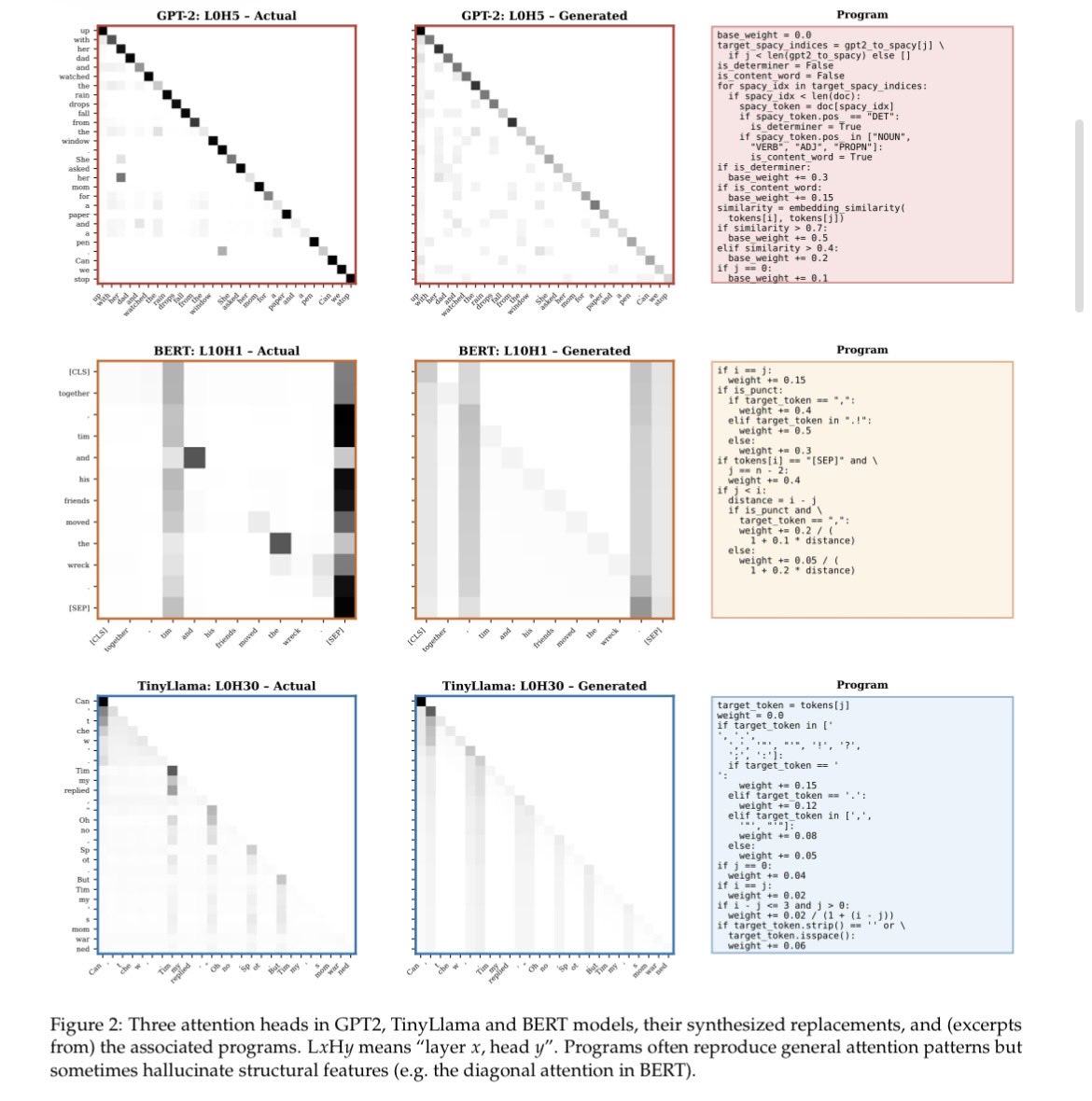
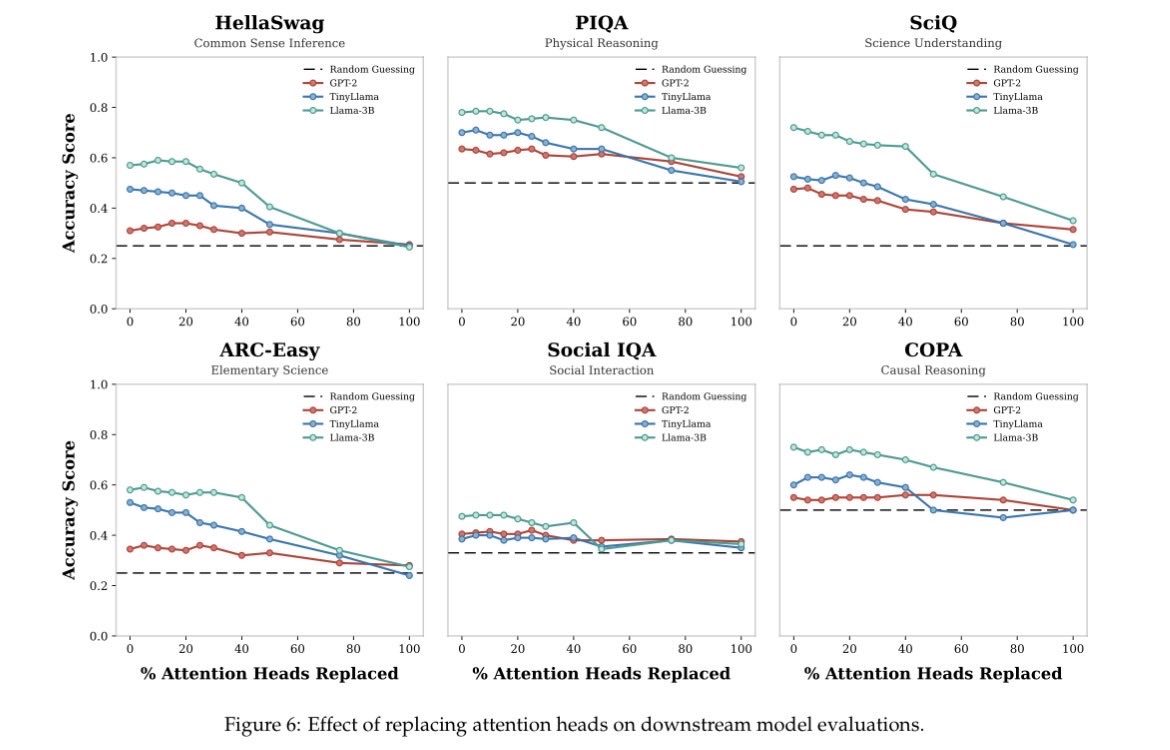
New paper! We introduce a new automated interpretability technique where attention heads are explained with Python programs. Turns out you can drop-in replace ~40% of attention patterns in Llama-3B with outputs of these programs and barely affect task performance!
More broadly, I’m excited about the actionable implications of this technique: Understanding attention phenomena has historically led to architectural improvements in Transformers (see e.g. attention sinks), and I’m excited about the potential for this technique to uncover more such opportunities.
Make sure to check out @amirihayes_ thread below! ⬇️
@giffmana Good, but isn’t the platonic representation hypothesis obviously false? I thought it was something like a joke paper, or overreach by some philosophers new to the field
Final version of my book (with a new title)
Online Learning: A Modern Introduction Using
Convex Optimization
Especially proud of the Foreword by @NicoloCB!
It'll be printed by Cambridge University Press.
The end of 7 years of updates :)
https://t.co/NeqTSih2ra
@dggoldst@besttrousers It's like looking at the latest stock price and saying that everyone paid that for their stock, or the market cap is that price multiplied by outstanding shares.
Well, we do do the latter but...
@soumitrashukla9 I've noticed this in my own work. You can set up a bunch of agents in the background to do the fanciest thing you can think of, compare approaches, etc and they do -- while you focus on the problem formulation and the useful answer.
(1/n) New blog from UC Berkeley, UW, and Princeton: Who scales better in long horizon: AI coding agents or top coders?
We compared modern agents to top human contestants in an open-ended coding marathon.
Agents sprinted early. Then they plateaued. Top humans kept improving.
We study this as a new test-time scaling problem: do agents learn better intrinsic test-time strategies, or are they mostly getting more random tries?
@davidbessis Yeah, so much of this discourse feels like "... and then things got hard, I was embarrassed, and I quit." Feeling incompetent ("plateaued") can last for a very, very long time and you need to push through it. This is not new! even 1992 books like George Leonard's "Mastery".
@natolambert It’s fairly consistent with Anthropic messaging. I think it’s wrong and their messaging is incorrect, but it’s not obvious to me why (well-meaning, competent) regulators would do something different.
@CartoonsHateHer@EmmaVitz Why are the fights in academia so bitter?
Because the stakes are so small
https://t.co/hAxUJ7QFno
A variant of Parkinson’s Law
The hardest skill with frontier models, frankly, is becoming the same as managing a high performer: you need to scope their problem to be *big enough*, a little bigger than you think they can do.
Then you watch it materialize.
If you ask for too little you’re disappointed