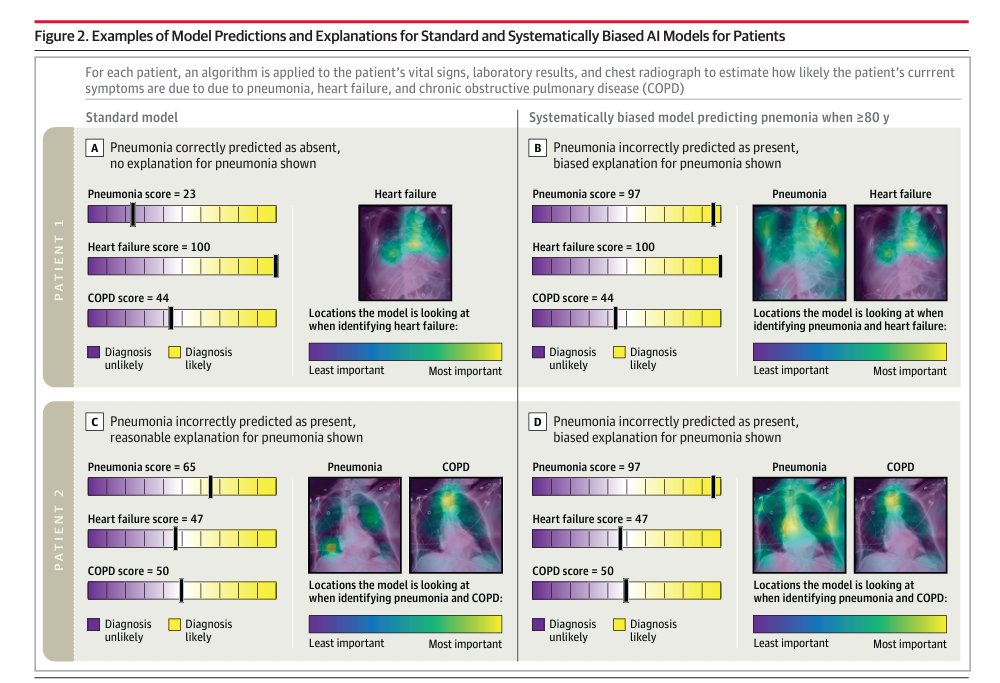
A recent @JAMA_current study co-authored by MIDAS affiliate faculty member @umichmedicine's Dr. Michael Sjoding cautions the use of AI tools with baked-in systemic bias to help diagnose patients. Read more from @axios. https://t.co/jpvwO3wdau
Although standard AI models improve diagnostic accuracy, systematically biased AI models reduced diagnostic accuracy, and commonly used image-based AI model explanations did not mitigate this harmful effect.
https://t.co/cRWTnq4PKk
In #AI for medicine, we often hear, "Oh, this tool just assists clinicians - they decide care"
In @JAMA_current, @SarahJabbour_ et al's randomized study finds potential harm from decision support w assistive AI
We cover "Automation Bias" in an editorial
https://t.co/bavXW3ywH7
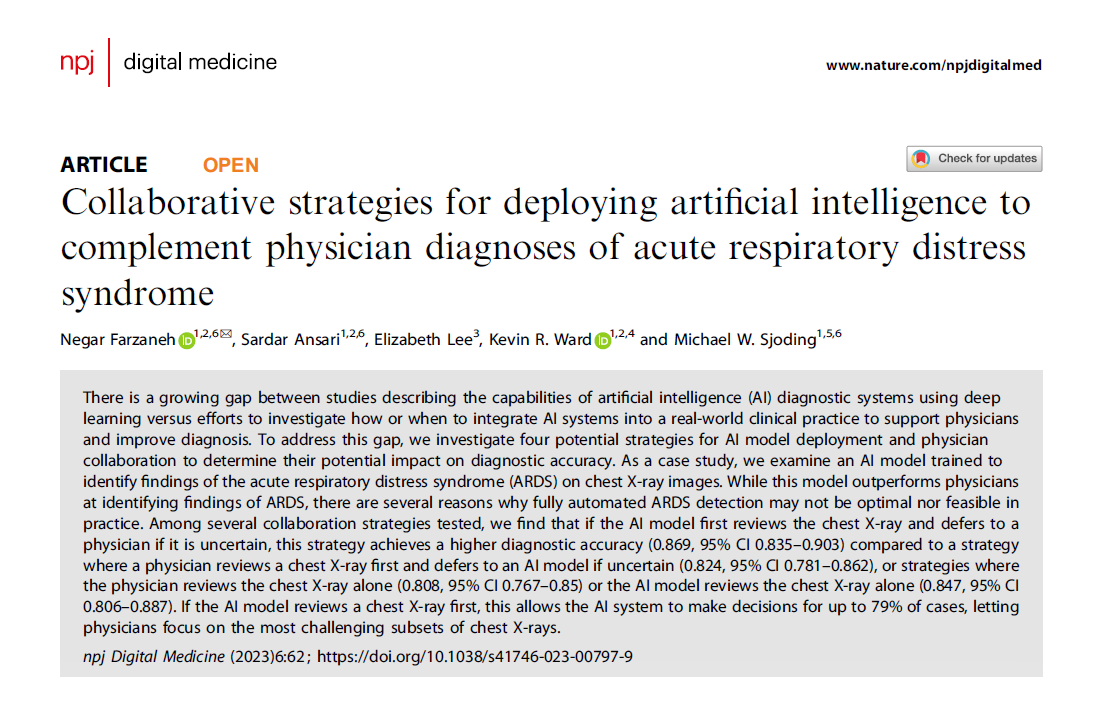
Of 4 collaboration strategies to deploy #AI for the diagnosis of ARDS from chest XR, the most accurate is to allow AI review the XR first & defer to the physician if uncertain. 79% of cases were decided by AI - significantly reducing physician workload.
https://t.co/n2dTtQlG1e
On this day when a mentee has a great paper accepted, I'm grateful to have learned how to generously and effectively respond to manuscript reviewers from @ColinRCooke @iwashyna and now can model this with my mentees
I've been accused of "relentlessly" covering the pulse oximeter issue. Guilty as charged. I find this issue critical. It's a microcosm of the painful, historical, scientific & nuanced ways race interests with medicine. Here's a🧵of our coverage. https://t.co/fUKNGevtqT
Ahead of an 11/1 @US_FDA mtg on pulse oximeters, #UMPrecisionHealth members @tsvalley, @iwashyna, @msjoding authored a piece in @ATSBlueEditor proposing actions that FDA, senators, clinicians, manufacturers can take to ensure they work accurately for all https://t.co/5q5NHxhejm
Proposal #4: Leverage widely available data to ensure real world safety in relevant subgroups
- We need more real world, real patient performance testing in clinical settings, not just data from laboratory on healthy patients
As Nov 1 FDA meeting on PulseOx approaches, @tsvalley, @iwashyna and I wrote editorial in @ATSBlueEditor discussing actions @US_FDA, @ATS, @SCCM, @SenWarren, @SenBooker, clinicians, manufactures could all take to ensure they work accurately for everyone https://t.co/HuKBfv00dp
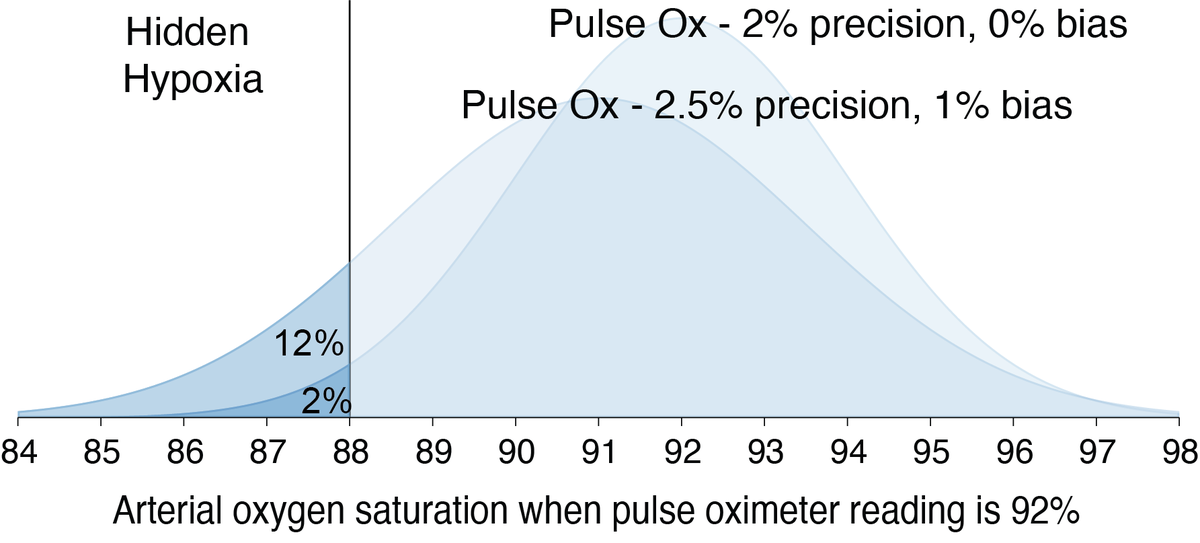
Proposal #3: Power pulse oximeter tests to detect small but clinically important differences between racial groups
- Small performance differences translate into significant population disparities, hidden hypoxia rates of 2% versus 12% for example!
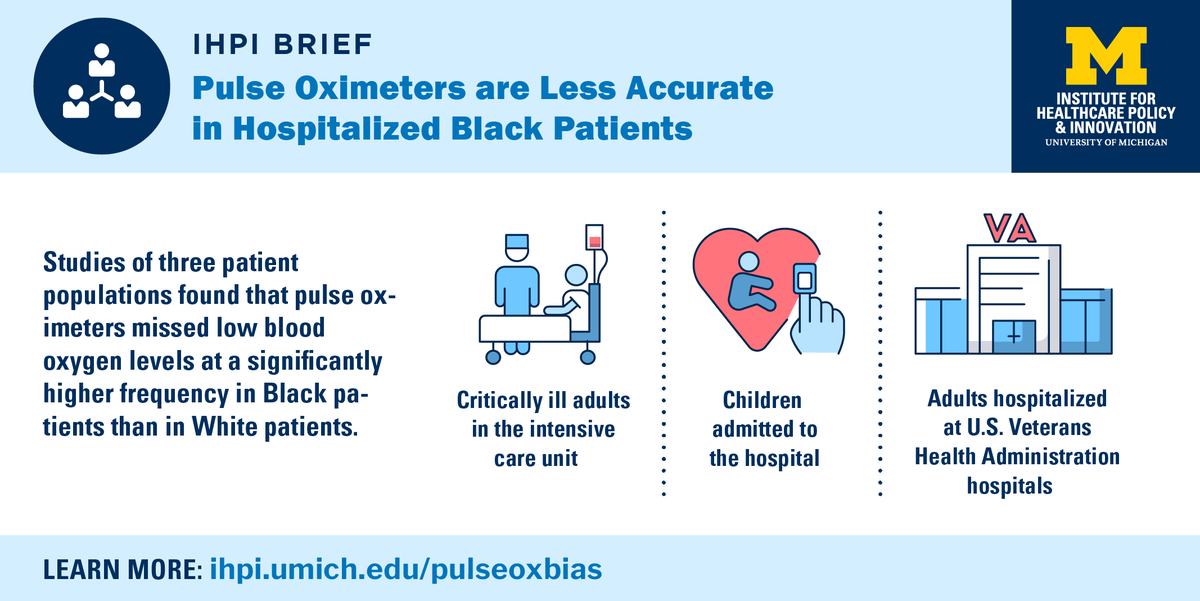
NEW: @msjoding & colleagues have spent 2+ years looking at the accuracy of #pulseox devices in hospital patients with darker skin, and finding major issues.
Read our new brief summarizing their work, in advance of an @US_FDA hearing on the topic this fall: https://t.co/dRQDqJXOzW
1/ Excited to announce our new work at @MLHC2022! Many patient risk-stratification ML models are trained using lab test results as labels. But testing disparities are known to exist across patient groups. (w/ @msjoding, Jenna Wiens) @MichiganAI (https://t.co/hQMbfawhKD)
Hi, here’s my (@shanestorks) next Michigan AI #StudentTakeover Spotlight with Trenton Chang (@chang_trenton)! We discussed equity in healthcare and diagnostic testing, the role of AI, and overcoming imposter syndrome. #AcademicChatter
https://t.co/a4hkMRPnFw
Distillation of complex figure/nuanced thread on pulse ox accuracy/reliability. If pulse ox and ABG are way off, additional pulse ox readings likely unreliable for all. If pulse ox and ABG align, additional pulse ox readings likely accurate for White but less so for Black pts.