@HelmanDaniel@NikoMcCarty It's analagous to assembling a computer from prebought components. Yeah each part can't work on it's own, but you didn't build it from "scratch"
But the paper you sent is really interesting, that must have been a crazy thing to see back in 1970.
@HelmanDaniel@NikoMcCarty I think by creating life from scratch, he's talking about creating life from chemical building blocks. Something like this: https://t.co/PUdVuhw9Ii
The paper you sent reassembles amoeba by extracting their cytoplasm, membrane, and nuclei, but you couldn't make them from"scratch"
Scientists have created a synthetic cell that can eat, grow and reproduce. The lab-made cell, called SpudCell, could help researchers better understand the basic building blocks of life. https://t.co/VNw61gFWYo
@slavov_n I really like this "follow up" from Prof. Kording, where they actually try and do it rather than offer the thought experiment. Has anyone done anything else more recently using more recent AI tools? https://t.co/32TiZMfIGX
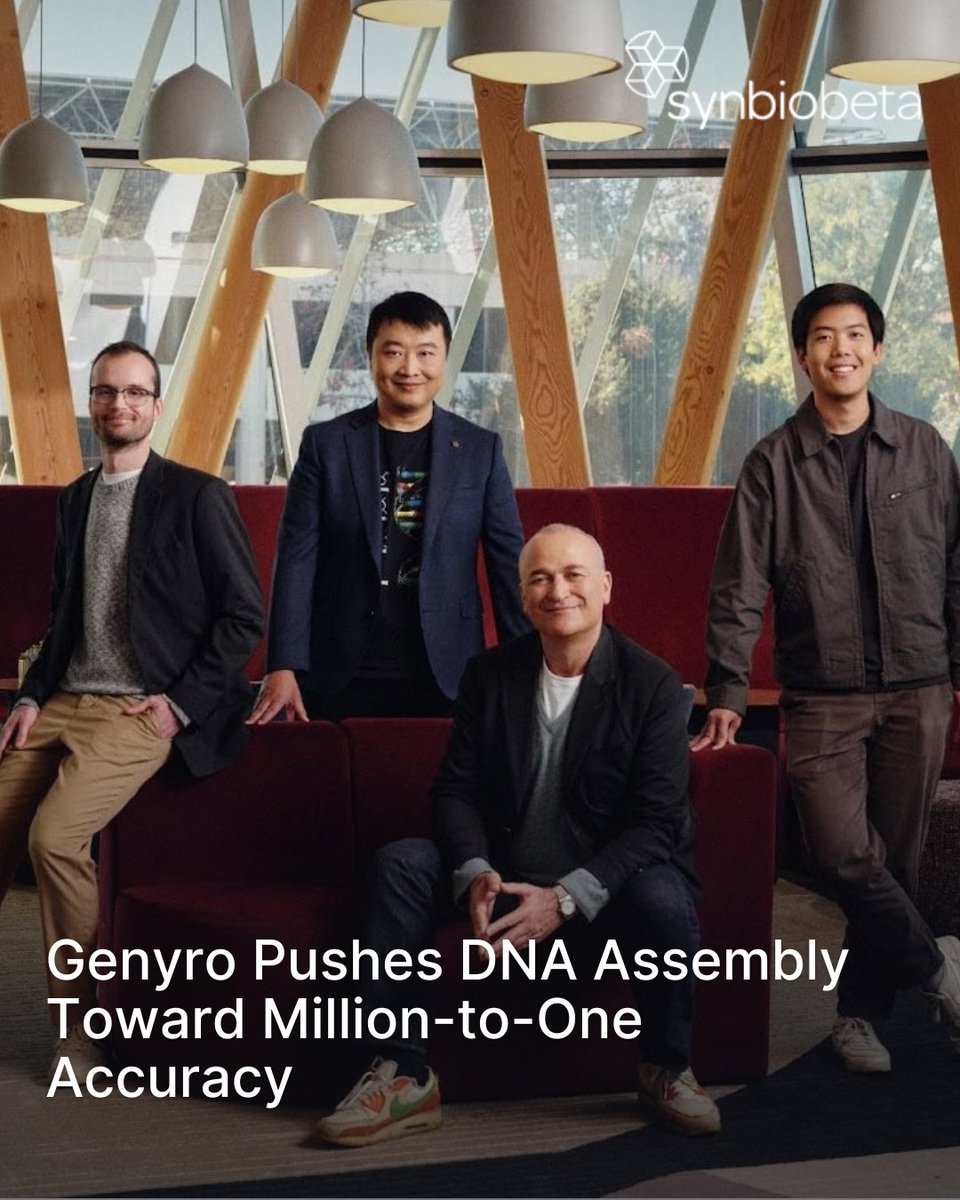
DNA assembly has been stuck at ~1-in-10 error rates.
Genyro’s new Nature paper reports ~1-in-1,000,000 accuracy—unlocking repetitive and GC-rich genomes that were previously impossible to build.
This is how biology becomes programmable. Meet Adrian and Kaihang at SynBioBeta 2026, May 4-7 in San Jose. https://t.co/aooc2uvR2W
A long standing goal in synthetic biology is ‘PURE makes PURE’ - effectively the start of self-replicating biology in a tube from just adding biochemicals and DNA instructions. This looks like a promising breakthrough from the Maerkl lab. 👀
Big news for the future of biotech infrastructure. @Ginkgo Bioworks is partnering with the Department of Energy and PNNL to build some of the nation’s first fully autonomous microbial labs, powered by AI, robotics, and next-generation automation. From the Genesis Mission executive order to a $47M contract for M2PC, this is the strongest federal signal yet that autonomous labs will become core scientific infrastructure. Full article here. https://t.co/cdrGXAiPAn
Subscribe to our newsletter and get the biggest biotech news straight to your inbox 🧬. https://t.co/ogrqWu4QM5
I wrote a blog post: The Parallel Decoding Trilemma
Parallel decoding research has tried to optimize the speed-quality tradeoff, but I believe quality should be decomposed into fluency and diversity.
"An hour of planning can save you 10 hours of doing."
✨📝 Planned Diffusion 📝 ✨ makes a plan before parallel dLLM generation.
Planned Diffusion runs 1.2-1.8× faster than autoregressive and an order of magnitude faster than diffusion, while staying within 0.9–5% AR quality.
@chofski@iA Hmm, what are some philosophical foundations for other older engineering and science disciplines? I draw many analogies from computer science to syn bio
@chofski@iA Similar to the Fryman quote “what I can’t build I do not understand”. That’s why I think synthetic biology should build cells/biology from scratch rather than build on top of natural systems
@ATinyGreenCell It’s an acquired taste for sure, but one engineers won’t be used to. An interesting question is whether it’s something that all future engineers in biology will have to deal with?
@ATinyGreenCell What excites me now is building synthetic cells from the bottom up, in hopes that we can better routinize synthetic biology, and to better reverse-engineer natural biology. That problem excited me more than working as a jr software engineer
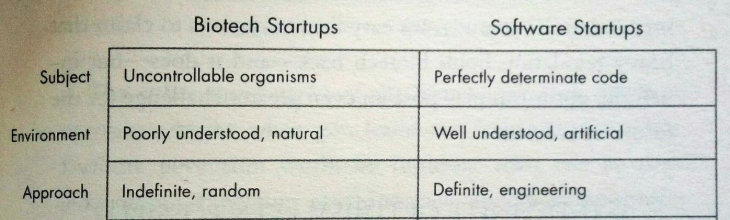
@ATinyGreenCell As someone who was picking between software or syn bio career, I think engineering biology needs to be more routinized, and we're not there yet. There's a lot Peter Thiel and I disagree on, but he gets a lot right about why investors/individuals prefer software over biotech.