Independent prediction-market forensic and investigation firm.
We reconstruct trading activity, test claims and publish the evidence.
Contact: [email protected]
Combo contracts — prediction markets’ version of parlays — now account for a huge share of headline volume.
But because contracts are reported at their $1 notional value regardless of the price actually paid, the resulting volume figures can look very different from the cash traders are actually putting at risk.
As I told CNBC, multi-leg contracts are “helping [Polymarket and Kalshi] claim a higher number with lower realistic cash output.” Thank you @AnanyaBChetia and Davis Giangiulio for including MSR Decode in the piece.
Read the full article in the link in comment.
On September 18, 2026, a wallet displayed as Papeasy led Polymarket’s monthly profit ranking No. 1 with $6.13 million PnL and $0 of trading volume. However, the ranked wallet was in fact collecting contracts bought by other wallets (suppliers), redeeming them and returning nearly all the cash to the suppliers.
Our new MSR Decode case file examines five historical cases from May through September 2026, to explain how Polymarket's leaderboard displayed profit diverged from real trading profit. Read the full report in the link in the comment below:
Combo contracts — prediction markets’ version of parlays — now account for a huge share of headline volume.
But because contracts are reported at their $1 notional value regardless of the price actually paid, the resulting volume figures can look very different from the cash traders are actually putting at risk.
As I told CNBC, multi-leg contracts are “helping [Polymarket and Kalshi] claim a higher number with lower realistic cash output.” Thank you @AnanyaBChetia and Davis Giangiulio for including MSR Decode in the piece.
Read the full article in the link in comment.
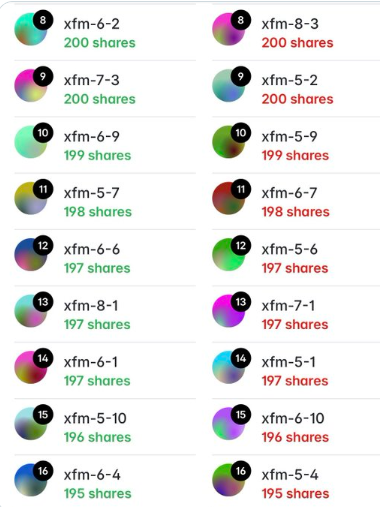
One wallet buys Yes, and its partner buys No. Then both move to the next market.
Our new Polymarket case reviews 97 selected XFM profiles. In 40 of 47 complete pairs, the partnered XFM wallets entered the same markets in the same order.
Read the full report in the link in comment:
We’ve redesigned the MSR Decode Case Files.
Clearer language. More visual storytelling. More interactive ways to explore the data and understand our findings.
Same research — much easier to read and navigate. Link in comment.
We analyzed more than 463 million Polymarket fills and found that a surprisingly small group of recurring accounts accounted for $506 million in trading volume across 928 markets.
Sometimes the most interesting part of a market isn’t the price. It is who keeps trading with whom.
We published the full evidence and methodology in the comments ↓
A Polymarket trader was named a proposer of No, and 14 seconds later it bought more No shares. The market also resolved No in the trader's favor.
Across its full history in that market, it ultimately profited 61,713 pUSD after trading fees. See the full report at https://t.co/DNjBsfmOj6
We’ve redesigned MSR Decode’s Case Work pages: shorter summaries, clearer charts, timelines and cash-flow diagrams.
The sources, detailed records and limitations remain. The evidence is easier to follow.
Explore: https://t.co/cVmBaPElB7
Two wallets traded with each other 1,383 times in an LA mayoral market: 99.75% of reconstructed trading over 47 hours.
A separate trio traded with itself in two other election markets.
Read the full report in the link in comment.
Part II is live.
@Kalshi's Oct→Apr volume grew 237.7% on $1-face counting vs 170.4% at execution prices.
By Aug, combos were 44.6% of face volume but only 9.6% of execution turnover.
Not fake volume — a measurement + product-mix story.
Full report in the comment


![msrdecode's tweet photo. Combo contracts — prediction markets’ version of parlays — now account for a huge share of headline volume.
But because contracts are reported at their $1 notional value regardless of the price actually paid, the resulting volume figures can look very different from the cash traders are actually putting at risk.
As I told CNBC, multi-leg contracts are “helping [Polymarket and Kalshi] claim a higher number with lower realistic cash output.” Thank you @AnanyaBChetia and Davis Giangiulio for including MSR Decode in the piece.
Read the full article in the link in comment.](https://pbs.twimg.com/media/HUAnD7nX0AAGfHh.jpg)