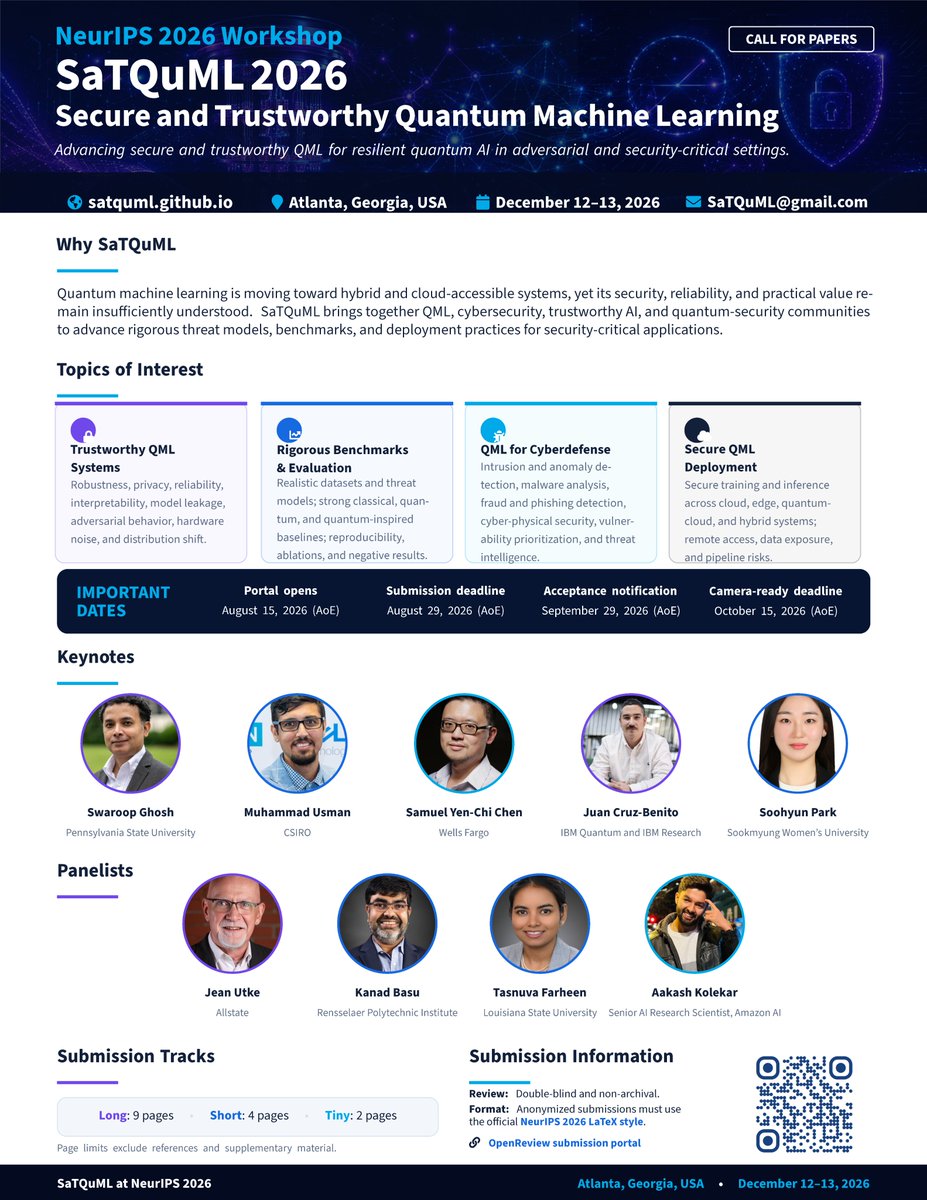
Paper submission portal is open for 𝗦𝗮𝗧𝗤𝘂𝗠𝗟 𝟮𝟬𝟮𝟲: 𝗦𝗲𝗰𝘂𝗿𝗲 𝗮𝗻𝗱 𝗧𝗿𝘂𝘀𝘁𝘄𝗼𝗿𝘁𝗵𝘆 𝗤𝘂𝗮𝗻𝘁𝘂𝗺 𝗠𝗮𝗰𝗵𝗶𝗻𝗲 𝗟𝗲𝗮𝗿𝗻𝗶𝗻𝗴, co-located with 𝗡𝗲𝘂𝗿𝗜𝗣𝗦 𝟮𝟬𝟮𝟲, to be held in 𝗔𝘁𝗹𝗮𝗻𝘁𝗮, 𝗚𝗲𝗼𝗿𝗴𝗶𝗮, 𝗨𝗦𝗔.
#Neurips2026
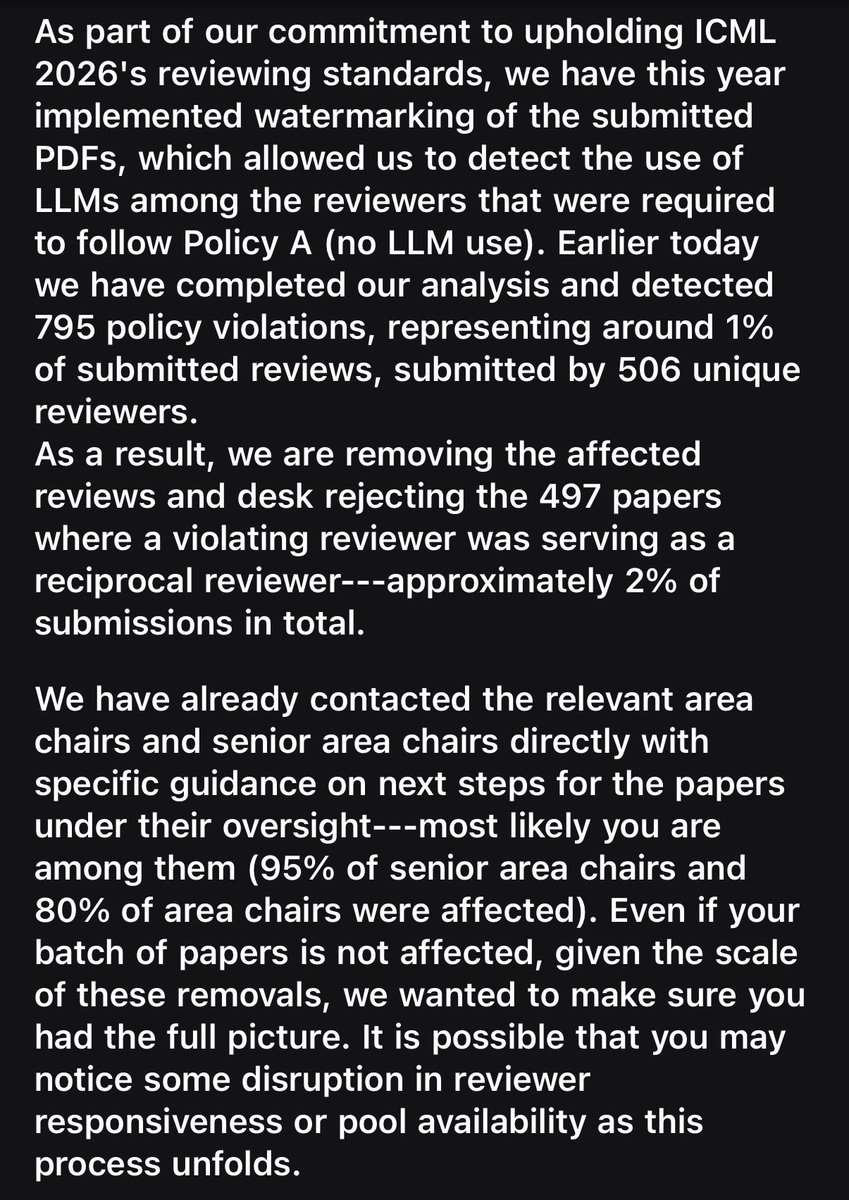
If the paper addressed the concerns in rebuttal, I improved the scores and advocated for acceptnace. Sadly! it did not happen for the papers of my group. I feel bad for my students.
#Neurips2026
Call for Papers: NeurIPS 2026 Workshop on SaTQuML: Secure and Trustworthy Quantum Machine Learning, to be held in 𝗔𝘁𝗹𝗮𝗻𝘁𝗮, 𝗚𝗲𝗼𝗿𝗴𝗶𝗮, 𝗨𝗦𝗔, 𝗼𝗻 𝗗𝗲𝗰𝗲𝗺𝗯𝗲𝗿 𝟭𝟮–𝟭𝟯, 𝟮𝟬𝟮𝟲.
https://t.co/5k5M144Daa
We've released a new 5-point action plan for strengthening cyber defense.
AI is reshaping cybersecurity. The same capabilities that help defenders may be used by malicious actors.
One approach is to treat these systems as too dangerous for broad defensive use and limit them to a very small number of approved partners.
We think that misses the central challenge. Attackers won’t wait. Existing models are already useful for many cyber workflows and capabilities will keep advancing. Criminal groups will adopt whatever tools are available.
The best way to reduce national risk is to responsibly equip and accelerate trusted defenders faster than adversaries can adapt. Check out our plan ⬇️
https://t.co/pcV0XAWx1q
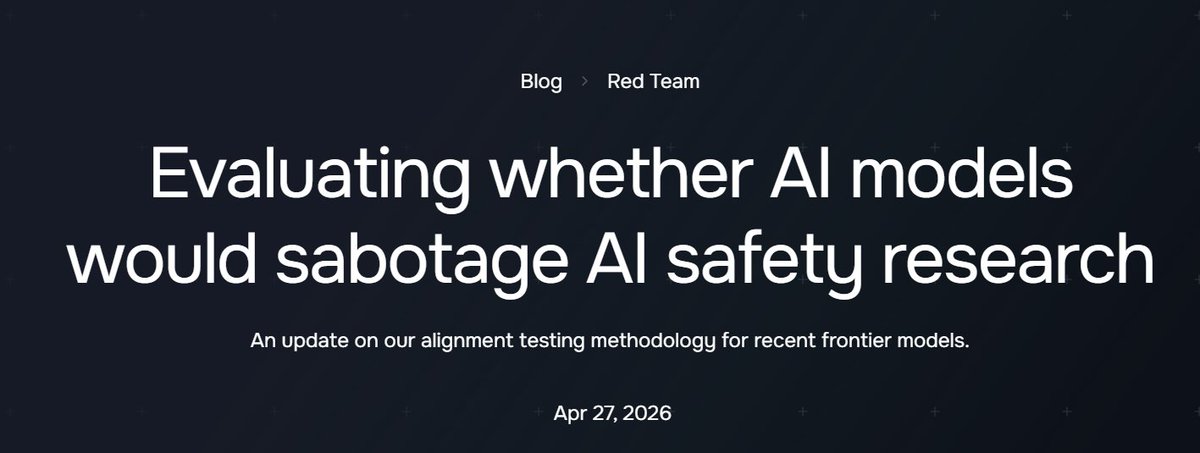
As part of our work on assessing AI loss-of-control risks, we collaborated with @AnthropicAI to pilot alignment evals on models including pre-release snapshots of Mythos Preview and Opus 4.7.
We ask: could an AI agent used inside a frontier lab sabotage safety research? 🧵
NeurIPS 2026 @NeurIPSConf Call for Workshops is out!
- Deadline: June 6
- Notifications: July 11
- Workshop dates: Dec 11–12 (Sydney) & Dec 12–13 (Paris, Atlanta)
I am honored to serve as a workshop chair this year and am excited to see your proposals!
https://t.co/TYJLYmvODO
Introducing Project Glasswing: an urgent initiative to help secure the world’s most critical software.
It’s powered by our newest frontier model, Claude Mythos Preview, which can find software vulnerabilities better than all but the most skilled humans.
https://t.co/NQ7IfEtYk7
NIST is developing best practices for LLM / agent evaluation. Our feedback: benchmarking must move beyond 1-dimensional capability evaluation and incorporate properties such as reliability. https://t.co/yWV9pv6ldb
By @steverab, @sayashk, @PKirgis, and me.
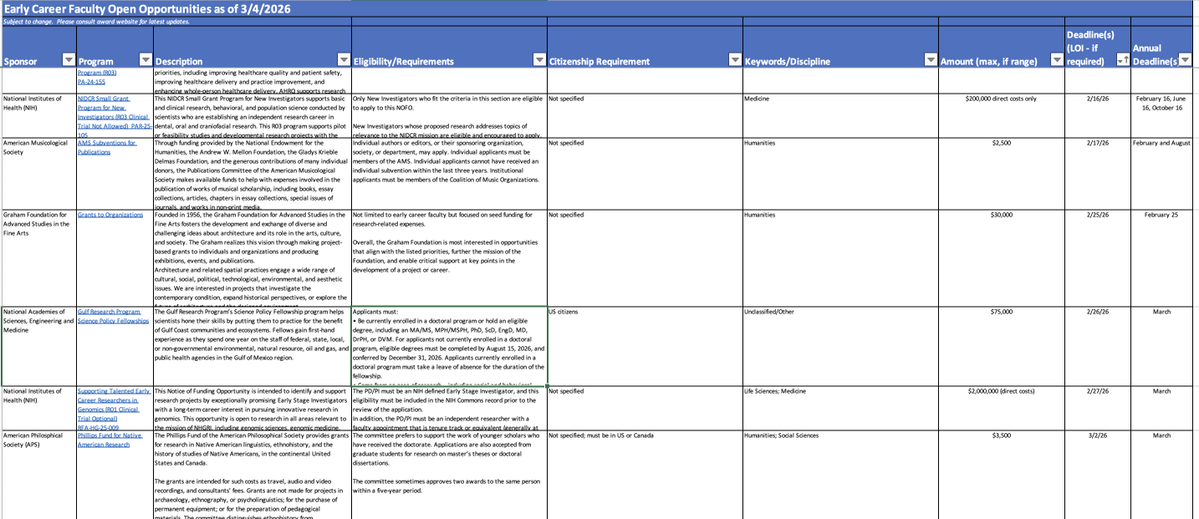
Here is our updated database of grants for early careers researchers in all fields.
It goes way beyond traditional NIH and NSF funding opportunities. We list 428 types of grants.
Download it here: https://t.co/RGXGrdp2uf
Tonight, we reached an agreement with the Department of War to deploy our models in their classified network.
In all of our interactions, the DoW displayed a deep respect for safety and a desire to partner to achieve the best possible outcome.
AI safety and wide distribution of benefits are the core of our mission. Two of our most important safety principles are prohibitions on domestic mass surveillance and human responsibility for the use of force, including for autonomous weapon systems. The DoW agrees with these principles, reflects them in law and policy, and we put them into our agreement.
We also will build technical safeguards to ensure our models behave as they should, which the DoW also wanted. We will deploy FDEs to help with our models and to ensure their safety, we will deploy on cloud networks only.
We are asking the DoW to offer these same terms to all AI companies, which in our opinion we think everyone should be willing to accept. We have expressed our strong desire to see things de-escalate away from legal and governmental actions and towards reasonable agreements.
We remain committed to serve all of humanity as best we can. The world is a complicated, messy, and sometimes dangerous place.
Quick clarification: submitting the abstract of an ICLR 2026 submission to ICML 2026's upcoming abstract deadline does not violate double-blind policies, as long as you withdraw your ICML submission in the event that your ICLR submission is accepted.