We have moved to more beautiful skies... and are now also on LinkedIn. Please follow us on one or both platforms as we won't be posting here anymore. @RNASociety#RNASalon
@fondaz_inf_act My sincere condolences to his family, colleagues, lab members, and students. We collaborated on DDX3X and hosted several students from his lab here in Ireland. He was an inspiring, generous, and supportive scientist and we will miss our interactions with him. Very upsetting news.
Funded 4-year #PhD in the exciting BBSRC NILAB program. @WWIEM_QUB Receive multidisciplinary training, develop #infection models and #AI image analysis to reveal bacterial & viral disease mechanisms & discover new antimicrobials. Fight #AMR Get in touch! https://t.co/NK4RIrGZqn
Dr Carla Mateus from the @Maynoothgeog examines the short history of extreme weather events around #StPatricksDay in Ireland. Historical reports tell us it was a day which often featured intense cold, torrential rain, thunderstorms and the odd tornado. ☔
https://t.co/pbCP4BpzB9
It's clear that many do not understand what @NIH-funded research does to improve health. It's time to revive a study published 10 years ago that provides incredible information about this. link in the comment
Every single new drug approved by the FDA from 2010–2016 was built on NIH-funded research—that’s all 210 drugs. But what the public sees is just the tip of the iceberg.
Pharma takes credit for the final product, but beneath each drug developed, there are ~20 years of basic research, and 90% of the cost is from basic research funded by the NIH, which discovers drug targets, understands disease mechanisms, and creates life-saving treatments.
Figuring out how cancer evades the immune system, how addiction rewires the brain, and how heart disease develops is the role of the NIH, creating the foundation for the breakthrough drugs that come 20 years later, and the NIH does all that with only 0.8% of the US budget.
Without NIH, there would be no cancer immunotherapy, no anti-overdose medication, no anti-heart attack or stroke medication, no cutting-edge treatments.
If NIH funding is cut, the iceberg will melt. That means fewer cures, more suffering, and more lives lost.
The science beneath the surface keeps us afloat.
Invest in NIH. Invest in life
We are delighted to be hosting the next @IrishRNA All-Ireland RNA Club event on 14th March! Registration and abstract submission is open. All welcome. @RNASociety@lexogen
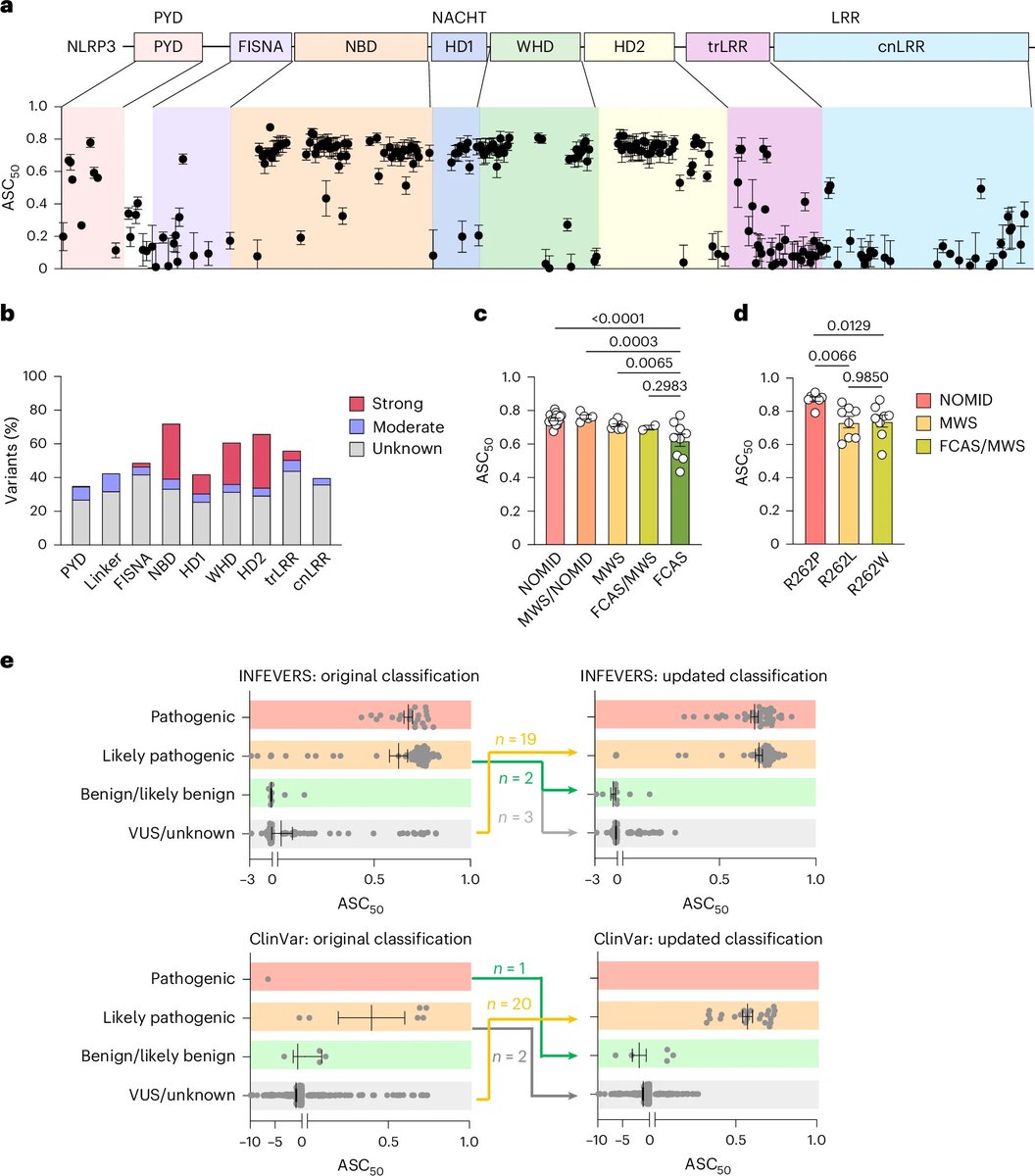
A large dataset we hope is helpful for patients who may have CAPS, an #autoinflammatory condition associated with gene variants in NLRP3. Many variants of uncertain significance now have a readout from our in vitro assay which can aid clinical diagnosis. https://t.co/bXjXHb5ktQ
Mechanisms of NLRP3 activation and inhibition elucidated by functional analysis of disease-associated variants
https://t.co/1XWNTr2p8w
@NatImmunol@sethmasters@shouya_feng
Our next online All-Ireland RNA club meeting is happening this Friday, the 14th of February, 1-2pm. Scan the QR code to join the Teams meeting, all Ireland-based researchers welcome to attend! #RNASalon@lexogen@RNASociety
I am thrilled to share our latest article that has been published in @ImmunityCP. We describe a new role for NLRP3 outside of its inflammasome complex, where it can regulate microglial metabolism & key metabolites that affect the epigenetic landscape (1)
https://t.co/CZFmQnXu0P
Applications for undergraduate summer studentships @WWIEM_QUB are now open. We would love to host enthusiastic students from anywhere in the world in Belfast! 👨🔬👩🔬🧪💊🌎 Details: https://t.co/6tQcwfkFQL