@MMVD_RTO and @MORTHIndia
Request to please check vehicle & mobile number link process on vahan portal, it's not working /broken.
And few days back PUC renewal linked to otp on cell, if number is incorrect then can't renew.
Pls remove that PUC link, urgently
#RTOMumbai
There was a lady who started her PhD a year ahead of me. Eventually, she went for her qualifying exam.
After her 30 mins presentation, she was questioned by the committee for another 1 hour and 30 minutes.
One of the questions she was asked was: Where do transcription and translation take place in the cell? She missed the question completely.
I think the committee was surprised because that was considered very basic science.
At the end of the exam, she was asked to assess her own performance, which is a common practice. She rated herself very highly, and I think that became another concern for the committee because her performance had been considered poor. They probably expected a more honest self-evaluation.
Sadly, she could not continue with the program after that. That was the end of her PhD journey there.
But beyond her experience, I learned something important very quickly: never neglect the basics of science. It is easy to become so focused on complex ideas, advanced techniques, and “big” concepts that you overlook the simple foundations that hold everything together.
After hearing that story, I intentionally went back to revisit my fundamentals. I downloaded materials, watched YouTube videos, and even refreshed my knowledge of statistics. Mind you, I had earned a distinction in Biostatistics…😁 Yet, I still realized there was more depth and clarity I needed.
And interestingly, statistics was part of the questions I was eventually asked during my own exam.
I think many people in science and academia become overly fascinated with complexity while underestimating the importance of truly understanding the basics. But the truth is, good science should be simple enough to explain clearly and understand deeply.
We must pay more attention to the fundamentals because they are what truly make science solid.
In the 1990s, India was facing a Biological Colonization. If Dr. R.A. Mashelkar had not stepped in, we might have ended up paying a royalty to a US corporation every time we used turmeric on a wound/exported Basmati rice.
In 1997, a Texas-based company called RiceTec was granted a patent by the USPTO (US Patent & Trademark Office) for Basmati Rice lines & grains. They claimed they had invented a superior strain of rice. Mashelkar realized that if this patent stood, Indian farmers would be barred from selling their own rice under the name Basmati in the US. It was a theft of Geographical Intellectual Property.
He did not just shout Injustice. He assembled a team to find Genetic Fingerprints. They proved that the new rice was actually derived from Indian germplasm that had existed for centuries. The USPTO was forced to strike down the majority of the claims.
2 researchers at the University of Mississippi were granted a patent for the use of turmeric in healing wounds. To a Western patent officer, this was a novel invention. To an Indian, it was something their grandmother did every day. Mashelkar produced an ancient Sanskrit text as Prior Art. The USPTO demanded a translation. He provided evidence from the Journal of the Indian Medical Association dating back to 1953 + ancient Ayurvedic texts.
This was the 1st time in history that a patent granted to a US entity was successfully challenged & revoked based on the Traditional Knowledge of a developing country.
Mashelkar also realized that India could not fight 10000 legal battles every yr. He needed a Scalable Solution. Patent officers in the West were not malicious; they were just Data Blind. They could not read Sanskrit/Tamil/Persian. If a discovery was not in an English journal, it did not exist in their system.
He hired 100s of experts (Ayurveda practitioners, IT engineers, & Patent lawyers). They took 500000+ formulations & converted them into a digitized Shloka to Code format. The data was rendered in English, French, German, Japanese, & Spanish.
Today, India has signed agreements with the USPTO, the European Patent Office, & others. Before an officer grants a patent, they run a TKDL Scan. If the herb/method is in the library, the patent is rejected instantly.
Bachpan waala India.
Regardless of the weather, our dinner time was at 7:00 PM and bed time was 10:00
Eating out at a restaurant was a huge deal, a rarity actually, that only happened when it was a birthday or a very special occasion to celebrate.
There was no such thing as fast food on every other day, and having a bottle of soft drinks and an ice-cream from the local shop was a real treat. Pass your final exams and you might have gotten a new set of clothes, or Bata shoes.
You took your school clothes off as soon as you got home and put on your ‘home’ clothes. There was no taking or picking you up in the car, you either boarded the school bus or rode on public transport, or just walked home. You got home did your chores and homework before dinner.
Not everyone had a house phone and much later, all private conversation were at PCO booth's.
We didn’t have appletv AmazonPrime or Netflix. We had only Doordarshan to watch. Jungle Book came once a week on a Sunday and Chhaya Geet on Thursday’s, for which we waited all week.
We played chor police, lappa chuppi, Football, Cricket, lagori, dabba ice-spice (actually it was “I spy”) Marbles and any other game we could come up with... At home, we stuck to chess, ludo, snakes and ladders and Monopoly.
Staying shut in the house was a PUNISHMENT and the only thing we knew about "bored" was --- "You better find something to do before I find it for you!"
Life was good without insta, facebook, twitter.
Followers were the friends standing behind you.
We played music via magnetic tapes or radio. A walkman was a luxury for the uber rich.
We went to the local shop for groceries and chiclets, jeera goli, kismi used to be a couple of paise.
We ate what Mum made for dinner and put in our lunch and snack box.
Bottled water was non existent. We drank from the school water filter.
We called our friends from home by shouting their names from the street below.
We weren't AFRAID OF ANYTHING. We played until dark... sunset was our alarm.
If someone had a fight, that's what it was and we were friends again a day later if not SOONER.
We watched our mouths around our elders because all of our aunts, uncles, grandpas, grandmas, and our parents' best friends were all extensions of our PARENTS and you didn't want them telling your parents you’d misbehaved! Or they would give you something to cry about.
We respected the Police, Firemen, Ambulance workers, Teachers, Doctors and Nurses.
We never answered back... ever!!!
We got detention at school for not doing homework, no hair cut, being late to class or being naughty.
Our teachers spanked us when we deserved it and our parents did not complain about it.
We did not know what luxury was. Our simple lives were so good.
Those were the good days. So many kids today will never know how it feels to be a real kid 😁.
I loved my childhood and all the friends I hung around with.
Congrats, if you are from the same generation...
😁🌹🤗
Apply #research paper development workshop.
Organized by the Journal of Supply Chain Management (ABDC A*) and @SPJIMR
Deadline for Ext Abstracts (750 words) is 15th April.
Editorial team will give personal feedback to shortlisted authors on 6-7th July in onsite workshop
Final call to get expert feedback from leading A* journal editors.
Inviting PhD scholars, postdoctoral researchers, and faculty to submit extended abstract (750 words) for the JSCM Paper Development Workshop 2026.
Deadline: April 15, 2026
Apply here: https://t.co/zU95zCgsXw
@fake_journals Maybe it's a relic from the time when submissions were physically sent, before the digital world came in. By since the old process got replicated, it continued.
wow Anthropic just published a crazy report on AI replacing your job and er... you might want to look at this:
- #1 most at-risk jobs are computer programmers, financial analysts (rip excel bros) and customer service
- most at-risk workers are female, white, older and higher paid.
- BUT high-risk jobs *aren't* firing employees... they've STOPPED HIRING. biggest victims: college graduates (4X more likely to be fucked)
- entry-level hiring has dropped 14% since chatgpt launched (for highest risk jobs)
- SAFEST jobs are... bartenders, dishwashers and lifeguards - any manual labour that AI can't automate (yet) this accounts for 30% of the job market.
- this was the scariest part: AI models are capable of automating most work TODAY but are prevented because of law and slow company adoption. so its not even a fucking skill issue its an ADOPTION issue.
- now its important to understand that the study is based on real world data but also 'theoretical' intelligence. so take it with a pinch of salt. some jobs (manual labor) didn't even meet min. data reqs
i applaud anthropic on being so damn transparent - they're literally the company behind claude who will be responsible for these impacts
studies like this will help us figure it the hell out. LOT of change coming this year.
Worked 2 decades in in consulting.
Made Partner in my 30s.
Led teams of 100+ people.
Run 9-figure client portfolios.
Lived and worked in 4 continents.
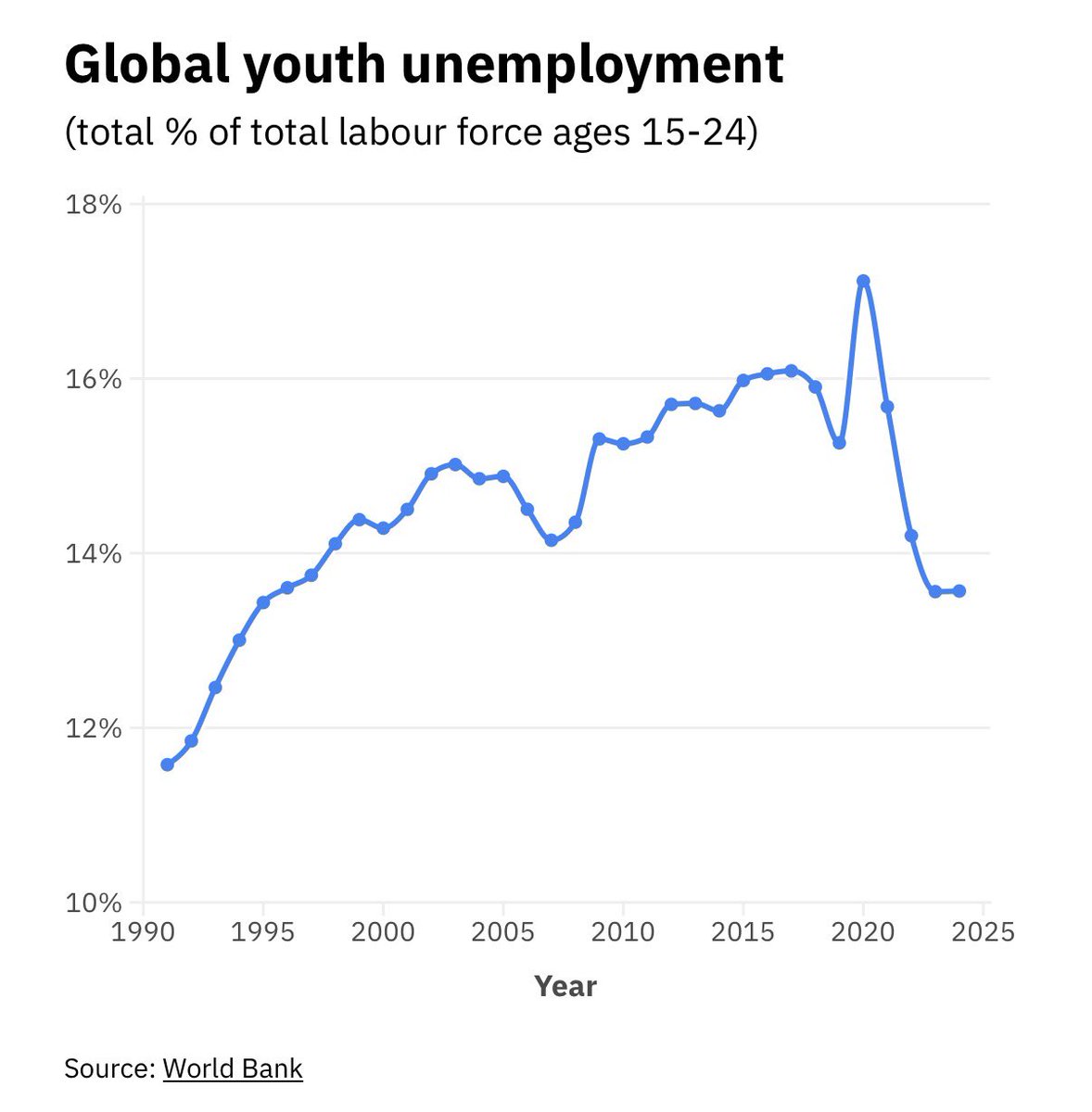
Young people are entering the workforce at a strange moment.
AI can draft your emails, build your slides, write your code, analyse your data, simulate your voice.
The default advice sounds smart:
"Upskill"
"Learn AI"
"Be adaptable"
Obvious stuff.
Let me give you 5 slightly heretical (but useful) ideas if you actually want leverage in the AI age.
Not survival. Leverage.
1) LEARN TO SELL BEFORE YOU LEARN TO BUILD
Everyone is learning to build with AI; who's learning to sell?
Because production is cheap, distribution is not.
In my experience, markets reward those who can convince others that something should exist and then align capital, people & narrative around it.
E.g., Steve Jobs didn't invent the GUI, the MP3 player, or the smartphone. He sold a vision of WHY they were cool.
Or Elon Musk. You can argue about him all day, but he bends capital markets through narrative force.
Young people obsess over becoming technically formidable. Good, but if you can't:
> articulate a problem in a way that feels urgent
> create emotional energy around a solution
> negotiate compensation/scope
> pitch yourself w/o sounding desperate
AI will outperform you on the build, and someone else will capture the upside.
2) BUILD SENSE-MAKING
AI can generate infinite variations but it can't reliably tell you which one is elegant.
You need pattern recognition + aesthetic + strategic sensemaking.
You need the extraordinarily valuable ability to say "This feels right"... and be correct 90% of times.
Steve Jobs called it "taste".
Designers call it judgment.
I prefer discernment.
Where does it come from?
Exposure. Feedback. Long apprenticeship. Studying history. Reading widely. Being around people better than you. Caring about the craft.
Everyone can create, but can you curate?
That's the challenge I'm giving myself.
3) CHASE POSITION
AI makes you faster.
So what?
Speed in the wrong direction is basically accelerated irrelevance.
Young professionals obsess over productivity hacks, automating emails, summarise meetings, generate slide drafts.
BS.
Meanwhile, someone else is positioning themselves closer to revenue, clients, capital allocation.
You want exposure to projects with visibility, problems tied to money, roles adjacent to decision-makers.
If you become the most efficient note-taker in the company, AI will replace you.
If you become the person who reframes what the company should be doing, it won't.
Simple.
4) LEARN TO WORK WITH AFRAID HUMANS
I see AI is making people anxious.
Managers worry about irrelevance. Employees worry about layoffs. Executives worry about being disrupted.
Walk into that fear and stabilise people:
> explain AI w/o hype
> show people how it augments rather than humiliates them
> design transitions instead of revolutions
Look at Satya Nadella. He pivoted Microsoft to cloud & AI, and changed the internal psychology of the firm from know-it-all to learn-it-all.
If you understand identity & ego, you will navigate the AI era far better than someone who just knows Python.
5) OPTIMISE FOR OPTION VALUE
Prestige brands still matter.
McKinsey, Goldman Sachs, Google still open doors.
But if you optimise purely for logo collection, you might wake up one morning highly employable and strategically constrained.
The AI era will produce volatility, with entire functions that will shrink and new ones that will explode.
Option value means:
> skills that transfer
> geographic flexibility
> intellectual independence
> networks that span industries
> income streams that are not singular
Status feels good today but options protect you tomorrow.
Chase convexity: small downside, large upside exposure.
You want an identity not fully fused with your employer. When layoffs come (they will) your sense of self doesn't disintegrate.
All the best!
I just watched the most important 2 hour AI podcast of 2026.
Dario Amodei (Anthropic CEO) sat down & revealed AGI timelines, and blockers that will change the future.
1. ANTHROPIC'S REVENUE GROWTH IS ABSOLUTELY BONKERS:
→ 2023: $0 → $100M
→ 2024: $100M → $1B
→ 2025: $1B → $9-10B
→ January 2026 ALONE: Added "another few billion"
That's 10x growth EVERY SINGLE YEAR.
Dario: "Obviously that curve can't go on forever. The GDP is only so large."
Yeah. Because they're literally growing faster than the entire economy.
━━━━━━━━━━━━━━━━
2. THE AGI TIMELINE:
Dario's prediction for "country of geniuses in a data center":
1-3 years. 90% confident by 2035.
What does that mean?
- Nobel Prize-level intelligence
- Controls any computer interface
- End-to-end software engineering
- Can interface with physical world
His exact words: "I think it's crazy to say that this won't happen by 2035."
Not "maybe." Not "hopefully." 90% certain.
━━━━━━━━━━━━━━━━
3. THE THING THAT BROKE MY BRAIN:
Dwarkesh: "If AGI is 1-3 years away, why aren't you buying $5 trillion of compute?"
Dario's answer reveals EVERYTHING:
The technology will be ready. The world won't be.
Even when they build models that can cure every disease:
- Still need to do biological discovery
- Still need to manufacture drugs
- Still need regulatory approval
- Still need to actually distribute
We got COVID vaccines in 1.5 years. We've had polio vaccines for 50 years and still haven't fully eradicated it.
The bottleneck isn't AI capability. It's economic diffusion.
━━━━━━━━━━━━━━━━
4. END-TO-END SOFTWARE ENGINEERING: 1-2 YEARS
Not "90% of code written by AI" - that's already here.
Not "100% of code" - that's coming soon.
Actual end-to-end automation:
→ Technical direction
→ Understanding business context
→ Design documents
→ Implementation
→ Testing
→ Deployment
Dario: "We have engineers at Anthropic who don't write any code."
Claude does it all.
━━━━━━━━━━━━━━━━
5. THE PROFITABILITY MODEL THAT MAKES NO SENSE (BUT DOES)
Here's the wild part:
AI labs aren't profitable because they're "investing in growth."
They're unprofitable because they keep guessing wrong on demand.
The actual economics:
- ~50% compute for training
- ~50% for inference
- Gross margins >50%
If you predict demand perfectly = profitable every year
If you under-predict = super profitable, no research compute
If you over-predict = losses, tons of research compute
Profitability isn't about stopping R&D. It's about demand prediction accuracy.
Mind = blown.
━━━━━━━━━━━━━━━━
6. CONTINUAL LEARNING MIGHT NOT EVEN MATTER
Everyone obsessed over "can AI learn on the job like humans?"
Dario: "I think we may just get there by pre-training generalization and RL generalization. There just might not be such a thing at all."
Million-token context = days of human learning.
Pre-training + RL = massive generalization.
Computer use scaling: 15% → 70% on benchmarks.
The barriers keep dissolving into the "big blob of compute."
━━━━━━━━━━━━━━━━
7. THE CHINA TAKE (SURPRISINGLY DIRECT)
Dario on export controls:
"We are about to be in a world where growth and economic value will come very easily. What will NOT come easily is distribution of benefits, political freedom."
His stance:
→ Don't sell chips/data centers to China
→ DO sell the benefits (cures, drugs, etc.)
Why? AI + authoritarianism = "worse than nuclear weapons but more dangerous."
━━━━━━━━━━━━━━━━
8. TRILLIONS IN REVENUE BEFORE 2030
Dario: "It is hard for me to see that there won't be trillions of dollars in revenue before 2030."
Not billions. TRILLIONS.
And they're planning to be profitable by 2028 while this is happening.
━━━━━━━━━━━━━━━━
9. WHAT THIS MEANS:
1. The diffusion lag is your window
Even when models can do your job, 1-3 years to integrate.
This is your time to:
→ Learn AI workflows
→ Position for transition
→ Build complementary skills
2. We're in the steep part of the exponential
Not the beginning (that was GPT-3).
Not the end (that's "country of geniuses").
Right now = capabilities racing ahead of deployment.
3. Two exponentials compounding
Technical progress: FAST
Economic diffusion: Still fast, just slower
Both faster than anything in history.
The most striking thing?
Dario is MORE confident now than three years ago.
Despite seeing all the messy reality. All the deployment challenges. All the regulation fights.
He's MORE certain AGI is coming in 1-3 years.
That should tell you something.
After a certain age, your parents slowly become your children.
They ask simple questions, repeat stories, and depend on your patience the way you once depended on theirs. Very few understand this role reversal. What looks like innocence or inconvenience is really time coming full circle. Don’t correct them harshly. Don’t rush them. Care for them the way they once protected you. This is not a burden. It is repayment, quietly wrapped as love.
Jensen Huang told a Cambridge Union
"Intelligence is about to be a commodity"
For a long time, school and hiring treated “smart” as scarce, because fast recall and clean problem solving were hard to scale beyond the best individuals.
AI has flipped that.
Jensen explained “When AI takes over all standardized work, the only value humans have left is to handle the poorly defined work.”
“The poorly defined work is the most valuable of all work.”
- Defined Work (AI Territory)
- Poorly Defined Work (Human Territory)
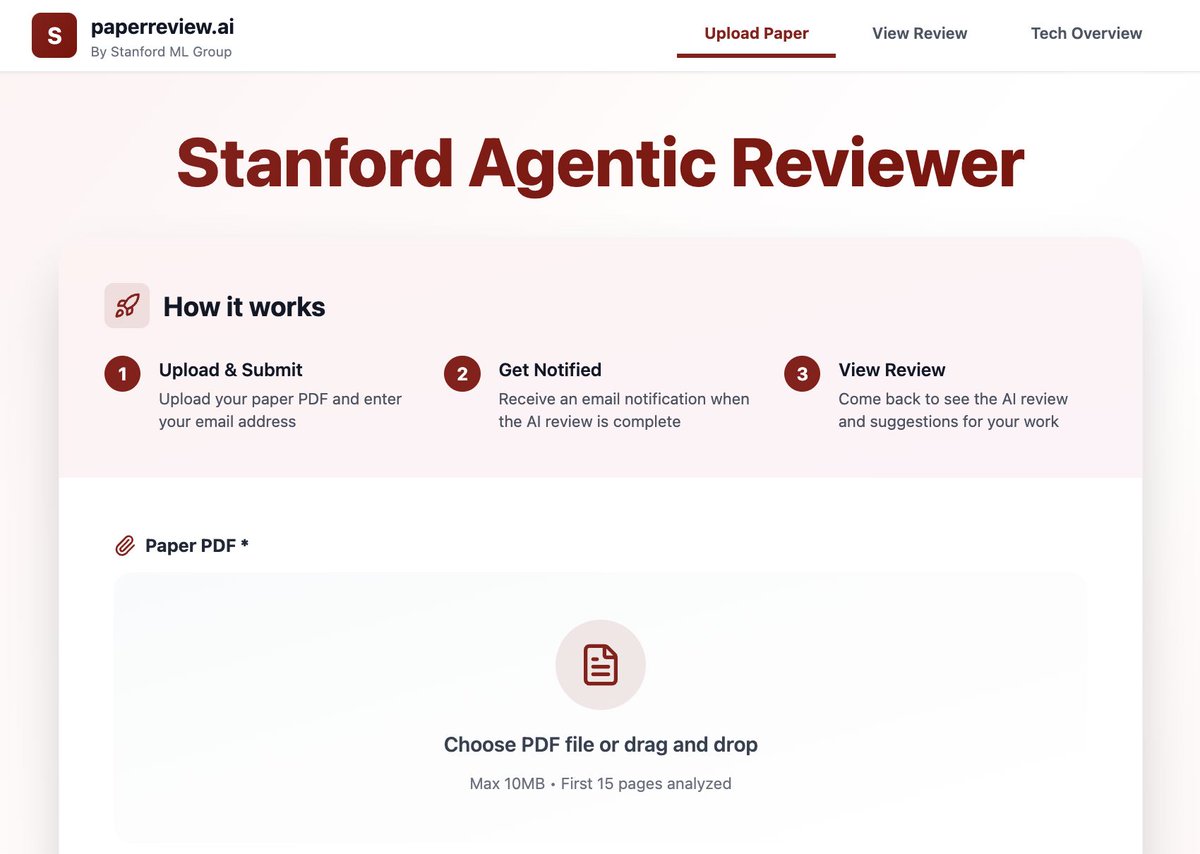
Releasing a new "Agentic Reviewer" for research papers. I started coding this as a weekend project, and @jyx_su made it much better.
I was inspired by a student who had a paper rejected 6 times over 3 years. Their feedback loop -- waiting ~6 months for feedback each time -- was painfully slow. We wanted to see if an agentic workflow can help researchers iterate faster.
When we trained the system on ICLR 2025 reviews and measured Spearman correlation (higher is better) on the test set:
- Correlation between two human reviewers: 0.41
- Correlation between AI and a human reviewer: 0.42
This suggests agentic reviewing is approaching human-level performance.
The agent grounds its feedback by searching arXiv, so it works best in fields like AI where research is freely published there. It’s an experimental tool, but I hope it helps you with your research.
Check it out here: https://t.co/n7ctnDilJJ
Ultraviolette has one assembly line.
Every bike they've ever sold came off that line.
Then they ship them to:
- Netherlands
- Switzerland
- Germany
- Belgium
- France
- Italy
- UK
Truly handmade in India, for the world.
Here's their Bengaluru factory where it all happens:
My college principal has no idea that his daughter is my girlfriend, but today fate decided to speedrun my funeral.
We were peacefully eating ice cream, minding our own business, when suddenly the principal, his wife, AND his son walked into the same ice cream parlor.
Bro, why was his whole family tree there? Did the universe schedule an intervention for me?
Me standing there like, “Yep, this is where my academic career, relationship, and soul all get rejected in one go.”
The principal starts interrogating me:
- Why are you here?
- Give your father's phone number
- When will you pay the college fee?
But then his wife saved us – she's my math professor!
But his 11-year-old son was judging me harder than my GPA.
All three of them had completely different personalities:
- Principal: strict and outdated
- Wife: modern and chill
- Son: judgmental
Honestly, the amount of difference between these three people needs an ANOVA test.
ANOVA is nothing but a statistical way to compare the means of three or more groups to determine if there's a significant difference between them.
Formula:
F = MSB / MSW
MSB = SSB / (k − 1)
MSW = SSW / (N − k)
SSB = Σ n (x̄ᵢ − GM)²
SSW = Σ (n − 1) sᵢ²
Where:
- F: F-statistic
- MSB: Mean Square Between groups
- MSW: Mean Square Within groups
- SSB: Sum of Squares b/w groups
- SSW: Sum of Squares Within groups
- k: Number of groups
- N: Total number of observations
MSB tells us how much the group means vary from the overall mean.
MSW tells us how much individual values vary within each group.
If F is big → Differences are too large to be random
If F is small → Differences could just be noise
Let's take an example:
A chips company claims their new flavor tastes better than tomato flavor and onion flavor.
They test 30 customers with tomato flavor (avg. rating: 7.2), 30 customers with onion flavor (avg. rating: 6.9) and 30 customers with the new flavor (avg. rating: 8.1). Standard deviations are 1.5, 1.0, and 1.3 respectively.
Sample sizes
- n₁ = 30
- n₂ = 30
- n₃ = 30
Sample means
- x̄₁ = 7.2
- x̄₂ = 6.9
- x̄₃ = 8.1
Standard deviations
- s₁ = 1.5
- s₂ = 1.0
- s₃ = 1.3
Question: Do the data show a statistically significant difference in mean ratings?
Let's solve step by step:
Step 1: Hypotheses
H₀: All means are equal
H₁: At least one mean is different
Step 2: Calculate Grand Mean (GM)
- x̄₁ = 7.2
- x̄₂ = 6.9
- x̄₃ = 8.1
- GM = (7.2 + 6.9 + 8.1) / 3
- GM = 7.4
Step 3: Calculate SSB
SSB = Σ n (x̄ᵢ − GM)²
+ 30(7.2 − 7.4)²
+ 30(6.9 − 7.4)²
+ 30(8.1 − 7.4)²
SSB = 23.40
Step 4: Calculate SSW
- SSW = Σ (n − 1) sᵢ²
- 29(1.5)² + 29(1.0)² + 29(1.3)²
- 143.26
Step 5: Calculate MSB and MSW
- k = 3, N = 90
- MSB = SSB / (k − 1)
- 23.40 / 2
- 11.70
- MSW = SSW / (N − k)
- 143.26 / 87
- 1.6467
Step 6: Calculate F-statistic
- F = MSB / MSW
- 11.70 / 1.6467
- 7.11
Step 7: Calculate Degrees of freedom
- df₁ = k − 1 = 2
- df₂ = N − k = 87
Step 8: Determine Critical Value
- Search F-Table on Google
- and check critical value for
- α = 0.05, df₁ = 2, df₂ = 87
According to the F-table, critical value is 3.10
Step 9: Decision
Since F = 7.11 > 3.10, reject H₀.
Final Answer:
Yes, there is a statistically significant difference in mean ratings among the three flavors (the new flavor differs from at least one of the others).
Congratulations 🎉, you've just learned ANOVA!
Bonus: Applications of ANOVA in Real Life & AI/ML
1. Manufacturing Quality Control: Companies use ANOVA to compare product quality from different production lines or machines to identify which ones need maintenance.
2. Marketing & A/B Testing: ANOVA helps compare effectiveness of multiple marketing campaigns, ad designs, or pricing strategies simultaneously.
3. ML Model Selection: Data scientists use ANOVA to compare performance of multiple machine learning models across different datasets to find the best one.
Really thoughtful piece written by @dionlim who’s seen previous cycles of boom and bust. I think this one has real staying power!
https://t.co/Duk9eD51in
I stole this idea and now use it with every single employee.
It’s the best illustration I’ve seen of teaching someone to be high agency.
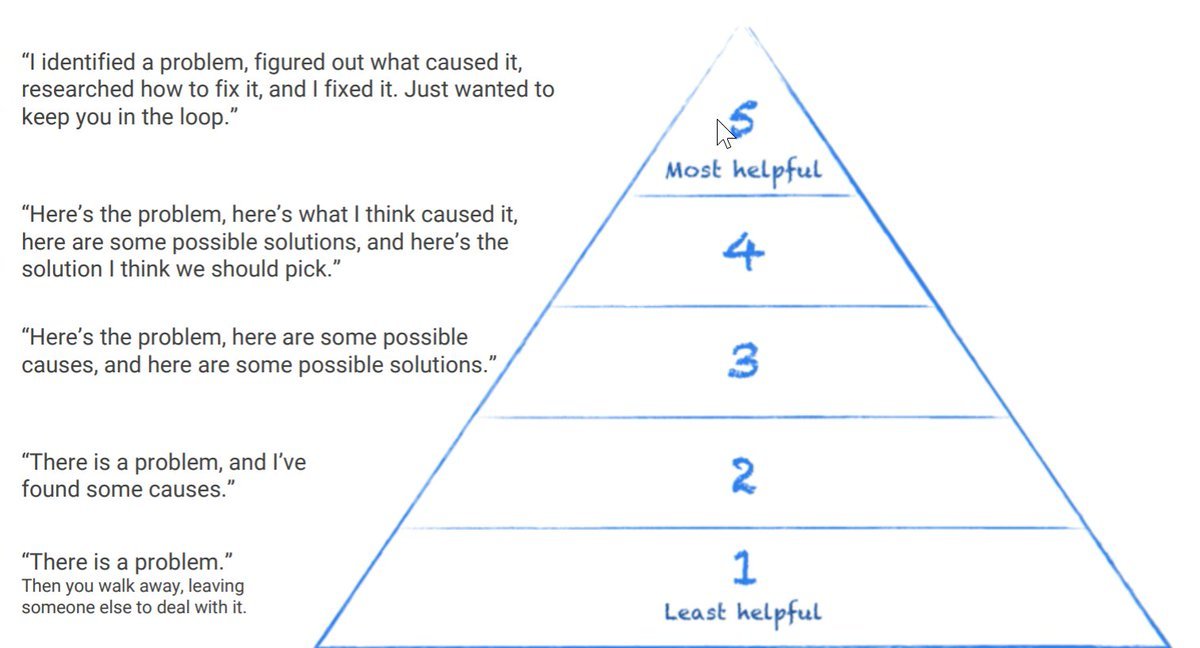
It says there are 5 levels of work:
Level 1: “There is a problem.”
Level 2: “There is a problem, and I’ve found some causes.”
Level 3: “Here’s the problem, here are some possible causes, and here are some possible solutions.”
Level 4: “Here’s the problem, here’s what I think caused it, here are some possible solutions, and here’s the one I think we should pick.”
Level 5: “I identified a problem, figured out what caused it, researched how to fix it, and I fixed it. Just wanted to keep you in the loop.”
Using this framework, here’s what I say to every new employee…
You will live at Level 4 from Day 1 and as we build trust you will rise to Level 5.
Being high agency doesn’t just mean tackling problems in this way. It means your entire way of working should be oriented to being a Level 4+ employee.
Plz feel free to steal it as well.
And ty @stephsmithio for the framework!
@pjr_tweets@FI_InvestIndia Yes that's true
I've also been told about that
But it was once a month that's was told to me, not sure if it's month or quarter