Here's something fascinating happening in the apartment market right now.
The cheapest, oldest apartments (Class C) are getting crushed right now.
But ONLY in cities that just delivered tons of new apartments.
Let me show you the numbers:
Denver: Class C rents down 13.9%
Naples: Class C rents down 13.5%
Austin: Class C rents down 13.3%
Phoenix: Class C rents down 10.5%
San Antonio: Class C rents down 7.2%
Dallas: Class C rents down 6.5%
What do all these cities have in common?
They just absorbed a massive wave of new apartments.
But here's the twist...
In cities that DIDN'T get a big supply wave?
Class C rents are actually RISING.
20 cities saw Class C rents go UP more than 3%.
19 of those 20 cities had supply BELOW the national average.
So what's going on?
It's basically musical chairs.
When a brand new luxury apartment opens up, where do those renters come from?
They don't appear out of thin air.
They move from slightly older apartments.
Those apartments now have vacancies. So they drop their rents to compete.
That pulls in renters from even older apartments.
And down the chain it goes.
Eventually it hits the oldest, cheapest apartments at the bottom.
And here's why they get hit the hardest:
People living in Class C apartments are already spending a huge chunk of their paycheck on rent.
To fill empty units, landlords have to cut prices A LOT.
Sometimes enough to attract people who couldn't afford market-rate apartments before.
It's like a waterfall effect.
The water (new supply) at the top pushes everything down.
But here's the important part:
This proves that building new apartments - even "luxury" ones - reduces rents all the way down the spectrum.
If it was just an affordability crisis, you'd see Class C rents falling everywhere.
In high-supply cities AND low-supply cities.
But we're not seeing that.
We're seeing a perfect split:
Lots of new apartments = falling Class C rents
Few new apartments = rising Class C rents
New supply at the top creates relief at the bottom.
Also: wages have been growing faster than rents for 3 straight years.
More people can afford apartments today than before.
The bottom line?
This is what happens when you actually build housing.
Supply works.
(Chart and analysis from Jay Parsons - one of the sharpest real estate economists out there)
RBC CEO McKay sees another 75-100 bps of BoC cuts, says "Every 25 bps of BoC rate cuts releases roughly $7 billion of cash flow into the Canadian economy. You can see why the Bank of Canada wants to get rates down..."
Laneway suites are now appraising around 20% over their construction cost.
Just heard this directly from Equitable Bank (the only Schedule I bank lending on laneway house construction) in a podcast interview we're doing on their new laneway financing:
https://t.co/UtQdqlfkQn
#ICYMI EllisDon has been involved with building retrofits for many years, but larger-scale office building conversions have become part of the company’s playbook quite recently as conditions in the #CRE market have put a focus on this type of project.
https://t.co/gNYerKYLtW
Scotia & National Bank & every Mortgage Financing Corp. like MCAP & First National have true Variable Mortgages if the Bank of Canada raises it's rate your payment goes up if the BoC lowers it's rate your payment goes down
But if your Variable Mortgage is at other Banks: NO
3/
Lots of prospective sellers waiting to list once the BoC cuts rates again in September. Inventory is coming. Fixed rates down to 4.5% might not be as bullish as some sellers think.
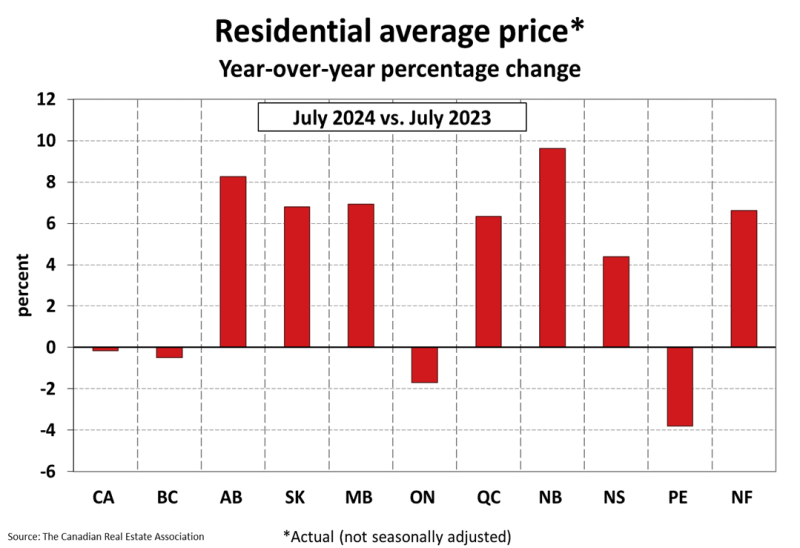
If you ever wanted an image to show how much Ontario and BC skew the national average - every other province can post big price gains, and a small decrease in Ontario & BC will pull Canadian average down:
A common thing that people overlook about paying off their mortgage early
is that your mortgage payments literally end (duh), and they end exponentially (its not linear) faster because of how compounding works
Early on, paying 10% of your mortgage principal off knocks off 17% of your mortgage payable. Tax free.
(you make 2.5 years worth of payments in one shot, and you knock off about 5 years of payments at the end....on a 25 year amort, 5% interest)
AND THEN, this frees up 30%+ of your cashflow 5 years sooner to invest
Everything compounds, even debt repayment.
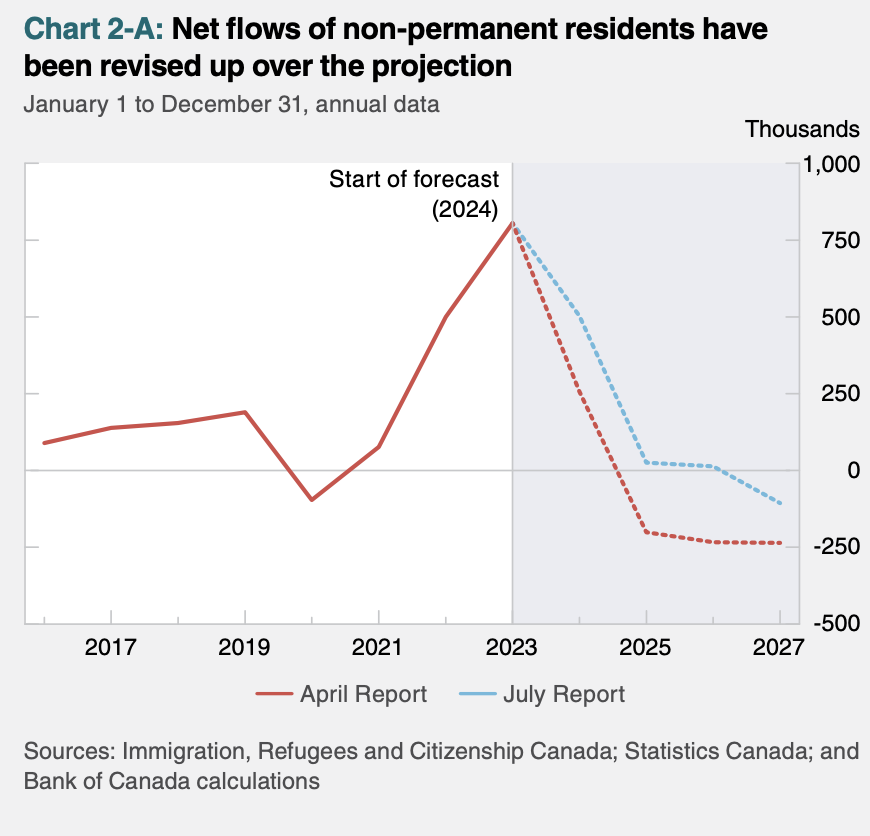
Bank of Canada again discusses non-permanent residents' role in their economic model for Canada moving forward:
"NPRs represented 6.8% of the population at the beginning of April—much higher than at the time of the March announcement—and the share is expected to continue rising over the near term. This suggests that it will take longer for planned policies to reduce NPR inflows to achieve the 5% target"
If rent growth does not keep pace there will be a lot of bankrupt real estate owners.
If it does well there will be quite a few rich owners.
Time will tell
The Brokers Hold All The Cards
They are the ones that come across great deals, and they choose who to bring the next opportunity to.
You can cut a broker short and save $10k to ruin your reputation, or you can overpay them and unlock a lifetime of terrific off-market deals.