THE “VALUE OVER CURRENCY” MANIFESTO‼️
Your labor is being devalued by design.
It’s time to fight back. 🛠️📉
As a worker, I realized that "saving money" was a losing game. No one told me the system was rigged against my hard work—until I looked at the charts.
I stopped just earning a paycheck and started storing value. 💎
My strategy for freedom:
• Crypto for the asymmetric upside 🚀
• ETFs & Commodities for long-term stability 🏗️
• CFDs for tactical opportunities 📊
I’m here to document my journey from the factory floor to financial sovereignty—and to help others escape the same cycle.
#1: Store Value. Don't just store money. 🛡️
Join the movement. Let’s break the rules of the worker’s life together. 🌍✨
#Investing #FinancialFreedom #StoreValue #WealthPreservation
OIL
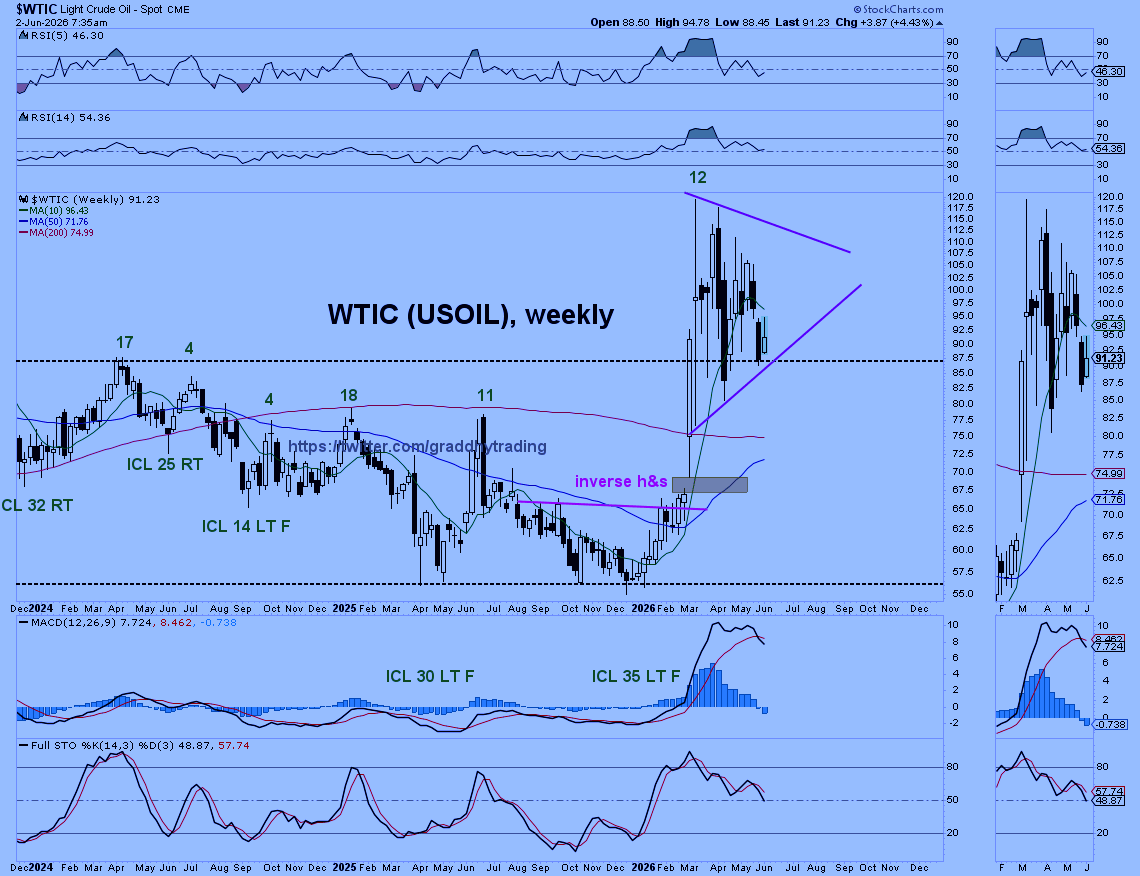
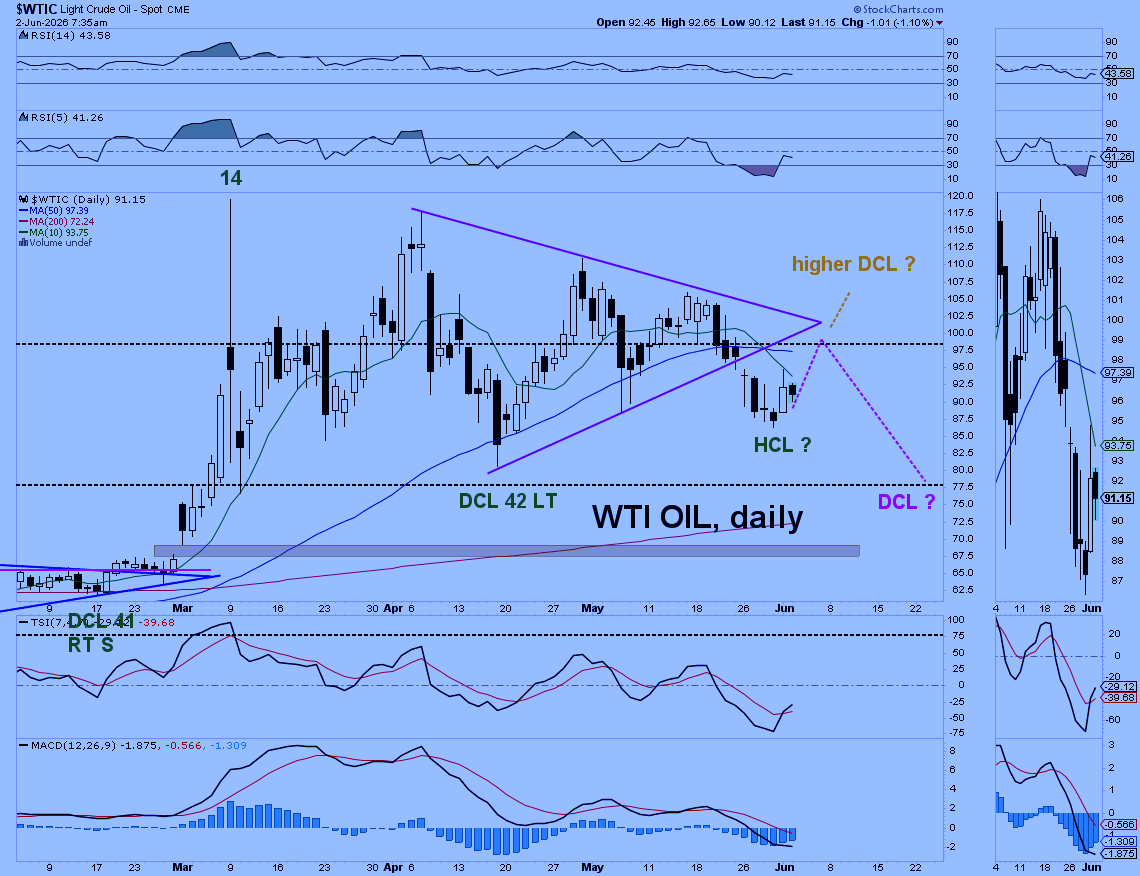
Oil has now broken below daily triangle so a further pullback in the ETFs is now possible. Oil is probably moving up from HCL now so the question is now if this DC rolls over pink route for a failed DC, or goes higher orange route.
USD
Higher low holding at support after MA penetration and orange breakout. Daily cycle count unclear with dual lows at 97.63 now testing weekly swing low potential. Watching breakout and backtest holds above 100.64 trigger for continuation confirmation.
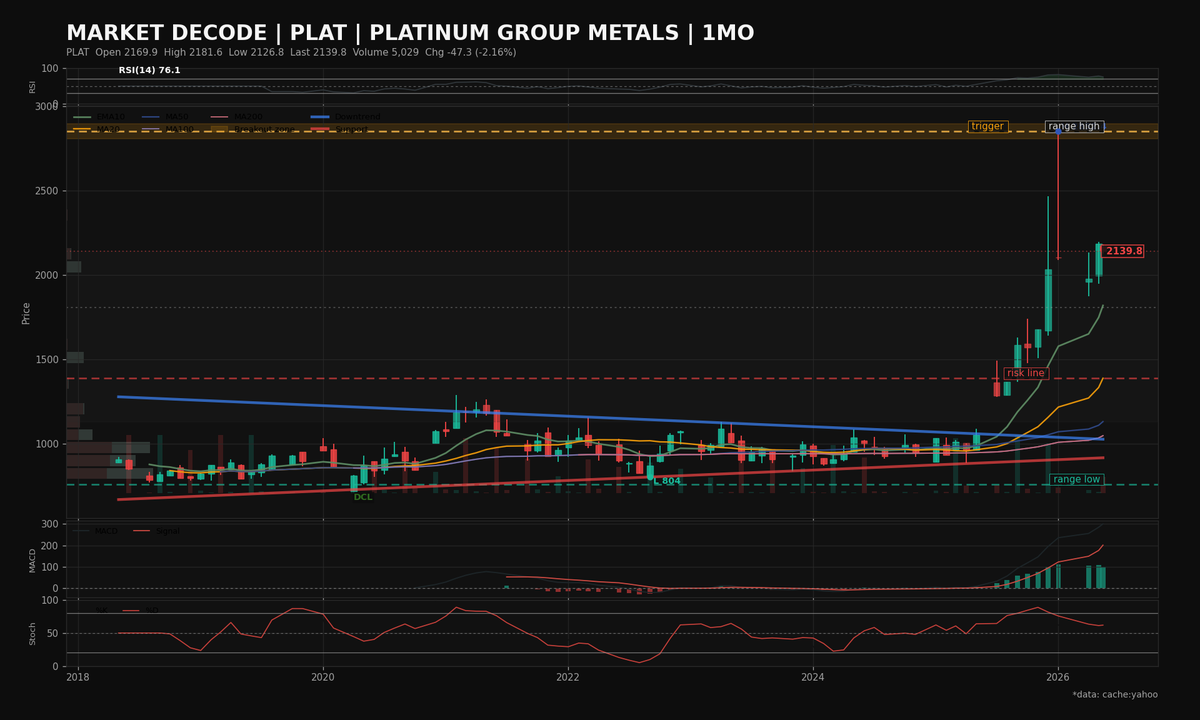
PGM Basket still looks constructive as a retest after breakout. Triggers: XPTUSD 2852, XPDUSD 2170, PLAT 2852, PALL 197. I want group confirmation before treating it as active. 1/5
TODAY
Daily context shows USD attempting a breakout higher amid a broader bullish market vibe in sectors like clean tech and AI. Watch for confirmation through key levels before any shift, as a rollover remains possible if follow-through fails.
A Day 3 recap of the war (with focus on Iranian strategic narrative):
🔹CENTCOM confirms that U.S. strikes on Iranian missile bases used B-1 bombers. The U.S. is trying to dismantle Iran’s fortified underground missile facilities.
🔹Iranian reports suggest Tehran has rejected multiple mediation attempts. Tehran’s apparent assessment is that it can sustain high-intensity conflict for 60-90 days, making early ceasefire acceptance strategically disadvantageous.
🔹Ali Larijani explicitly framed the war as a contest of endurance, stating Iran – unlike the United States – is prepared for a prolonged conflict. The objective appears to be altering Washington’s cost-benefit calculations over time.
🔹Iranian strategic discourse increasingly describes the conflict as a “war without rules” or a “game without red lines,” signaling deliberate unpredictability intended to reshape deterrence dynamics after leadership decapitation failed to halt Iran’s response.
🔹A related concept emerging in Iranian messaging is operating “one level above” adversary actions, i.e., delivering escalatory responses even to indirect threats in order to redefine escalation thresholds.
🔹This logic appears reflected in Iranian strikes toward British facilities in Cyprus, interpreted domestically as retaliation for London allowing U.S. access to Diego Garcia despite not joining offensive operations.
🔹One of the most consequential developments was the loss of three U.S. F-15 aircraft, initially claimed by Iran as shootdowns but later attributed to friendly fire from Kuwaiti air defenses, highlighting the growing risks of coalition battlefield congestion.
🔹Analysts close to Iranian security circles describe a layered missile strategy: first targeting radar systems, then launching low-cost drones and missiles to exhaust air-defense interceptors before deploying advanced weapons later.
🔹Iran’s continuous missile launches therefore appear designed less for immediate damage and more for attritional depletion of U.S. and Israeli defensive systems over time.
🔹Uncertainty over the size and dispersal of Iran’s advanced missile stockpiles may explain intensified U.S. and Israeli strikes against underground facilities and missile infrastructure.
🔹President Pezeshkian expanded emergency authorities across ministries and provincial administrations to ensure continuity of governance, deepening wartime decentralization already initiated before the conflict.
🔹Israel’s targeting pattern has become clearer: strikes now heavily focus on intelligence ministries, police headquarters, IRGC district bases, and internal security institutions, suggesting systematic erosion of regime coercive capacity.
🔹Parallel strikes against western border regions and Kurdistan province have fueled Iranian fears that external actors may seek to enable insurgent infiltration as an alternative to direct ground invasion.
🔹Iran has responded by striking areas in Iraqi Kurdistan while increasing pressure along its borders, indicating concern about a potential indirect ground dimension to the war.
🔹Iran-aligned Iraqi resistance factions – including Kataib Hezbollah, Harakat al-Nujaba, and Kataib Sayyid al-Shuhada – continue their operations on a limited scale, opening another attritional front against U.S. forces.
🔹Hezbollah formally confirmed its participation, firing rockets toward Haifa, though involvement remains limited due to degraded capabilities and domestic political constraints in Lebanon.
🔹Iranian sources claim prewar coordination between the Quds Force and regional partners defined phased entry into the conflict, suggesting activation of the “axis of resistance” is proceeding gradually rather than simultaneously.
🔹The IRGC has reportedly begun enforcing a de facto closure of the Strait of Hormuz, warning commercial vessels against transit and threatening missile strikes. This is a major escalation targeting global energy flows.
🔹Simultaneous attacks on Gulf energy infrastructure, including an Aramco facility near Ras Tanura and gas infrastructure in Qatar, indicate an effort to raise global energy prices and increase economic pressure on Washington.
🔹Iranian authorities signaled zero tolerance for dissent. IRGC intelligence warned that actions undermining stability during wartime would be treated as collaboration with the enemy, implying harsh internal repression.
🔹Negotiation signals remain contradictory. While Trump suggested a potential deal was possible, Larijani publicly rejected negotiations, reinforcing Tehran’s view that talks can occur only after strategic calculations shift.
🔹Iran’s sustained missile tempo against Israel appears designed to impose psychological as well as military pressure, keeping populations under prolonged shelter conditions while conserving firepower for a longer conflict.
🔹Overall, Day 3 shows the war evolving into simultaneous military, economic, psychological, and regional escalation far beyond bilateral confrontation.
🔹The key question now is whether expanding proxy involvement and energy warfare will force external powers into deeper participation or instead accelerate pressure for negotiated containment.
---
P.S: Not sure how long I can keep doing this!
🚨 THE PETRODOLLAR DEAL MAY BE UNDER REAL THREAT.
A Saudi official says: The United States abandoned us and redirected its air defense to protect Israel.
“They left all the Gulf states that host American military bases at the mercy of Iranian strikes.”
That statement alone explains why this moment is bigger than just a war.
Since the 1970s, the deal between the US and Saudi Arabia was simple.
After the oil crisis, the US and Saudi leadership reached an agreement:
• Saudi Arabia would price oil only in US dollars.
• Oil revenues would be reinvested into US Treasury bonds and dollar assets.
• Other Gulf countries followed the same model.
In return:
• The US would provide military protection.
• Advanced weapons systems.
• Security guarantees against regional threats.
That agreement created what we now call the petrodollar system. Because oil is traded in dollars, every country needs dollars to buy energy.
That constant demand keeps the US dollar strong globally.
Now fast forward to recent events.
In late 2024, Saudi Arabia was negotiating a formal defense treaty with the United States.
That deal slowed down and was eventually dropped due to political disagreements and regional tensions.
Then during the 2025 Iran-Israel escalation, something very important happened.
The US reportedly asked Gulf countries, including Saudi Arabia, to transfer air defense systems like THAAD interceptors to help defend Israel.
That was the first visible sign that Gulf countries were becoming more cautious and less willing to fully align.
Now in 2026, the situation has escalated further. Iran began striking US linked assets and bases inside Gulf countries.
Missiles and drones targeted locations in countries that host American military infrastructure.
Even if these countries were not leading the war, they became targets because US forces operate from their soil. And this is where the Saudi statement becomes critical.
If Gulf leaders feel that:
• They host US bases.
• They take the risk of retaliation.
• But when attacks happen, US air defense is prioritized for Israel instead of protecting Gulf infrastructure.
Then the core foundation of the security deal gets questioned.
The petrodollar system was never just about currency.
It was built on security trust. Oil in dollars in exchange for protection.
If that protection looks uncertain, then the political reason to stay fully tied to the dollar weakens over time.
This does NOT mean oil suddenly stops being priced in dollars tomorrow. But gradual erosion will start:
• A larger share of oil trade settled in yuan or other currencies.
• Gulf sovereign funds reducing their exposure to US Treasuries.
• Diversification of defense partnerships beyond Washington.
• Energy contracts structured in mixed currencies.
None of this requires a dramatic announcement. It happens slowly.
Today roughly 20% of global crude trade is already done in non dollar currencies.
China has been pushing for yuan based settlement for years.
Gulf countries have been building stronger ties with China and Asia, both economically and strategically.
If Gulf leaders feel exposed in this war, that process can accelerate.