Economists argue it is less distorting. Because once fixed, it is capitalized, and has no additional incentive effects. It's a standard argument in economics for at least 200 years. This is not controversial, because the "supply" of land is fixed.
A "good tax" in comparison to what? Theoretically I can see its merit as a rough user fee for the abutting street, storm sewers, etc. (And, of course, I don't see why we seniors get all the breaks we do.) But what better justification does it otherwise have over, e.g., sales tax or VAT?
@CurtisEyiogbe@VanceGinn Sure, same reason Lenin opposed trade unions.
Makes the revolution less likely, by buying off the most militant opponents with side payments.
If the tax is bad, get rid of the tax, don't buy support from the wealthiest by exempting them.
And I meant to put "C", not "2"
. @VanceGinn and I have argued THREE THINGS are all true.
1. Land tax, if fixed and rational, could be a good tax
2. Actual property tax is raised arbitrarily in many jurisdictions. Classic ex post recontracting. Bad tax
2. Exempting seniors makes bad tax WORSE, not better
Interesting that this seems to be such a hard argument to make.
1. Property taxes in Florida (some other states) suck.
2. BUT (!) eliminating some property taxes, for some (rich) people makes it worse, not better.
Keep trying, Vance!
As I hope you know, I agree with you about the need to eliminate property taxes. My goal is to keep pushing the North Star to what I believe will work to achieve this after studying different proposals, seeing them in practice, and evaluate economic effects.
My concern with this amendment proposal in Florida is how the proposed approach picks winners and losers in the tax code through homestead exemptions without spending restraint at the state and local levels.
This would not reduce the burden of government spending through different taxes as overall taxes go up for everyone.
This hasn’t worked in Texas with higher and higher homestead exemptions from $15,000 in 2015 up to $140K in 2025. Property taxes continue to go UP.
The problem is excessive state and local spending because it must be paid somehow.
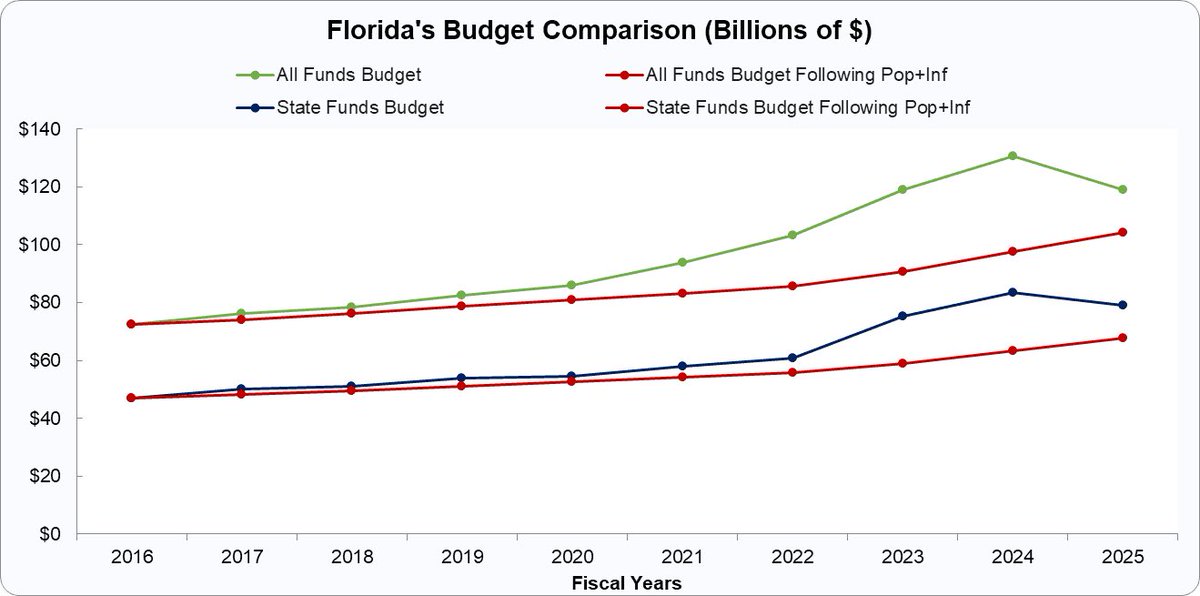
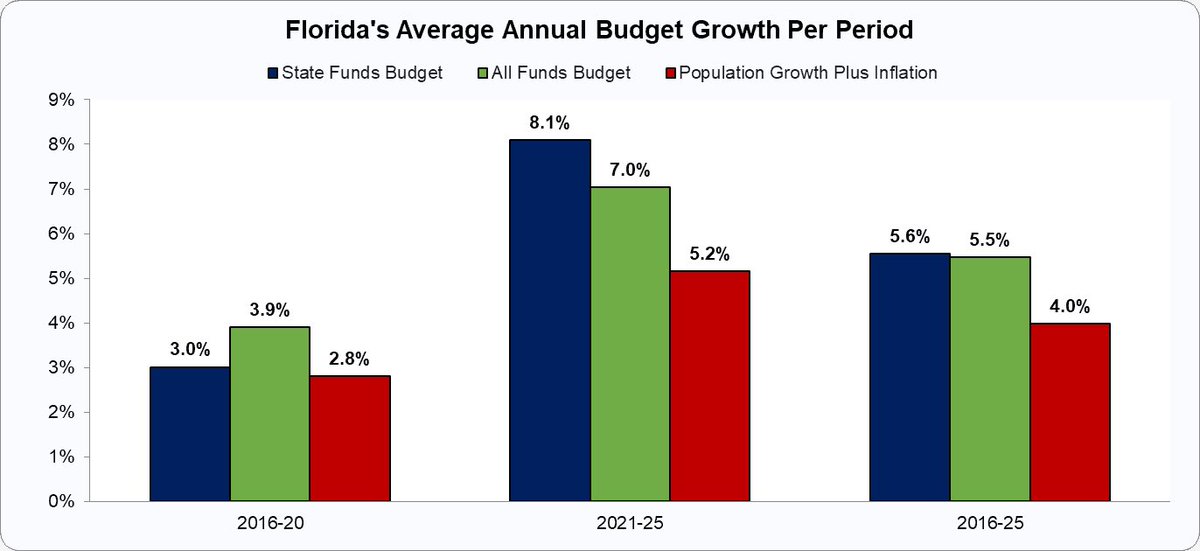
This amendment proposal can be improved by better spending restraint at the state and local levels. The figures below show how the state budget in state funds and all funds (state funds plus federal funds) have grown faster than population growth plus inflation for much of the last decade.
Eliminate property taxes!
See Budget data: https://t.co/YM1dT2q75D @RonDeSantis
Hell, most LEGISLATORS cannot read a bill, if you account for attention span.
"This is boring. Ima send some text photos of my winkie to my female staff..."
@Nolan_Mc To be fair, I think Trump is both more serious, and more likely to act effectively. Bernie is just singing an old song he knows well, a tradition.
Okay uhh... well now that we are 50% shareholders in this whole AI thing, we must object even more strongly to the data center moratorium—also backed by Sanders!—which would shrink our profits. (This points to the incoherence of the Sanders position.)
@mungowitz Concur in part, dissent in part. Orwell elides how the humans suborned the pigs, that's the part the movie develops (upscale shoppers buying artisanal eggs!!) and the end might caution people against "real animalism was never tried" arguments.
@James_Treadwell They think the point of university is not to be educated in your sense but to be certified so as to get a higher status job. If it no longer guarantees that then it's not worth it. In functionalist terms that is what universities now do and it's what most people pay for.
Also a large increase in PRICE over this period.
Universities charged high prices, and offered less education value. Instead, a proliferation of "Dept. of Indignation Studies" offerings.
People won't pay $250k for 4 years of ideological screeching about privilege.
This decline tracks the “great awokening,” which was led by universities. Regaining the public’s trust should be their top priority. But so far, with exceptions such as Dartmouth and Vanderbilt, they have responded too slowly and too timidly.
@Noahpinion I think there's some serious confounding there--a bunch of jobs that didn't require degrees now require them, and a bunch of other jobs that required non-BA degrees (such as nursing) now require BAs.
@CurtisEyiogbe I have heard it. But that's because I talk to philosophy professors a lot.
For economists, as you know, the tendency is "toward competition." Unless the state blocks entry, or regulates price-cutting.
Well...NO. NOT "like that."
Actual economics, not economics taught by a philosophy professor who knows nothing at all about economics.
You aren't trying very hard.