6/ We treated 11 patients on trial, 9 of whom experienced neurological improvements after IV CAR T cell therapy and went on to receive further intracranial doses of CAR T cells. Seven of the 11 patients showed overall shrinkage of their tumors, 4 of whom had overall reductions in tumor volume over 50%. The tumor responses fit a bell-shaped curve (Gaussian distribution). From the perspective of change in tumor size, there were no outliers.
@jeremypeterrich It was quite funny listening to her come backs after Cat kept speaking truths! eg arguing that a potential wrong centre pass was the reason diamonds went downhill
We’re thrilled to announce the publication of SpliceVarDB: A comprehensive database of experimentally validated human splicing variants in @AJHGNews 🧬
📖 https://t.co/FOSq1c4ega
#splicing#GeneChat
Phenotypes associated with ERG germline mutations will continue to grow. Anything vascular and developmental. Keep an eye out for cnLOH and low mutant allele freq at the ERG locus. We have functional assays for VUSs so pls contact us if you think you have something interesting.
Finally able to share our work “Germline ERG haploinsufficiency defines a new syndrome with cytopenia and hematological malignancy predisposition” in full (well at least pt1). It is out as a First Edition preprint in Blood https://t.co/G40PNqz7Wg
@leaseM_87 There were a couple of questionable calls in the third quarter and that is when the momentum really shifted, disappointing they weren’t able to recover
Exciting news for pediatric healthcare professionals! 🌟 Check out the latest clinical updates and surveillance recommendations for DNA replication-repair deficiency syndromes.
Congratulations IRRDC Co-Lead, Dr. Anirban Das🧬https://t.co/6zv0bbrByp
We have a new review article published in #DNARepair journal. Everything you ever wanted to know about FANCM, and its role in processing replication forks, R-loops, ICL traverse, and recombination.
Written by @LaraAbbouche and @RBDdoesDNA and... me!
https://t.co/GSbifRKl3A
Oceanian ancestries are among the most under-represented in reference databases and genomic research. Which is a shame, because to understand if this variant TRULY causes a relatively rare disease, we really needed to know how often it occurs in these populations /6
We are delighted to publish guidance for applying segregation (PP1 & BS4) and phenotype specificity (PP4) evidence to variant classification - both important approaches to implicate the variant's locus in disease. Special thanks to Les and the whole team! https://t.co/jvxg1i4Tmi
@conciergemaree I really love it, I think about this often as someone still playing netty (and not that great at it haha), meanwhile my teenager has stopped playing, and most of her team mates, it makes me sad as they are missing out on what is a fun and active hobby!
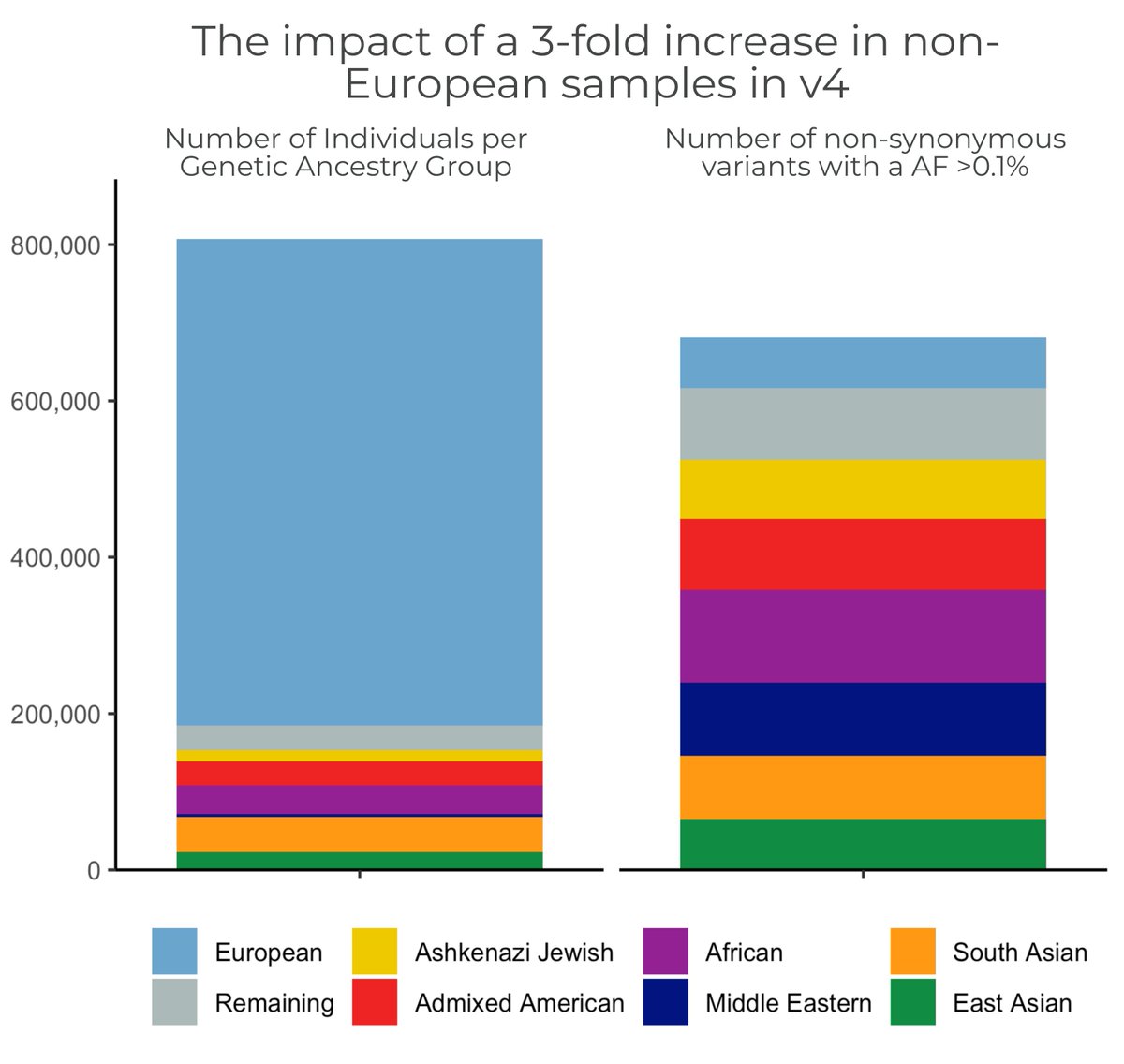
The #gnomAD team is proud to announce the release of gnomAD v4! The v4 dataset includes 730,947 exomes & 76,215 genomes, which is ~5x larger than the v2 & v3 releases combined, & includes nearly 120K indivs of non-European genetic ancestry https://t.co/YKXIFlZwSi #ASHG23 (1/11)