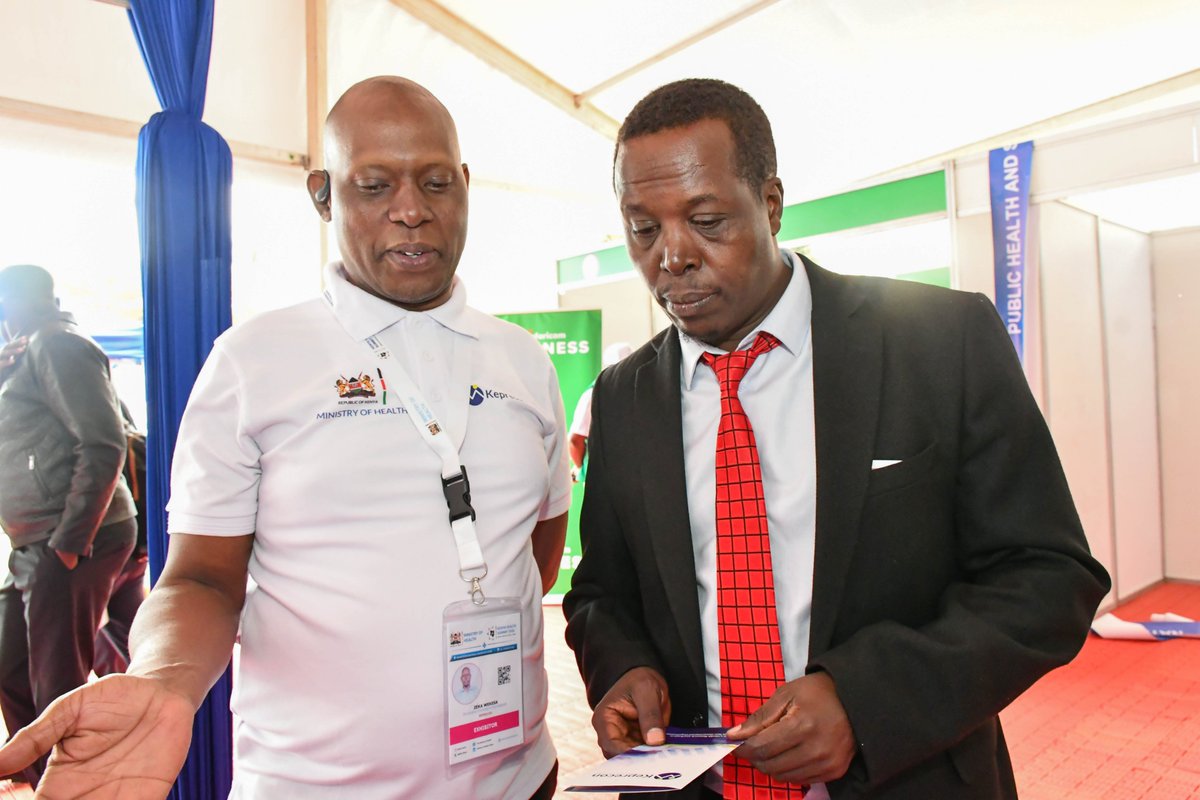
MY REFLECTIONS ON THE KENYA HEALTH SUMMIT 2026
I listened keenly to the Presidential Town Hall at the Kenya Health Summit yesterday. There are achievements in the health reforms that deserve acknowledgement. However, a Health Summit must not become a SHA praise forum. It must also provide an honest account of what is not working and, most importantly, what will be done about it.
The fundamental purpose of any social health insurance system is simple: to enable people to access healthcare when they need it without being pushed into financial hardship.
That must therefore be the test by which we judge SHA—not merely the number of people registered, the number of claims processed or the billions reportedly paid to hospitals.
My concern is that many Kenyans are still experiencing significant out-of-pocket expenditure, while healthcare providers continue to face serious financial strain.
There are several issues that the Government must confront honestly:
1. The cost of healthcare to households
Universal Health Coverage should progressively reduce catastrophic health expenditure. Yet Kenyan households are simultaneously carrying multiple statutory deductions and taxes that reduce disposable income, including the Housing Levy and SHA contributions.
The SHA contribution model also deserves continued debate. Contributions are tied to income, while the benefits available to members are defined and limited. We must continually ask whether this financing model is equitable, sustainable and actually protecting households from catastrophic expenditure.
2. The benefit package remains inadequate
The gazetted SHA tariffs and benefit packages contain significant exclusions and limitations. For many patients, particularly those requiring outpatient, chronic, specialised or prolonged treatment, the amount payable by SHA may not meet the actual cost of care.
When the insurance benefit ends, the disease does not end. The patient pays the difference.
That is not yet universal financial protection.
3. Digital Health Authority challenges
Digitisation can greatly improve healthcare, and I support appropriate digital transformation. But technology must facilitate healthcare—not become another barrier to accessing or paying for it.
Providers continue to report system interruptions, difficulties with pre-authorisations and claims rejected for reasons they consider unjustified. A healthcare worker may examine a patient, make the diagnosis, provide treatment and submit a claim—only for a digital system to reject payment.
Every rejected claim represents work already done, medicines already used and costs already incurred by a healthcare facility.
4. The NHIF legacy debt remains unresolved
Hospitals treated patients in good faith under NHIF. That debt did not disappear when NHIF was replaced by SHA.
We have repeatedly been told that claims are being verified. Meanwhile, some facilities are reportedly being asked to accept discounts or “haircuts” on legitimate historical claims.
These debts must be settled.
Failure to pay providers has real consequences: facilities downscale services, suppliers go unpaid, healthcare workers lose jobs and, in some cases, facilities close.
Ultimately, it is the patient who suffers.
5. SHA itself is accumulating unpaid obligations
Government should publish, transparently and regularly, how much SHA has collected, how much has been claimed, how much has been approved, how much has been rejected, how much has actually been paid and how much remains outstanding—broken down by public, faith-based and private facilities.
Transparency builds confidence.
6. PHC and chronic and critical illness financing remains inadequate
For FY 2026/27, Parliament allocated KSh19.1 billion to the Primary Healthcare Fund and KSh4 billion to the Emergency, Chronic and Critical Illness Fund.
We must ask whether these amounts realistically correspond to the healthcare needs of more than 50 million Kenyans.
Cancer, renal disease, cardiovascular disease, diabetes, major trauma and other chronic and critical illnesses are expensive. Universal Health Coverage cannot be achieved by promising comprehensive care while inadequately financing the funds expected to purchase that care.
The Government should therefore resist the temptation to measure SHA’s success by how often we say, “SHA is working.”
The more challenges a system has, the less useful it becomes to repeatedly defend it with slogans.
The better approach is to say:
This is what is working.
This is what is not working.
This is what patients are experiencing.
This is what healthcare providers are experiencing.
And this is what we are going to fix.
I want SHA to succeed because Kenya desperately needs a functional social health insurance system.
Criticism of SHA is therefore not opposition to Universal Health Coverage. It is a demand that Universal Health Coverage actually works.
A successful SHA will ultimately be judged not by the applause at a summit, but by something much simpler:
Can a Kenyan fall sick, receive the healthcare they need, have the healthcare provider paid promptly and fairly, and return home without being pushed into poverty?
That should be our measure of success.
Dr Simon Kigondu
Immediate Past President
@KenyaMedics_KMA
We’re at the Kenya Health Summit 2026, KICC Grounds - Nairobi having conversations around health innovation, collaboration, and what it takes to get impactful health solutions from ideas to the communities that need them. Of great interest to the participants we are interacting with is the Kenya Market Intel Hub. #AlignKenya #HealthInnovation #AlignConsortium #HealthInnovation
@19_michellini@KRACorporate Good question. Some medical devices qualify for VAT and customs duty exemptions but obtaining the approvals can be a lengthy process
WINNER OF THE HUMAN RIGHTS DEFENDER AWARD!
Congratulations to @LarryMadowo for winning the human rights defenders award, an award recognizing Individuals or movements who, within the past year, have demonstrated outstanding courage in addressing and challenging current human rights issues.
#HRDAwardsAt10 #MeettheHRDs #CourageHasAName