Open MarineTraffic right now. Search the Strait of Hormuz. Watch the timelapse from 28 February to today. You will see a waterway that carried 40 tankers per day go empty in 72 hours.
This is what the end of a global supply chain looks like in real time, and anyone on Earth with a phone can watch it happen.
The numbers behind the animation. On 1 March, Kpler recorded three tanker transits. Three. Down 86% from the 2026 daily average of approximately 19.8 million barrels per day. By 7 March, Windward maritime intelligence logged only 2 to 3 visible non-Iranian crossings per day. Today, the Strait that carries 20% of the world’s oil is functionally a ghost corridor.
Over 700 non-Iranian vessels are queued or idling on both sides of the Strait, including 334 crude tankers. They sit in formation off Fujairah, off Khor Fakkan, off Bandar Abbas, waiting for insurance that does not exist, clearance that cannot be guaranteed, and safe passage through a corridor where 31 autonomous IRGC commands hold independent firing authority.
Some ships are attempting to run the gauntlet in the dark. MarineTraffic and Windward have identified approximately 30 vessels that altered their AIS signals, went dark, or spoofed their positions in the past week. The Shenlong, a Greek-operated tanker carrying one million barrels of Saudi crude, switched off its transponder on 4 March, transited the Strait invisibly, and reappeared on tracking systems near India. The Pola and Run Chen 2 attempted similar manoeuvres. MarineTraffic reported new satellite navigation interference creating false crossing signatures, with 1,650 vessels flagged for GPS manipulation on 7 March alone, a 55% increase week over week.
This is the maritime equivalent of driving a highway at night with your headlights off, no insurance, no licence plates, through a corridor where 31 independent gunmen have been told to shoot at anything that moves and none of them answer to the same commander.
The ships going dark are not evidence the Strait is open. They are the most powerful evidence that it is closed. No vessel transits a functioning waterway by making itself invisible. No captain switches off the system designed to prevent collisions unless the risk of being seen exceeds the risk of being hit. The dark transits are acts of commercial desperation, not commercial normalcy.
Oil dropped from $119.50 to $91.88 on de-escalation hopes. The timelapse did not change. The 700 ships did not move. The 30 dark runners did not become 300. The seven P&I clubs did not reinstate. The 31 commands did not stand down. The price responded to words. The Strait responds to spreadsheets. And the spreadsheets have not moved.
Open MarineTraffic. Watch the timelapse. Count the ships. Then ask yourself why oil is priced as if they are moving when you can see with your own eyes that they are not.
Full analysis in the link.
https://t.co/eMrt5qYYst
The manufacturing of a Tomahawk missile, like many advanced military technologies, involves a variety of minerals and materials used in its components. While specific BOM details are often classified.
Iranian forces have hammered dozens of US-linked sites in the Gulf since escalation began—airbases, ports, logistics hubs. The US encirclement of Iran turned into targets.
Biggest hits: massive smoke at 5th Fleet HQ in Bahrain, key over-the-horizon radars in UAE/Qatar/Jordan, heavy penetrations in Kuwait (plus 3 friendly-fire F-15 losses), repeated damage to Erbil and Kurdish sites. Farthest strikes reached Cyprus (Akrotiri), Jordan (As-Salt), and Saudi Prince Sultan base—Iran denies Saudi involvement.
Iraqi proxies showed minimal confirmed impacts. Despite heavy counterstrikes on Iran, this isn't one-sided: critical infrastructure took blows, sparking economic chaos and panic in host countries.
Satellite imagery shows rapid expansion of Russian UAV and UCAV production infrastructure at the Yelabuga Special Economic Zone, in collaboration among: China, Russia, Iran, and North Korea.
https://t.co/5DjpRzSMsF @CSISKoreaChair
Billions in CapEx vs. decentralized Hotspots. Guess which one scales faster?
@helium_mobile is turning telecom economics upside down, building a next-gen MNO without massive infrastructure costs.
@HettingClaus explains how 👇
🔗 https://t.co/9IjTPgsO68
🌙 ☀️ Wow, DermaDAO looksmaxxers.
Our super early bird batch of 300 Moon & Sol Drops is almost sold out — <10 of each left!
Thank you for the overwhelming enthusiasm and trust in our vision. This is a massive milestone: the very first step toward truly decentralized, community-driven skincare science with DermaDAO.
Grateful for this incredible community 🤍
Grab one of the last bottles + earn extra BioXP now: https://t.co/YcmxZWH18n
Join the Discord for upcoming alpha!
LFGlow
What are U.S. foreign policy experts worried about in 2026?
Here are the emerging and intensifying conflicts they’re watching next year, according to our annual survey: https://t.co/PDgCVAhm5w
26 PREDICTIONS FOR 2026
From Bitcoin to DeFi, Layer 1 and Layer 2 blockchains, Artificial Intelligence, and much more
The Galaxy Research team is back with predictions for the year ahead (and also an assessment of our predictions last year) 👇
Drones are going to fully replace aircraft for Earth imaging within the next 5 years. The future will be only autonomous capture from drones and satellites.
@LayerDrone working with @SpexiGeospatial is the first network that will prove this, others will follow, but we are the first.
Did you know that when you open google or apple maps over modern western cities, you are looking at imagery from airplanes not satellites? Airplanes flying in grids over these cities chugging fuel and resources.
This has been the status-quo to get better imagery than satellites can provide... UNTIL US! The game has changed.. no stopping it now.
Fully standardized drone imagery produced by off the shelf drones, and coordinated by crypto-economics is the future of high-resolution aerial data which is the fuel for world models and geospatial ai. In hindsight this will be obvious.
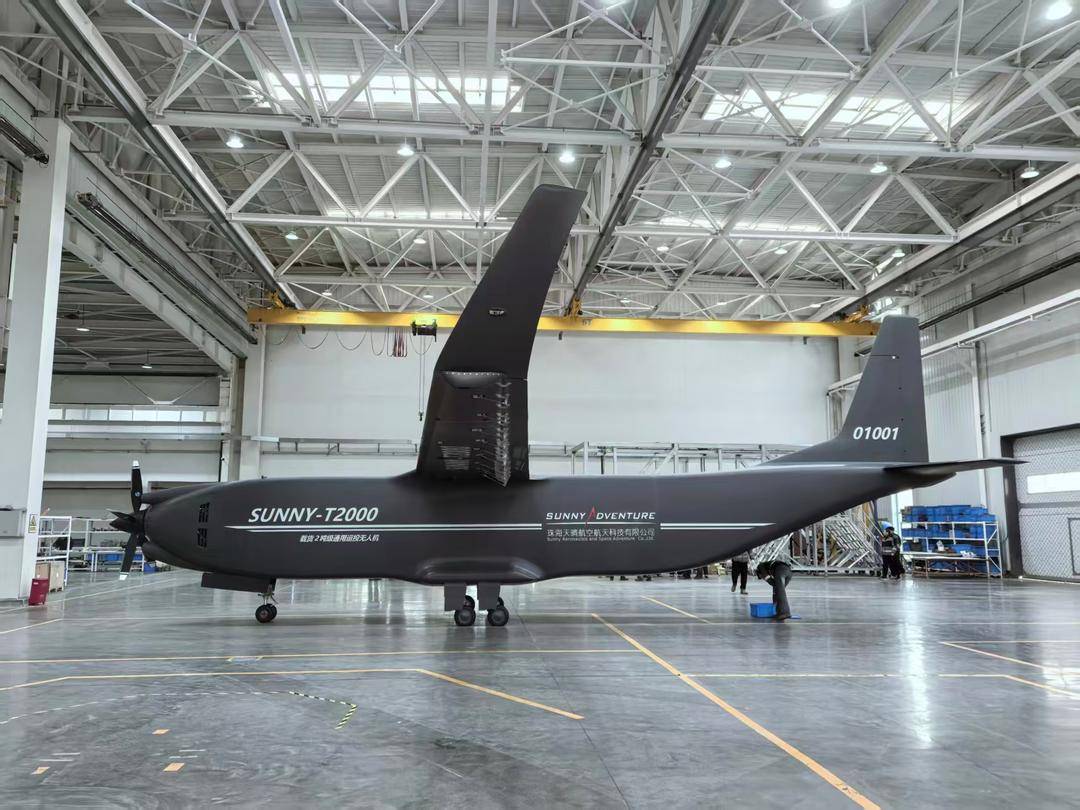
A Chinese cargo drone, the SUNNY-T2000, from Shenyang.
It has a 15-cubic-meter cargo hold, the drone can carry up to 2 tonnes of cargo and has a range of more than 1,000 km at full load.
What a beast.
For those affected by the severe flooding in Indonesia, Starlink is providing free service to new and existing customers through the end of December. We’re also working with the Indonesian government to rapidly deploy terminals and restore connectivity to the hardest-hit areas on Sumatra → https://t.co/JQolMx7I0J
So what if Bitcoin enters bear market territory? This image below shows the true Bitcoin heartbeat from the last decade.
BUY THE $BTC DIP. I know I am.