eTIMS credit notes confuse very many people.
As a result, they get themselves into unnecessary trouble with KRA. I do not want you to be one of them.
Let us say you deliver goods worth Sh1 million to a customer and issue a proper eTIMS invoice.
You have made a sale. You recognize the revenue and pay the VAT to KRA.
Lakini customer ni gaidi. Three, four, five months pass. He never pays you.
You call. You send reminders. You follow up. Gaidi imekataa kulipa.
Then yule jamaa wako, who is always full of ideas, gives you a clever idea.
- Why not go to eTIMS & cancel the original invoice by issueing a full credit note? After all, you never received the money.
You rush and issue a credit note. Now the sale is cancelled, and you claim back the VAT you had paid KRA.
But that is a very expensive mistake.
A credit note is not meant to erase a genuine sale simply because the customer has refused to pay.
It is meant to correct errors. Such as returned goods, incorrect price, incorrect quantity, wrong amounts, wrong customer PIN, etc.
A bad debt is not an invoicing error. You already delivered goods to him. He never returned the goods. That is not an error. Si ndio?
So, what should you do?
- Do not cancel the genuine sale by issuing a credit note merely because the customer has failed to pay.
- Keep evidence of your attempts to recover the debt, including demand letters and follow-up correspondence.
- Establish that the debt is genuinely irrecoverable.
- Write off the bad debt and claim the deduction & VAT.
A bad debt is not a cancelled sale.
Know the difference and save yourself from time wasting inquiries from KRA.
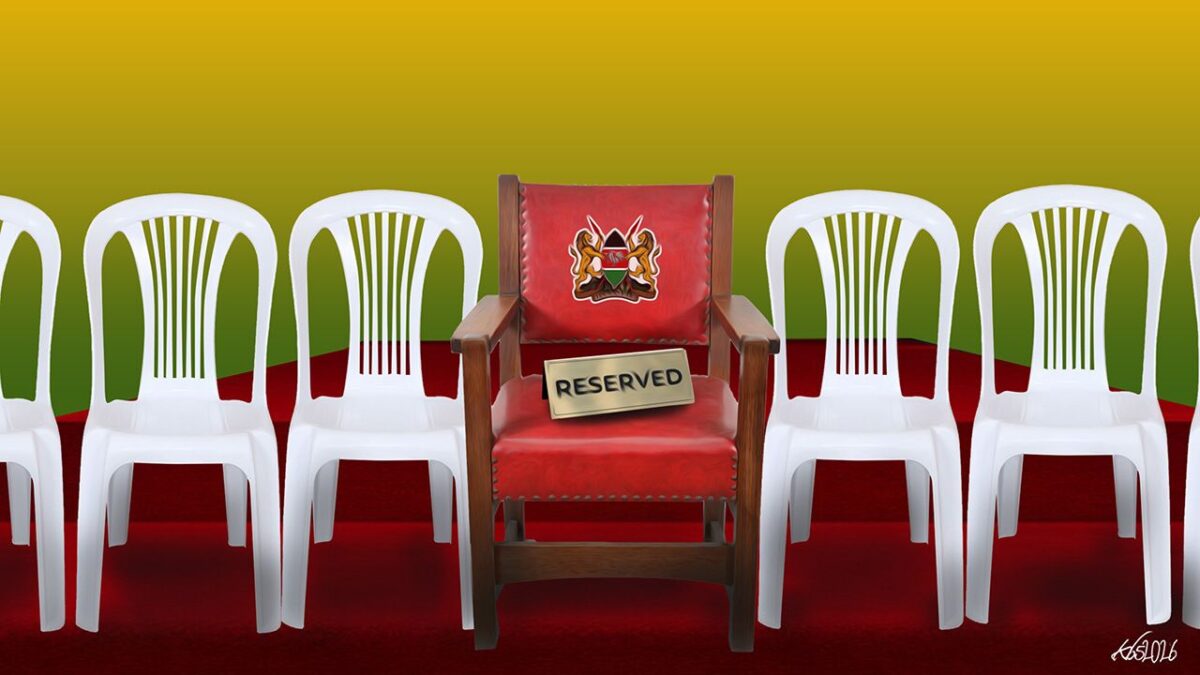
The High Court has ruled that personal branding of projects funded by public resources violates the Constitution.
The court has ordered the removal of politicians’ names and personal branding from publicly funded projects
1/3
Penny-Wise, Pound-Foolish: Kenya's Insurance Tax on Tourists Will Cost Us the 5 Million Dream.
Kenya has just done something no serious tourism destination in the world does. From 5th October 2026, every non-Kenyan arriving in this country must buy a travel health insurance policy through eCitizen, issued by a Kenyan-licensed insurer, before they board their flight. Every adult. Every child. Every grandmother on a once-in-a-lifetime safari. And airlines have now been asked to police it at check-in.
❗️Let me be blunt. This is a tax wearing a stethoscope, and it is aimed squarely at the industry that earns this country more foreign exchange than almost anything else.
The tourist was never the problem. The international leisure tourist is the best-insured person who will ever walk into a Kenyan hospital. The German couple in Diani, the American family in the Mara, the British retirees in Watamu they arrive with comprehensive cover from Allianz, AXA, Bupa or their credit card provider, cover that includes medical evacuation and repatriation, which no eCitizen policy will match. Tour operators already insist on it. Their own governments tell them to buy it.
These visitors do not queue at Coast General or Kenyatta National Hospital. When they fall ill, they go to Aga Khan, Nairobi Hospital or Mombasa Hospital, pay with a card, and claim later. They have never been a burden on our public health system.
Not once in my 30 years in this industry have I heard a hospital administrator complain that safari tourists were bankrupting the wards so what problem is this solving?
Nowhere in the circular does the government make any provision for a visitor's existing policy. The question is not whether the visitor is insured. The question is whether the visitor has paid us.
Nobody else does this.
The government will point to Schengen. That comparison collapses on contact. Europe asks visa applicants to show cover from any compliant insurer. Georgia, which brought in its rule this year, accepts Georgian or international policies. Even Cuba accepts foreign insurance and only sells local cover to those who arrive without it.
Kenya does none of this. Kenya says: whatever you have, buy ours as well.
The only real precedent is Zanzibar, a single island and look at who has quietly walked away from mandatory visitor insurance? the United States, Aruba, Costa Rica. They learned what we are about to learn the expensive way.
Count the damage. The double payment a family of four from Frankfurt already insured now pays four extra premiums. Not one. Four, because the rule says every traveller, "including a minor", must be individually covered. Families are the backbone of our beach business. We just made them pay a penalty for bringing their children.
The 90-day trap. Each policy runs for 90 days to match the eTA. Fine for a safari but what about the long-stay European winter visitor in Malindi and Kilifi, the snowbirds who fill our coast for four months and keep entire villages employed through the low season? More paperwork, more cost, more reasons to choose other destinations.
The airline gatekeeper. Airlines are being asked to verify compliance at check-in for every non-exempt passenger. Every airline station manager in Doha, Dubai, Istanbul, Addis Ababa and Amsterdam now carries the risk of fines for carrying an "inadmissible" passenger. What do airlines do with risk? They deny boarding. A tourist turned away at Heathrow does not reschedule. He goes to Cape Town and they will forever hate Kenya .
The retroactive sting. The requirement applies to all arrivals "irrespective of the date on which tickets were issued". Tour operators in Europe sold Kenya packages for this winter at prices that did not include this cost. Who absorbs it? Our DMCs, our hotels, or the client who now feels ambushed. Every one of those outcomes damages trust in Brand Kenya.
Kenyan seers once advised sending the brightest youth to study colonial systems and reclaim sovereignty. Instead, those educated elites moved into the master's house.
Alienated by an education that prioritized individual status over community, they now rely on private solutions, gated walls, private schools while public systems collapse.
Did the Kenyan elite become the very obstacle to the independence they were meant to secure?
Analysis: https://t.co/EjE4zgAG95
@ObyObyerodhyamb@WMutunga@ReginaldOduor@jnyairo@wmnjoya@m_ogada@TheRealSmitta
Tonight, I am going to bed with a heavy heart.
There are days when you return home and realise that your own problems are not really problems.
There are days when you see how some children are surviving, and you wonder how you can possibly complain about your own life.
Today was one of those days.
Her name is Millicent Riziki.
She is 16 years old.
She is a Grade 10 student at Njiru Secondary School in Njiru Ward, Kasarani Constituency.
Millicent has an identical twin sister, Rehema.
They were born together.
They grew up together.
They should have been sitting in the same classroom, sharing books, laughing over school stories and worrying about the same exams.
But life took them in different directions.
Rehema dropped out of school before her sister.
She now works as a househelp and does casual work as a mama fua.
Millicent is still holding on.
Barely.
Her parents are unemployed.
The family of eight lives in terrible conditions, with substance abuse making an already desperate situation even worse.
Millicent has been at home because of KSh17,000 in school fees arrears.
I went to see her at their home, near Ngong River.
I did not find her sitting idle.
I found this 16 year old girl teaching a neighbour's child how to count from one to fifty.
Just imagine that.
A child who should be in a classroom was sitting outside it, helping another child learn.
She should have been holding her school books.
Instead, she was trying to make sure another little child could count.
And perhaps that tells you everything about Millicent.
She has every reason to give up, but she hasn't.
She told me how painful it is to remain at home watching her friends and classmates go to school every morning.
She sees children she knows she can compete with academically sitting in class while she stays behind because her parents cannot raise the fees.
Her request to me was not complicated.
She did not ask for a phone.
She did not ask for clothes.
She did not ask for a comfortable life.
She simply said:
“Help me go back to school. I will give you my weekly report.”
That sentence has been disturbing me. I have broken down while praying for her.
Because she is only 16.
At 16, a child should be thinking about examinations, friendships, dreams and what she wants to become.
She should not be calculating how poverty is slowly taking her future away.
And around her, the danger is real.
Many children have already dropped out of school.
Some teenage girls are pregnant.
Some have simply surrendered to the circumstances they were born into.
Millicent is still fighting.
And I don't want us to wait until she becomes another statistic.
I can personally raise KSh3,500 towards the KSh17,000 tomorrow when I visit Njiru Secondary School.
I am asking you, my brothers and sisters, friends and well wishers, to help me raise the balance and get this child back into class.
PayBill: 303030
Account: 2052935582
Mpesa: 0725 081 218
I also appeal to the Kasarani MP @KarauriR to look at Millicent's case personally.
Please, let us not begin by asking where her parents are registered as voters.
A hungry child does not understand constituencies.
A child who has been sent home does not understand political boundaries.
She only understands that her friends are in school and she is not.
I was told that when her mother previously sought bursary assistance, she was informed that only constituents qualify.
But these people live here. They are Nairobians.
They live near Ngong River.
Whatever their political registration may be, Millicent is still a Kenyan child whose education matters.
Tonight, I keep thinking about that little girl counting from one to fifty with a neighbour's child.
She is still trying to learn.
She is still trying to teach.
She is still dreaming.
Please, let us not allow poverty to decide who Millicent becomes.
She does not need our pity.
She needs a chance.
Let us put her back in school.
I have been sampling churches like a man looking for a wife, and I have finally settled on the Catholic church in my village, Kingeero.
The church is old. When it rains, you have to choose whether to listen to the homily or move your chair away from the leaking roof.
Even the walls look like they are holding on through prayer alone.
Two weeks ago, Padre announced a fundraiser to rebuild it.
“Bring whatever God has blessed you with,” he said. “If you sell tomatoes, bring tomatoes. If you run a hardware shop, bring nails or iron sheets. Whatever you have, bring it.”
Today, people arrived carrying cash, tomatoes, cement, nails and roofing sheets.
Then we saw a coffin at the church entrance.
Everybody stopped. In Kingeero, we do not hold funerals on Sundays.
So whose emergency was this?
Someone spotted Irungu WaBeth, our village coffin maker, sitting quietly in the corner.
People began looking at him as if he had brought a menu to a wedding.
But Padre had said, “Bring whatever God has blessed you with.”
Well, God had blessed Irungu with coffins. 😭
After Mass, the auction began. Tomatoes went. Cement went. Iron sheets went.
Finally, Irungu dragged his coffin to the front.
The entire church fell silent.
Even the people who usually cough through the service recovered instantly.
Then Irungu’s friend Kimani stood up.
“I offer KSh 15,000. I’m buying the coffin for Padre.”
Padre sprang up so fast his chair nearly followed him.
“KSh 20,000!” he shouted. “I’m buying it for Mama Karanja, the CWA chairlady.”
Mama Karanja stood up holding her chest.
“Padre, I am still very much alive! KSh 30,000. Let the Catechist have it!”
The Catechist looked at her like he was about to remove her from the prayer group.
He immediately offered more money and passed it to someone else.
That coffin travelled around the church faster than the collection basket.
Every new bid was made on behalf of a person who was absolutely not ready to receive it. 😂
Finally, one wealthy elder stood up.
“KSh 100,000,” he said. “I’m buying the coffin for Irungu WaBeth.”
Irungu accepted his coffin, loaded it up and took it straight back to his shop at Kingeero Shopping Centre, smiling all the way.
The man people laughed at raised the most money for the church, kept his stock, and went home without spending a shilling.
Bring whatever God has blessed you with, Padre said. Irungu listened carefully. 😂
But there is a lesson in it too: the very thing people look down on you for may be what God uses to lift you up.
My wife's cousin has had this BMW for more than 20 years now , it has never given him problems. He has told me that it's time to hold on to this fixable cars for dear life . The newer versions are designed to fail within 10 years just long enough to make it to the third world countries.
You are not poor ,the system just has you in a perpetual buying cycle ,if they had a way to make land expire ,they would . Since they can't they are coming up with seedless,parented seed and water rights . Dnt let them take your food from you .
I would recommend every body to make some lumpsome money ,not a lot but enough. Enough to pay off your debts ,school fees for a year ,rent for some months and all other expenses catered for .After you have made this money I want you to take time off , dnt go on holiday or the village just stay where you live and slow down . Dnt think about starting business or any project, just eat sleep and go for walks .
This gives you an aerial view of the rat race , you will listen to your neighbors waking up at the crack of dawn and coming back at night, you will watch stress consume them as they chase numbers on a screen . You will learn that life is not all about making more . Only then will your life begin .
@WashiraX The Itax system replaced ITMS in 2014. KRA owns and operates it. TATA Group designed/ developed and implemented the Itax system. And.. yes, the Tata Chemical read MagadiSoda, is part of Tata Group. The simply want to replace the system....just like NHIF <>SHA/SHI
Kenyans never see the bigger picture when a PsyOp is being pushed.
They figured out that just pushing tribal narratives was not working as they wanted. So, they went for a bigger gun.
One that will first whip your emotions to the level that they want.
So, they have started with foreigners and before you know it, they will narrow down to tribes.
“Ooh, this and that tribe does more business here than the locals. Warudi kwao.”
This script is as clear as day.
Since you will be emotionally charged, you will just react rather than think.
I am very invested in the psychological manipulations being played by this regime.
@moneyacademyKE Mtu wa karen na mtu wa Umoja kulipa same land rates is diabolical.
Somebody needs to look at lands rates being a factor of land value in specific ares....
The image of Jomo Kenyatta as a pan-Africanist is Britain's best psyop.
Jomo Kenyatta played the British game of riding on the wave of perception better than the British themselves (a Kenyan on this app equated it to the main character in the movie Forrest Gump). Kenyatta was a moderate who rarely condemned the Kenya Land and Freedom Army (Mau Mau) because he knew Africans were not going to follow the path of constitutionalism, rather than armed struggle, as he was suggesting.
Once Kenyatta became president, Malcolm MacDonald, the last colonial governor, became British High Commissioner and sanitized Jomo's image as an "old bear" (MacDonald's words) who was harmless. Then in 1965, Kenyatta launched a sessional paper on "African socialism" because he knew that announcing he was capitalist would get him into trouble with the rest of the continent. Jaramogi Oginga Odinga even explained it in "Not Yet Uhuru":
"Everyone advocates 'African socialism' but in the case of most [Kenya] party and government leaders this has become a cloak for the practice of total capitalism. These politicians want to build a capitalist system in the image of Western capitalism but are too embarrassed or dishonest to call it that. Their interpretation of independence and 'African socialism" is that they should move into the jobs and privileges previously held by settlers."
Apart from Not Yet Uhuru, the best two books about this problem are by Wunyabari Maloba, a very underrated but phenomenal Kenyan historian.
In recent weeks I've been talking of how oppression in Kenya is very intimate. In public, Kenyans will talk of big policy, laws and infrastructure that sound very very progressive, but when you get into the intimate details, of what we eat, where we sleep, walk and how we travel, the cannibalism is everywhere. It's the water we drink.
The British perfected this art of keeping beautiful lids of policy and speeches on dustbins of filth and rot. That's what the monarchy and their tabloids still do in Britain.
Take for example, education. In the 1920s, educated Kenyans got tired of bs education given to so few, that they started establishing their own schools. Africans started sending their children to African schools, and church schools lost up to 90% of their students. So what did the colonial government do?
It wrote an ordinance in 1931 with these laws:
1. No African can start a school without getting a licence from the colonial government. To get that license, you had to meet requirements designed to frustrate
2. The board of the African independent school must have 3 members from the Local Native Councils. Who were on the councils? Missionaries and colonial appointed chiefs. In other words, the school would get a missionary on the board, the same missionary who campaigned for your school to be shut down
3. The school could not have a board meeting without informing the colonial office
4. After the meeting, the minutes must be submitted for approval to the who? The colonial office.
So essentially, Africans were being set up to never build their own schools. But instead of openly saying that, the colonial office came up with ordinances in the name of "quality."
In the end, Africans decided they won't bother seeking permission and just build the schools anyway. Dedan Kimathi said that people were tired of education being rationed like medicine. In the oaths for the Kenya Land and Freedom Army, people swore not to implement the Beecher report, one of those gaslighting reports where, again, the British pretended to respond Africans' demand for more secondary schools, but in the same report, said schools without government funding (of course they didn't use the term "independent schools,") will be shut down.
*
Kenyans don't get this truth about the elites and the imperialists whom Kenyan elites serve. The elites hate us. But they don't want us to revolt, so they con us. They tell us that their laws, policies and education in Kenya are for our own good, but in reality, they are for gatekeeping.
Like with CBC, Jogoo House told us about the global market, the latest industrial revolution and no exam obsession. But when I looked under the lid, I said that CBC is gatekeeping and under-educating through more bureaucracy.
Under CBC, if your child is sick and misses classes for a week, and there was an assessment during that week, the school tells KNEC that your child didn't do the assessment, and you might not know that until your child finishes grade 9 and they can't get a certificate. Before, KNEC didn't need to be in your child's bizness until end of Std 8 and form 4. But you wanted the government to love your children like a parent. The way we used to be told under Moi that KANU ndiye baba na mama.
I warned of this, but what did Kenyans tell me? "No...the government doesn't want us to always think of exams." You actually believed GoK cares for your children. But we love intimacy, we love GoK being in everything we do, so we eat sandwiches and send photos for GoK.
This simple truth is difficult for us to get, because our school system trains us to be civil servants. Yes. So even if educated Kenyans don't all join government, they're all inclined to justify government policy and call for its implementation, as opposed to reading the political reality and saying: this is why our elites and their imperialist bosses maintain this rot inside the beautifully decorated dustbin of our British colonial state. #CBCisheretostay