Fostering human connection with OurStories (Stanford/Cornell CS, Meta, Trulia/Zillow, Netscape/AOL). I love teaching AI, mentoring tech startups, and building.
We are entering an age of effortless creation. Yes, that means AI created content (including AI slop) will proliferate. But my hope is that human created digital content will also increase (assisted by tools that lower the friction of creation). I also hope that we end up creating more content (human or AI generated) that fosters human to human connection, understanding, and empathy.
Are you a software engineer who wants to become an AI Engineer? Read on, and please share. The "𝗔𝗜 𝗘𝗻𝗴𝗶𝗻𝗲𝗲𝗿 𝗔𝗰𝗮𝗱𝗲𝗺𝘆" series offers milestones and live discussions to guide our journey to becoming proficient AI engineers.
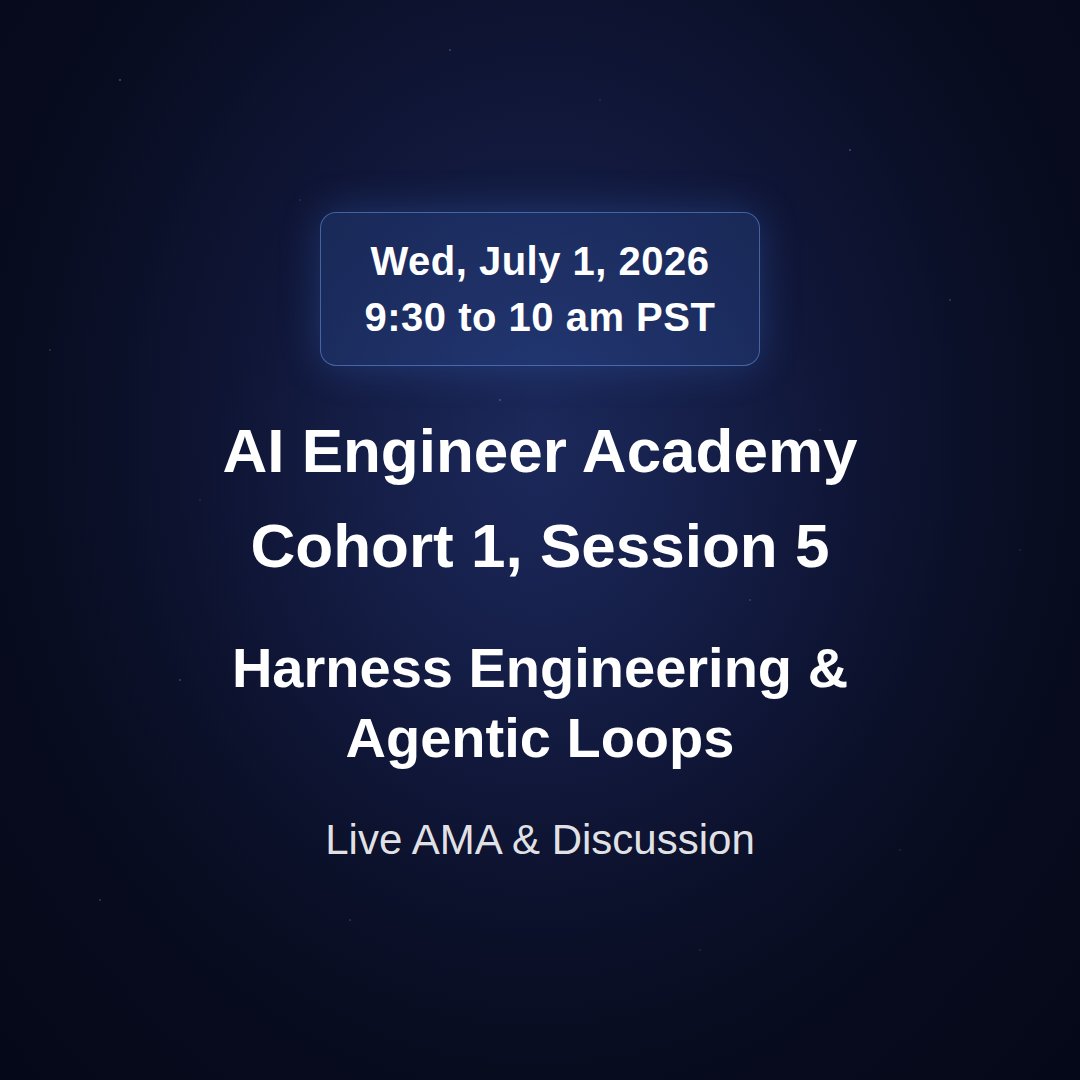
📌 𝗔𝗜 𝗘𝗻𝗴𝗶𝗻𝗲𝗲𝗿 𝗔𝗰𝗮𝗱𝗲𝗺𝘆, 𝗖𝗼𝗵𝗼𝗿𝘁 #𝟭, 𝗣𝗼𝘀𝘁 #𝟱
📌 𝗠𝗶𝗹𝗲𝘀𝘁𝗼𝗻𝗲 𝟱: 𝗛𝗮𝗿𝗻𝗲𝘀𝘀 𝗘𝗻𝗴𝗶𝗻𝗲𝗲𝗿𝗶𝗻𝗴 & 𝗔𝗴𝗲𝗻𝘁𝗶𝗰 𝗟𝗼𝗼𝗽𝘀: 𝗦𝗰𝗮𝗳𝗳𝗼𝗹𝗱𝗶𝗻𝗴 𝗳𝗼𝗿 𝗟𝗼𝗻𝗴-𝗥𝘂𝗻𝗻𝗶𝗻𝗴 𝗔𝗴𝗲𝗻𝘁𝘀
In Milestone 4, we learned to build, evaluate, and connect agents. But a model alone isn't enough. The harness (prompts, tools, memory, and control logic) and the loop that drives the agent over long horizons matter just as much. This milestone covers that scaffolding.
✅ 𝗦𝘁𝗲𝗽 𝟭) 𝗙𝗼𝘂𝗻𝗱𝗮𝘁𝗶𝗼𝗻: 𝗪𝗵𝗮𝘁 𝗜𝘀 𝗮 𝗛𝗮𝗿𝗻𝗲𝘀𝘀 𝗮𝗻𝗱 𝗪𝗵𝘆 𝗟𝗼𝗻𝗴-𝗥𝘂𝗻𝗻𝗶𝗻𝗴 𝗔𝗴𝗲𝗻𝘁𝘀 𝗡𝗲𝗲𝗱 𝗢𝗻𝗲: Read Anthropic's "Effective Harnesses for Long Running Agents" and its companion "Harness Design for Long Running Apps." They explain why agents that run for minutes or hours, not seconds, need deliberate engineering for context compaction, error recovery, and state management.
✅ 𝗦𝘁𝗲𝗽 𝟮) 𝗛𝗮𝗿𝗻𝗲𝘀𝘀 𝗗𝗲𝘀𝗶𝗴𝗻 𝗶𝗻 𝗣𝗿𝗮𝗰𝘁𝗶𝗰𝗲: Read OpenAI's "Harness Engineering: Leveraging Codex in an Agent-First World" for a practical look at building harnesses around coding agents in a real agent-first workflow.
✅ 𝗦𝘁𝗲𝗽 𝟯) 𝗔𝗴𝗲𝗻𝘁𝗶𝗰 𝗟𝗼𝗼𝗽𝘀: 𝗥𝗲𝗹𝗶𝗮𝗯𝗹𝗲 𝗪𝗼𝗿𝗸𝗳𝗹𝗼𝘄𝘀 𝗧𝗵𝗮𝘁 𝗟𝗲𝗮𝗿𝗻 𝗢𝘃𝗲𝗿 𝗧𝗶𝗺𝗲: Every agent runs on a loop: observe, decide, act, repeat. "How to Solve Problems of Autonomous Agentic AI Workflows" covers common failure modes (drift, runaway loops, lost context) and how to keep a loop on track. LangChain's "Continual Learning for AI Agents" shows how the best loops learn from each iteration and improve with every run.
✅ 𝗦𝘁𝗲𝗽 𝟰) 𝗣𝘂𝘁𝘁𝗶𝗻𝗴 𝗜𝘁 𝗧𝗼𝗴𝗲𝘁𝗵𝗲𝗿: 𝗔𝗻 𝗔𝗹𝘄𝗮𝘆𝘀-𝗢𝗻 𝗔𝗴𝗲𝗻𝘁 𝗬𝗼𝘂 𝗖𝗮𝗻 𝗠𝗲𝘀𝘀𝗮𝗴𝗲: Study the "Hermes Agent Masterclass" (architecture similar to OpenClaw): the harness and loop working together as an always-on agent that lives on a server, runs continuously, and reaches you over Telegram or Slack. Send it a task from your phone, and it works on its own and messages you back.
Do the above and comment below with your questions.
📌 𝗟𝗶𝘃𝗲 𝗔𝗠𝗔: 𝗪𝗲𝗱𝗻𝗲𝘀𝗱𝗮𝘆, 𝗝𝘂𝗹𝘆 𝟭, 𝟵:𝟯𝟬 𝗮𝗺 𝗣𝗦𝗧 Comment below for the Zoom link and bring your questions.
📌 𝗟𝗶𝗻𝗸𝘀 (𝗳𝗼𝗿 𝘀𝘁𝗲𝗽𝘀 𝗮𝗯𝗼𝘃𝗲):
𝗦𝘁𝗲𝗽 𝟭 𝗟𝗶𝗻𝗸𝘀: 1) https://t.co/TVsZjp0f2J, 2) https://t.co/TXvnF2ylXF
𝗦𝘁𝗲𝗽 𝟮 𝗟𝗶𝗻𝗸: https://t.co/kJsdFrAb1q
𝗦𝘁𝗲𝗽 𝟯 𝗟𝗶𝗻𝗸𝘀: 1) https://t.co/BiH0uTNnOg, 2) https://t.co/q9YW68j2Xo
𝗦𝘁𝗲𝗽 𝟰 𝗟𝗶𝗻𝗸: https://t.co/ekRgITZJ7h
Kudos to @kieranklaassen of @every on writing this Compound Engineering guide: https://t.co/lhlozbPdjF. Highly recommend that everyone building with AI read this guide.
Autonomous companies will become a reality before the end of 2026.
I want autonomous companies to be accessible for anyone with a computer, a dream, and Pancake.
Not just the top 0.1%.
Introducing Pancake: the OpenClaw cofounder that makes your company autonomous.
I constantly get asked about quantization by students I teach in agentic AI courses. It is a technique used to compress model weights so that model inference can run cheaper and faster. @samwhoo at @ngrokHQ has written a fantastic post: "Quantization from the ground up" that explains everything from first principles. Highly recommend! https://t.co/n7Tcl03bZr
Here's a Ralph loop based plan/build workflow that is working well for me:
1) Talk to Claude Code about new features. Generate multiple options with pros/cons. Then ask CC to write a .md spec in specs/ directory.
2) Run Ralph loop in plan mode to create an IMPLEMENTATION_PLAN.md. This usually includes other architectural and platform improvement suggestions not all of which I want to implement immediately. Edit this plan to my satisfaction.
3) Run Ralph loop in build mode for an appropriate number of iterations to implement everything in IMPLEMENTATION_PLAN.md. In every loop, 1-2 work items from the plan are chosen by CC, implemented, git tagged, and committed (but not pushed).
4) Do acceptance testing before a git push. Each push results in a new build deployed to production.
I have successfully run the build loop uninterrupted up to 20 times to implement plans that point to multiple feature/platform specs.
Ralph loop GH repo: https://t.co/XVrbjUSqrW
Just attended @gauntletai CTO @ashtilawat's awesome talk, "Building a Software Factory". Highly recommend you take a look at his Github repo (in reply below) and fork it to play with this idea. This factory concept can be applied to any digital creative endeavor, not just software. Talk online at: https://t.co/pzDpLXDKtJ
New image gen model Uni-1 from @LumaLabsAI just dropped and it's architecturally interesting — autoregressive transformer that reasons through prompts BEFORE generating pixels. Beats Nano Banana on preference tests at 30% lower cost.
Try it: https://t.co/UzmxFYFAC4 Tech details: https://t.co/Py7sUa8HdJ VentureBeat coverage: https://t.co/I3Vp5j0D3i
Are you a software engineer interested in becoming an AI Engineer? Please read on. Do you know engineers who might like to become AI engineers? Please share this post. AI engineering skills are a key differentiator for all of us. I've started the "𝗔𝗜 𝗘𝗻𝗴𝗶𝗻𝗲𝗲𝗿 𝗔𝗰𝗮𝗱𝗲𝗺𝘆" series of X posts with well defined milestones and live discussions to guide us on our journey towards becoming proficient AI engineers.
📌 𝗔𝗜 𝗘𝗻𝗴𝗶𝗻𝗲𝗲𝗿 𝗔𝗰𝗮𝗱𝗲𝗺𝘆, 𝗖𝗼𝗵𝗼𝗿𝘁 #𝟭, 𝗣𝗼𝘀𝘁 #𝟰
📌 𝗠𝗶𝗹𝗲𝘀𝘁𝗼𝗻𝗲 𝟰: 𝗔𝗴𝗲𝗻𝘁𝗶𝗰 𝗔𝗜 — 𝗙𝗿𝗼𝗺 𝗖𝗵𝗮𝘁𝗯𝗼𝘁𝘀 𝘁𝗼 𝗔𝘂𝘁𝗼𝗻𝗼𝗺𝗼𝘂𝘀 𝗔𝗴𝗲𝗻𝘁𝘀
✅ 𝗦𝘁𝗲𝗽 𝟭) 𝗙𝗼𝘂𝗻𝗱𝗮𝘁𝗶𝗼𝗻 — 𝗪𝗵𝗮𝘁 𝗔𝗿𝗲 𝗔𝗴𝗲𝗻𝘁𝘀 𝗮𝗻𝗱 𝗪𝗵𝘆 𝗗𝗼 𝗧𝗵𝗲𝘆 𝗠𝗮𝘁𝘁𝗲𝗿? Take Dr. Andrew Ng's "Agentic AI" short course on https://t.co/3WFGXhfyZV. Learn agentic design patterns — reflection, tool use, planning, and multi-agent collaboration.
✅ 𝗦𝘁𝗲𝗽 𝟮) 𝗕𝘂𝗶𝗹𝗱𝗶𝗻𝗴 𝗮𝗻𝗱 𝗘𝗻𝗴𝗶𝗻𝗲𝗲𝗿𝗶𝗻𝗴 𝗔𝗴𝗲𝗻𝘁𝘀: Read Anthropic's "Building Effective Agents" guide and their follow-up article "Effective Context Engineering for AI Agents". Build AI agents and feed them the right context (prompts, memory, tool outputs, etc.).
✅ 𝗦𝘁𝗲𝗽 𝟯) 𝗘𝘃𝗮𝗹𝘂𝗮𝘁𝗶𝗻𝗴 𝗔𝗴𝗲𝗻𝘁𝘀: Read Anthropic's "Demystifying Evals for AI Agents". Build evaluation frameworks to measure and improve agent reliability.
✅ 𝗦𝘁𝗲𝗽 𝟰) 𝗠𝘂𝗹𝘁𝗶-𝗔𝗴𝗲𝗻𝘁 𝗦𝘆𝘀𝘁𝗲𝗺𝘀 𝗶𝗻 𝗣𝗿𝗮𝗰𝘁𝗶𝗰𝗲: Read Anthropic's case study on building their multi-agent research system. Learn how multiple specialized agents can coordinate on a complex task.
✅ 𝗦𝘁𝗲𝗽 𝟱) 𝗔𝗴𝗲𝗻𝘁 𝗣𝗿𝗼𝘁𝗼𝗰𝗼𝗹𝘀 — 𝗖𝗼𝗻𝗻𝗲𝗰𝘁𝗶𝗻𝗴 𝗔𝗴𝗲𝗻𝘁𝘀 𝘁𝗼 𝗧𝗼𝗼𝗹𝘀 𝗮𝗻𝗱 𝗘𝗮𝗰𝗵 𝗢𝘁𝗵𝗲𝗿: Read the intro to the Model Context Protocol (MCP) and take https://t.co/3WFGXhfyZV's course on the Agent2Agent (A2A) protocol. MCP connects agents to tools; A2A connects agents to agents.
Please do the above steps and reply below with questions and suggestions.
📌 𝗟𝗶𝘃𝗲 𝗔𝗠𝗔 𝘀𝗲𝘀𝘀𝗶𝗼𝗻 𝗼𝗻 𝗪𝗲𝗱𝗻𝗲𝘀𝗱𝗮𝘆, 𝗔𝗽𝗿𝗶𝗹 𝟴 𝗮𝘁 𝟵:𝟯𝟬 𝗮𝗺 𝗣𝗦𝗧
Please reply below to get the Zoom link to the live AMA session. Bring your questions, discuss progress and connect with peers.
📌 𝗟𝗶𝗻𝗸𝘀 (𝗳𝗼𝗿 𝘀𝘁𝗲𝗽𝘀 𝗮𝗯𝗼𝘃𝗲):
𝗦𝘁𝗲𝗽 𝟭 𝗟𝗶𝗻𝗸: https://t.co/6H7WXbCZlA
𝗦𝘁𝗲𝗽 𝟮 𝗟𝗶𝗻𝗸𝘀: 1) https://t.co/6HVwmunRsh, 2) https://t.co/t1rOr86U6Z
𝗦𝘁𝗲𝗽 𝟯 𝗟𝗶𝗻𝗸: https://t.co/lLApjoEp0x
𝗦𝘁𝗲𝗽 𝟰 𝗟𝗶𝗻𝗸: https://t.co/fqWNrMHkSN
𝗦𝘁𝗲𝗽 𝟱 𝗟𝗶𝗻𝗸𝘀: 1) https://t.co/zHQVM09QBj, 2) https://t.co/QPUTw0ggDy
Distributed pre-training of LLMs is getting better. Covenant is a 72B parameter model trained on 1.1T tokens via trustless peers on the internet. It scored 67.4 on the MMLU benchmark beating LLaMa-2-70B (released 3 years ago) which got 63.1 and was trained on ~2T tokens. https://t.co/FuSNaHSiqJ
Last week my goal for 2026 was to build a revenue positive self operating business run by up to 10 autonomous agents. Earlier today I saw Kelly AI: an agent managing an idea factory, a software factory for iOS apps, and a marketing factory generating revenue from day 1. Looks like I need to aim higher! 😀
One thing I’m thinking about is how much we create vs consume using human or artificial intelligence. I think all knowledge workers can measure and increase their creation-consumption ratio (CCR) by leveraging AI to create software, text, music, audio, images and video. Creation is active whereas most consumption is passive so a higher CCR directly correlates to higher human agency and more bias to action. Optimizing CCR is critical in the AI age.
All knowledge workers can 10x amplify what they love to do *and* 10x reduce what they don’t like to do by leveraging AI. If you are a knowledge worker and not already doing this, figure out a path to do this in 2026. All the tools and technology to enable this is getting better by the day.
Reading Accelerando, written in 2005, feels surreal. The author (Charles Stross) got so many things right, it feels like he time-travelled into the future before writing the book. If you want to prepare for the Singularity, read it: https://t.co/eZwYHrexuX
This is a really interesting development: a software factory: https://t.co/b04YjYyjk7. @strongdm says:
- Code must not be written by humans
- Code must not be reviewed by humans
- If you haven't spent at least $1,000 on tokens today per human engineer, your software factory has room for improvement
I’m not sure if I’m ready for $1000/eng/day spend but I’m intrigued by the factory idea where no code is written or read by humans.
The article links to @strongdm principles, techniques, and products that relate to how they built their software factory.
Definitely worth exploring further.