Former BNM Vice Chairman Dr. Khudabakhsh Baloch’s Family Subjected to Continued Collective Punishment: Dr. Naseem Baloch
Wednesday, September 9, 2026 | #BNMChairman
https://t.co/Plgz9Eosyz
Dr. Naseem Baloch, Chairman of the Baloch National Movement (BNM), has said that the family of the party’s former Vice Chairman, Dr. Khudabakhsh Baloch, has been subjected to systematic and relentless collective punishment for years. His elder brother, Qadir Bakhsh Baloch, has been forcibly disappeared for the third time. This is not merely the abduction of an individual; it is a recurring state crime aimed at breaking, intimidating, and silencing an entire family.
Dr. Naseem Baloch said that Qadir Bakhsh Baloch and his sons have endured years of unspeakable persecution and suffering at the hands of the Pakistani state. This is the third time that the head of the family, Qadir Bakhsh Baloch, has been subjected to enforced disappearance. Previously, he and both of his sons were detained by the Pakistani military and taken to torture facilities, where they were subjected to severe physical and psychological abuse before eventually being released.
However, their release did not mean freedom. They were forced to live under constant fear, surveillance, and the ever-present threat of being taken away again. Now, once again, Qadir Bakhsh Baloch has been torn away from his home, his family, and his life. Those he has left behind are forced to live every moment with the anguish of not knowing where their loved one is being held, what condition he is in, or what kind of suffering he may be enduring.
Dr. Naseem Baloch said that the Pakistani state has turned collective punishment into a permanent ordeal imposed upon Baloch national and social life. Across Balochistan, there are now scarcely any days when a home or neighbourhood is not raided or attacked, when a mother is not deprived of her child, or when a child is not separated from their father and a sister from her brother.
Only a handful of families in Balochistan can now be counted among those who have remained untouched by state repression, enforced disappearances, torture, and military aggressions . Here, people are not merely disappeared; entire families are robbed of their sleep, peace, future, and sense of security. Mothers remain startled by every knock and sound at the door for years. Children grow up waiting for their fathers to return. Families are left suspended between life and death, enduring each day the agonising uncertainty of not knowing whether their loved ones are alive or dead.
He said that the Baloch nation will undoubtedly endure these phases of oppression, violence, and state terrorism with courage and resilience. However, those who participate, at any level, in the brutal system of Pakistani colonial rule; those who assist state crimes, whether openly or from behind the scenes; and those who claim to represent the national cause while remaining silent in the face of the cries emerging from Baloch homes will not escape the judgment of history or the accountability of the Baloch nation.
State power may provide them with temporary protection, positions, and privileges, but it cannot erase their role from the collective memory of Baloch society. The day the Baloch nation collectively rejects them, they will have nowhere left on earth to hide their role, their silence, or their complicity in these crimes.
Thanks to @EUPakistan and @KaroblisR for considering the grave human rights violations that have devastated Balochistan in so many ways.
Pakistan has crossed all red lines when it comes to human rights violations. The EU and other democratic powers must stop overlooking grave abuses in the name of trade and strategic interests and hold Pakistan accountable.
The world must stand with the Baloch, Sindhi, Pashtun and Kashmiri peoples, who continue to suffer immense pain and the loss of their loved ones at the hands of Pakistan’s military and secret services.
The recent airstrikes in Surab, which killed children and elderly civilians, alongside collective punishment, extrajudicial and custodial killings, and enforced disappearances, including documented cases submitted to EU and international bodies, must not be ignored.
The EU must act now: launch a serious and transparent review of Pakistan’s GSP+ obligations, demand independent investigations into violations, and make continued trade privileges conditional on concrete, verifiable human rights improvements. GSP+ must not become a blank cheque for impunity.
Paank strongly condemns the enforced disappearance of Dr. Mahir Mazar, 28, son of Mazar Rahim, and Dr. Jamshair Baloch, 28, son of Ganguzar Baloch, from Absor, Turbat, Balochistan.
At approximately 1:00 AM, Pakistani security forces raided their respective family homes in Absor and forcibly took both doctors away in front of their families. Dr. Jamshair Baloch is a veterinary doctor. Their whereabouts, safety, and legal status remain undisclosed, while their families have been denied information and contact with them.
The forcible removal of individuals from their homes, followed by the concealment of their fate or whereabouts, constitutes enforced disappearance and represents a grave violation of fundamental human rights. Such practices violate protections guaranteed under international human rights law, including the International Covenant on Civil and Political Rights (ICCPR), particularly the rights to liberty, security, due process, and protection from arbitrary detention.
Paank calls on the Pakistani authorities to immediately disclose the whereabouts, safety, and legal status of Dr. Mahir Mazar and Dr. Jamshair Baloch, allow them immediate access to their families and legal counsel, and release them without delay.
Paank further urges an immediate end to nocturnal raids, arbitrary detentions, and the systematic practice of enforced disappearances across Balochistan. Pakistani authorities must ensure accountability for those responsible and guarantee the safety and fundamental rights of all persons subjected to such operations.
The arrest of Dr Aisha Faiz is yet another manifestation of the colonial tactics through which Balochistan is governed under de facto, indirect martial rule. Decisions affecting people’s land, livelihoods and communities are imposed through coercion, while those who challenge them are met with intimidation and arrest. A senior citizen and former police surgeon who devoted decades to public service is being punished for opposing the destruction of Mastung’s apple orchards and the displacement of its people. This is not democratic governance, it is the use of state power to enforce decisions without public consent. When dissent is criminalised and communities are denied any meaningful say over their own land, civilian governance becomes merely a facade. Dr Aisha Faiz must be released immediately and the proposed destruction and displacement in Mastung must be stopped.
A senior citizen and the province’s only police surgeon for years, Dr Aisha Faiz deserves honour and respect, not arrest and mistreatment.
Dr Aisha Faiz recently retired after years of dedicated service to humanity. Her arrest is not merely an attack on an individual doctor; it reflects the rapidly shrinking civic and democratic space in Balochistan.
When the Chief Minister of Balochistan recently announced, in an authoritarian and deeply irresponsible manner, that the apple orchards of Mastung would be destroyed and residents would be forced to leave their homes and live as internally displaced persons (IDPs), concerned citizens rightly raised their voices. Dr Aisha Faiz was among those who criticised the consequences of such a policy.
These are not simply trees that can be removed without consequence. These apple orchards were cultivated by local communities through years of labour, investment and care. The fruit they produce provides families with income and sustains an important local agricultural economy. Destroying these orchards therefore means destroying productive assets, livelihoods and the economic foundations of local communities.
At the same time, the destruction of these orchards would have serious environmental consequences. Trees play an important role in maintaining soil stability, protecting biodiversity, supporting local ecosystems and regulating the local environment. Their removal can contribute to soil erosion, loss of habitat, degradation of agricultural land and increased environmental vulnerability.
This is therefore not simply a dispute over trees. It is a question of environmental protection, people’s livelihoods, agricultural land, economic security and the right of communities to have a meaningful say in decisions that directly affect their lives.
Instead of addressing these legitimate concerns, the authorities chose to arrest a senior citizen from her home.
The fundamental question is: Why is a powerful public official not held accountable for announcing a policy that could destroy people’s livelihoods and displace communities, while a citizen who raises concerns about its consequences is punished?
The arrest of Dr Aisha Faiz exposes the oppressive governance in Balochistan. A government that responds to criticism with arrests demonstrates not strength, but intolerance and insecurity.
Dr Aisha Faiz must be released immediately. Her dignity must be respected, and the government must answer the legitimate concerns surrounding the proposed destruction of apple orchards, environmental damage and the displacement of local communities.
@HRCP87@amnestysasia
#Pakistan: Grave concern over the alleged enforced disappearance, torture, & extrajudicial killing of Imran Ali in #Balochistan. UN experts urge authorities to conduct a prompt and impartial investigation into the circumstances of his detention and death.
https://t.co/XNiaz5h01R
Paank strongly condemns the extrajudicial killing of Akbar Haider, a resident of Singani-sar, Turbat, #Balochistan, during a targeted raid on his residence by Pakistan’s Counter-Terrorism Department (CTD) on August 25, 2026.
Akbar Haider was killed inside his home during the CTD operation, representing a grave violation of the fundamental right to life and a serious abuse of state authority. Such actions are unacceptable and violate Pakistan’s obligations under Article 6 of the International Covenant on Civil and Political Rights (ICCPR), which protects every person against arbitrary deprivation of life.
Paank condemns the use of counter-terrorism operations as a means of carrying out extrajudicial killings and expresses grave concern over the continuing impunity surrounding alleged abuses by security forces in Balochistan.
Paank calls on the Government of Pakistan to immediately conduct an independent, transparent, and impartial judicial investigation into the killing of Akbar Haider and to hold all officers and commanders responsible accountable through lawful and transparent proceedings.
Paank also urges the United Nations Special Rapporteur on extrajudicial, summary or arbitrary executions and international human rights organizations to investigate the killing and the broader pattern of extrajudicial violence in Balochistan.
Akbar Haider’s killing must not go without accountability. Paank demands justice for Akbar Haider and an end to impunity for extrajudicial killings in Balochistan.
Remembering Nawab Akbar Khan Bugti
Twenty years have passed since the killing of Shaheed Nawab Akbar Khan Bugti, yet his name remains deeply woven into the political memory and resistance of Balochistan.
Nawab Bugti belonged to a generation that witnessed the denial of Baloch political rights and the growing use of force against the Baloch people. In the final chapter of his life, he chose to remain in the mountains rather than surrender his political convictions. His death in 2006 became a defining moment in the contemporary history of Balochistan.
His legacy is not simply that of a tribal chief or former governor. He was a politician who understood the question of Balochistan as a question of national identity, political authority, dignity and the right of a people to determine their own future.
The attempt to silence Nawab Bugti through military force could not erase the questions for which he stood. Twenty years later, those questions remain unresolved.
On his 20th martyrdom anniversary, we remember Shaheed Nawab Akbar Khan Bugti with respect and honour.
The martyrdom of Akbar Khan Bugti had a profound and direct impact on the younger generation in the modern #Baloch movement, inspiring many to become actively involved in the struggle. There is perhaps no other example in the modern history of #Balochistan where the martyrdom of a single leader so deeply influenced Baloch youth and drew them into resistance.
Today, we remember Shaheed Akbar Khan Bugti as one of the most important and influential leaders of Balochistan and the modern Baloch movement.
#ShaheedAkbarBugti
Read more: https://t.co/VwMK3uNQ40
Download Poster : https://t.co/63InOt9f5w
اسلام آباد کی ایک یونیورسٹی میں ناخوشگوار واقع پیش آیا ایک فوجی افسر کی قریبی عزیزہ کے ساتھ بدتمیزی ہوئی اس نے فون کر کے افسر کو بلا لیا پھر وہاں یہ واقعہ ہو گیا فوجی افسر کوانکے ادارے نےتحویل میں لیکرانکوائری شروع کر دی ہےفوجی ڈسپلن کی خلاف ورزی پر افسر کےخلاف سخت کارروائی ہو گی
We observe 14 August as a Black Day. On this day, a British experiment was established to secure its interests. That very existence became a suppressive menace, plundering our resources and killing our beautiful people.
ڈبو چوہدری بحث کے نام پر صرف اس لیے نسل کشی کا مطالبہ کر رہا ہے کہ بلوچ اپنے تاریخی وطن میں پنجابی فوج اور اسٹیبلشمنٹ کی مداخلت کے بغیر آزادی سے رہنے کا مطالبہ کر رہے ہیں۔
ڈبو چوہدری پاکستانی فوج اور اسٹیبلشمنٹ کے اُس نظریے کی پرچار کر رہے ہیں، جس کے تحت بلوچستان پر فوجی قبضے اور لوٹ مار کے ساتھ بلوچوں کی نسل کشی کو بھی جائز سمجھا جاتا ہے۔
Terrorist state, Pakistan airstrike reportedly targeted Goandhan village in Surab, Balochistan, killing 28 civilians including 9 children and 7 women and injuring more than 17 others.
The reported attack exposes the brutal reality of state repression in #Balochistan@UN@amnesty
Pakistani forces conducted airstrikes on civilian populations in Surab, Balochistan, killing around 27 people, including minors, women, and elderly people, while many others were severely wounded. The world must not ignore these brutalities and must hold the Pakistani military accountable for its crimes against humanity in Balochistan.
#StopBombingCivilians
#StopBalochGenocide
#SurabMassacre
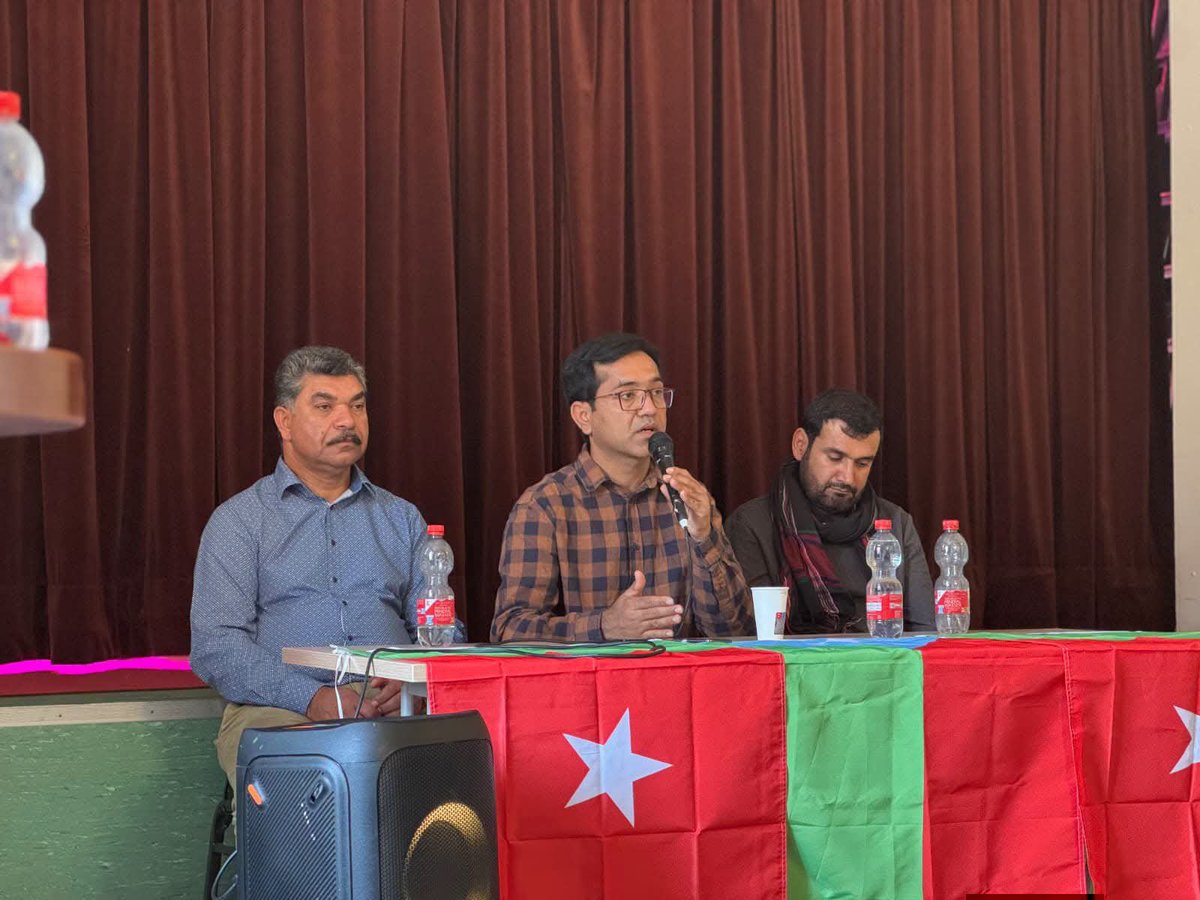
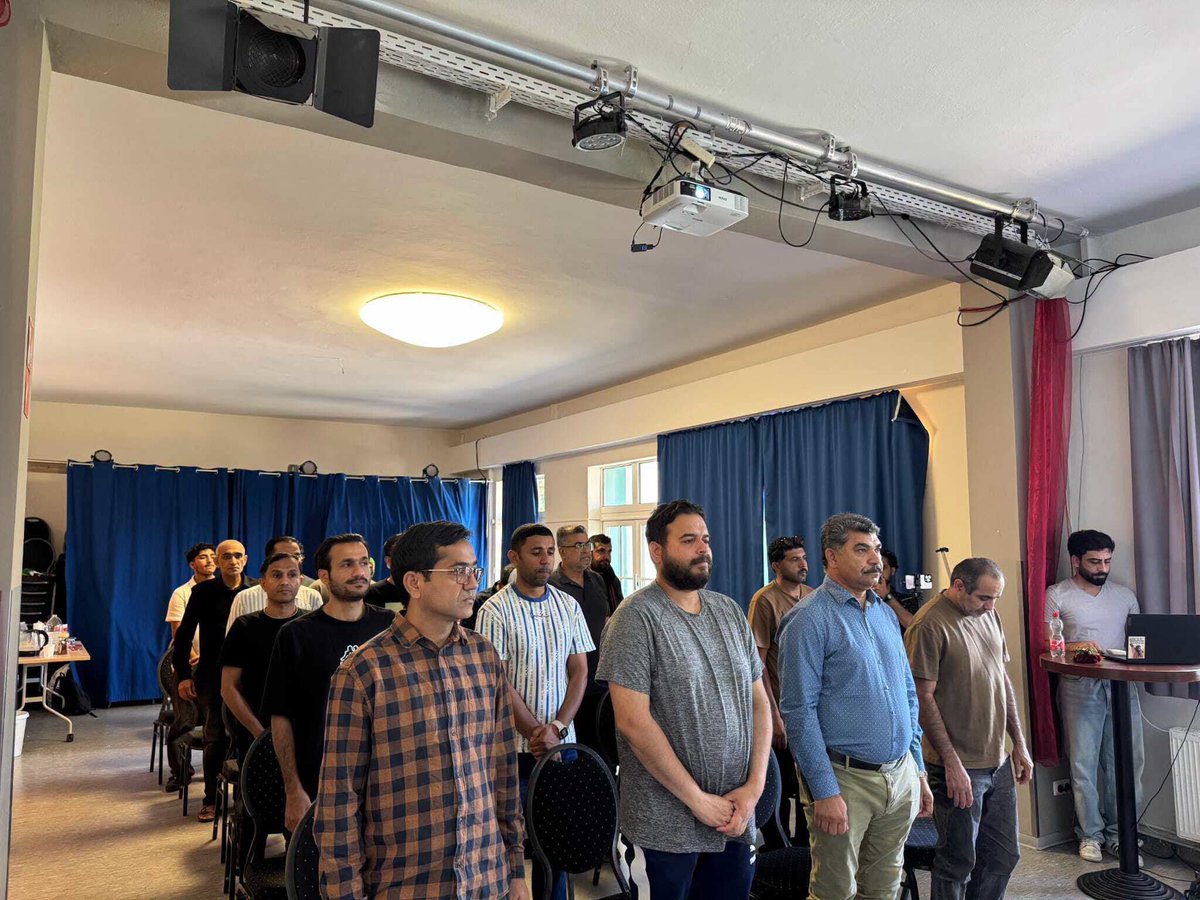
The Baloch National Movement (BNM) organized a seminar in Berlin to commemorate Baloch Pledge Renewal Day. The seminar brought together members and supporters to discuss Baloch history, the significance of this historic day, and the Baloch people’s aspirations for freedom, dignity, and self determination. The event aimed to raise awareness and promote greater understanding of the Baloch national cause.
#BalochPledgeRenewalDay #BNM #Balochistan #SelfDetermination
AUGUST PROGRAMME | 2026
📅 11 August — Baloch Pledge Renewal Day
A day of remembrance marking the declaration of Balochistan’s independence following the withdrawal of British colonial rule.
#BalochPledgeRenewalDay
📅 14 August — Formation of Pakistan: Black Day
A day observed in remembrance of the partition of India and the creation of Pakistan, marking what is viewed as the beginning of a new phase of colonial subjugation of nations.
#14AugBlackDay
📅 26 August — Martyrdom Anniversary of Shaheed Akbar Khan Bugti
A day commemorating the martyrdom of Baloch leader **Shaheed Akbar Khan Bugti**, who was killed by the Pakistan Army in 2006.
#ShaheedAkbarBugti
Paank strongly condemns the systematic, state-backed campaign of violence against Asma Jattak and her family in Khuzdar, Balochistan, as detailed in the Asma Jattak's Case study report prepared by Paank. The Pakistani authorities have not only failed to protect this family but have actively enabled severe human rights abuses through their ongoing complicity and support to death squads.
Since 2014, Asma has endured extreme forced marriage coercion by an armed group led by Zahoor Jamalzai. This relentless persecution has resulted in the targeted killings of those defending her, including her fiance Abdul Salam, her uncle Ashraf Nichari, and two local community leaders, Wadera Ghulam Sarwar Mosiani and Sardarzada Kamran Jattak. Most recently, on August 4, 2026, her father, Master Inayat Ullah Jattak, was assassinated shortly after Asma released a desperate public appeal for protection.
Despite a written government agreement in February 2025 promising the immediate arrest of the primary accused and protection for the Jattak family, the authorities have taken no action. Instead, the accused continues to operate with absolute impunity, appearing openly armed within the political protocol of former Chief Minister Nawab Sanaullah Zehri, demonstrating clear backing from the Pakistani state and military.
The risk to Asma and her surviving relatives is critical and imminent. Paank urgently calls on the United Nations, the European Union, and the international community to intervene immediately to provide independent protection for the family.
We demand an independent, international investigation into these state-sponsored death squads to ensure those responsible at all levels are held accountable for these atrocities.
https://t.co/OEqZC0FRoo