@Fahdhusain again raises very pertinent 10 questions on the ability of the government. The striking para👇
“Consider this. No government has had more space to get work done than the present one. There are no judges who are throwing Suo Moto spears at it, or striking down any projects or policies as unconstitutional; there are no journalists who are exposing any scandals or running a campaign against the government (on their own or on someone's behalf), there is no opposition that is holding long marches or public rallies or even challenging the Treasury benches in the Parliament; there is no threat from the establishment; there are no external challenges (or threat of punitive actions) from superpowers, regional powers or financial institutions; there is no province that has the need or the capacity to undercut the functioning of the Centre; and there is more diplomatic goodwill available than has ever been in living memory”
https://t.co/VSfjEVqnce
Dawn newspaper told her to stick to cooking and child-rearing.
She built her own magazine instead.
And used it to bring down a military dictator.
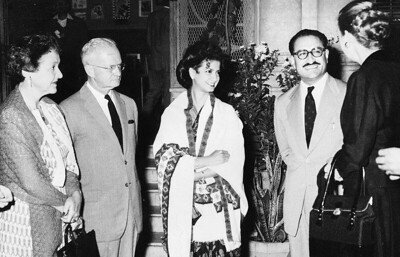
Zaib-un-Nissa Hamidullah. Born December 1918 in Calcutta. Daughter of Syed Wajid Ali, a Cambridge-educated writer who translated Tagore into English and Iqbal into Bengali. A family that breathed literature.
She published her first poem in The Illustrated Weekly of India in 1933 at age 15. At 18 she won a poetry competition in England's Daily Mirror.
After partition she moved to Karachi with her husband and began writing a column for Dawn. She became Pakistan's first female political commentator. Her editor let her write on the condition she stuck to feminine matters.
She wrote about politics anyway.
In 1951 the Dawn editor sent her a letter. It is still in the archives.
Dear Mrs. Hamidullah. You will have noticed that we could not use your article last week. The reason was that it dealt with problems other than feminine.
She read the letter. Resigned. And in 1952 founded her own magazine.
The Mirror.
Pakistan's first female editor and publisher. Her own press. Her own voice. No editor to answer to.
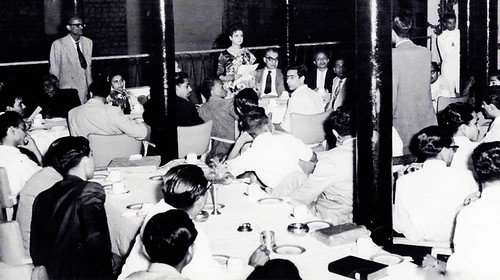
In 1955 she became the first woman to address Al-Azhar University in Cairo. One of the oldest universities on earth. She spoke about Kashmir. The audience was shocked. Thrilled. Divided.
She did not care.
In 1957 she published a ferocious editorial defending Prime Minister Suhrawardy after Iskander Mirza forced him out. The government banned the Mirror for six months. Advised her to apologise.
She took them to the Supreme Court instead.
She won. First woman journalist in Pakistan to successfully challenge press censorship in court.
In October 1962 she published Please Mr. President. An open letter to Ayub Khan about the blood staining Pakistan's streets after student protests. She printed his photo upside down as a sign of protest.
Ayub Khan called her rashly emotional. Then replied publicly to her letter. Because even he knew she could not be ignored.
The Mirror was banned twice. Government advertising was withdrawn. She kept publishing.
In 1969 she reprinted Please Mr. President alongside a new editorial. No, thank you, Sir. Pakistan will continue to erupt as long as you remain its President.
Ayub Khan abdicated months later.
A street in Karachi is named after her. Zaibunnisa Street. Previously called Elphinstone Street. Named by the British. Renamed for a woman who spent her life defying exactly their kind of power.
She died September 10, 2000.
The editor who told her to write about cooking accidentally created Pakistan's most fearless journalist.
Zaib-un-Nissa Hamidullah.
Pakistan Zindabad. 🇵🇰
انور مسعود
اگلے دن کچھ ایسے ہوں گے
چھلکے پھلوں سے مہنگے ہوں گے
ننھی ننھی چیونٹیوں کے بھی
ہاتھی جیسے سائے ہوں گے
بھیڑ تو ہو گی لیکن پھر بھی
سونے سونے رستے ہوں گے
پھول کھلیں گے تنہا تنہا
جھرمٹ جھرمٹ کانٹے ہوں گے
لوگ اسے بھگوان کہیں گے
جس کی جیب میں پیسے ہوں گے
ریت جلے گی دھوپ میں انورؔ
برف پہ بادل چھائے ہوں گے
Pakistan’s grid is doing something rare. Fossil has fallen from 66% to 44%. Nuclear is scaling. Solar is breaking out, wind is joining in & decentralised rooftop solar is scaling at an unprecedented pace. Meanwhile, hydro holds the system together as the generational shift begins.
For two decades, Pakistan’s power mix barely moved. Fossil sat around 60–70%, hydro carried ~30%, and everything else was marginal. Then the energy transition began, and it didn’t follow the usual script.
Nuclear moved first. From ~2% in 2000 to ~17% by 2025, it’s one of the few systems globally where nuclear share is clearly rising. That growth is deliberate, built, and running at high capacity, quietly strengthening the backbone of the grid.
Wind edged in gradually. But the real disruption came from solar. From effectively zero to ~8% in a short window, driven less by policy and more by economics. High tariffs, unreliable supply, and cheap panels triggered a massive surge in behind-the-meter installs.
That’s the key nuance. A large share of Pakistan’s solar boom sits off-grid and isn’t fully captured in official generation data. It makes the system look slower to change than it actually is, and makes building a clean dataset far more challenging than in most countries.
Two very different forces are now moving together. Nuclear is scaling from the top down, engineered and centralised. Solar is spreading from the bottom up, reactive and decentralised. They’re not competing. They’re stacking.
Hydro sits in the middle, doing what it has always done, balancing and stabilising the system. Fossil is still large and still necessary, but it’s no longer growing. From ~66% down to ~44%, it’s clearly losing ground.
Pakistan hasn’t followed a clean transition pathway. It’s been pushed into change by cost, constraints, and demand. The result isn’t one technology replacing another. It’s a system being reshaped from multiple directions at once.
Hydro anchors. Nuclear scales. Solar breaks out. Wind warms up. Fossil fills what’s left.
Not merely a transition. A system under pressure, starting to bend.
#Iran War Update No. 28 (focus on Iranian strategic narrative):
🔹Iranian strategic circles increasingly assess that the United States is preparing for direct involvement, including heliborne operations across different parts of the country or ground deployments inside Iranian territory. In response, Iranian military officials claim that they have mobilized one million troops to counter any potential ground invasion.
🔹In the same vein, Iranian forces are reportedly preparing contingency plans aimed at inflicting maximum casualties and potentially capturing U.S. or Israeli personnel, indicating readiness for a higher-intensity phase of conflict.
🔹The Houthis have outlined redlines and conditions for entering the war. They have warned that if additional actors join the coalition against Iran, they will also enter the conflict. This appears to specifically reference the potential participation of Saudi Arabia and the United Arab Emirates in a campaign against Iran and is intended as a deterrent. The Houthis have also cautioned that any use of the Red Sea for operations against Iran could trigger their involvement in the war.
🔹This effectively expands the geography of Iran’s deterrence beyond the Persian Gulf, raising the risk that escalation could extend to the Red Sea and Bab el-Mandab if additional actors become involved – a scenario that is becoming increasingly likely.
🔹Israeli strikes on Iranian industrial infrastructure continued, including attacks on two major steel production facilities and associated power generation units, reinforcing the pattern of targeting Iran’s economic and industrial base and undermining its post-war recovery potential.
🔹In response, calls within pro-government circles for both vertical and horizontal escalation are becoming more pronounced, with arguments that only a broader and more severe response can restore deterrence.
🔹In this vein, Iranian state media have begun publishing potential target sets across the region, including major steel and industrial facilities in Saudi Arabia, the UAE, Qatar, Kuwait, and Bahrain. The IRGC has already warned that retaliation across the region will follow.
🔹This reflects a growing tendency to target regional economic infrastructure at a massive scale in response to attacks on Iran’s economic and industrial bases, suggesting Iran’s readiness to escalate further to establish a deterrence equilibrium.
🔹Iran is also tightening its control over the Strait of Hormuz. The IRGC has expanded restrictions, warning that vessels shipping to or from countries supporting the U.S. campaign will be denied passage.
🔹At the same time, Tehran is attempting to construct a legal justification for these actions, framing selective restrictions as a legitimate wartime measure while still allowing conditional transit for non-hostile states.
🔹Despite Trump’s earlier announcement of a delay in potential attacks on Iran’s energy infrastructure, markets remain unconvinced. Oil prices have risen above $110 per barrel, indicating low confidence in the credibility of de-escalatory signaling from Washington.
🔹The disruption is now affecting not only energy but also global food supply chains. A significant portion of fertilizer trade and LNG flows passing through the Strait of Hormuz has been impacted, raising concerns about broader economic consequences.
🔹The UAE is emerging as a central focus in Iranian threat perceptions. Reports indicate that Abu Dhabi is exploring participation in efforts to reopen the Strait and may support U.S. operations.
🔹In response, Iranian discourse increasingly frames the UAE itself – and not just American interests there – as a potential target, including critical economic and technological infrastructure.
🔹Some Iranian commentary has gone further, suggesting preemptive action against the UAE or even the seizure of territory (Emirati shores) if it actively supports U.S. military operations. A similar suggestion has also been made regarding Bahrain.
🔹The military balance also remains contested. Reports indicate that only a portion of Iran’s missile capabilities has been degraded, with underground and dispersed systems continuing to enable sustained launches. This contradicts earlier U.S. and Israeli claims of destroying 80-90 percent of Iran’s missile capabilities.
🔹Recent launches from a hardened missile site near Yazd have been widely highlighted as evidence of the resilience of Iran’s missile infrastructure and its ability to absorb repeated strikes while maintaining offensive capacity.
🔹At the same time, concerns are growing about U.S. resource constraints. Reports indicate that interceptor missile stockpiles and precision munitions are being depleted at a significant rate.
🔹Washington is reportedly considering deploying an additional 10,000 troops to the region, expanding its military options despite ongoing discussions about a possible negotiated outcome.
🔹The nuclear dimension is also becoming more prominent. Following renewed strikes on Iranian nuclear facilities in Arak and Esfahan, calls within Iran to withdraw from the NPT and pursue nuclear weapons are gaining traction.
🔹This shift is particularly significant given the absence of previous political and religious constraints (Ali Khamenei’s nuclear fatwa), suggesting a potential long-term transformation in Iran’s strategic posture.
🔹Externally, the war is increasingly intersecting with broader geopolitical dynamics. Reports of Russian and Chinese military and technical support to Iran and Ukraine’s indirect involvement via cooperation with Saudi Arabia against Iranian drones are reinforcing emerging alignment patterns.
🔹Overall, Day 28 indicates that the conflict is moving toward a more expansive and higher-risk phase, characterized by growing expectations of U.S. ground involvement, widening target sets across the region, and increasing pressure on both the global economy and the nuclear nonproliferation regimes.
Honestly this is a great premise for a sitcom:
In the icy wasteland of Greenland, a ragtag NATO detachment of 13 Germans, 2 Norwegians, 3 Swedes, 15 French and 1 lone Brit must "defend" the Arctic from... well, mostly boredom, polar bears, and each other's national stereotypes.
Stationed at a remote outpost in Nuuk, their biggest enemies are cabin fever, frozen plumbing, the Danes who keep forgetting they're there, and each other. They’re constantly prepping to counter the absurd threat of an American takeover with the total force smaller than a pub trivia team.
The show will have everything - petty national rivalries that project from history, offensive cultural stereotypes, frustration due to NATO bureaucracy, and because this is so European, the whole thing will be pretty gay.
Oh and a recurring theme is that they will constantly be picking on the lone Brit.
There is very strong opposition in the region to US military attack and regime change in Iran from countries that have no love for the Islamic Republic, such as Turkey, Saudi Arabia, and Pakistan.
How do we explain this?
The two main factors are:
1. They fear that the intervention will not lead to a stable democracy in Iran but rather chaos and potentially even civil war. This will produce a massive refugee crisis that will destabilize the entire region, save Israel (even the civil war in Syria did not create refugee flows to Israel - they went to Lebanon, Jordan, Turkey - and of course Europe)
2. But there is also a broader geopolitical factor at play here. Ever since the US essentially lifted all restraints on Israel during the Biden admin, regional players have started to see Israel's aggressive and reckless foreign policy as a direct threat to them (Israel has bombed 7 countries in the region since Oct 7, 2023). If the alliance with the US does NOT protect you from what these countries see as Israel's designs for regional hegemony, then you will need a new configuration aimed at balancing against Israel. Saudi Arabia, Pakistan, and Turkey have moved in this direction. Though Iran is not part of this configuration, it does serve as a buffer against Israel. Chaos in Iran - or a pro-Israeli puppet being installed in Tehran - is seen as a very dangerous blow to the effort to balance against Israel's increasingly aggressive regional posture.
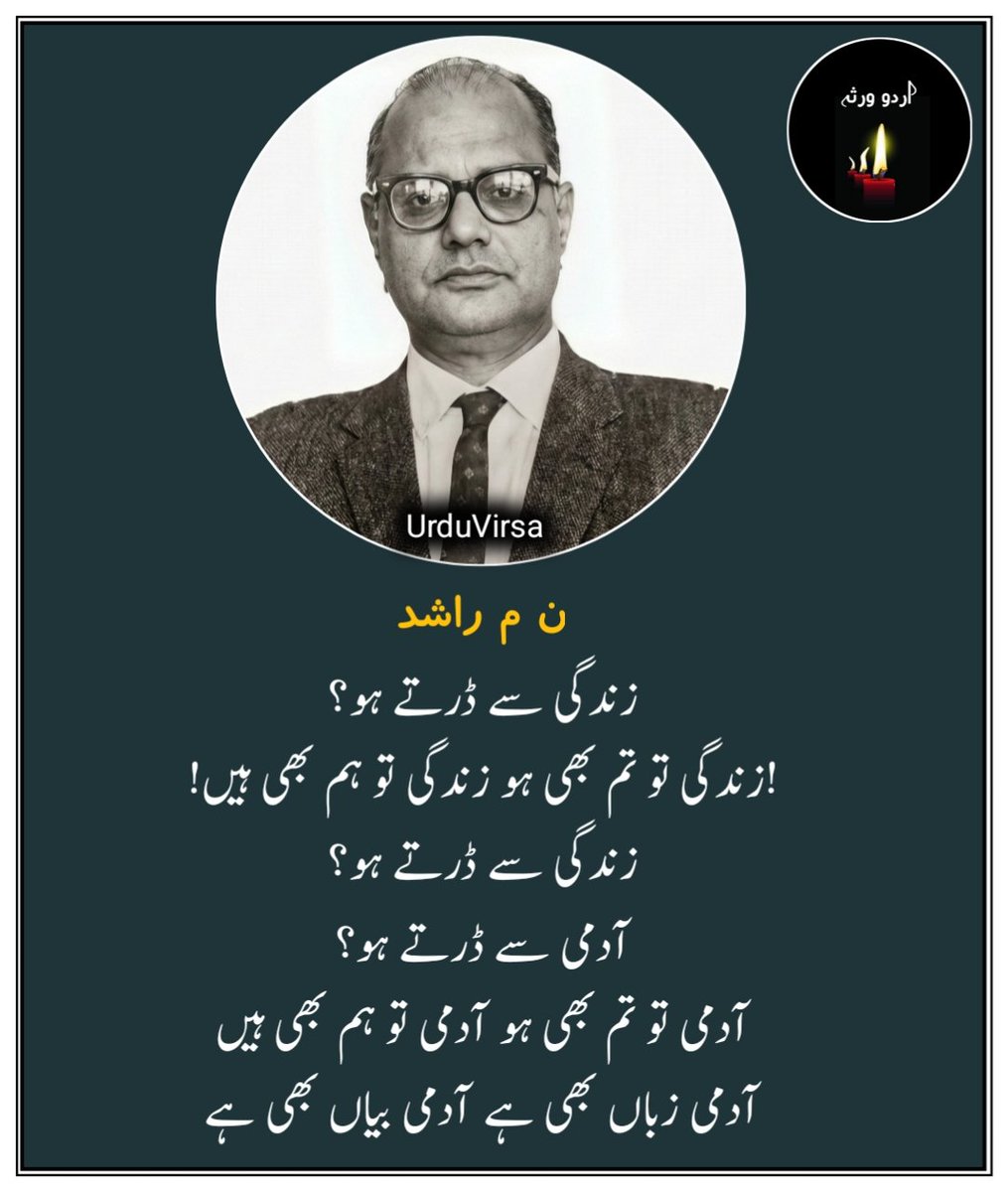
زندگی سے ڈرتے ہو؟
!زندگی تو تم بھی ہو زندگی تو ہم بھی ہیں!
زندگی سے ڈرتے ہو؟
آدمی سے ڈرتے ہو؟
آدمی تو تم بھی ہو آدمی تو ہم بھی ہیں
آدمی زباں بھی ہے آدمی بیاں بھی ہے
اس سے تم نہیں ڈرتے!
حرف اور معنی کے رشتہ ہائے آہن سے آدمی ہے وابستہ
آدمی کے دامن سے زندگی ہے وابستہ
اس سے تم نہیں ڈرتے
''ان کہی'' سے ڈرتے ہو
جو ابھی نہیں آئی اس گھڑی سے ڈرتے ہو
اس گھڑی کی آمد کی آگہی سے ڈرتے ہو
پہلے بھی تو گزرے ہیں
دور نارسائی کے ''بے ریا'' خدائی کے
پھر بھی یہ سمجھتے ہو ہیچ آرزو مندی
یہ شب زباں بندی ہے رہ خداوندی
تم مگر یہ کیا جانو
لب اگر نہیں ہلتے ہاتھ جاگ اٹھتے ہیں
ہاتھ جاگ اٹھتے ہیں راہ کا نشاں بن کر
نور کی زباں بن کر
ہاتھ بول اٹھتے ہیں صبح کی اذاں بن کر
روشنی سے ڈرتے ہو
روشنی تو تم بھی ہو روشنی تو ہم بھی ہیں
روشنی سے ڈرتے ہو
شہر کی فصیلوں پر
دیو کا جو سایہ تھا پاک ہو گیا آخر
رات کا لبادہ بھی
چاک ہو گیا آخر خاک ہو گیا آخر
اژدہام انساں سے فرد کی نوا آئی
ذات کی صدا آئی
راہ شوق میں جیسے راہرو کا خوں لپکے
اک نیا جنوں لپکے
آدمی چھلک اٹھے
آدمی ہنسے دیکھو، شہر پھر بسے دیکھو
تم ابھی سے ڈرتے ہو؟
ہاں ابھی تو تم بھی ہو
ہاں ابھی تو ہم بھی ہیں
تم ابھی سے ڈرتے ہو
ن م راشد
It is Over
by ZORAIN NIZAMANI
For the older men and women in power, it’s over. The young generation isn’t buying any of what you’re trying to sell to them. No matter how many talks and seminars you arrange in schools and colleges, trying to promoting patriotism, it isn’t working. Patriotism comes naturally, when there is equal opportunity, sound infrastructure and efficient mechanisms in place. When you provide your people with basic necessities and ensure people get their rights, you won’t have to go to schools and colleges to tell students that they are supposed to love their country, they already will nonetheless.
Young minds, the Gen Z, the alphas, they know exactly what is happening and despite your consistent efforts of trying to sell your views of patriotism to them, they are seeing right through it. Thanks to the internet, thanks to whatever little education we have left, despite your best efforts of keeping the masses as illiterate as possible, you have failed. You have failed to tell people what to think, they are thinking for themselves. They might be a little too scared to speak their minds because they prefer breathing. But they see right through the façade of self-righteousness and virtue that you’ve meticulously put together. You may be able to stay in power by using power but the people could not care less about you. You can’t even step outside your house without security, if that doesn’t speak enough about your popularity amongst people, you need to reevaluate things.
The younger lot has had enough and because they have learned that they cannot challenge the powers, they’re leaving the country. I would be too idealistic to think that they would lead a movement against corruption. They’d rather take a silent, quiet exit and not look back because their friends, who spoke up, were silenced.
But for the boomers, it’s over. There is no future for them. There seems to be a massive disconnect between the young population and the current regime. There is no mutual ground. The Gen Z wants faster internet, the ones in power want a stronger firewall. The Gen Z wants cheaper smartphones, the boomers want smartphones to be taxed. The Gen Z wants eased restrictions on freelancing, the boomers want to increase regulations on freelancing. There seems to be no common ground amongst them. That is exactly why the boomers have lost.
You can orchestrate all the wars you want; Gen Z will make memes out of it. Censor all the mainstream media, Gen Z will jump to platforms like Rumble, YouTube and Discord to voice their opinions. Boomers, you cannot censor thoughts now. Gone are the days when you could fool the people. No one’s being fooled anymore. Yes, we don’t have libraries. Yes, we cannot afford to rent an apartment. Yes, we cannot afford to buy a car anymore. All thanks to your efforts, the economy handed down to us is worse than your morals.
But despite all that, we continue to trudge along, finding solace in books, social media, coffee shops (as much as I despise them) and double patty beef burgers. We continue to navigate across the murky waters. We don’t watch when you talk on TV because most of the times whatever you say is hysterical. We have stand-up comedy for that, why watch mainstream media?
Times are changing and the sooner you realise the better. But you don’t care either. Your children are abroad, you’re making millions every single day, you enjoy vast, unchecked power, you eat the finest of foods and drink only the cleanest of water, why would you care?
You will when you realise no one’s listening to you.
You know why?
Gen Z has their headphones on and their Spotify paid for, if the situation becomes unbearable, half of them will have enough resources to leave, the other half will make you listen to their music and not in a good way.
Boomers. We’ve had enough. We aren’t buying your narrative anymore.
It’s worn out.
Writer is pursuing his PhD in Criminology from the University of Arkansas.
#2026YearOfImranKhan
The Edhi Foundation reported that from January to December 2025, authorities recovered the bodies of 168 newborns across various parts of the city.
Of these, 28 were found in garbage dumps, trash bins, sewer drains, vacant plots, near railway tracks, and in the vicinity of residential areas, the charity spokesperson Muhamamd Amin told me.
Genocide is being carried out by RSF in Sudan and UN as usual has failed to play its role.
Yesterday, RSF burst into a hospital, killing 460 people without any mercy.
In the last 3 days, RSF has killed over 1,500.
Only in Khartoum state, more than 61,000 people have been killed.
Millions have been displaced.
Somehow the international media and humanitarian organisations are totally silent about it.
Politicians across the globe are silent as well.
Is it because the people are black or African lives are not as important as the ones in the Middle East or Asia?
غامدی صاحب ہر لحاظ سے اور ہر معنی میں ہمارے دور کے عظیم دینی عالم سکالر ہیں۔
کیا خوب چار مراحل کا رویہ بیان کیا ہے کہ ہماری شروعات ہی دوسرے کو convince کرنے سے ہوتی ہے دوسرا مرحلہ ٹھونسنا تیسرا کفر کا فتویٰ اور چوتھا مار ڈالنا۔ اصل رویہ کیا ہونا چاہیئے، سنیں اور غور فرمائیں۔
Tax Policy in PK
- Why are you taking risk, creating jobs, and operating formally? Pay an effective tax rate of 39%+.
- So you want to export? lmao get an export license. You want to import? You can get a giraffe for your garden without a license.
- Why are you saving formally in a bank account? Pay a tax on your profit, and another additional tax on your profit because you are too rich. Why bother with saving formally, when we have one of the lowest Investment-GDP ratios in the world. Haha weirdo.
- You want to buy gold? How much? Zero tax, delivery at home, cash payment -- faster than foodpanda. Stupid people taking risks et al.
- You stay out of the system, pay in cash, invest in real estate, do not create jobs, do not create exports -- you have the lowest effective tax rate, and you are darling of the state.
ngmi
آپنے تابش ہاشمی کا مئیر کراچی کے ساتھ شو تو دیکھا ہوگا،آج کل اس کی کلپس بہت وائرل ہورہی ہیں ۔۔ جہاں بہت سے لوگ تابش کو سراہ رہے ہیں وہیں کچھ کا کہنا ہے کہ تابش تو کامیڈین ہیں انہیں کیا ضرورت ہے سیاسی معاملات میں گھسنے کی، یا even سیاسی جوکس کرنے کی۔۔ آپکی اس بارے میں کیا رائے ہے؟
#Raftar #tabishhashmi
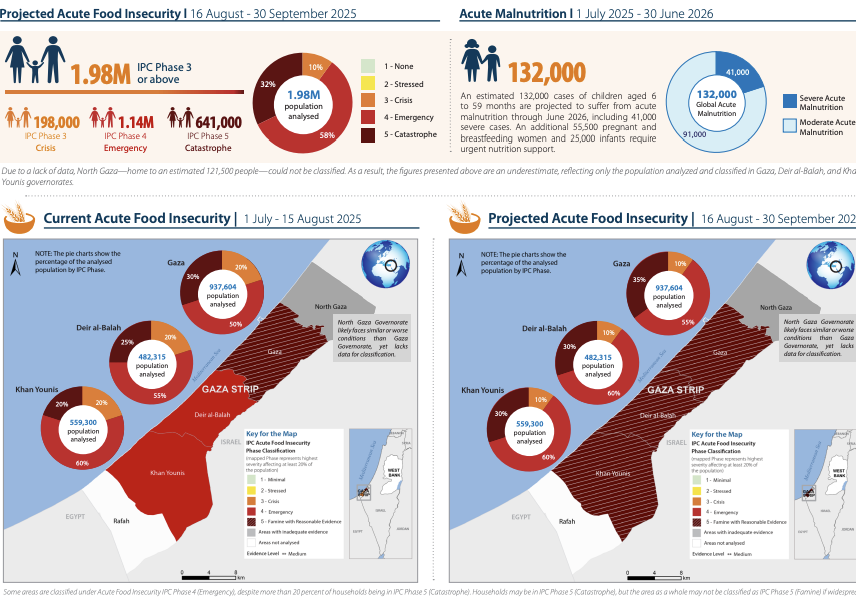
Please read the IPC report, cover to cover. Read it in sorrow & in anger. Not as words & numbers but as names and lives. Be in no doubt that this is irrefutable testimony.
It is a famine. The Gaza Famine.
It is a famine that we could have prevented, if we had been allowed. Yet food stacks up at borders because of systematic obstruction by Israel.
It is a famine within a few hundred metres of food, in a fertile land.
It is a famine that hits the most vulnerable first. Each with a name, each with a story. That strips people of dignity before it strips them of life. That forces a parent to choose which child to feed. That forces people to risk their lives to seek food.
It is a famine that we repeatedly warned of. But that the international media has not been allowed in to cover. To bear witness.
It is a famine in 2025. A 21st century famine watched over by drones and the most advanced military technology in history.
It is a famine openly promoted by some Israeli leaders as a weapon of war.
It is a famine on all of our watch. Everyone owns this. The Gaza Famine is the world’s famine. It is a famine that asks ‘but what did you do?’ A famine that will and must haunt us all.
It is a predictable and a preventable famine. A famine caused by cruelty, justified by revenge, enabled by indifference and sustained by complicity.
It is a famine that must spur the world to more urgent action. That must shame the world to do better. It is a famine that therefore also asks ‘… and what now will you do?’
My ask, my plea, my demand to Prime Minister Netanyahu and anyone who can reach him:
Enough. Ceasefire. Open the crossings, north and south, all of them. Let us get food and other supplies in, unimpeded & at the massive scale required. End the retribution.
It is too late for far too many. But not for everyone in Gaza.
Enough. For humanity’s sake, let us in.
Remarks by Tom Fletcher, Under-Secretary-General for Humanitarian Affairs and Emergency Relief Coordinator. Aug 22, 2025
Last year the federal govt collected about Rs 11,700 bn in taxes, gave provinces more than Rs 7000 bn and ran a deficit of Rs 8000 bn. This deficit is the source of inflation and curtailment of investment and economic growth in Pakistan.
Now if the federal govt wanted to balance the budget it would not have to raise just Rs 8000 bn in taxes, it would have to raise Rs 20,000 bn in taxes as it has to give 60% of what it taxes to the provinces. So to balance the budget the federal taxes would have to go from Rs 11,700 bn to Rs 31,700 bn (this will impoverish perhaps 80% of the population and destroy our economy).
And provinces that are awash in cash already and are running surpluses will have another Rs 12,000 bn in cash!
In order to bring down income and sales taxes, we need to reduce NFC and keep the growth of all federal and provincial expenditures below inflation. And drastically cut down PSDP and ADPs and only increase direct cash transfers for the poor.