@IBetancourtCol Iran deserves better than a transition from one radical system to an Islamic Marxist cult. This organization does NOT represent the people and has no place in Iran’s future
Thank you for presenting historical fact and contrasting those countries to Iran. The agreements signed after WWI created nation states of multi ethnic and religious groups that never operated under 1 unit ever in history let alone being led by a non-native (Hachemite) who was only put in power as a favor returned for helping the British in the war.
“Regime change doesn’t work”
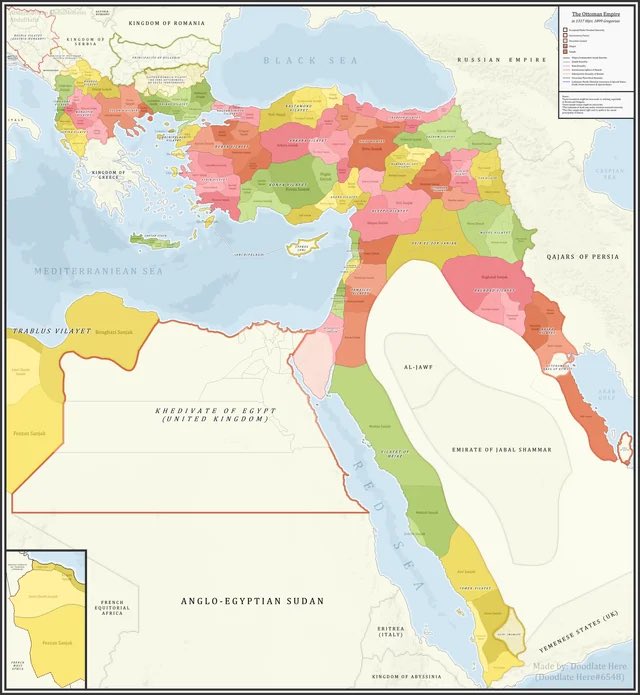
Iraq: Fake country created by Sykes / Pichot. 60/30/10 split between Shia, Sunni and Kurd. Oil in Shia and Kurdish areas but not Sunni. Initial ruling family was Hashemite from Hejaz (ie not Iraq), imposed by British. Sunni dictator ran country for 30+ years before regime change. During Ottoman period, it was governed by 5+ different administrative regions
Syria: Fake country created by Sykes / Pichot. 75% Sunni. Little oil. Initial ruling family was Hashemite from Hejaz (ie not Syria), imposed by French. Run by various Sunni dictators until Assad regime took control. They are part of 10% Alawite minority. During Ottoman period was principally split between two major provinces (Aleppo and Damascus).
Libya: Fake country. Tribal society that wasn’t post colonial until 1950s.
Iran (Persia): One of the oldest civilizations in the world. While religious makeup has evolved, Persian is a 2,500 year old language.
@Doranimated Your point about borders being products of conquest and contingency is true in the abstract for ALL states — this is a universal characteristic of every major nation state. Borders do change over time in every region of the world.
First — saying there’s “nothing ancient, natural, or durable” about Iran’s borders is a lazy half-truth. Iran’s core frontiers show real continuity. The western boundary with the Ottomans was fixed in 1555 and reaffirmed in 1639, and it still largely defines Iran’s border with Iraq and Turkey today. That’s ~400 years of persistence(1.6x the life of the USA and 5x the life of Israel). Geography, settlement patterns, and long-standing state institutions matter.
Second — the modern contours of Iran were shaped through long historical processes, not random accidents: Treaties of Gulistan (1813) and Turkmenchay (1828).
In other words, Iran’s borders—LIKE ALL BORDERS—are contingent, but they are also historically coherent, geographically grounded, and unusually durable. Pretending otherwise is erasure dressed up as analysis and introduces a fragmentation argument which is archaic and proven to have failed time and time again.
This framing is a relic of 1920s colonial thinking—the same logic used to justify carving up societies from afar. That experiment produced a century of chaos, war, and authoritarianism across the region. Treating fragmentation as a policy option isn’t prudence; it’s recycling a demonstrated failure. It should be retired from serious discourse, not revived under a new label.
Fragmented Iran” isn’t an analytical insight—it’s a speculative fantasy with no serious historical grounding.
Iran is a multi-ethnic nation with a shared civilizational identity, language continuum, and Persian tradition that has held for centuries—often under far worse conditions than today. There is a reason Iran is one of the few non Arab speaking nations in the Middle East…these countries all had their own languages in the past before Islam and Arabic dominated the region.
Treating disintegration as a serious policy baseline isn’t realism; it’s importing external anxieties onto a society that has repeatedly demonstrated cohesion under pressure.
@melkaylan Get your facts straight before putting an article like this out there. This is a staggeringly bad idea. A fragmented Iran would be a disaster for the region—civil war, refugee waves, militia rule, and nonstop proxy conflict from the Caucasus to the Gulf. And the claim that Iran’s borders are “artificial” doesn’t hold up to historical facts. Iran is one of the few states in the region that preserved its territorial borders through modern history. Unlike post-Ottoman states—Jordan, Syria, Israel, Iraq, Kuwait—whose borders were carved up by outsiders under Sykes-Picot and related agreements, Iran’s borders predate and outlast imperial map-drawing. Breaking up a coherent historical state doesn’t weaken chaos; it creates it.
History reality check — even as new forms of energy have arrived, usage of the existing ones has continued to increase.
Europe burns 3x as much wood as it did at the start of the 20th century, and global coal production is at record highs.
The institutionalization of $ETH accelerates.@jpmorgan now let institutional clients pledge $BTC and $ETH as collateral for loans.
Pivotal moment for integrating digital assets into traditional finance.
#ETH#JPMorgan#TradFi#DigitalAssets https://t.co/rCKNZoovNS
@naval Not quite. Stablecoins monetize trust; CBDCs monetize control.
Stablecoins are market-driven, opt-in, and programmable — the opposite of state-controlled CBDCs. #Crypto#DeFi#Stablecoins
1 % of @Walmart 2025 sales = $6.5 B.
Put that on-chain → ~13k #ETH burned / yr (~35 per day assuming a consumer spends on average $100 per transaction)
That’s ~¼ of all ETH burned today.
Now imagine @amazon, @Costco, @Shopify.
Stablecoins = #Ethereum demand engine
Every industrial revolution feels like a bubble at first. The question isn’t if this lasts, but how long. Usually longer than anyone thinks — and it always changes the world as we know it.
Via JPM's Michael Cembalest, AI-related stocks have driven:
- 75% of S&P 500 returns since ChatGPT’s launch in November 2022
- 80% of earnings growth over the same period
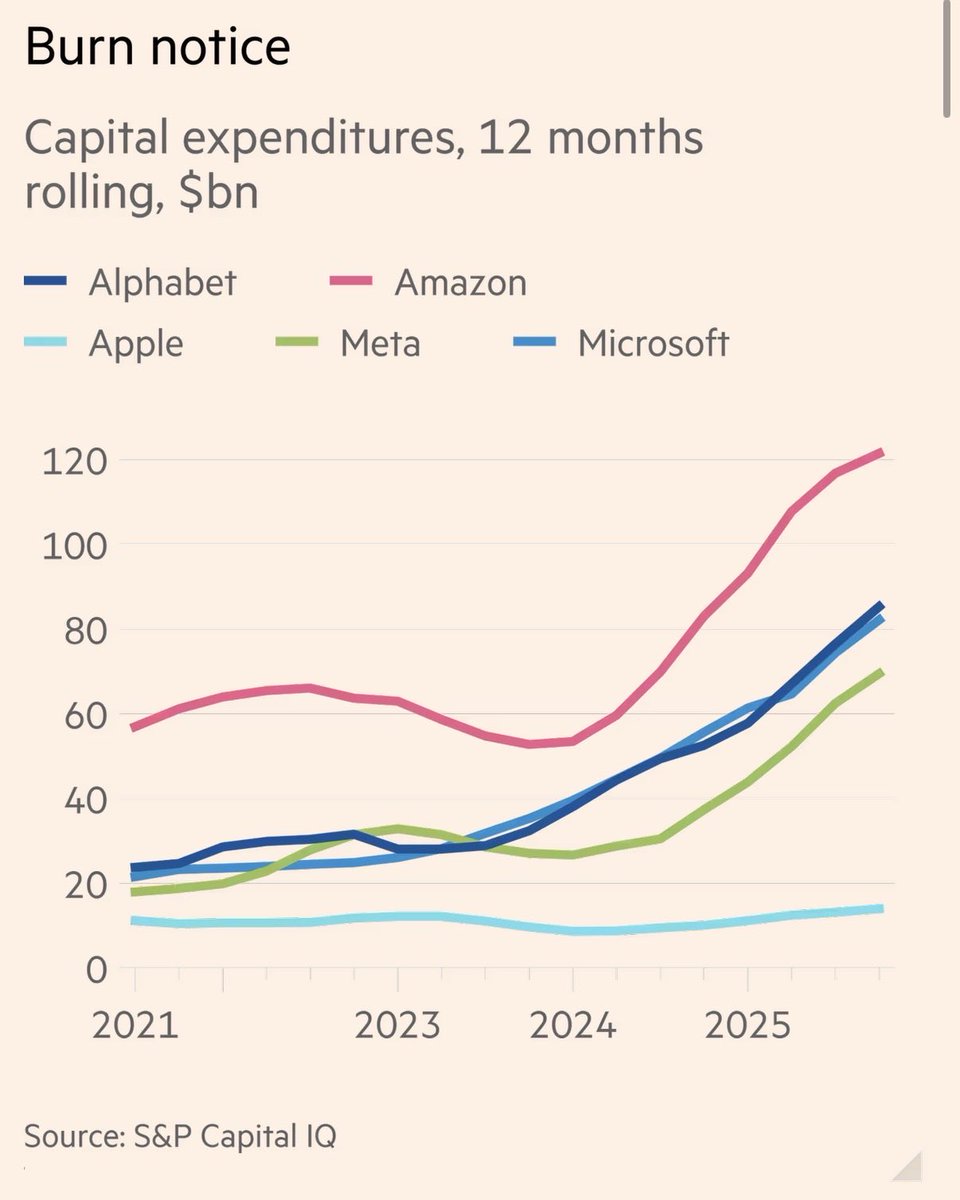
- 90% of capital spending growth
- Data centers are now eclipsing office construction spending.
- In the PJM region (the largest regional transmission organization, covering 13 states and D.C.), 70% of last year’s electricity cost increases were due to data center demand.