Look up tonight.
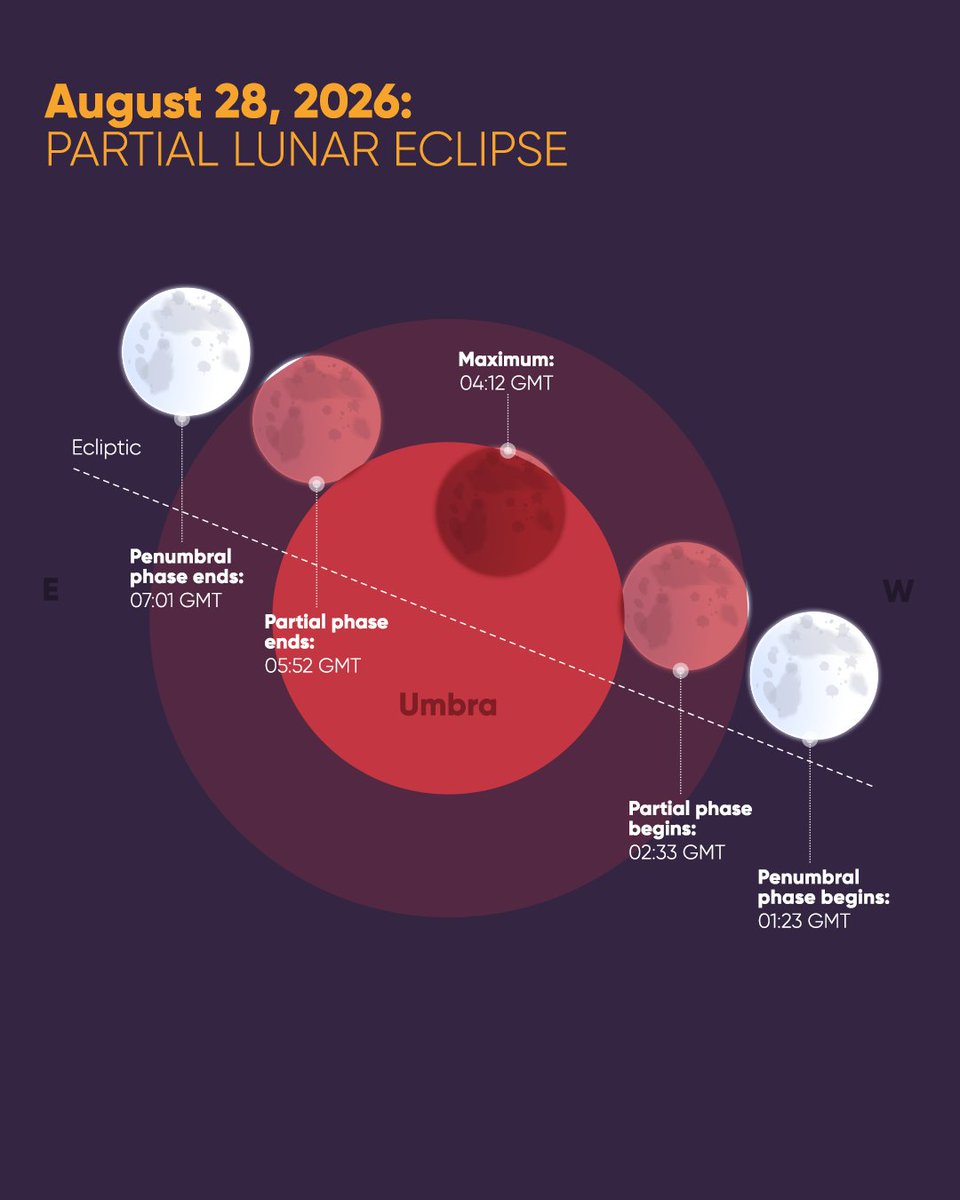
The Moon will pass through Earth's shadow during a deep partial lunar eclipse visible from much of North and South America and parts of Europe and Africa. As the eclipse deepens, the Moon will appear tinged with shades of red and copper.
🌕 Almost total — but not quite!
On August 27–28, 2026, a deep partial lunar eclipse will transform the Full Moon. At maximum, about 96% of the Moon’s diameter will be immersed in Earth’s dark umbral shadow, leaving only a thin bright edge uncovered.
The eclipsed portion may become dramatically dark and take on a rusty or coppery tint — a sight that could easily resemble an almost-total lunar eclipse.
Check the map to see what will be visible from your location. For the detailed view, check the map in the Sky Tonight app: https://t.co/v48Uloiavj
No special equipment or eclipse glasses are required. Just find a clear view of the Moon and watch Earth’s curved shadow move across its surface.
Save this post and share it with someone who loves watching the night sky! ✨
#LunarEclipse #Eclipse #Astronomy #Moon #StarWalk
One of the most detailed images of Mimas—a small but highly unusual moon of Saturn.
🛰️ The image was captured by the Cassini robotic spacecraft, which studied the Saturn system for 13 years.
The camera imaged the surface of Mimas with a resolution that allows for the observation of surface features as small as a few hundred meters across.
Over one million names will be traveling a million miles away in space in less than a month!
Roman’s Send Your Name campaign wrapped up with over 1.3 million names submitted. Make sure to tune in Aug 30 at 7:26 am ET to watch the observatory launch from @NASAKennedy.
https://t.co/5QN6usiDhB
NEWS 🚨: A Falcon 9 upper stage abandoned in orbit since Jan. 2025 will hit the Moon on August 5 at ~5,437 mph (8,750 km/h)
It's projected to carve out a 100-foot crater
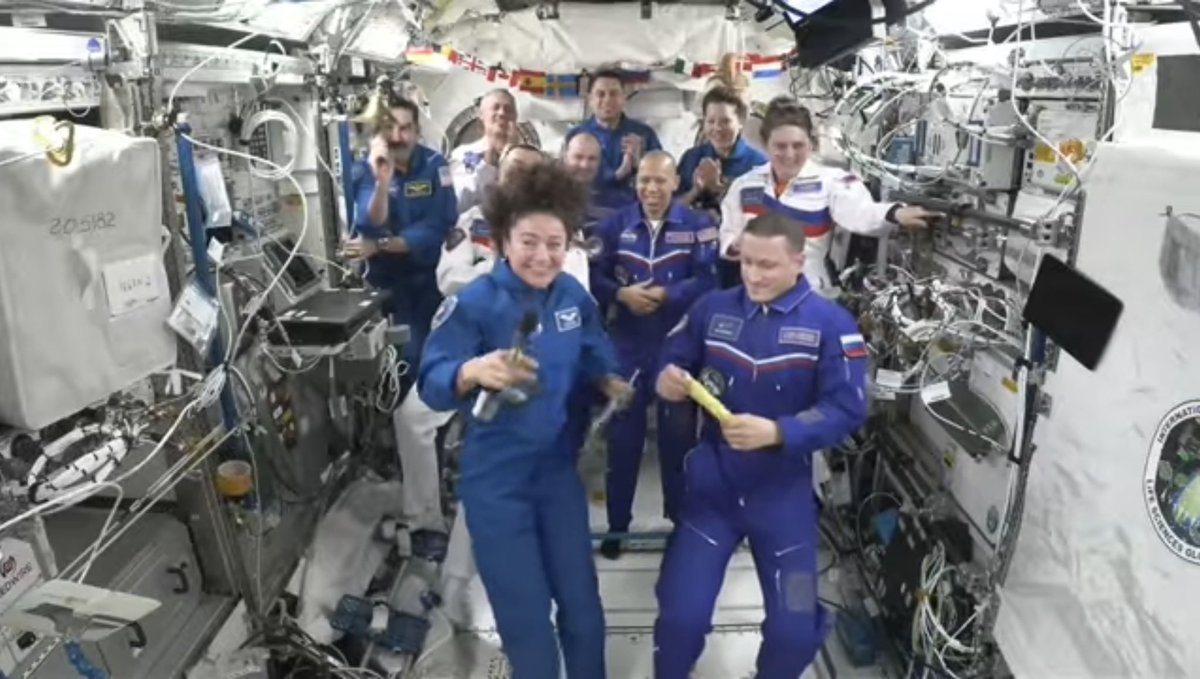
Change of command: Complete.
@Astro_Jessica is now commander of the International @Space_Station as former station commander Sergey Kud-Sverchkov handed over the role this morning ahead of the Soyuz MS-28 crew’s departure. Next up? Farewells and hatch closure, live tonight at 11:10 pm ET. Learn how to watch: https://t.co/eKaHlQLmmw
𝕏 IS #1 FOR NEWS IN THE USA
X continues to hold the #1 spot in the News category on the App Store in the United States.
While other platforms chase entertainment and short-form video, X has become the primary place where breaking news, real-time information, and unfiltered discussion actually happen.
It’s not just another social app anymore — it’s the digital town square for news in America.
Free speech + real-time information is winning.
WHY THE STARSHIP CATCH MATTERS
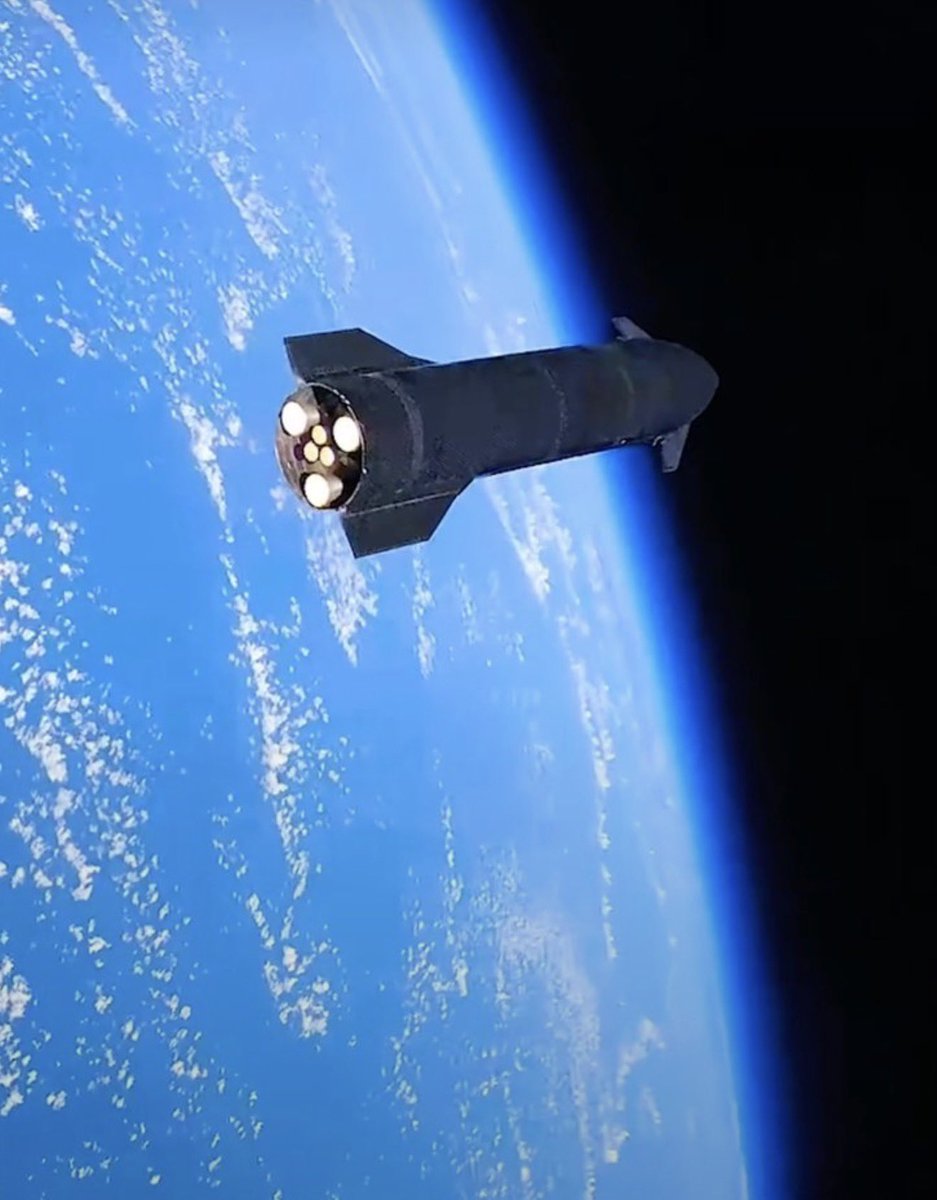
Catching the Super Heavy booster with the tower arms isn’t just a cool stunt — it’s the key that unlocks true rapid reusability.
Here’s why it’s so important:
• Speed of reuse
Landing in the ocean or on a droneship still requires recovery ships, transport back to the pad, and significant refurbishment. Catching the booster directly at the launch tower means it can potentially be restacked and flown again in hours or days instead of weeks.
• Cost
The rocket is the most expensive part of spaceflight. If you can catch and reuse the booster with minimal work, the cost per kilogram to orbit drops dramatically. This is the path to Starship’s target of under $100/kg.
• Flight cadence
A multiplanetary civilization and large-scale orbital industry require flying often. High cadence only becomes realistic when both the booster and ship can be turned around quickly. The tower catch is what makes that possible for the first stage.
• Closing the loop
Falcon 9 proved reuse works. Starship aims for both stages to be fully and rapidly reusable. Catching the booster is the biggest remaining milestone for the first stage.
Everything else — Mars missions, lunar bases, orbital data centers, heavy cargo — becomes far more practical once you can catch the booster and fly it again quickly.
@elonmusk
Our crewmate @Astro_ChrisW stated a few weeks ago that he was hoping for another round of aurora viewing from the @Space_Station before his departure, and the solar system delivered! Wishing the 74S crew a journey home that is as spectacular as the ethereal glow of the Aurora Australis. It has been an absolute honor flying with you Sergey, Sergei and Chris.