A few might be thinking: What is Micromax up to? While the average consumer assumes they vanished after the smartphone wars, Micromax has quietly pulled off 1 of the most brilliant strategic pivots in Indian tech history.
Instead of fighting losing battles in the retail smartphone market, they pivoted deep into hardware infrastructure through a stealthy JV with Phison Electronics (the Taiwanese global titan of NAND flash controllers) called MiPhi Semiconductors, established in Dec 2024.
Historically, Indian tech brands were just "re-badgers", importing finished white-label products from China, slapping a local logo on them & selling them. MiPhi completely breaks that cycle.
Micromax holds a 55% controlling stake, while Phison holds 45%. Micromax provides the local manufacturing footprint (via their factories in Noida/Greater Noida), domestic supply chain logistics & sales infra. Phison brings the actual core IP, 2100+ global storage patents & elite NAND controller architecture.
In mid-2025, MiPhi became the 1st brand to locally design & manufacture enterprise-grade SSDs in India. Now, they are ramping up production capacity 10x, moving from a baseline of 30K units/month to 300K enterprise SSD units/month.
Co-founder Rahul Sharma announced that after hitting around ₹100 crore in the fiscal year ending March, the company is targeting a ₹1000 cr revenue run-rate by the end of this year, funded primarily through internal accruals.
The best part, when Phison & Micromax announced this venture, they highlighted a major goal: slashing the cost of AI training by 90% using their proprietary storage architecture.
Instead of buying hyper-expensive, heavily sanctioned enterprise GPUs (like NVIDIA's H100s) to run massive LLMs, MiPhi has been rolling out solutions (like Phison's aiDAPTIV+ technology) that offload heavy AI model weights directly onto ultra-fast, high-end local SSDs. In late 2025, they even partnered with Intel and SUSE to demonstrate AI training setups that bypass expensive GPUs entirely for small-to-medium enterprise models.
Micromax is very much alive & rocking also :))
True, although I unironically believe X is the best place to do this.
If your psyche can manage it then I cannot recommend it strongly enough:
1. Create an anon account
2. Archetype it based on the complete opposite of how you present IRL
- If you're a bit neurotic, in your head, or overly restricted & routined then the archetype is highly chaotic, fun, impulsive, sexual, schizo
- If you lack structure in all you do, then your archetype is the opposite. Words ordered, syllables professional. Everything tight. So tight.
3. You cannot half-ass this. It is not some fun game or pastime – if you mess this up you will become mentally ill in a way that even psychiatrists cannot diagnose.
Fully embody it. All in. Visualise it in your head. Every sensation and thought is through this thought form. Post as much as you can.
First it feels separate and foreign, then it takes on a living breathing life of its own. You will know. When you post, it is as if the repressed part of your psyche is speaking directly –– because it is.
You will move in and out of dissociative states.
You will only be vaguely conscious of what you've written. Go back and study it.
You will gain so much wisdom and self-knowledge in a short time. Extremely high leverage way to use this app.
You directly train and communicate with deeper parts of your mind.
The economic and demographic effects of corruption.
Cost of land in our urban areas is far higher than what our GDP per capita would dictate. The ratio of land value to per capita GDP is probably higher in India than anywhere else. As an example, land prices in Chennai or Bengaluru rival that of cities like New York which has a vastly higher per capita GDP.
The key reason?
First, vast sums of political corruption money is parked in real estate. This raises real estate prices and high real estate prices affect everything downstream.
Second, corruption in building approvals and the like - the famous DTCP - raises construction costs, on top of already higher real estate costs.
Third, corruption in private school regulatory compliance enforcement raises school fees.
Fourth, corruption in private hospital regulatory compliance enforcement raises health care costs.
Fifth, household goods need sales outlets and those pay higher rents due to high real estate prices and construction costs.
So housing, education, healthcare and household goods - all of these now cost higher.
As a direct consequence, the economic burden on the average person gets worse. Young people, facing all these costs, postpone marriage, and postpone children or have fewer children.
That directly affects our demographics.
While this issue exists in many parts of India, Tamil Nadu, being the most urbanized of the bigger states, is particularly hit hard.
So corruption is becoming an existential threat to our society.
If you worry about the super-low birth rate in Tamil Nadu, way below replacement, understand that corruption raising our cost of living is one of the major causes, not the only cause, but a big one in our context.
The BMC has a 123-year-old Municipal Analyst Laboratory in Dadar where citizens, housing societies and commercial establishments can get food and water samples tested at nominal charges.
The laboratory, established in 1903, tests over 70,000 samples every year, including drinking water, street food, ice, swimming pool water, construction water, school mid-day meals and even prohibited substances such as gutkha and flavoured tobacco. Water testing reports are made available within 24 hours via WhatsApp and email.
Additional Municipal Commissioner (City) Prajakta Lavangare Verma has appealed to citizens and businesses to make greater use of the facility to ensure the quality and safety of the food and water they consume or supply.
She also said the BMC is upgrading the laboratory to enable more advanced and detailed testing. The facility, recognised as a State Food Laboratory by the Food Safety and Standards Authority of India (FSSAI), has analysed over 7 lakh food and water samples in the last decade.
You are not an imposter. You deserve to be in any room you find yourself in. God has planted you. Allow that deliberate purpose to fill all of your motion.
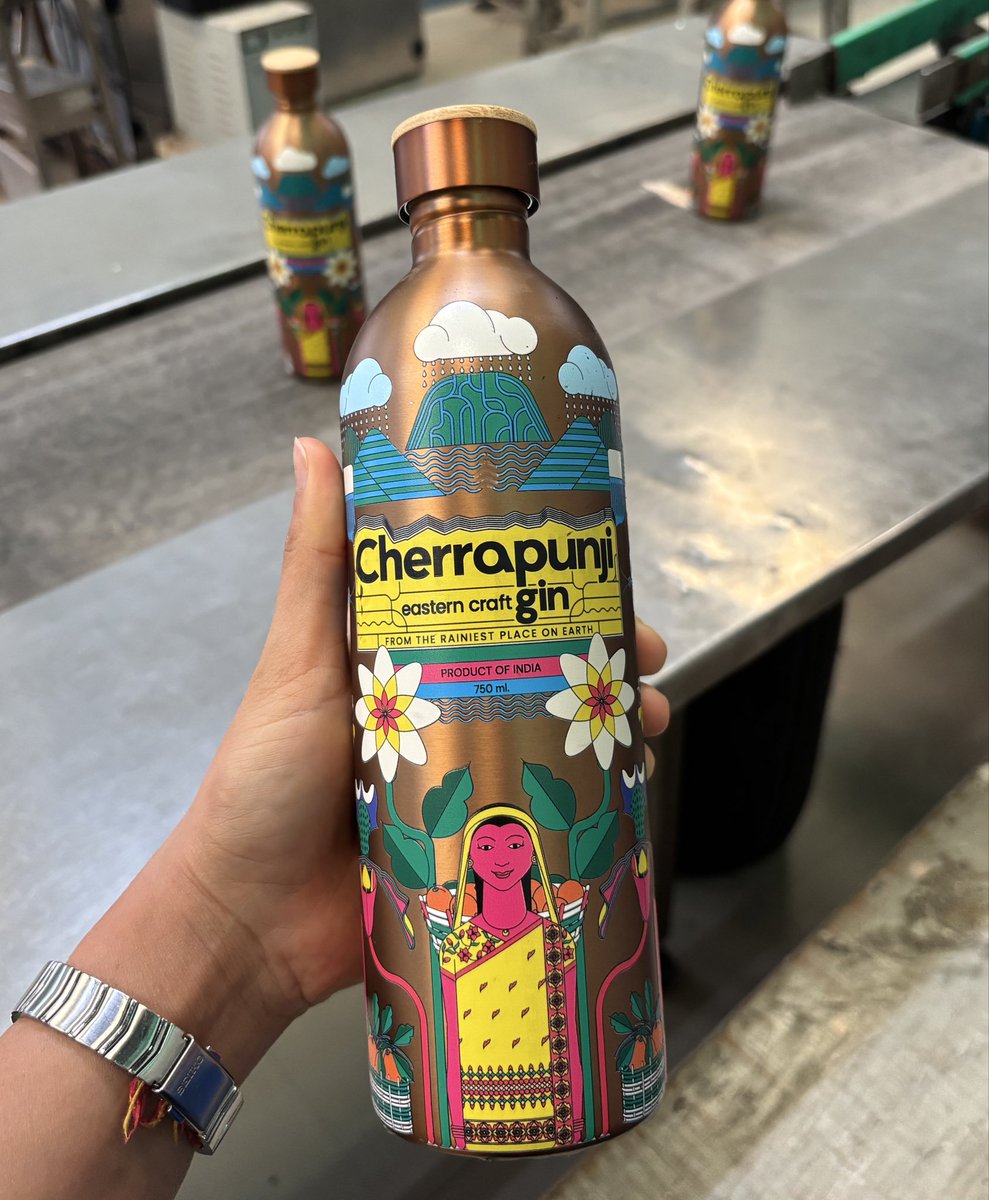
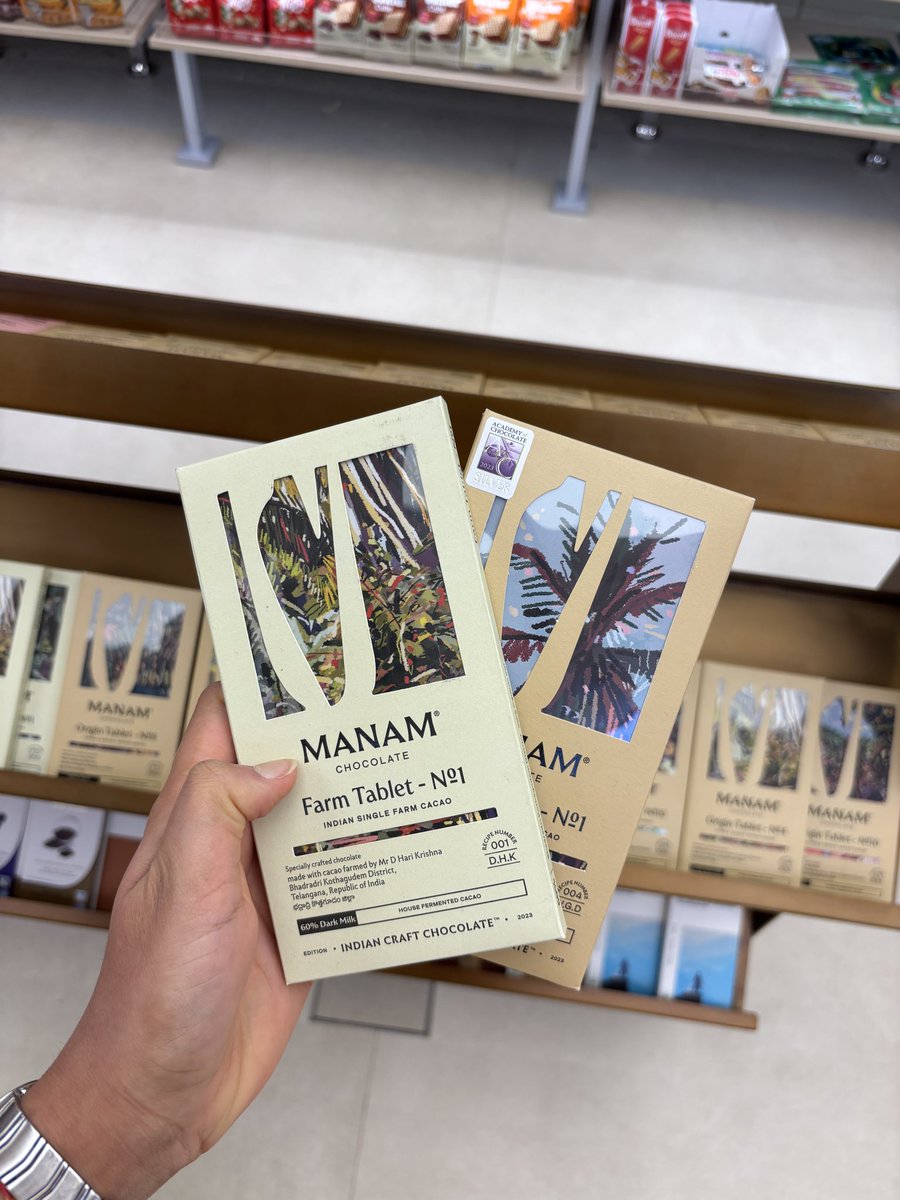
One thing I’ve been noticing with newer Indian brands is that many of them are not trying to look imported anymore.
You can see it most clearly in packaging. More colour, more local references, more confidence in looking Indian.
This came up in our recent interview with @CherrapunjiGin too. When we asked @mayukhazarika about the gin bottle, he said India is bright and colourful, and their bottle had to reflect that.
It made me think about how much the idea of premium has changed.
Earlier, premium often meant muted, minimal and slightly foreign-looking. Not anymore.
A few recent brands I came across that made me think about this.
Loads of secondary steel & equipments coming into the market. Great time to prototype using that and build indigenuous items.
Just visit Alang and you'll be shocked to see how massive the secondary market is.
Everything is Marine Grade.
The Royal College of Surgeons of Edinburgh was established in 1505. Sushruta had already been performing reconstructive surgery for over two thousand years by then. His ethical framework predates the Hippocratic Oath. East India Company surgeons were still learning rhinoplasty techniques from Indian practitioners in the 18th century.
What happened in Edinburgh this week is an overdue correction to Western assumptions about where foundational medical knowledge originated.
In the corridors of real estate - there was common chatter about the MP CM’s hunger for property. Kudos to Indian Express for going beyond the chatter and exposing the nefarious practice.
FCRA is India’s domestic law.
Foreign funding for missionary work in India should not be allowed.
Hinduism does not believe in conversions. It is overwhelmingly the majority faith in India.
Hindus are primarily the target of conversions.
This is a form of assault on the majority faith.
We should stand firm on this and reject any intrusion into our internal affairs.
The US is not being secular in seeking to promote Christian lobbies in India.
Laughter is anti-inflammatory. Crying is regulating. Hugging is immunoprotective. Singing is vagal toning. Dancing is neurogenic.
Joy is a biological necessity.
Being pro-life has ironically made me significantly more misanthropic because it means being constantly confronted with the average modern person’s bottomless selfishness, their default posture of narcissistic navel-gazing, their pathetic cowardice when faced with any hardship, their clueless solipsism that is the source of their puerile, vapid, counterfeit notions of happiness and fulfillment.
By nature you are ordered toward the other, yet you live only for yourself. Your life was a free and gratuitous gift, yet you hoard it like a miser. Maybe no one ever told you: you are not that interesting!
𝐍𝐚𝐭𝐮𝐫𝐚𝐥 𝐠𝐚𝐬 𝐝𝐢𝐬𝐜𝐨𝐯𝐞𝐫𝐞𝐝 𝐚𝐭 𝐒𝐫𝐢 𝐕𝐢𝐣𝐚𝐲𝐚𝐩𝐮𝐫𝐚𝐦-𝟑, 𝟏𝟓 𝐤𝐦 𝐨𝐟𝐟 𝐀𝐧𝐝𝐚𝐦𝐚𝐧 𝐈𝐬𝐥𝐚𝐧𝐝𝐬
Minister for Petroleum and Natural Gas @HardeepSPuri announced that natural gas has been discovered at the Sri Vijayapuram-3, about 15 kilometres off the east coast of the Andaman Islands.
The minister said, the discovery reinforces the vast energy potential of the Andaman Sea and marks another success in the ongoing exploration campaign in the basin.
He informed that the natural gas has been discovered at a water depth of 355 metres.
@moefcc@mnreindia #NaturalGas
Balram is one of the most respected male tigers in Tadoba, not because he is the largest or the most famous, but because he has survived in one of the most fiercely contested tiger landscapes on Earth. In a forest where territorial wars never truly end and dominant males can lose everything overnight, Balram has managed to hold his ground for years.
What immediately sets Balram apart is his incredible physique. Broad shoulders, massive forelimbs, and a heavily built front half give him the appearance of a heavyweight fighter rather than a wild tiger. Many tiger enthusiasts in India consider him one of the most powerfully built males ever seen in Tadoba.
The life of a male tiger is not measured by age, but by the number of battles he survives. Throughout his adult life, Balram has faced constant challenges from rival males seeking to take over his territory. In a reserve with one of the highest tiger densities in India, maintaining dominance for years is an achievement in itself.
Balram's strength is evident not only in territorial conflicts but also in his hunting ability. Sightings of him dragging the carcass of a fully grown sambar deer through the forest have become a testament to the raw power he possesses. Every scar, every hunt, and every confrontation has shaped him into the tiger he is today.
What makes Balram truly remarkable is not that he has ruled uncontested, but that he continues to endure in a world where another tigers are constantly replaced.
This is an unbelievable piece of work by Sarthak and something that requires amplification.
Let me explain what he found, in simple terms.
Sarthak is a Class 12 student from the 2025-26 batch, one of the 17 lakh students whose answer sheets went through CBSE's new On-Screen Marking system.
He spent days reading through CBSE's evaluation tenders, scraped all 576 tenders CBSE has issued, and tracked how the rules changed across three versions of the same tender.
The core finding is that the company that won the contract to scan and grade 17 lakh students' answer sheets is Coempt Eduteck.
Coempt used to be called Globarena Technologies. Globarena was the company behind the 2019 Telangana intermediate exam disaster, where software failures led to 3.8 lakh students getting wrong or missing marks, and 23 students died by suicide.
A government committee found systemic failure and negligence. Six months later, Globarena rebranded to Coempt Eduteck.
So a company with that track record won a contract to handle 17 lakh CBSE students. Sarthak's investigation is about how the rules were rewritten to let that happen.
The tender was issued three times.
> First tender, February 2025. It existed, then disappeared from the public GeM portal. Sarthak scraped all 576 CBSE tenders and this one was missing from the archive entirely.
> Second tender, May 2025. Four companies applied including TCS and Coempt. All four failed the technical evaluation. Cancelled.
> Third tender, August 2025. Coempt won. Between the second and third tender, a series of rule changes happened, and every single one made it easier for Coempt to qualify.
Here is what changed, one by one.
01. The old rules disqualified any company with a history of abandoning work, failing to complete contracts, or financial weakness. The new rules deleted this clause entirely. Coempt's Telangana history stopped being a barrier.
02. The old rules disqualified any company that was "blacklisted earlier." The new rules changed this to "currently blacklisted." Because Globarena rebranded after Telangana, removing the word "earlier" effectively erased their past.
03. The rules required Rs 50 crore average turnover over three years. Coempt's exact average came to Rs 50.86 crore. They cleared the bar by less than 1%. Earlier, a smaller company had asked CBSE to lower the bar to Rs 30 crore for fairer competition. CBSE refused. So the bar was kept high enough to block small players, but sat exactly low enough for Coempt to scrape through.
04. Software maturity is measured on the CMMI scale, 1 to 5. The old rules required Level 5. The new rules dropped it to Level 3. Coempt is a Level 3 company.
05. The cooling-off period for engaging retired CBSE officials was cut from two years to one. This makes it easier to use recently retired insiders to influence the process.
06. The old rules required experience with large projects of at least 5 lakh students each. The new rules removed the student count and counted cumulative answer-book volume across small projects instead. Coempt has many small fragmented university contracts. This helped Coempt and hurt TCS.
07. The old rules required bidders to own their own data centre and disaster recovery centre on Indian soil. The new rules allowed third-party MeitY-empanelled cloud hosting. Coempt runs on AWS and Azure. This helped Coempt and hurt TCS, which owns its own data centres. It also means student data is no longer on sovereign, Indian infrastructure.
08. The old rules required the bidder to own or control the complete source code of its software. The new rules deleted this. Coempt's platform runs on Microsoft's proprietary IIS, which they don't own.
09. A last-minute corrigendum, issued right before bid submission, removed CBSE's own power to blacklist the firm if its software failed catastrophically. So even a Telangana-scale failure couldn't get Coempt banned from future government tenders.
10. The penalty structure shifted from punishing mistakes to punishing delays. The old rules fined the vendor for wrong scanning, merged pages, and unscanned books. The new rules dropped those and instead levied Rs 50,000 per day for delays. This incentivises rushed scanning over accurate scanning.
11. The old rules had a hard accuracy threshold, error rate not to exceed 0.5%. The new rules removed this number entirely.
12. The old rules specified proper book and robotics scanners. The new rules just say "sufficient scanners." The definition was vague enough that, as Sarthak notes, the scanning could be done with a phone on a stand.
13. On the security side, the contract required a VAPT (vulnerability and penetration test) certified by CERT-In before go-live, and a restricted beta phase before launch. The system clearly wasn't restricted, because the other researcher, Nisarga, was able to access it and find vulnerabilities four days before go-live. So the mandatory security audit appears to have been bypassed.
These are more than a dozen rule changes, all between the failed tender and the winning tender, all pushing in the same direction, all benefiting the one company with the worst track record in the field.
The security holes Nisarga found last week now have an explanation. The system was built by a vendor that was specifically allowed to skip the security certification, the source code ownership, the data sovereignty, and the quality thresholds the original rules demanded.
Following things need to happen immediately;
1. An immediate CAG audit of the tender process.
2. A parliamentary debate on the topic.
3. An independent investigation into
> Why the first tender vanished?
> Why the disqualification clauses were deleted?
> Why the turnover bar was held exactly where it was?
> Why the security level was dropped?
> Why the blacklisting power was removed at the last moment?
Sarthak, this is genuinely exceptional investigative work. Far better than most journalists with full resources ever manage. Take a bow. :)
Basically the problem with our society isn’t even “women” or “phones,” it’s that the built-in short-term perks and amenities created by general affluence make it so that no one is willing or able to iterate past their immediate whims and imagine what their life will be in the future or acknowledge that they too are subject to aging or consider what this will look like at scale. Affordability is a huge factor, of course, but partly a self-reinforcing one.