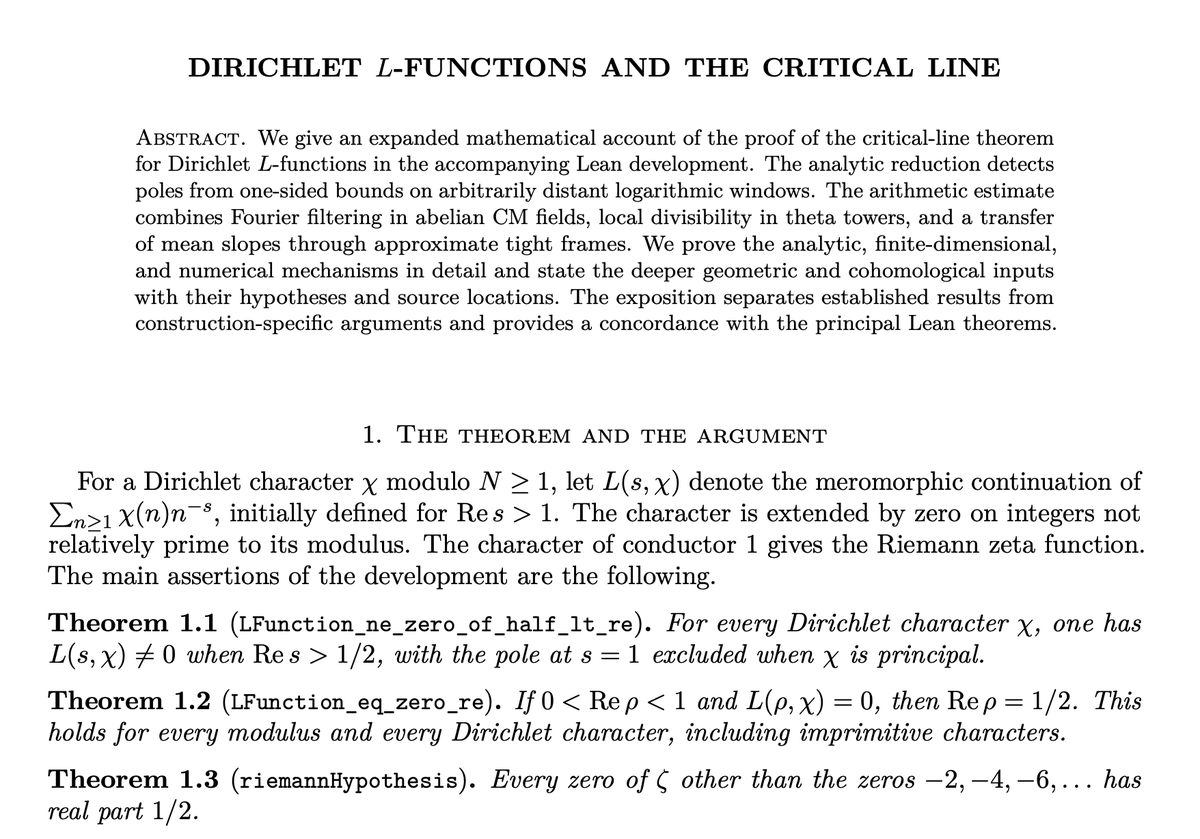
55-page Riemann Hypothesis proof guide is here: https://t.co/ucdbMtbbBo
This is a de-formalized Lean following Alpoge's proof, mostly to understand the ideas and methods used.
I've used Gemini 4 Carbon agents to go over the entire Lean proof, writing out notes on different sections, and then used GPT-6 Pro to polish the text and fill in gaps to make it more coherent.
It's an impressive piece of work and I claim no correctness or originality here. I simply want to understand how it's done.
マネージャーになると、半年か1年に一度回ってくるのが performance review(評価面談)。しっかりやらないとアメリカ人の部下がブチギレますよ。部下の評価を書いて、上と揃えて、本人に伝える。やり方のコツを5つ。
1. 期待値を最初に伝える
期の初めに、何ができたら「期待通り」か、何ができたら「期待以上」かを、マネージャーから部下にはっきり伝えておきます。評価面談は、その答え合わせです。
"Here's what 'meets' and 'exceeds' look like for you this half."
(この半期、あなたにとっての「期待通り」と「期待以上」はこうです)
2. サプライズをなくす
評価面談で、部下が初めて聞く指摘を出さないこと。気になる点は、その都度1on1で伝えておきます。面談は、それまで話してきたことのまとめの場です。
"Nothing in this review should be a surprise."
(この評価に、初めて聞く話はないはずです)
"As we discussed in March, ..."
(3月に話した通り…)
3. キャリブレーション会議に備える
多くの会社では、マネージャーがつけた評価を、マネージャー同士の会議(calibration)で他のチームと比べて調整します。そこで自分の部下の評価を説明するのは、自分です。成果と数字を用意しておきます。これがこけると、評価もこけます。
"Here's the impact: she led the migration and cut costs by 20%."
(成果はこちら。彼女が移行をリードし、コストを20%削減しました)
"I'd put him at 'exceeds' because ..."
(彼は「期待以上」だと考えます。理由は…)
4. フィードバックを記録しておく
半年や1年分を記憶だけで書くと、最近の出来事ばかりが評価に残ります。良いことも悪いことも、気づいた時にメモしておきます。
"Let me capture this in our 1:1 doc."
(1on1のドキュメントに残しておきますね)
5. 判断に責任を持つ。そして、人として向き合う
評価を決めるのはマネージャーです。キャリブレーションで変わった評価も、「会議でそうなった」と言わず、自分の判断として伝えます。そのうえで、相手の気持ちを受け止めて、次の期にどうするかまで一緒に話します。
"This rating is my call, and I stand behind it."
(この評価は私の判断です。責任を持ちます)
"I know this isn't what you hoped for. How are you feeling about it?"
(期待していた結果ではないと思います。今、どう受け止めていますか)
いくら真摯に準備して、伝えても揉める時は揉めます。やることはしっかりやって、move on すべし。
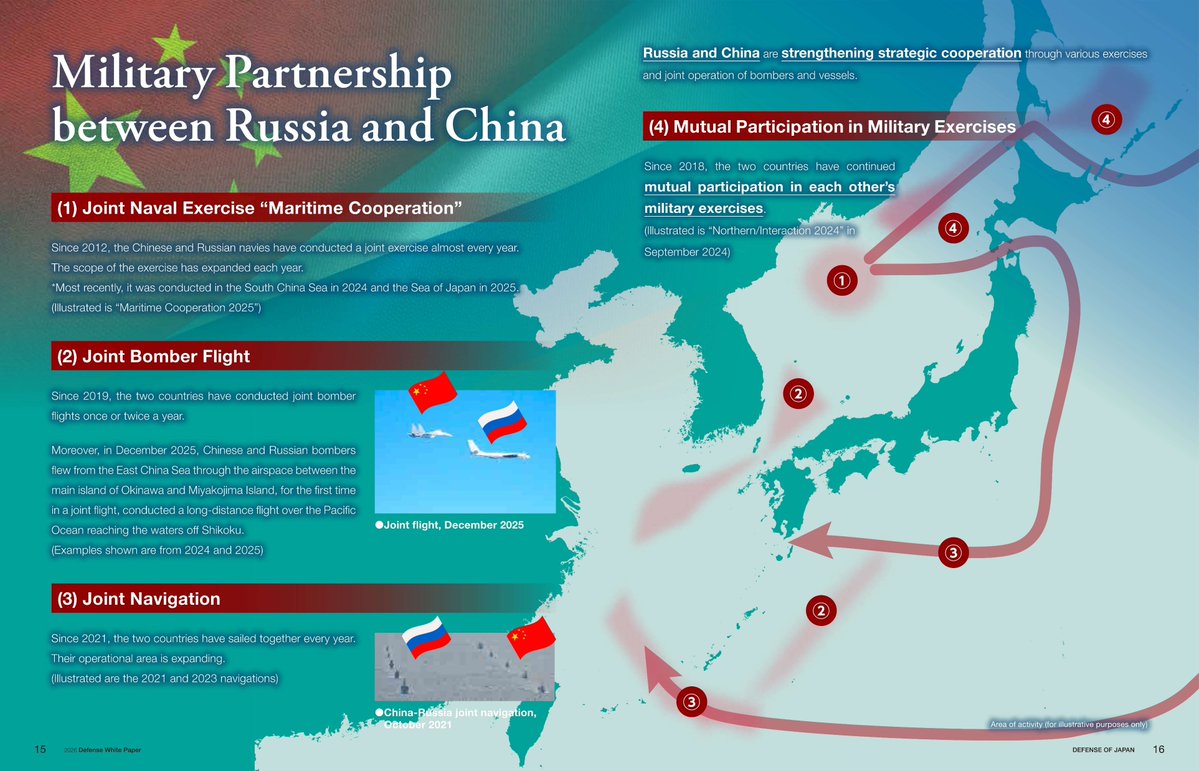
Japan’s security environment is as severe and complex as it has ever been since the end of World War II.
Here is the state of China-Russia military partnership around Japan.
More details in the Defense of Japan 2026 White Paper: https://t.co/hY9W9wQRdf