Bon voyage @ESA_Euclid 🚀
#DidYouKnow that data-processing software developed at CERN has been integrated into #ESAEuclid’s Science Ground Segment? It will process about 850 Gbits of compressed data per day – the largest of any @ESA mission to date.
🔗 https://t.co/O8IuKp0yi5
Have you heard about DUNE?
And no, we don’t mean the movie…
To learn about all things #neutrinos, join #CERN, @Fermilab and @Sanfordlab on 15 June at 18.00 CEST for our first gameshow-style livestream #DUNEParticlePursuit, a journey of the Deep Underground Neutrino Experiment.
#DUNEscience #DUNElive #neutrino #physics @DUNEScience
Set a reminder: https://t.co/c4xrNi7zAV
Longer days, shorter weeks⏰
The BETA experiment at #CERN used one of the world's most precise clocks to measure how long a second lasts in caesium and anticaesium.
The new definition of a second means the day should, in reality, last 24h, 56min and 24s: https://t.co/gFhOWXfVz7
12:22 was beam o’clock in the #LHC 🌠
Yesterday, CERN’s flagship accelerator wakes up from its winter slumber – the year-end technical stop (YETS) – ready for the 2023 data-taking season of the #LHCRun3. #BeamTime
Read more: https://t.co/X2WTVsfMkX
Today at the #Moriond conference, the @ATLASexperiment & @CMSExperiment have both reported the observation of a rare phenomenon: the simultaneous production of four top quarks, which could hold the key to physics beyond the #StandardModel.
Find out more: https://t.co/6ORZb3BS3I
Congratulations to Slawosz Uznanski for making it to the new class of @esa astronauts! 🧑🚀 He is a senior engineer at CERN, working for the #LHC, and passed the selection process that gathered 22 500 participants!
Slawosz will join the ESA astronaut reserve pool.
Brilliant day learning from professionals at the IoP (@PhysicsNews) attending their communicators and outreach conference.
Fantastic to bump into @naomidinmore (fellow physicist from school) and @mtheory123 (physics teacher) that have shaped me into the physicist I am today!
#ClimateCrisis - UN finds ‘no credible pathway to 1.5C in place’
- Countries' failure to cut carbon emissions means ‘rapid transformation of societies’ is only option to limit impacts, @UNEP report says
Story by me
https://t.co/ybWeI3hih6
LHCf recently completed its first data-taking run at the energy of 13.6 TeV #LHCRun3
It uses particles created at the #LHC to simulate cosmic rays, and search for particles that are made up of a #quark and an antiquark pair, including a strange quark.
🔗 https://t.co/r8cZFuovyg
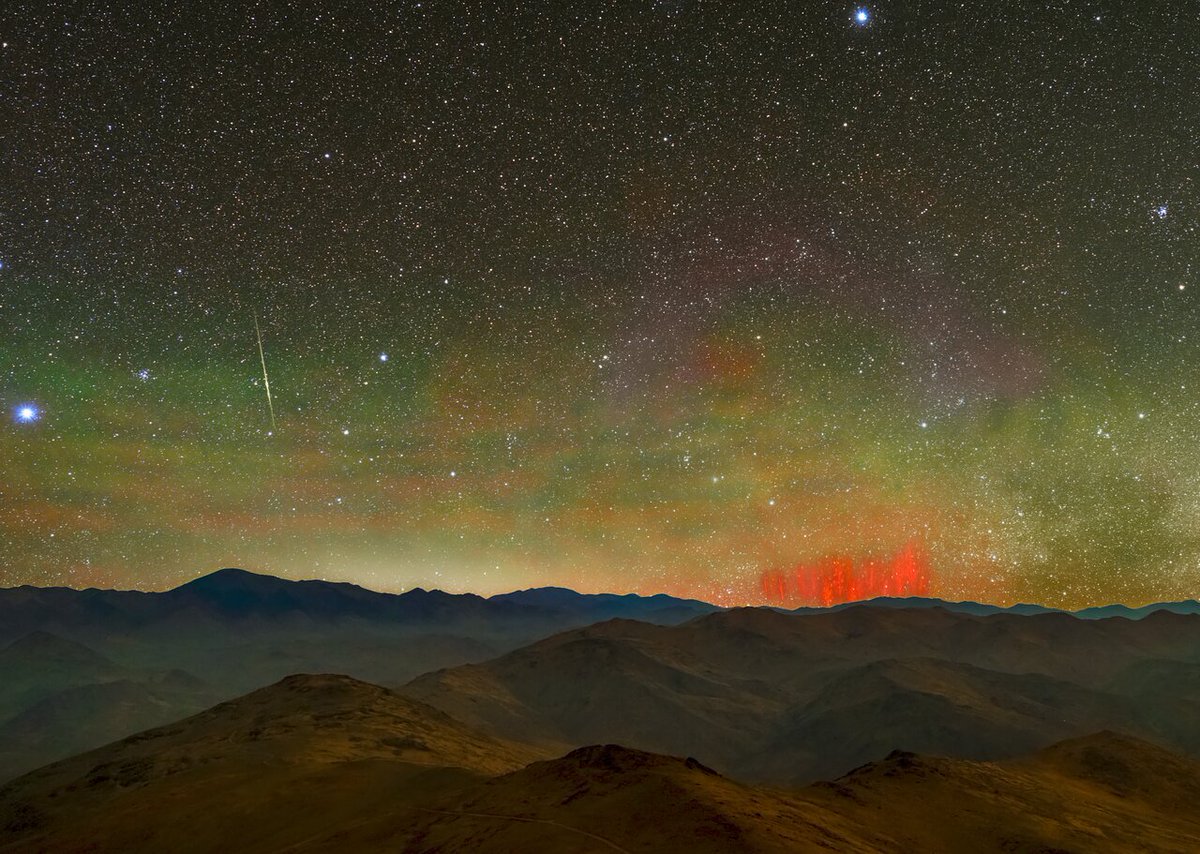
This Picture of the Week captures a very elusive phenomenon: red sprites. This is a form of lightning occurring well-above storm clouds, discharging electricity high up in Earth’s atmosphere at an altitude of 50-90km.
🔗 https://t.co/uykgr4AjUZ
Credit: @zdenek_bardon / @ESO
This image of a woman shirtless in a sports bra - hugely significant. This is a woman’s body - not for sex or show - just for the sheer joy of what she can do and the power and skill she has. Wonderful. #Lionesses
'I have had enough of being told by shadowy old businessmen and lazy, ignorant hacks – who aren't real scientists – that the science is wrong.'
Andrew Marr's furious response to those dismissing the climate crisis, as the UK faces a record-breaking heatwave.
@AndrewMarr9
1/ Astronomers have unveiled intricate details of the star-forming region 30 Doradus (Tarantula Nebula), using new data from @ALMAObs . This shows the nebula in a new light, with gas clouds that provide insight into how massive stars shape this region.
🔗 https://t.co/4Z16nKX7Gi
Less than three weeks until #LHCRun3
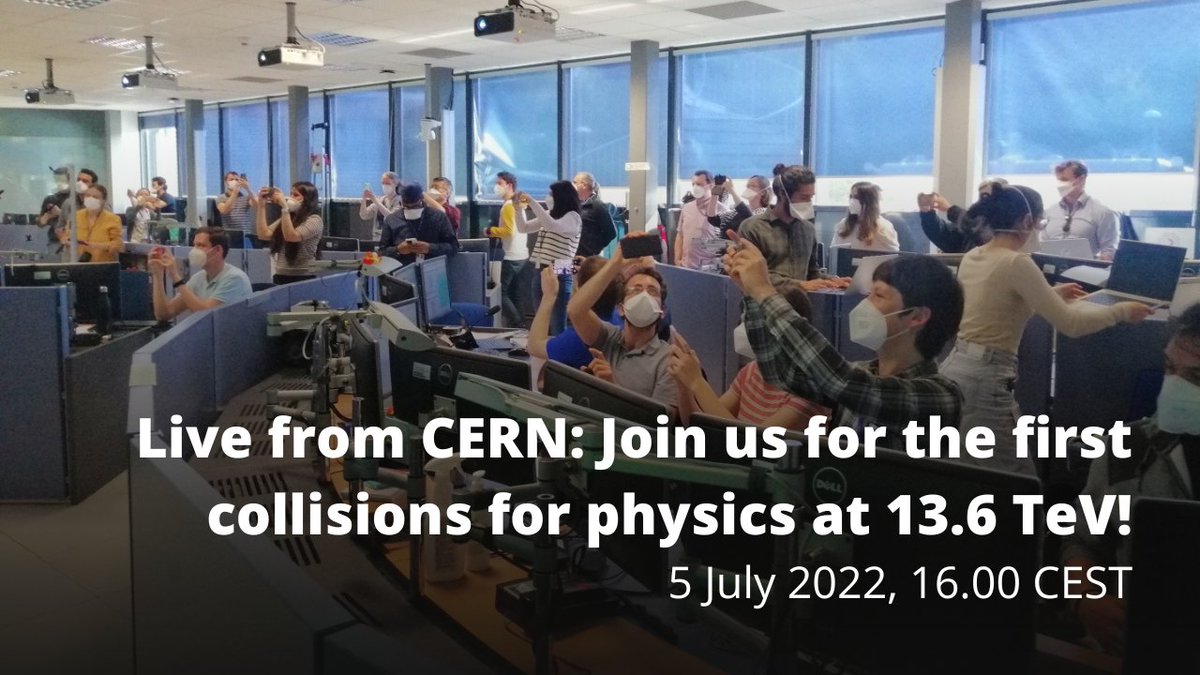
Join CERN scientists live on 5 July, 16.00 CEST to celebrate the first collisions with stable beams at the world-record energy of 13.6 TeV, a milestone that will mark the beginning of the third physics run of the LHC.
Loved writing this #ESOblog about the Early Universe! Fittingly, (or rather, sadly) it's going out on the last day of my internship here - but please have a read if you're curious about the origins of where we all came from 🌌
The early universe was a strange place. When did the first stars and galaxies form? How different were they from the present-day ones? Find out in our latest #ESOblog by @naomidinmore
🔗 https://t.co/t3HKXFtoHf
Credit: @ESO /M. Kornmesser