Founder of Arcimoto, primary progenitor of STAR Voting and the Equal Vote Coalition, presently rehabilitating the spinal column and… what?! New shiny?!
Where The Train Tracks End
The elderly mother’s retelling of the German soldier’s response echo in my mind to this day: “Keep it. Where you’re going, you’ll need it - and I’ll try to miss.”
Our tour group on that June day in 2001 was small: myself, a retired empty nest Midwest farming couple who’d sold everything to join the Peace Corps’s efforts in Moldova, and a middle aged woman and her elderly mother returned to Poland for the first time since the 1940s.
As we waited in the reception lobby, she told the story of her “visit” a half century prior. At a train station she learned that Auschwitz was her final destination and knew it was a death sentence. Desperate, she approached a guard and begged him to let her run in exchange for her engagement ring. His human and chilling response helped answer the question that had become the overarching study of my backpacking trip through Europe:
How could this atrocity have happened?
My housemate John and I touched down in Amsterdam in May of 2001. Coming off of two grueling years building Tribes 2, we both needed a break, and I’d long dreamed of backpacking around Europe before diving into GarageGames. We landed with no real agenda, so we wandered, taking in the sites of the city - the architecture and canals, the Red Light District and coffeeshops, the parks and museums.
Near the end of that first week overseas we toured the Anne Frank House.
Though I hail from the erudite hills of South Eugene, I was only vaguely aware of the name “Anne Frank” and her diary — probably the subject matter of one of the many lit classes I studiously avoided in high school. As such, learning her story for the first time, inside the very house where she and her family hid from the Nazis for years before being discovered and sent to concentration camps, was deeply impactful.
In that house I purchased her book, “The Diary of a Young Girl”, and read it as I traveled by train through Europe. As I traveled, the question that began to burn in my mind was simple. How could ordinary people, people who lived and loved, thought and cared… how could those same people have participated in gruesome atrocity on a massive industrial scale?
After touring Paris and mountain biking in the Swiss Alps, John headed home and I took the train to the Bavarian town of Tegernsee to stay with distant cousins.
Their perspective was telling: younger than I, they and their friends felt visceral generational guilt from the actions of their forebears. Their schooling included pointed inoculation against government propaganda and the divisive rhetoric used to turn a populace against minority groups.
My cousins strongly encouraged me to visit concentration camps and see firsthand the atrocities normal “good” people can commit when led down a long slippery slope by power-thirsty tyrants.
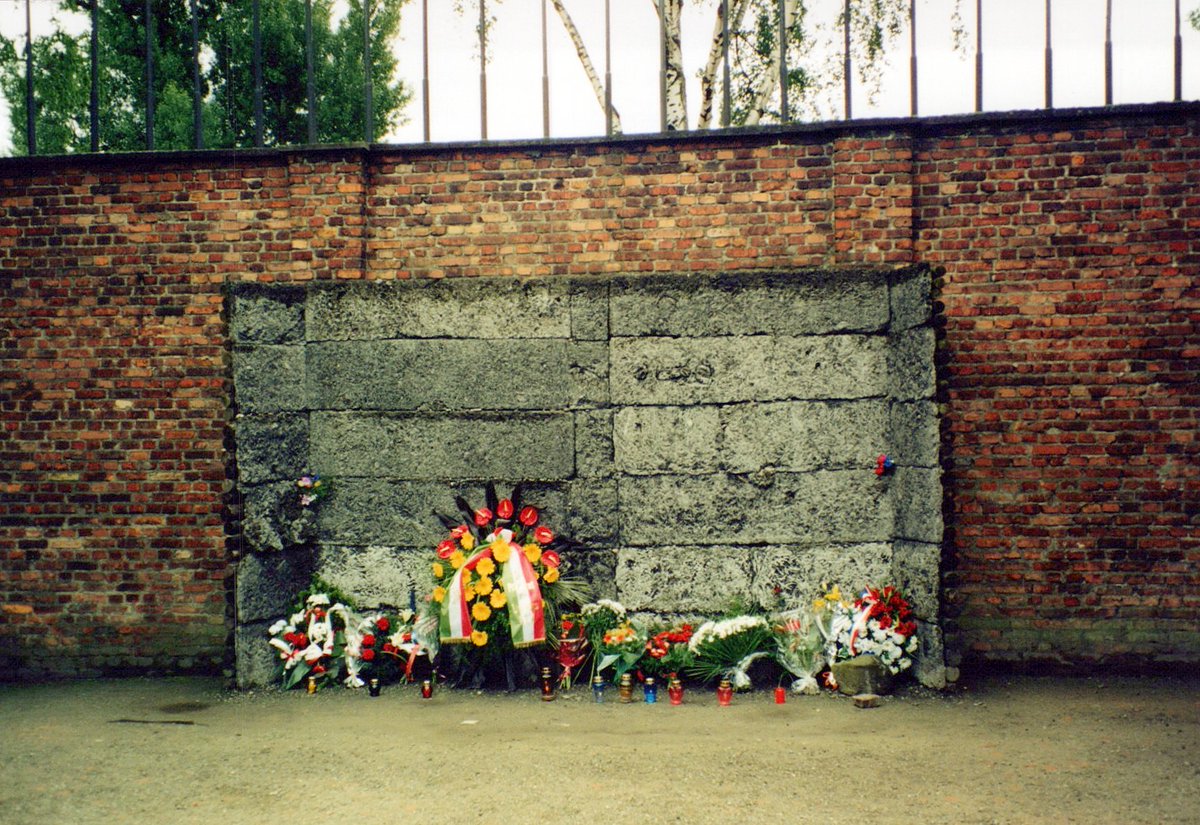
That imperative led me to the Polish city of Krakow and from there to Auschwitz-Birkenau, where the train tracks end.
It’s hard to convey in words the darkness of that place: the rooms full of suitcases and shoes, the ash pits with bone chips still visible, the stunning industrial scale of manufactured murder of a million and a half people at that site alone.
When the elderly Jewish mother related the guard’s words from a half century prior: “Keep it. Where you’re going, you’ll need it - and I’ll try to miss,” it clicked just a little. The holocaust didn’t happen overnight. Its many participants weren’t all “evil”. It was a system of control and destruction built over many years with divisive propaganda, silencing of dissenting views, and hierarchies of force.
The guard knew he had to shoot because if he didn’t he’d be shot in the back. His tiny act of humane defiance in the darkness allowed a young woman to live and have a family, and is a reminder to me to this day that there is a beating heart under every regimented uniform.
So why am I telling this story now? Well, I’m cleaning out my house and I finally borrowed a scanner to digitize my old photos. Might as well explain a few of ‘em. That this scanning comes at a time of civic madness might just be a total coincidence.
Or it may be one dude trying to make sense of his friends (not to mention public leaders) on “both” “sides” (as if there are sides more important than our shared humanity and as if there are only two of them) as they lob shots across the bow that only deepen the division and hasten our collective descent.
After seeing friends on social media calling people Nazis without reasonable cause or watching a reddit video of a fellow community member flippantly exclaiming “we need the Gestapo”, I am impelled to speak up. Calling someone a Nazi who doesn’t identify as such is a lousy opener for understanding, and we definitely don’t need the Gestapo. I’ve been to where the train tracks end and I’m here to report that it ain’t a pretty place.
Please! Let's talk! And listen! Not just to the choirs in which we already sing, but particularly the ones we don’t. Going all-in on the First Amendment doesn’t require us to be dismissive assholes; quite the opposite. If we’re going to avoid the bloodshed implicit in the Second Amendment’s last resort, patient civil discourse and bridging of understandings is paramount.
Ok. That’s all I’ve got for today. Love, peace, and humptiness to you all.
@TheEqualVote Well, that’s just like… your opinion, man. What if I have an even better strategy under STAR Voting than just voting honestly? What then? 🤔
@ChuckGafvert@CollinRugg A first principles approach, imo, would look at the voting method before the lines. The impact of gerrymandering is magnified to the extreme by plurality (choose one) voting. Methods such as STAR that provide an equal weight vote will likely yield more representative outcomes.