Studying the origin and evolution of life on Earth to inform the search for life elsewhere in the Universe. Follow @NASASolarSystem, @NASAMars, & @NASAUniverse
This has been the best community on the internet & we've loved every minute of it.
This account is now inactive. Find future astrobiology news and resources on our website at https://t.co/dHSABmnQsj and by following @NASASolarSystem, @NASAMars and @NASAUniverse.
Stay curious.🖖
📢 Important: As part of NASA’s effort to streamline communications, this account will be archived on Sept. 1.
For news, discoveries, and resources related to understanding life and its potential in the cosmos – please follow @NASASolarSystem, @NASAMars and @NASAUniverse.
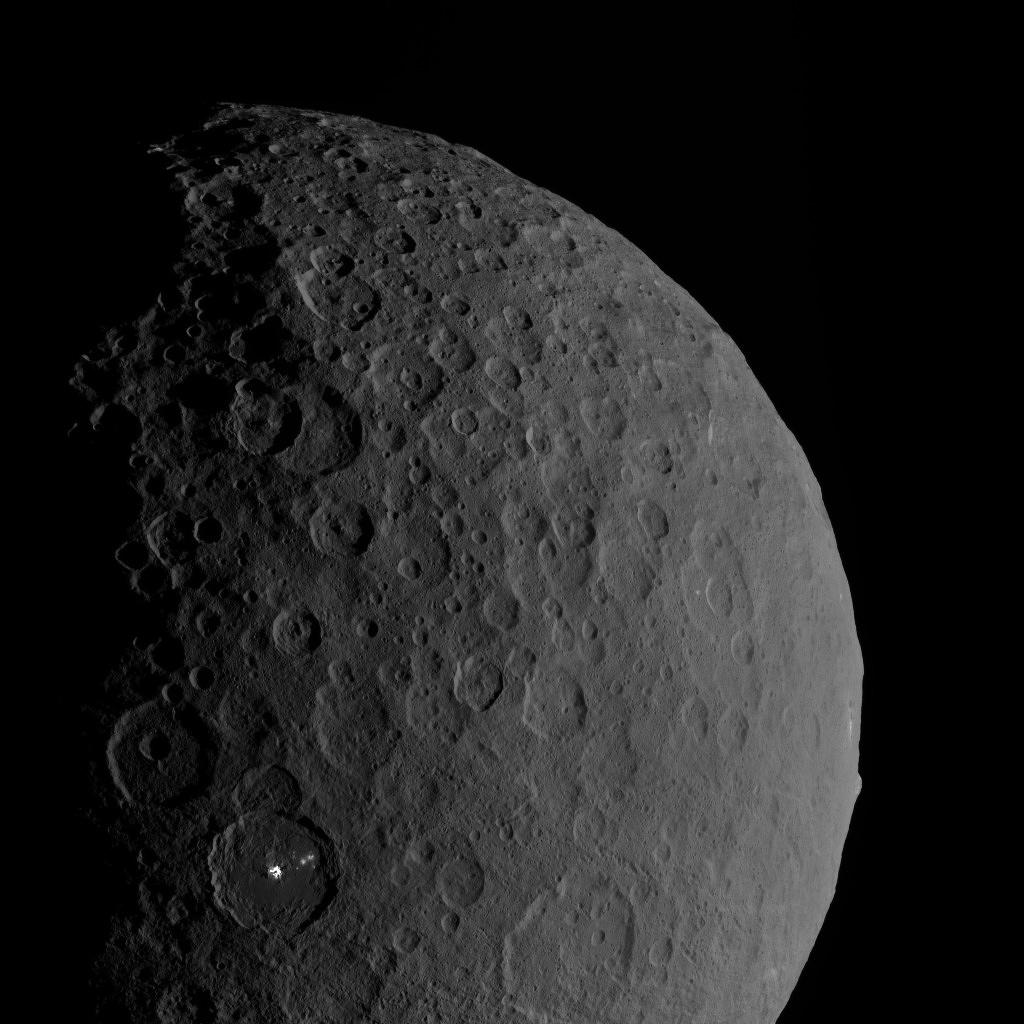
Hot science on a cold dwarf planet: Ceres may be cold now, but new research suggests it once had a lasting source of chemical energy. When combined with the briny water and carbon molecules found in its interior, Ceres may have been habitable. https://t.co/EWz9u6Y95F
Today at 3 p.m. ET — we're talking about artificial intelligence in the search for life and our Habitable World Observatory. Join here to ask questions live: https://t.co/f7o9jtUgk4
This week on #AskAstrobio we're talking artificial intelligence, exoplanets, and the future of astrobiology. Tune in below and follow @NASAUniverse for astrobiology news from beyond our solar system!
What will it take to find life on planets beyond our solar system? Our Habitable Worlds Observatory will be the first mission designed to find out! Share questions for Program Scientist Dr. Megan Ansdell and tune into #AskAstrobio on Aug. 14 at 3 p.m. ET: https://t.co/z38xEUhiOv
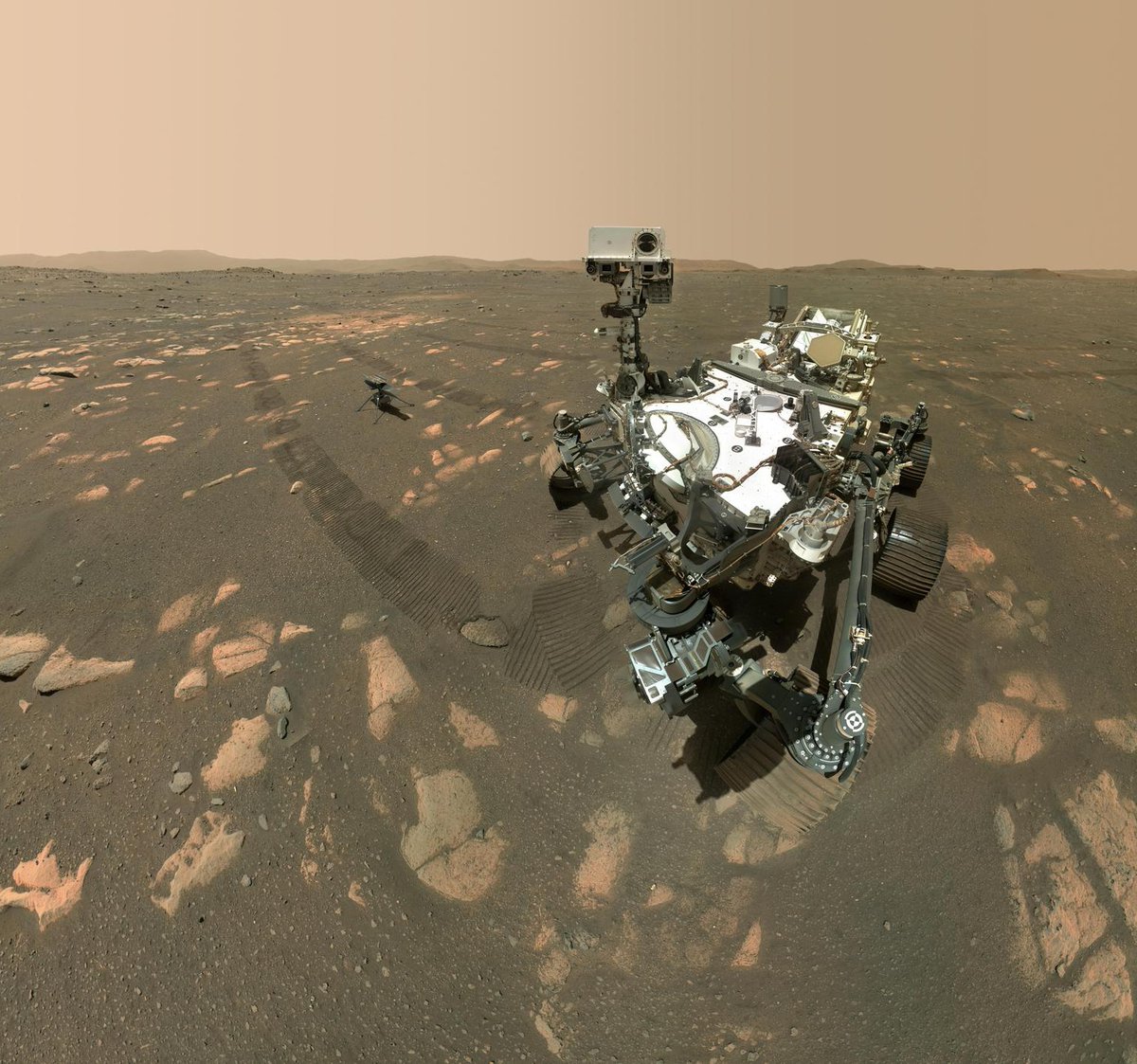
A few interesting sights here:
- The abrasion patch made by the rover is 2 inches (5 centimeters) wide
- These tracks are about 300 feet (90 meters) away
- This peak is 40 miles (65 kilometers) away!
https://t.co/yler3uvX00
Our account might be going away, but the science we love continues. 💫 Follow @NASASolarSystem to get continued updates on astrobiology-related missions, science, and discoveries.
Are there places on Jupiter's moon Europa where water is near the surface? Our Europa Clipper spacecraft will use its E-THEMIS instrument to find out. In March, the instrument went through a test run at Mars: https://t.co/ClqMo6JqwU
📢 Important: As part of NASA’s effort to streamline communications, this account will eventually be archived. For news, discoveries, and resources related to understanding life and its potential in the cosmos – please follow @NASASolarSystem, @NASAMars and @NASAUniverse.
Are we alone? To find out, we’re building the Habitable Worlds Observatory. This powerful space telescope uses proven technologies from @NASAHubble, @NASAWebb, and @NASARoman to look for signatures of planets that can support life — and maybe life itself. https://t.co/rKKDP1Slys
Our next #AskAstrobio guest, Dr. Amber Young, uses climate and photochemical modeling to identify clear signs of life in Earth’s atmosphere—and applies that expertise to develop new strategies for detecting life on distant rocky planets. Join her live Q&A on June 17 at 1pm ET: https://t.co/hS5V9hTTLk
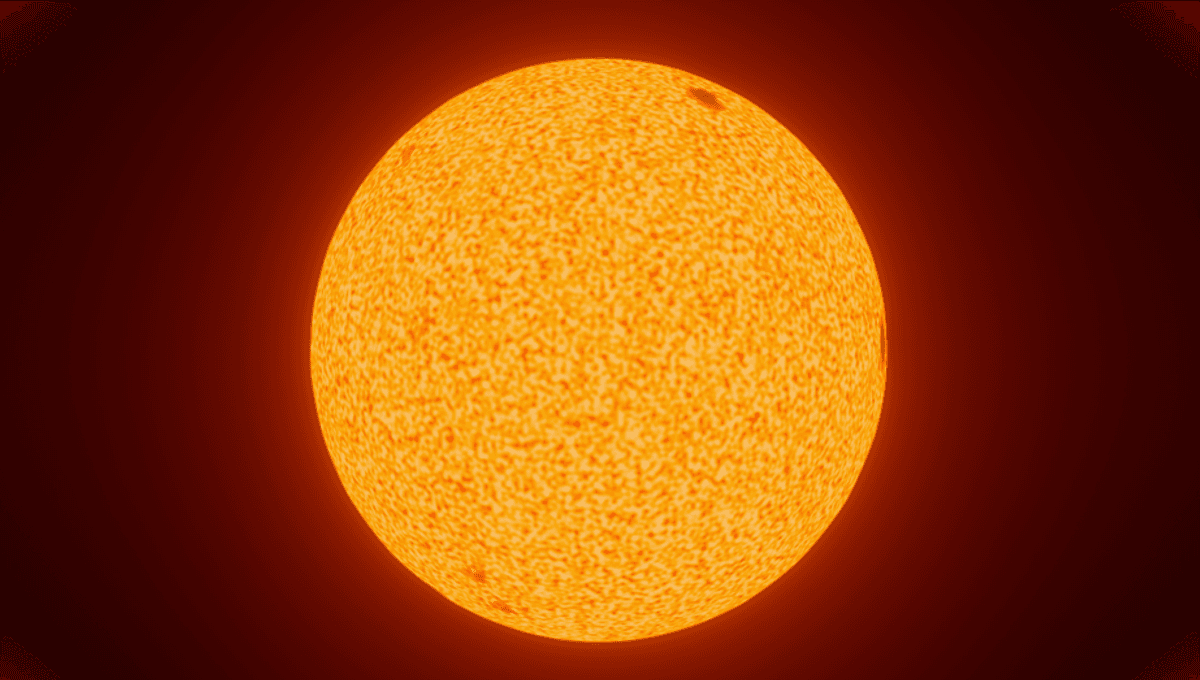
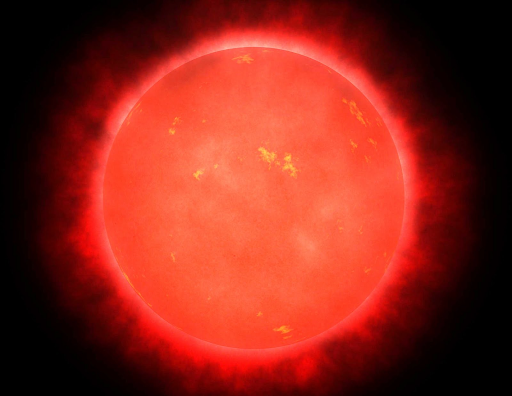
Our next guest on #AskAstrobio, Dr. Amber Young from @NASAGoddard, is modeling possible habitable worlds beyond our solar system. Which stellar type do YOU think is most likely to host a habitable exoplanet? Vote here: https://t.co/3wyBYttAm3
Bring your questions June 17 at 1pm ET: https://t.co/XlHVXwefp7
Our next #AskAstrobio guest, Dr. Amber Young, uses climate and photochemical modeling to identify clear signs of life in Earth’s atmosphere—and applies that expertise to develop new strategies for detecting life on distant rocky planets. Join her live Q&A on June 17 at 1pm ET: https://t.co/hS5V9hTTLk
@NASAMars This finding helps explain how Mars transitioned from a potentially habitable world—with liquid water on its surface—to the cold, dry planet we see today. It’s a key piece in the astrobiology puzzle of whether life could have once existed on the Red Planet.
After a decade of searching, @NASAMars' MAVEN mission has directly observed sputtering—an atmospheric escape process where solar particles knock atoms out of the Martian atmosphere. This long-suspected process likely played a major role in stripping Mars of its thick atmosphere. https://t.co/J7AHxUVDMX
Where did Mars' water go? And why?
These questions have long puzzled scientists. Now, after a decade of searching, @NASAMars’ MAVEN has made the first direct observation of an elusive atmospheric escape process known as sputtering, offering new insight into the Red Planet’s mysterious water loss. https://t.co/4KqzZUJwmc
What if colors hold the key to finding alien life? Get answers straight from the expert!
Dr. Lígia Coelho joins #AskAstrobio live today at 1pm ET to discuss her groundbreaking microbial research and space exploration innovations. Bring your questions & share for a shoutout: https://t.co/n4yCLEA7L2
@spacenukej We hope to see you soon during the live show! Send in questions for our expert to answer live by using #AskNASA on X or YouTube: https://t.co/SAC0acSAW5
Our next guest for #AskAstrobio is Dr. Lígia Fonseca Coelho, an astrobiologist who studies biological pigments of a certain color that she says could expand our list of potential candidates for habitable worlds outside our solar system! What color planets should future telescopes include in their search? Vote here: https://t.co/euZLZcptGJ