@chandraxray The red light represents X-ray observations by Chandra, revealing superheated gas pervading the cluster.
The blue haze shows specially-processed data from Hubble, suggesting evidence of dark matter – the invisible "scaffolding" of our universe: https://t.co/rc68XhMvD2
It takes telescope teamwork to get the full picture of ZwCl 0024+1652!
This galaxy cluster is located about 9.5 million light-years away. The glowing blue and red light here shows data from Hubble and @ChandraXRay ⬇️
A galactic photobomb!
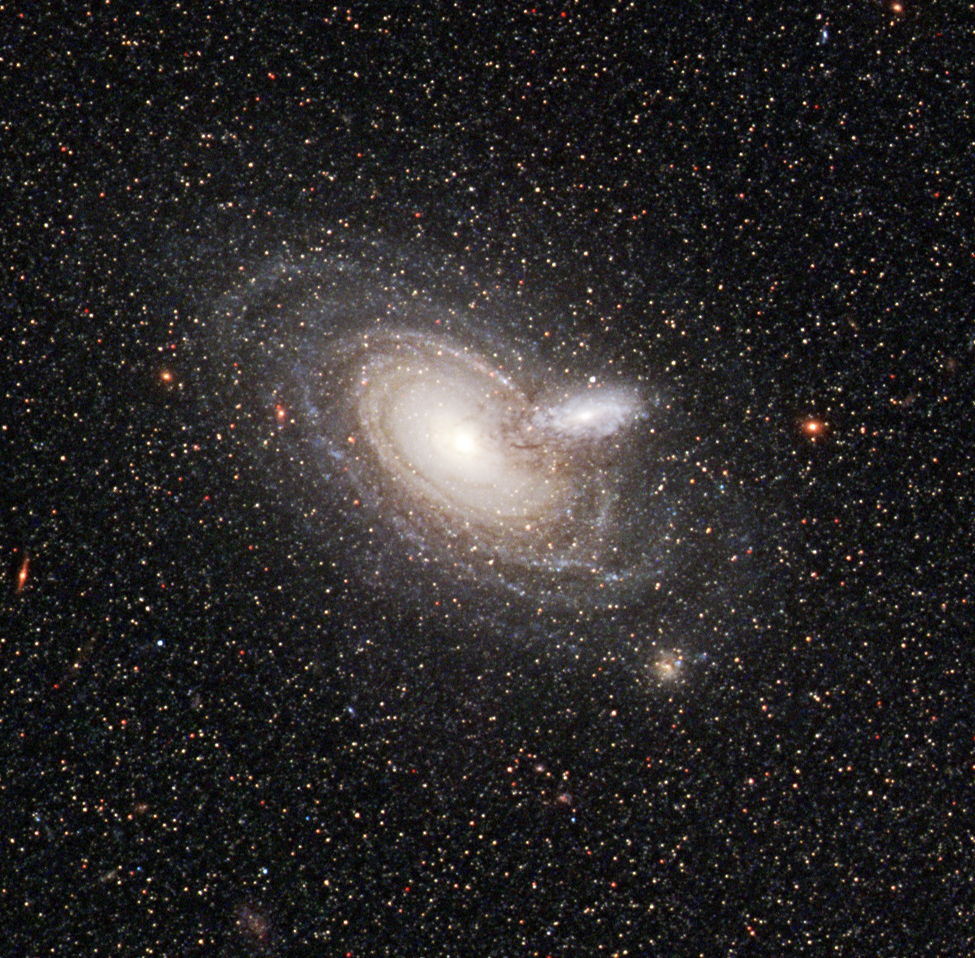
By a chance alignment, two galaxies overlap in this Hubble image. And another galaxy appears, too – most of the stars sprawled across the background belong to another spiral galaxy called NGC 253, which is out of frame to the right: https://t.co/TyCFOo6a0v
Baby, you're a firework 🎆
This image combines data from Hubble and @ChandraXRay to show a spectacular star cluster surrounded by a vast region of dust and gas.
Called NGC 3603, this star factory shines 20,000 light-years away: https://t.co/rc68XhMvD2
July 12th is Webb’s 4th science anniversary!
When we dive deeper into the familiar galaxy Centaurus A, our view becomes richer and stranger— a vivid record of cosmic history.
https://t.co/lUTv8fE451
Happy 250th Independence Day, America! 🇺🇸
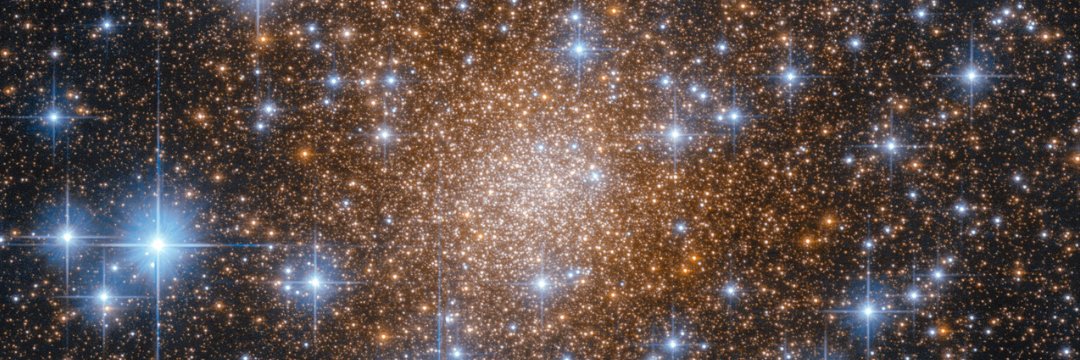
Hubble's birthday gift to the nation is this new image of NGC 6426, a glittering star cluster that looks like a sparkler waving on a dark night.
Learn more about this Fourth of July view: https://t.co/oBThpzljEM
Like bright fireworks, blue and white stars shine against a red background of glowing gas in this new Hubble image of LH 95. 🎆
LH 95 is a star-forming region within the Large Magellanic Cloud, a dwarf galaxy that orbits our Milky Way: https://t.co/u8iroV16Qx
Congratulations, Katalyst Space and Northrop Grumman, on a successful launch! Now Katalyst's LINK will undergo several weeks of commissioning before rendezvousing with our Swift observatory to attempt an orbital boost. More here: https://t.co/daQGHGsfoI
It’s Fourth of July Eve!
Get ready for America’s 250th birthday with a new star-spangled view of Messier 3. Located about 34,000 light-years away, this huge cluster contains more than 500,000 stars: https://t.co/4GFcXsAHrA
Though dust obscures background stars and galaxies, in @NASAHubble’s image of FS Tau (right) we can see protostar FS Tau b, its dusty protoplanetary disk, and its jet of matter (colored cyan). Compare to the Webb image on the left!
@adamk028@myspacemia444@NASAUniverse Sometimes, Hubble takes exposures over the course of multiple days in order to capture enough light from faraway cosmic objects. That's why you might see one of your birthday images on another day, too!
What Did Hubble See on Your Birthday?: Expanded Edition! 🥳
In celebration of America's 250th birthday week, now you can find *five* Hubble views taken on your special day.
Discover yours and let us know your favorite in the replies: https://t.co/QqEpU35JYQ
Explore the Fourth of July through Hubble's eyes. 🎆
In honor of the original 13 colonies, take a look at 13 Hubble views captured on previous Independence Days here: https://t.co/U8uIG0PURz
Have you looked up what our @NASAHubble telescope saw on your birthday?
Our popular page has a new look — and now, you can use it to find five stellar sights that Hubble was observing on whatever day you choose. Check it out: https://t.co/zV0oN7h5vs