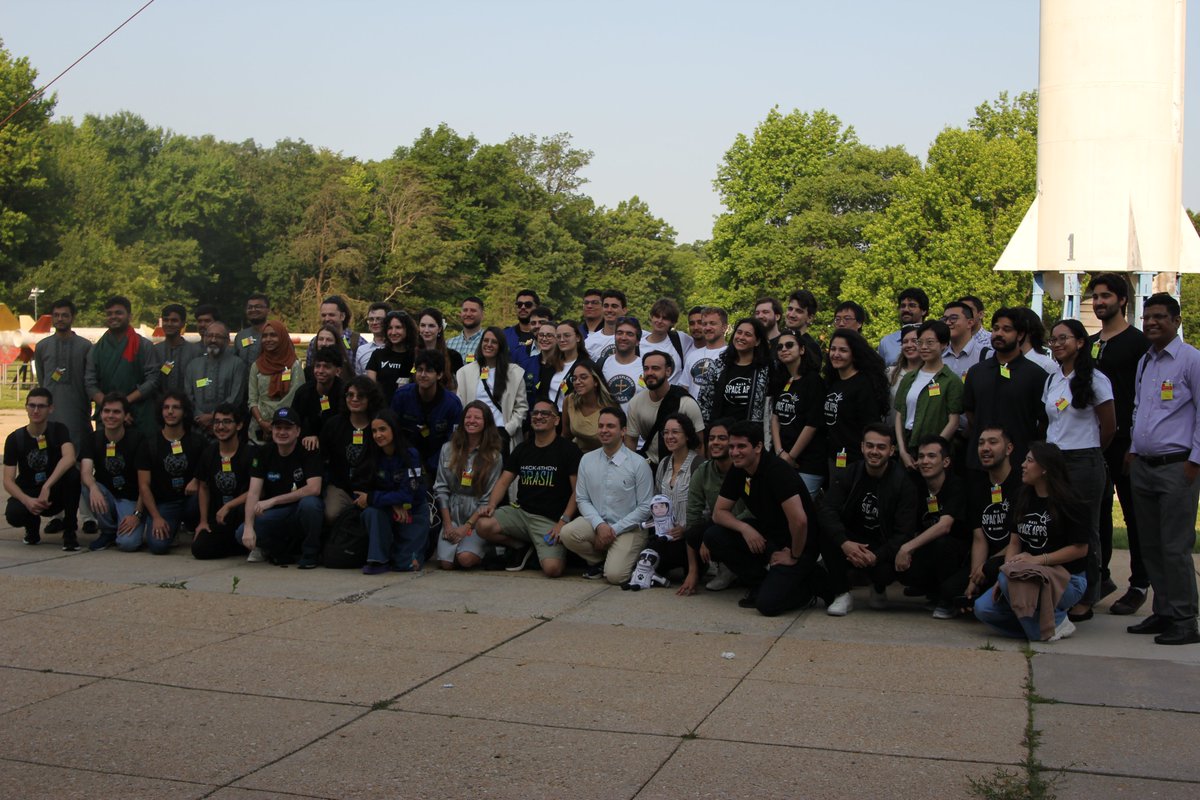
Everyone you love in one photo ❤️
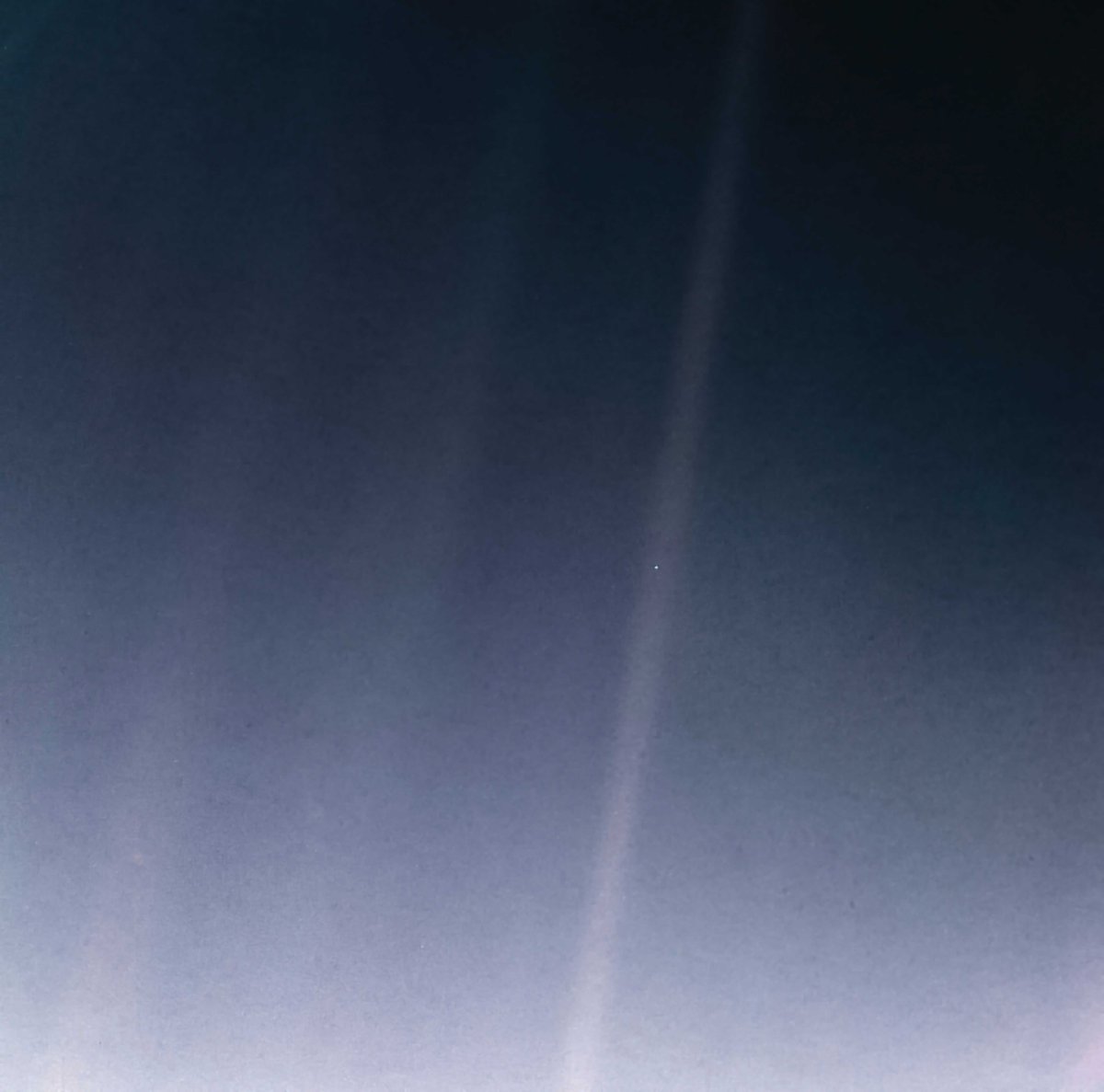
Before its imaging camera was turned off, NASA's Voyager 1 took this iconic photo known as the "Pale Blue Dot" #OTD in 1990. In it, Earth is visible as a miniscule speck in the inky darkness.
A team from @UofMich is working with @NASA to create a new approach to measure Earth’s magnetic fields by developing a new system that can both take scientific measurements and provide spacecraft attitude control functions.
Learn more: https://t.co/q4omSxFxDN
Reminder: Over the next few weeks, this X account will soon be archived. To find the latest news, announcements, and resources regarding NASA Science and its leadership, please make sure to follow our blog and the NASA Science website, both linked below.
Blog: https://t.co/1ZjgPycjAM
Web: https://t.co/qCBgJBoc0f
Sundays are for perspective.
From tracking ocean currents and wildfires to studying distant galaxies, #NASAScience helps us see the beauty and fragility of our home planet and beyond.
Take a moment to look up, and remember: science is how we explore, protect, and understand our world. Discover more: https://t.co/PdV3xSSIdm
The #NISAR mission is one step closer to liftoff!
This NASA-ISRO satellite, designed to monitor Earth’s changing ecosystems, land surfaces, and ice, has safely arrived at India’s Satish Dhawan Space Centre. Launch is targeted for July. Details: https://t.co/1WbvCrYUfg
During its early years, our universe was immersed in a fog of neutral hydrogen gas, but today this gas is ionized.
Until now, astronomers have wondered what objects caused this transformation.
Using @NASAWebb data, a team of astronomers have identified dozens of small galaxies that played a starring role in shaping our universe into the one we know today. More: https://t.co/Q1h6Bavehu
Have you seen the latest images of solar eruptions from @NASA's PUNCH mission?
Using the mission’s highly sensitive, wide-field instruments, we’re able to capture a big-picture view of coronal mass ejections (CMEs) as they evolved and raced through the inner solar system in much greater detail than previously possible. The data from these images are helping scientists better understand space weather and its impact.
More: https://t.co/tf7R5jyinV
Over time, NASA’s social media portfolio grew to more than 400 accounts across dozens of platforms. While each account has served an important purpose in telling our story, our focus is to improve the user experience through more cohesive messaging. We are reducing the overall number of accounts for a simplified presence that continues to inform, educate, and inspire the public.
Update: The SunRISE team is reviewing its launch date, anticipating no earlier than September for liftoff.
SunRISE, led by Prof. Susan Lepri of @UMich, consists of six small satellites that will detect storms of solar energetic particles that could pose a risk to spacecraft and astronauts. Learn more: https://t.co/oLVRwJoxGR
Three black holes have been caught snacking on stars, thanks to a new study combining many different telescopes including from @NASA, @ESA, and other institutions. These events will help us gain new insights into galaxy and black hole evolution: https://t.co/JbAzjpACkg
Two #NASAScience technologies are key components of a new high-resolution sensor for observing wildfires. This tiny sensor could be used by a constellation of small satellites to provide first responders with detailed wildfire data in less than an hour: https://t.co/iSeKPNco5T
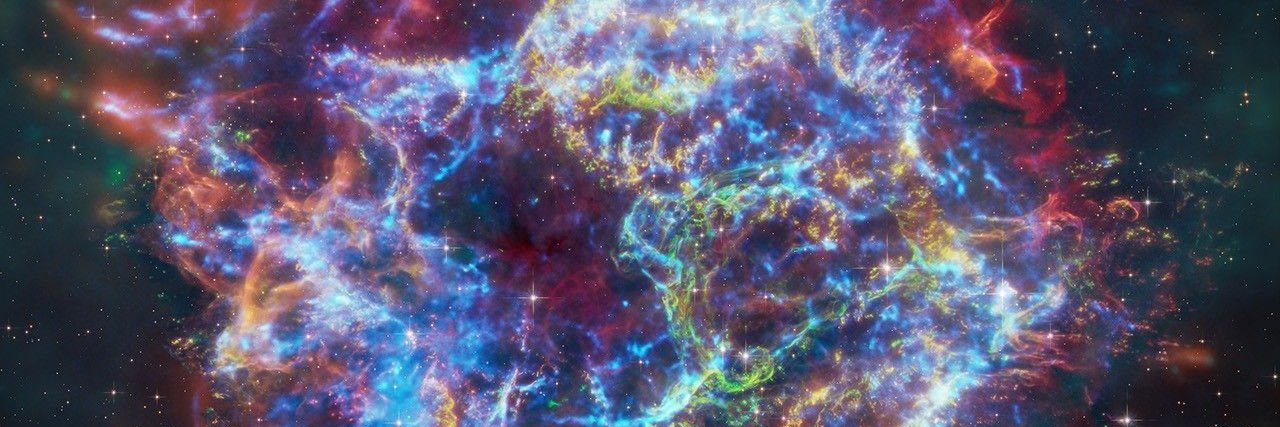
This month’s #NASAScience image features Cassiopeia A, one of the most studied supernova remnants. Using data from @chandraxray and @NASAWebb, researchers have uncovered previously unseen structures within the stellar debris, offering new insights into the complex aftermath of a massive star’s explosion.
Explore the science: https://t.co/CXwfR8K1Yh
Where did Mars' water go? And why?
These questions have long puzzled scientists. Now, after a decade of searching, @NASAMars’ MAVEN has made the first direct observation of an elusive atmospheric escape process known as sputtering, offering new insight into the Red Planet’s mysterious water loss. https://t.co/4KqzZUJwmc
On the ISS, bubbles don’t rise, tools float away and air doesn’t move on its own, so experiments in space need to be reimagined from the ground up. A NASA scientist explains how we do research in zero gravity.
Learn more about science on @Space_Station: https://t.co/B9vtSsVHML
Did you know that changes in nearby tree leaves can indicate when a volcano becomes more active and might erupt? New research from @NASA and the Smithsonian Institution suggests that we can now detect these changes from space. More: https://t.co/bYd9ydN8l8
This #MemorialDay, we honor the brave souls who gave everything for our nation. Their sacrifice echoes through time like starlight, their legacy shines on in the vast cosmos.