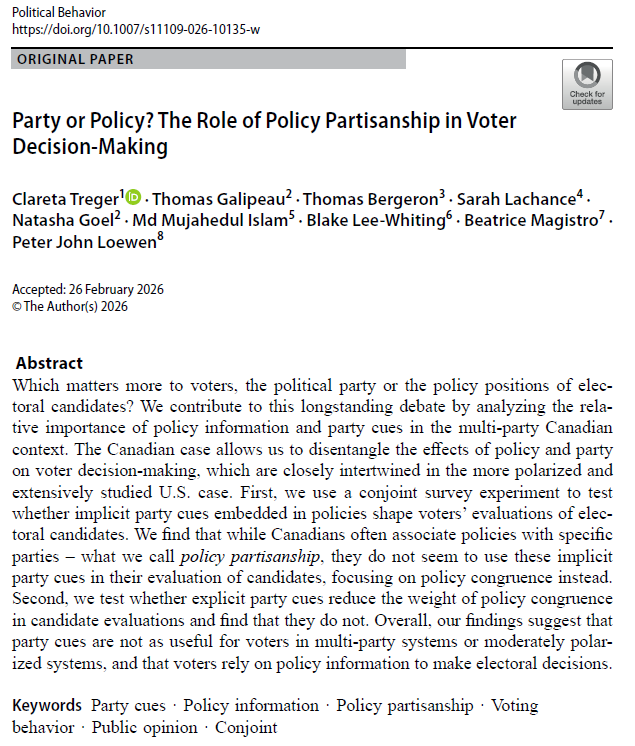
1/ 📢Very excited to share a new open-access paper in @PolBehavior: “Party or Policy? The Role of Policy Partisanship in Voter Decision-Making”
https://t.co/YdANPM3USR
In a longstanding debate in political behavior, what matters more to voters: party cues or policy positions?
In 2015, only 16% strongly agreed Canada had too much immigration. By 2024, that number doubled to 33%.
This IRPP paper by @randybesco and @natgl7 reveals a striking reversal in Canadians’ views on immigration: https://t.co/8ZX74c4k0f
This new article by the Citizen Lab's Gabby Lim (et al) in @techpolicypress examines the growth of economic power in the hands of private firms “incentivized to serve the surveillance state and further a new kind of space military-industrial complex.”
Read it here: https://t.co/DXKszbu85f
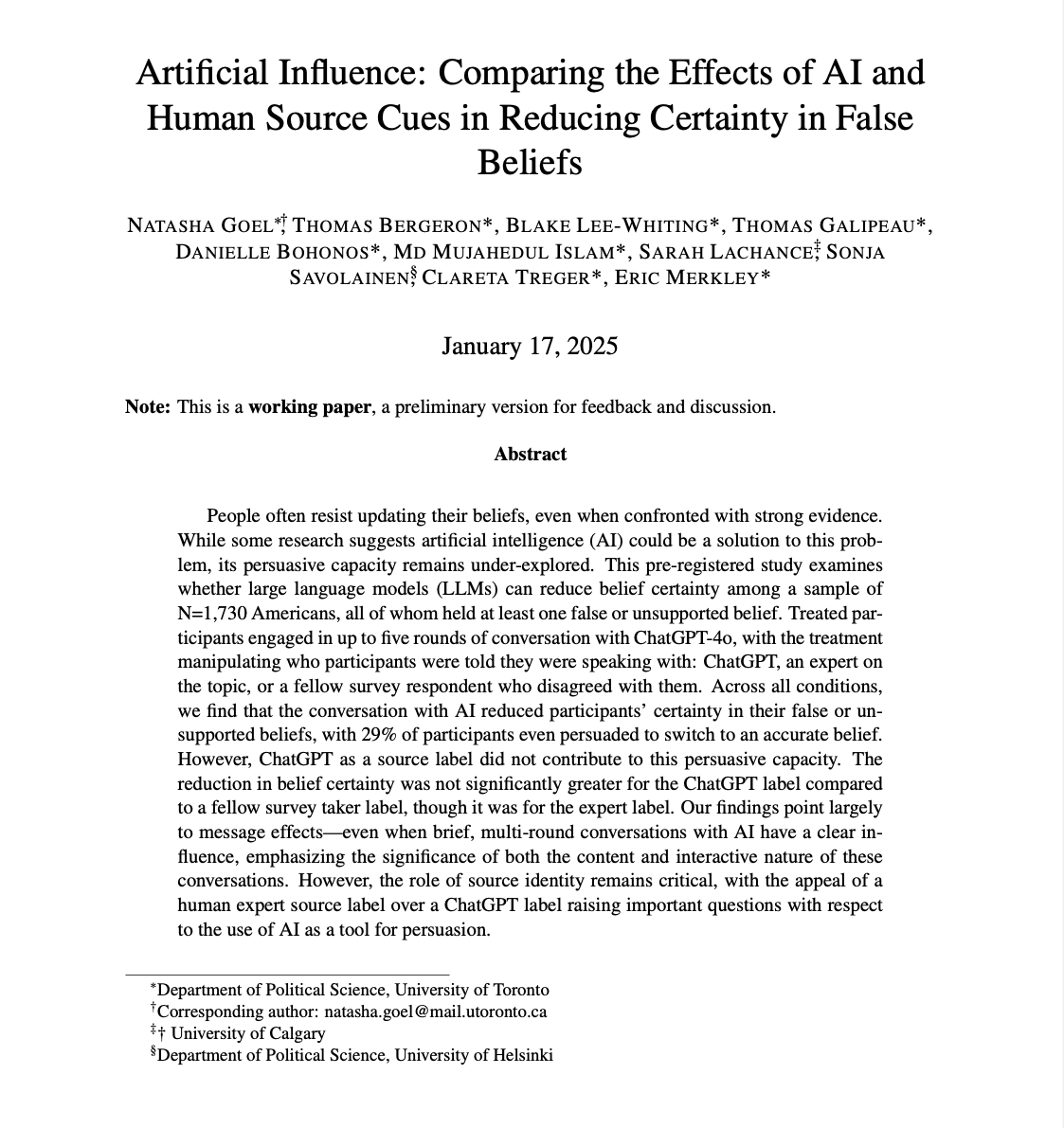
Can ChatGPT change your mind? I wrote for Tech Policy Press about what we find + where AI persuasion research should go from here:
How will trust in AI evolve? What can it really persuade us on? Will it reach resistant audiences?
https://t.co/rfiY9JRxvg
Can ChatGPT change your mind? I wrote for Tech Policy Press about what we find + where AI persuasion research should go from here:
How will trust in AI evolve? What can it really persuade us on? Will it reach resistant audiences?
https://t.co/rfiY9JRxvg
🚨New article with @melissabaker712 out at Politics and the Life Sciences on the dynamic and conditional effects of Big-5 traits on COVID-19 attitudes and behaviours 🧵👇1/
https://t.co/DTHeeM8lHI
Prof @YamilRVelez, w co-authors @patrickpliu and Scott Clifford, published a working paper in the American Government and Politics section of APSA Preprints entitled, "When Information Affects Attitudes: The Effectiveness of Targeting Attitude-Relevant Beliefs."
Details below:
Partisans often seem unwavering in their support for a politician/policy, even when faced with opposing evidence. But recent studies show that partisans can be persuaded. So how can both be true? My new @BJPolS paper explores this Q: https://t.co/2IWU2Si8EQ
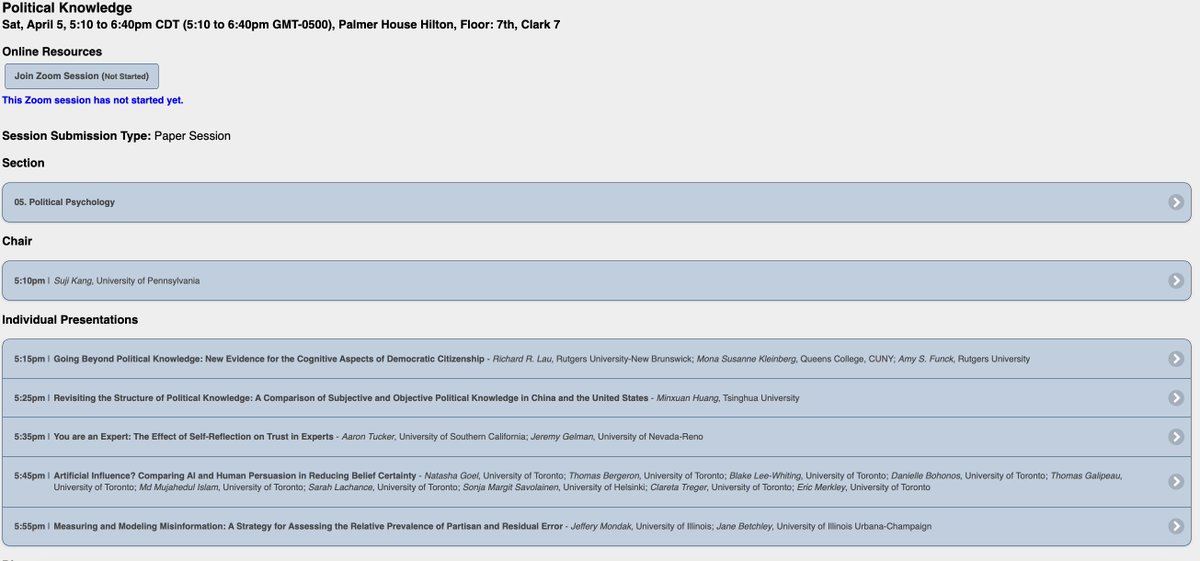
If you're at #MPSA2025 and interested in AI as a tool for persuasion, I will be presenting our paper comparing effects of AI and human source cues in reducing certainty in false beliefs on Saturday at 5:10pm (Political Knowledge, Palmer House 7th floor)
In terms of co-partisans, although it was cognitively satisfying to see belief reinforcing-information, there was a limit: individuals recognized norm-defying incivility and punished it accordingly.