It’s an international internet phenomenon that the instance a woman turns 16, she starts imagining losing herself and getting murdered on a Great American Roadtrip.
The banana in your kitchen is a sterile mutant that can't reproduce. Every single one is a clone, and nearly the entire global export supply traces back to one plant raised in an English greenhouse in the 1830s.
Wild bananas are stuffed with hard seeds the size of peppercorns. Barely any flesh. Around 7,000 years ago, farmers in New Guinea stumbled on rare mutants carrying three sets of chromosomes instead of two. An odd number can't split evenly during reproduction, so seed-making fails and the plant pours everything into flesh. Those tiny black specks in the middle of your banana are the remains of seeds that never developed.
Perfect fruit, one catch. No seeds means no planting. Growing another one requires cutting a shoot off the base and sticking it in the ground.
A clone.
Back in the 1830s, the Duke of Devonshire's gardener raised one of these plants at Chatsworth House. His family name was Cavendish. Cuttings descended from that greenhouse now make up 99% of bananas exported on Earth, genetically identical from Ecuador to the Philippines.
Identical genes means a fungus that kills one plant kills all of them. And it already happened. Gros Michel, the banana everyone ate before 1960, was wiped out commercially by a soil fungus called Panama disease. The industry quietly swapped in the Cavendish, a lookalike that resisted it, and most shoppers never noticed their banana had been replaced.
A new strain called TR4 kills Cavendish too. No cure exists, the spores survive in soil for decades, and it has spread to more than 20 countries. Late 2025 it reached Ecuador, the world's biggest exporter.
The world already lost its banana once and got handed a body double. The body double is dying the same way.
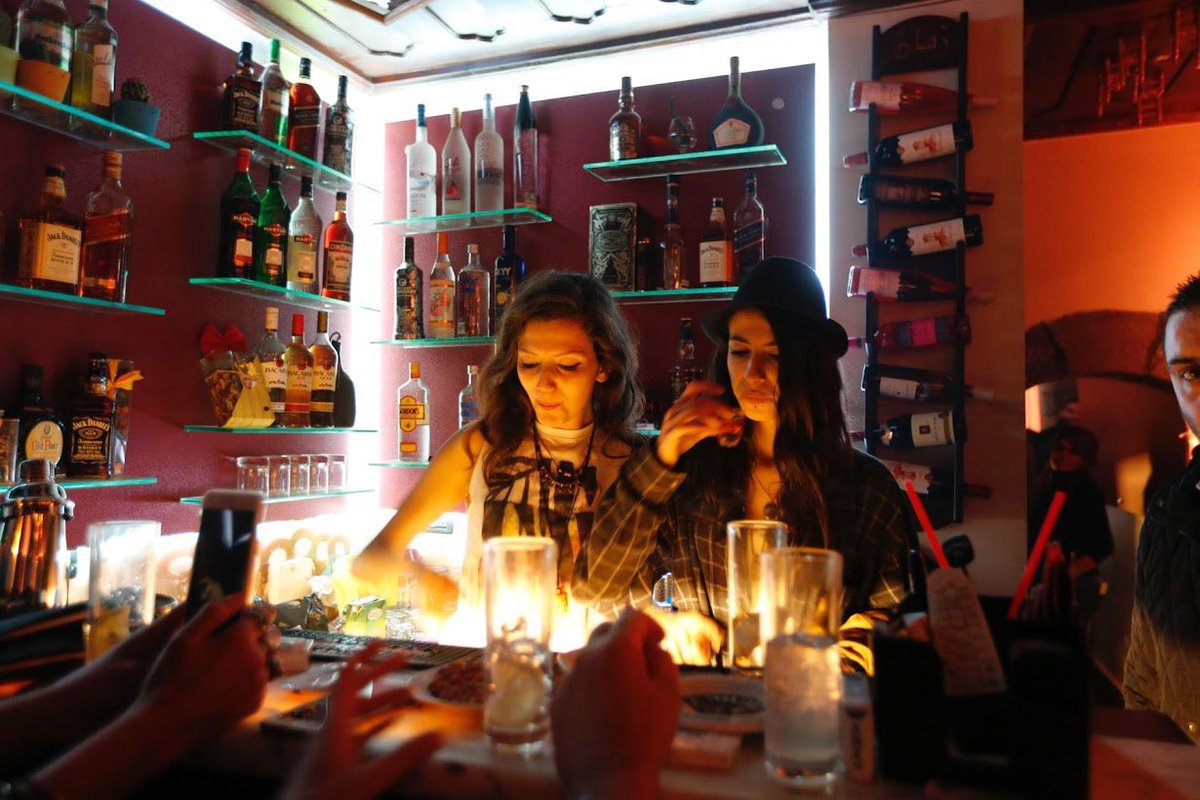
This image is good proof-of-concept for ‘Orientalism-Maxxing’ - idea that the aesthetic conditions of multiculturalism can be improved if migrants dress as caricatures of exotic stereotypes from their home countries. You never see people complain about fully-robed Buddhist monks
ABOUT SYRIA’S NIGHTLIFE 🇸🇾
My experience is that Syria was like this too under Assad - think you have to appreciate Syria has always had a class of people like this and that the tension between secular westernised Syrians and religious conservative Syrians is one of the main drivers of conflict in the country. When I visited Syria towards the end of the Civil War under Assad one of the most surprising aspects was how active the nightlife was - and not just how active it was but how ‘good’ it was ie in Damascus at least Bars, Sisha Places and Nightclubs full of lots of well-dressed and attractive Syrians partying
The Syrian women in the different venues were almost without exception very attractive. Not to be too lewd or flippant, this is a very mature and sensible account, but this was a very striking aspect of the experience - it is genuinely quite rare to be in a place where almost all of the women around you are that attractive let alone a majority Muslim city nominally in the middle of a Civil War. Another thing too, most were visibly westernised, many with no hijabs and so on, they could have slotted straight into an Ibiza club night - something you again wouldn’t necessarily assume in Syria of all places but maybe it makes a certain kind of sense, or for the parts of Syrian society who go to these kinds of venues at least. Interesting contrast versus the ISIS British Pakistani Jihadi John or mountain goatherder types you could see around the rest of the country anyway
Often it was like being in a bar and club street in a Western country, in a Mediterranean one. Lots of dancing, smoking, drinking. People really liked taking shots. In terms of music everything from electronic, dance, house, EDM and trance to lounge, Arabic lounge and reggaeton etc and in one place even UK Grime. People often throw out the casual platitude that even in war ‘life goes on’ but there is going on and then really going on. Say what you want about Assad but they were throwing some great parties under him. Maybe it was the war that gave them a little extra special edge, who knows
Some anecdotes:
The Syrian Australian Woman
One evening met a Syrian woman who lived in Australia in the bar
“I live in Australia I’m from Australia but I’m also from Syria”
“So you’re Syrian?”
“I’m a Syrian from Australia”
“What are you doing in Syria? Does it bother you that the war is still ongoing?”
“I fly back to Syria every year to see my family, stay in Syria a while. Recently I’ve been working on some art installations”
“Can you do that in the middle of a war?”
“Yes I’ve been do it most years when I can”
“Did it you do it the year Damascus was under siege?”
“No not that year but most other years”
“And you can genuinely just come in to Syria during the war?”
“Yeah Sydney to Dubai then to Beirut then cross the border. Sometimes they had flights to Damascus airport”
She was very insouciant about it
The Sudanese DJ
There was a Sudanese man, (not an Arab Sudanese an African (Nilotic) Sudanese,) who after fleeing the Sudanese Civil War somehow had found his way to Damascus apparently illegally and then again somehow had taken to DJing in the Damascus Nightclubs. He was very good at DJing and in his exoticness had became enough of a local celebrity that nobody really cared that he was there illegally. He would have special sets during the height of the Civil War and people would go and see ‘The Black African DJ’. There are hardly any black people in Syria despite its proximity to Africa so this was genuinely a novelty for a lot of Syrians - including the wealthier more liberal ones who went to Damascus nightclubs
Door Checks
There aren’t just nightclubs, which is one thing, but high end nightclubs too. Was taken aback at first
“Sorry you can’t come in”
“What?”
“You’re not dressed formally enough”
Just assumed that because Syria was still in the middle of a Civil War they would be more lax about dresscode at nightclubs. Not the case
it's so insane that a lot of germans killed themselves in the 18th century after goethe dropped Die Leiden des jungen Werther. basically 13 reasons why for bürgerliche
Mongolians apparently have their own version of Bowling Alone / the evils of modernity discourse, which they post as AI slop on Instagram. My favorite is lamenting the cars that didn't have seatbelts.
Japan’s prime minister has revealed an unlikely companion during her long hours at work: a cockroach.
Sanae Takaichi said she felt “a little lonely” after staff removed the insect from her official residence, because she thought it might be part of the cycle of reincarnation.
🔗 https://t.co/4EvFnAOT1G
Ein bisschen Goethe, ein bisschen Bonaparte
So soll er ausseh'n, der Mann, auf den ich warte
Ein bisschen Geist, ein bisschen Mut
An meiner grünen Seite, ja das wäre gut
Ein bisschen Goethe, ein bisschen Bonaparte
In the 19th century, men across Western Europe formed "ugly clubs," where ugly bachelors joined together to sing, drink, and satirize their own looks.
One such club, called The Liverpool Ugly Face Clubb, had ten such men. Each member was voted into the club based on whether he had “something odd, remarkable, droll, or out of the way in his phiz.”
William Long, for example, was accepted into the club because he had a nose “like a pair of nutcrackers.”
Matthew Strong had “flook mouth” and an “irregular bad set of teeth like those of an old worn-out comb thoroughly begrim’d.”
Of all the members, Jos Farmer was probably the ugliest. At the end of his long list of qualifications, members of the Liverpool Ugly Face Clubb noted on his record: “His looks upon the whole are extraordinary, haggard, odd, comic, and out of y’ way. In short, he possessed of every extraordinary qualification to rend him Phoenix of Society, as the like won’t appear again this 1,000 years."