A Pakistani content creator offered ordinary Pakistanis a wad of cash to burn the Indian flag.
Every single person refuses.
You can manufacture outrage. You can monetize hatred. But sometimes ordinary people remind you that patriotism does not require dehumanising your neighbour.
That is the Pakistan I recognise.
In Casino Royale, David Corenswet says Bond gets his second kill in the bathroom, not in the office
“My hot take is, everyone thinks the second kill is when Bond kills the main bad guy in the office later and he’s like, ‘Yes, considerably.’
“But what actually happened is, experientially, Bond already had his second kill because he drowned the guy and then had to shoot him.”
“So, in his experience, he had to go through drowning the guy, thought he was dead, thought that he had had his first kill, and then the guy woke up and he just shot him. So, that’s actually the second kill in his mind that was super easy.”
“It’s a human experience thing. The point is not the second person you kill, it’s the second experience of killing.”
Pakistan finds itself in a diplomatic sweet spot, wooed by US President Donald Trump, China and the Middle East, despite New Delhi's efforts. Analysts say the Indian government's missteps are partly to blame. https://t.co/8ZAjO1ZfoC
Is Pakistan’s Government a Poor Negotiator Because of Its Servile Mentality Forever In Debt?
When the UAE announced it would store 30 million barrels of crude oil in India’s Strategic Petroleum Reserves following Modi’s Abu Dhabi visit about 10 days ago, the story was reported as a milestone in Indian energy security. Pakistan did not make the headlines. It should have.
The deal, signed between ADNOC and India’s Strategic Petroleum Reserves Limited, places up to 30 million barrels of Emirati crude inside Indian underground caverns across facilities in Mangalore, Visakhapatnam, and the upcoming Chandikhol site in Odisha. Thirty million barrels sounds large. In global terms, it is not extraordinary. The United States Strategic Petroleum Reserve holds over 400 million barrels, and China’s estimated reserves exceed 900 million. For India, though, the volume represents roughly six days of import cover, nearly filling the country’s entire sovereign storage capacity of 39 million barrels. More importantly, it pays. Under the commercialisation framework India formalised in 2021, ADNOC leases cavern space on commercial terms, generating storage fee revenue for the Indian state while a portion of capacity remains earmarked for Indian emergencies. Underground cavern storage carries operating costs of around $3.50 per barrel, and the lease rates ADNOC pays on top of that are not publicly disclosed, but the arithmetic of 30 million barrels at commercial rates makes clear that India earns real money simply for having built the infrastructure. The UAE brings its oil. India collects the fee.
Now look at the other side of the ledger.
Dubai’s DP World owns a 75% controlling stake in Pakistan’s Qasim International Container Terminal, the country’s leading port operation, which accounts for 39% of Pakistan’s container volumes and 32% of its total terminal capacity. The revenue from that arrangement flows in the opposite direction. Dubai does not pay Pakistan for the privilege of operating its primary maritime gateway. It profits from it. Pakistan, which sits on the Arabian Sea, which built Gwadar as a supposed anchor of regional connectivity, which has spent decades leveraging its Gulf relationships as diplomatic currency, holds a 25% minority interest in its own most important container port while the operator headquartered in the UAE extracts the returns.
The contrast is not incidental. Modi’s visit produced a Strategic Defence Partnership, energy memorandums covering petroleum reserves and LPG supplies, a Ship Repair Cluster agreement, and a commitment of $5 billion in UAE investment into Indian markets. The 2022 Comprehensive Economic Partnership Agreement had already elevated bilateral trade and created the institutional framework within which that investment commitment sits, and the recent deals represent its full maturation. The UAE has made a structural choice, and that choice has a clear direction.
Pakistan’s 3.5 million workers in the UAE, whose remittances remain among the few reliable supports for the country’s balance of payments, send money home from an economy now formally integrating with Pakistan’s principal regional rival across defence, energy infrastructure, and sovereign investment. The Gulf’s traditional posture of equidistance between the two countries is a relic. What replaced it is visible in the numbers: Dubai holds Pakistan’s port and pays India to hold its oil.
Pakistan’s foreign policy class has no answer for this, because answering it would require acknowledging what produced it. Decades of institutional decay, chronic inability to attract serious investment, and a state that oscillates between crisis management and borrowed time have made Pakistan a place the Gulf routes around rather than through.
Pakistan’s rulers are failing to secure the country’s national security umbrella and something has to change otherwise the future continues to look bleak.
It has been apparent to me for quite a while that Pakistan as a mediator is more than problematic. Their animosity towards Israel is long standing.
It is undeniable that Iranian military aircraft are being housed on Pakistani air bases and past rhetoric from the highest Pakistani officials against Israel is disturbing.
As to the defense minister’s comments about the Abraham Accords, saying that Pakistan would never join because they don’t trust Israel: The clip may be a year old, but I fear the sentiment is fresh.
In that regard, it is imperative that Pakistan give an answer now to President Trump’s call to join the Abraham Accords.
In Pakistan's mostly rural Chakwal district, more than 100 Shi'ite Muslims say they were deported from UAE without their luggage or access to the savings they spent years building https://t.co/t184eGHaCy
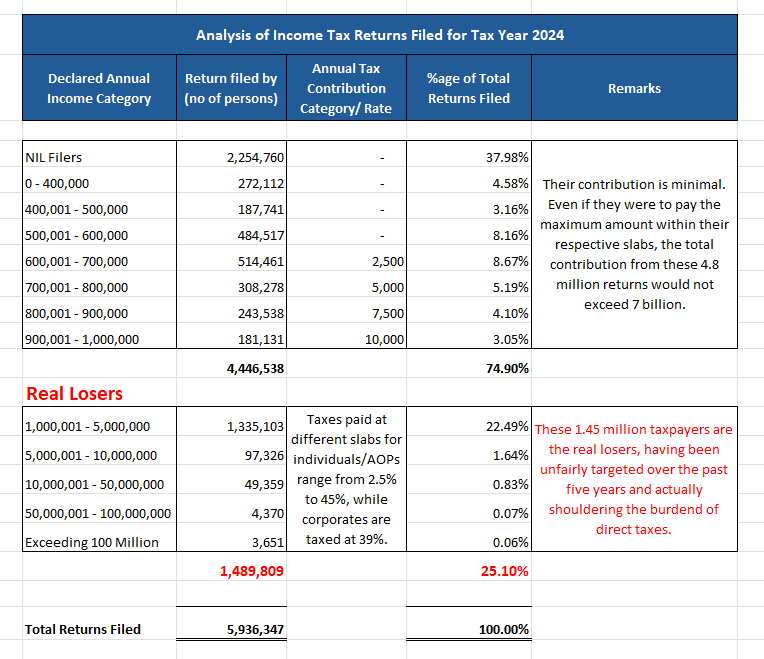
Make the return form simpler so that we can add more NIL filers to the return filers list :)
Two years back, I made this working: you can clearly see who the real taxpayers are while filing tax returns (trend not changed much). Pakistani seths are equally responsible for the current tax system, along with the Federal Board of Revenue.