Apex Body for all Associations and Federations in the Arts, Culture and Creative Industry of Uganda🇺🇬. Advocacy | Research | Dialogue
[email protected]
CONTENT IS THE NEXT GOLD. 🪙
"I want to hear and fund ideas for content creation, the capacity to produce it, the capacity to market it, and the capacity to protect it." —
Hon. Minister
Henry K. Tumukunde @Tumukunde_#NCFAdvocacy
Uganda's culture and creative industries sector must be supported to reach full potential to grow & support efforts to address the unemployment challenge. But how? This question was one of the many pondered on at @EPRC_official dialogue on the sector held at Serena 1/2
At the @EPRC_official Conference, Our ES @itseCarlos presented sector key issues.
Keynote by @juliuskyazze , CEO @Swangz_Avenue, was clear: Funding musicians alone won't grow the sector.
Fund the system:
1. Talent identification & devt
2. Shared spaces / Creative Hubs
MUSASIZI SEEKS BANK SUPPORT FOR INTELLECTUAL PROPERTY-BACKED LENDING
Government is calling for support from commercial banks and financial institutions to enable players in the cultural and creative industries to use their intellectual property as collateral for loans, unlocking financing for enterprise growth, investment and job creation.
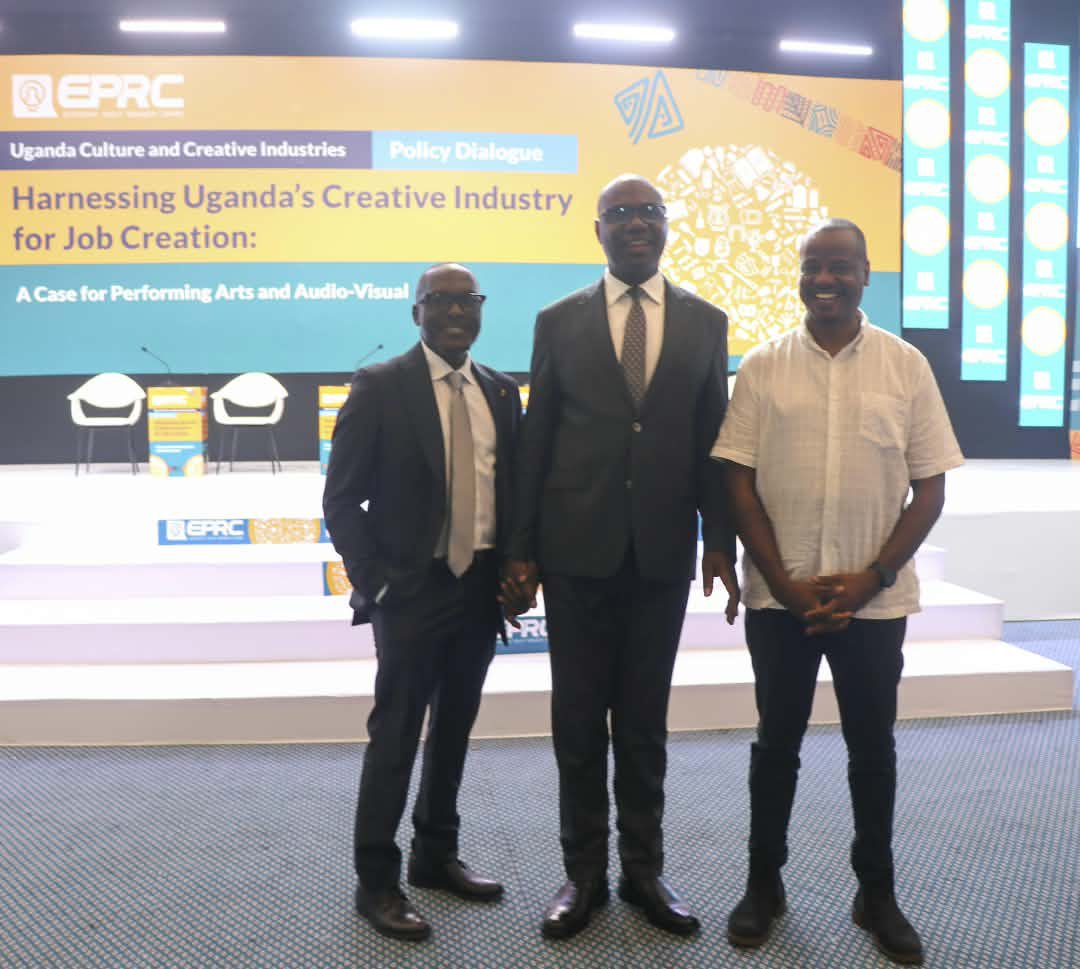
The Finance Minister @henrymusasizi1 who was the Chief Guest at the Uganda Culture and Creative Industries Policy Dialogue organised by the Economic Policy Research Centre (EPRC) at Serena Hotel in Kampala, said the Security Interest in Movable Property Act, 2019 provides for intellectual property to be used as collateral to access commercial bank credit.
However, he noted that some banks remain hesitant to implement the provision, limiting creatives' ability to leverage their intellectual assets to secure financing.
Musasizi added that in FY2025/26, Government provided Shs 66 billion to support the creative industry, including Shs 10 billion for a revolving fund for artists, with the balance allocated to creative arts. An additional Shs 33 billion was provided to the musicians' revolving fund in FY2026/27 to promote enterprise growth and job creation.
Other interventions include a Shs 500 million grant to filmmakers through the Uganda Communications Commission in 2021, Shs 5 billion advanced to the podcasters' SACCO in 2026 and Shs 7 billion to support the event promoters' SACCO.
“Government prioritises the cultural and creative industries as a key for boosting the country's domestic resource mobilisation,” Musasizi said.
He noted that informality remains a major challenge, with much of the value generated in the sector coming from informal activities rather than registered enterprises. Consequently, its actual contribution to the economy is significantly higher than what is reflected in official national accounts.
He said strengthening data systems, improving sector classification and supporting the formalisation of creative enterprises would be critical to unlocking investment, improving measurement and broadening the tax base.
The 2024 National Population and Housing Census counted 353,115 people in creative occupations, representing 3.7% of Uganda's total working population. Government targets to double the sector's contribution to GDP from 3% to 6%, increase its share of employment from 1% to 5%, and grow its export earnings and domestic revenue contribution by 25%.
EPRC Executive Director Dr. Sarah Ssewanyana said the creative industry presents an important opportunity to address Uganda's youth unemployment challenge through productive and sustainable employment.
“According to the Bureau of Statistics, four in every ten young people in Uganda are not in employment, not in education or training,” she said.
She added that approximately 7 in every 10 people working in performing arts, music, film and fashion are young people, making the industry an important source of livelihoods and business opportunities.
Dr. Ssewanyana also observed that creative industries remain resilient amid technological advancement and artificial intelligence because they depend on cultural sensitivity, social skills and individual vision, qualities that cannot easily be replicated.
The interventions form part of Government's Tenfold Growth Strategy, which targets expanding Uganda's economy to US$500 billion by 2040.
Nigerian academic Prof Dr Kizito Ogedi Alakwe, from the School of Media and Communication at Pan-Atlantic University, says one of the biggest mistakes African governments make is limiting the creative industry to music, dance and drama (MDD), yet the sector encompasses many other fields.
He says Uganda can learn from Nigeria, where mandatory local-content quotas for art and music have helped create a market for local creatives and products.
Alakwe says Nigeria’s creative industry has grown to the extent that some artistes, such as Davido, can earn sums comparable to the US president’s annual salary through social media posts and endorsements alone.
Where is the other Shs 5bn?
Denis Uma Akena, Principal Culture Officer at Ministry of Gender, Labour and Social Development, wonders why everybody keeps mentioning Shs 33 billion figure for the Creatives Uganda Revolving Fund, yet on the ground it is only Shs 28 billion.
He says, as far as he's concerned, only Shs 28 billion was allocated and not the Shs 33 billion officially quote.
So where is the other Shs 5bn? he asks.
Swangz Avenue co-founder Julius Kyazze warns that the government funding creatives - or any other sector through Saccos without building public infrastructure will neither grow the industry nor create mass jobs.
Uganda's only public theatre, the National Theatre in Kampala, seats just 377 people, forcing creatives to spend heavily to hire private venues and convert them into concert halls.
He says the government should have stepped in to build a fully fledged events venue, particularly on the land recently allocated to Phaneroo Ministries.
He also notes that the Uganda Revenue Authority (URA) is effectively stifling formal businesses that attempt to declare all their earnings - driving companies to either evade taxes or close shop altogether.
The #creative industry in Uganda has proved to be inclusive, accommodating youth & women, and offering employment regardless of one's level of education. How can its full potential be unlocked? Join our discussion 2morow on the subject. Register here: https://t.co/wurQ9pDBBQ
Many young Ugandans today rely on the culture and creative industries for employment. Yet the sector remains largely informal and unrecognised. How can we unlock its potential? Register to join us this Thursday Nov 26, 2026: https://t.co/wurQ9pD3Mi
How can Uganda’s creative industry drive job creation?
Join the @EPRC_official for a National Policy Dialogue on “Harnessing Uganda’s Creative Industry for Job Creation"
📅 Thursday, 26 November 2026
🕗 8:00 AM – 4:30 PM
📍 Kampala Serena Hotel
#CreativeEconomy#JobCreation
Abakulembeze b’ekitongole ki Uganda National Cultural Centre ekikulembera bannabitone, besonzeemu enywe mu maaso g’akakiiko ka COSASE ku nkola yaabwe ey’emirimu okuba ey’ekibogwe
#AgafaEyo https://t.co/PQrVLoEe2Z
One of the things I have been passionate about is seeing Uganda’s fashion industry move beyond talent and creativity into a well organised, recognised and economically empowered sector.
Yesterday, 23 November 2026, in my capacity as Fashion and Design Domain Head under National Culture Forum, I had the privilege of leading our delegation at the COSASE–UNCC Multi-Sectoral Stakeholders Dialogue, where we submitted our Position Paper on the development of Uganda’s fashion industry.
Our proposals focused on recognising Fashion and Design as a distinct economic domain, establishing a proposed UGX 5 billion enterprise financing window, strengthening local textile and garment production, modernising fashion education, improving market access and protecting intellectual property.
We support the revitalisation of the Uganda National Cultural Centre (UNCC) and are committed to working with it. But Fashion and Design must receive meaningful recognition as an important cultural and economic domain, with its contribution to employment, manufacturing, trade and Uganda’s GDP taken seriously.
My appreciation to the @NCFUganda (For Mobilizing us), Parliamentary COSASE, @UNCC_UG ,my partners - the Uganda Tailors Association , Crocheters' Association Uganda , John Mark Mukasa, Josephine Kisaka and photographer Ochaloi Daniel for standing with us.
We have submitted in our Position Paper. Now, let us turn dialogue into action.
#UgandaFashionIndustry #FashionAndDesign #CreativeEconomy #UNCC #COSASE
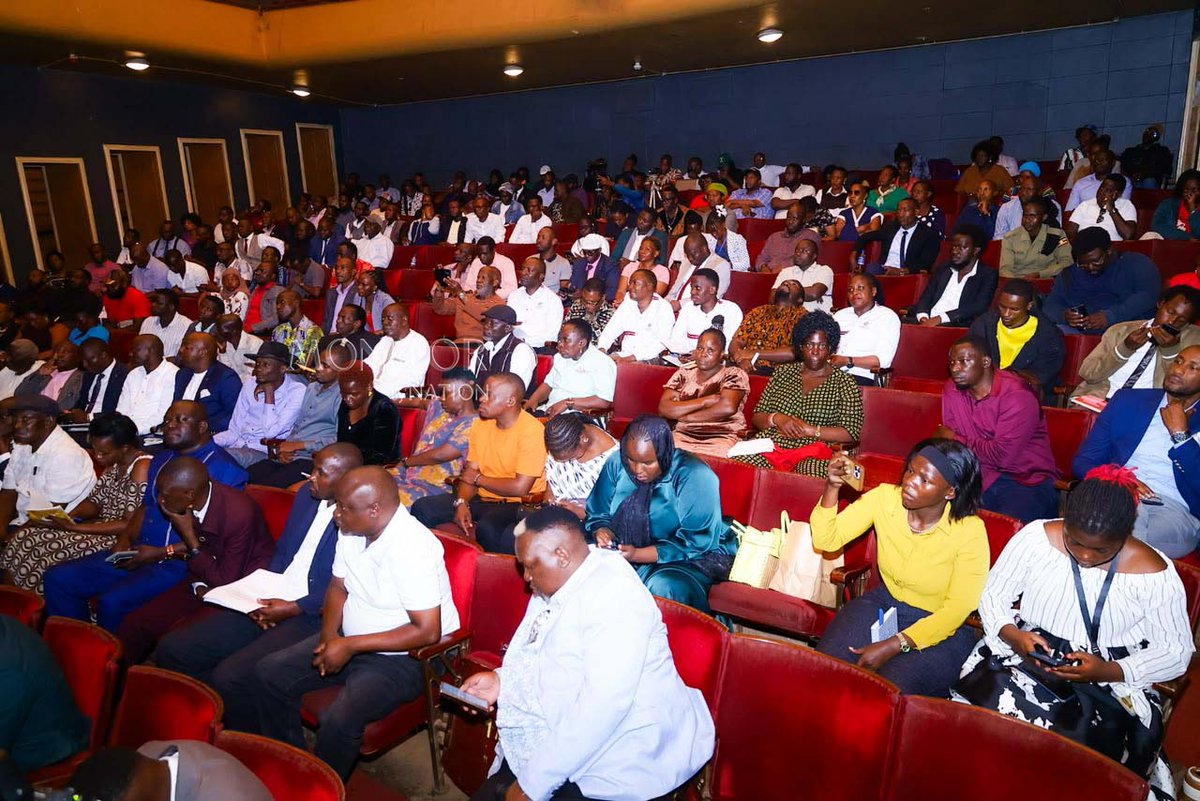
The Parliamentary Committee on Commissions, Statutory Authorities and State Enterprises (COSASE) is meeting with stakeholders from the Uganda National Cultural Centre (UNCC) to review the centre's operations, organisational structure, achievements and challenges affecting artists and the wider creative industry.
#MonitorUpdates
📷@IbrahimKavuma
Today, many people measure popularity by their following on TikTok and YouTube. However, promoting artistes years ago was much more difficult and largely informal, as being an artiste was often looked down upon and even considered an insult. - Daniel Kazibwe (@raggadeemusic)
#MorningAtNTV
Culture is what defines who we are and shapes our identity. With more than 55 tribes in Uganda, each with its own unique traditions, beliefs and practices, our cultural diversity is a reflection of who we are as a nation. -Daniel Kazibwe (@raggadeemusic)
#MorningAtNTV
It has been difficult for many people to understand art and culture. It is only recently that the government has begun to appreciate and realise how significant this sector is. -@PeterOjede, Executive Director @UNCC_UG#MorningAtNTV