S. ‘Soma’ Somasegar, 1966-2026: Microsoft and Madrona leader was a champion of developers and startups // Heartbroken to share this news of friend and long-time colleague. We started at Microsoft months apart, both grad school dropouts. Our work paths intertwined for more than two decades on everything from the first NT through dev tools with a good deal of college recruiting all along. His contributions to Microsoft and culture were as legendary as was the admiration and respect he earned from generations of the Softies he guided and led. Om Shanti, Soma. https://t.co/hgwyJn9Wtz @GeekWire
💥 Introducing "Dirty Frag"
A universal Linux LPE chaining two vulns in xfrm-ESP and RxRPC. A successor class to Dirty Pipe & Copy Fail.
No race, no panic on failure, fully deterministic. ~9 years latent.
Ubuntu / RHEL / Fedora / openSUSE / CentOS / AlmaLinux, and more.
Even if you've applied the "Copy Fail" mitigation, your Linux is still vulnerable to "Dirty Frag". Apply the Dirty Frag mitigation.
Details:
https://t.co/9nqku4svkY
Too good not to share! I did not know this.
If you want to "void" a row in a paper tape, you punch out every dot, and that happens to be the DEL character in ASCII.
Marre de "cliquer" vos objets 3D ? 🐭
OpenSCAD n'est pas d'hier, mais le bouquin de Roberto Hamm montre qu'il reste l'outil ultime pour les dev. On oublie la souris, on ressort les scripts et les maths ! ✅ Précision chirurgicale+Paramétrage total
https://t.co/2Urp6MDm8f
Struggling to trace what’s happening across your .NET app?
Here’s a simple OpenTelemetry setup I use in every project:
- ASPNET Core instrumentation
- HttpClient instrumentation
- EF Core instrumentation
- Redis instrumentation
- Npgsql (or SqlClient)
This gives you rich, end-to-end traces, instantly.
To visualize them, try:
0. Aspire Dashboard
1. Grafana
2. Jaeger
3. Seq
Seq also supports structured logs, which pairs nicely with tracing.
Want to go deeper with OpenTelemetry in .NET?
Here’s a practical guide: https://t.co/YqQDQkP9cS
Have you tried the Aspire dashboard yet?
You can even self-host it as a container.
Si vous avez un seul film à regarder avant de lancer votre startup, c'est Pirates of Silicon Valley (1999). Pas The Social Network. Pas Steve Jobs avec Fassbender. Celui-là.
Le film raconte en parallèle la construction d'Apple et de Microsoft. Deux visions du monde, deux types de fondateurs, deux stratégies radicalement différentes qui mènent toutes les deux au sommet.
Steve Jobs dans ce film c'est la meilleure incarnation jamais faite du personnage. Un type torturé, abandonné à la naissance, obsédé par le contrôle et par le beau. Toute sa douleur intérieure il l'a transformée en exigence absolue. Apple c'est littéralement sa thérapie devenue produit.
Première leçon : ta blessure peut devenir ton avantage compétitif. Jobs ne cherchait pas juste à vendre des ordinateurs. Il cherchait à prouver qu'il valait quelque chose. Cette rage de créer du beau, du parfait, c'est ce qui a rendu Apple incomparable. L'énergie derrière ton produit compte autant que le produit lui-même.
Bill Gates de l'autre côté c'est l'exact inverse. Pas de vision artistique. Pas de quête existentielle. Juste une intelligence froide, stratégique, impitoyable. Il commence en sous-traitant pour Apple, presque invisible. Et pendant que Jobs se concentre sur le produit, Gates observe, apprend, et copie tout.
Deuxième leçon : la distribution bat le produit. Gates n'a jamais eu le meilleur produit. Jamais. Mais il a compris avant tout le monde que celui qui contrôle la distribution contrôle le marché. Pendant que Jobs faisait de l'art, Gates signait des contrats avec tous les fabricants de PC de la planète.
Troisième leçon : ne confonds pas création et protection. Jobs a laissé Gates rentrer dans Apple. Il lui a littéralement ouvert les portes. Parce qu'il pensait que la qualité de son produit le protégeait. Erreur fatale. Si tu ne construis pas de moat, quelqu'un va te piller pendant que tu peaufines ton design.
Quatrième leçon : le storytelling est une arme de guerre. Le film montre comment Jobs a inventé le lancement de produit tel qu'on le connaît. Le reality distortion field. La capacité à faire croire aux gens qu'ils tiennent entre leurs mains quelque chose de révolutionnaire. C'est pas du marketing, c'est de la conviction pure.
Cinquième leçon : tu peux avoir raison sur tout et perdre quand même. Jobs avait la vision, le produit, le talent, la culture. Et il s'est fait virer de sa propre boîte. Parce qu'avoir raison ne suffit pas. Il faut aussi savoir gérer le board, les alliances internes, la politique. Le fondateur qui ignore la politique finit par en être la victime.
Mon conseil : regardez ce film ce soir et posez-vous une question simple. Est-ce que vous êtes en train de construire le meilleur produit du monde en oubliant de verrouiller votre distribution ? Parce que dans le film, c'est exactement comme ça que Gates a gagné. Et dans la vraie vie, c'est exactement comme ça que la plupart des startups meurent. Le produit ne vous protège pas. La distribution si.
quand j’étais gamin je démontais tout, les réveils, les télécommandes, les radios, les jouets, tout y passait et tout le monde pensait que je cassais alors que j’ai jamais rien cassé
je voulais juste comprendre comment les choses tenaient ensemble pourquoi tel engrenage s’emboîtait dans tel autre, pourquoi cette vis était là et pas un centimètre plus loin
les profs me convoquaient comme si j’avais un problème alors que le seul problème c’est que personne autour de moi ne se posait les mêmes questions
à 8 ans tu ne sais pas que ça s’appelle de la rétro-ingénierie tu sais juste que ton cerveau refuse d’accepter qu’un objet fonctionne sans savoir pourquoi
et quand tes camarades te regardent comme un alien parce que toi tu démontes pendant qu’eux jouent tu comprends très vite que tu es seul dans ta façon de voir le monde et ça c’était le plus dur, le jugement d’autrui, le rejet, l’incompréhension dans le regard des autres…
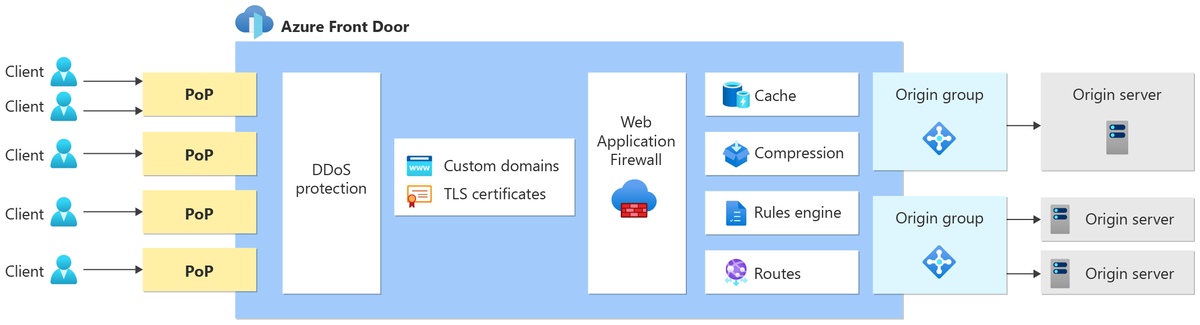
Power real‑world app scenarios with #Azure Front Door 🚦
✨ Global load balancing
✨ Secure app delivery with WAF
✨ Active‑active & failover designs
Build fast, resilient apps at scale 👉https://t.co/CuFndftco8
#AzureFrontDoor#CloudArchitecture
Microsoft is apparently finally admitting that what many users have wanted all along is a faster, quieter, more dependable operating system. Not more Copilot.
In a new Windows Insider post, Microsoft’s Pavan Davuluri laid out a broad quality push for Windows 11 centered on performance, reliability, and what the company calls “craft.”
More likely, it's what Steve Jobs called "taste", if you remember THAT interview...
And honestly, a lot of it reads like Microsoft finally sat down, opened Feedback Hub, and decided to take the complaints seriously.
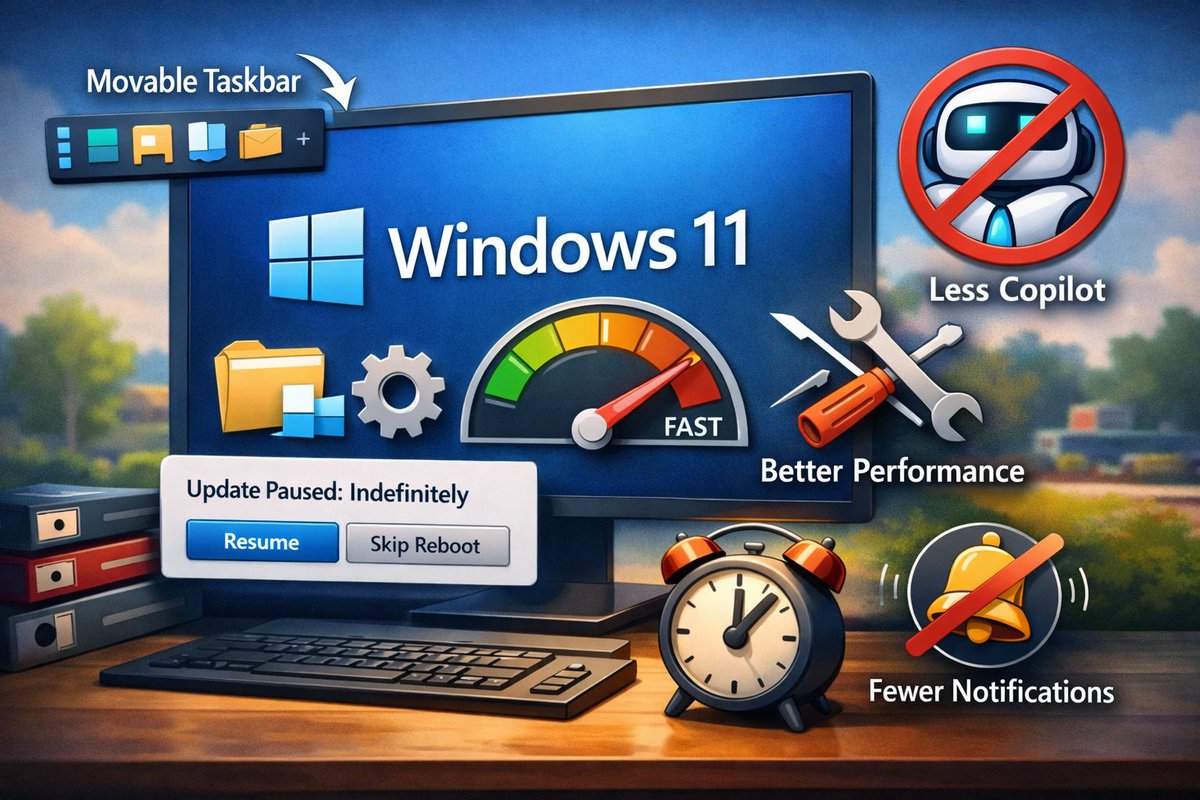
The headline changes are exactly the kind of practical fixes power users have been asking for: taskbar repositioning to the top or sides of the screen, fewer forced update interruptions, more control over when updates install, faster File Explorer, lower baseline memory usage, better search responsiveness, fewer notifications, and more reliable drivers and wake behavior. Microsoft also says it is reducing “unnecessary Copilot entry points,” starting with apps like Snipping Tool, Photos, Widgets, and Notepad.
The Windows Update story is interesting.... Microsoft says it wants updates to be less disruptive, with a move toward a single monthly reboot, the ability to restart or shut down without being forced to install u-pdates, and the option to pause updates for as long as needed. That is a major philosophical shift from the old “we know what’s best, enjoy your reboot” era, even if the real test will be how consistently Microsoft follows through in shipping builds.
Performance also seems to be getting real attention instead of marketing lip service. Microsoft says Windows 11 will reduce its own resource usage, improve memory efficiency, make File Explorer quicker and more dependable, and lower latency by moving more core experiences to WinUI 3.
The company specifically calls out Start menu responsiveness, search consistency, faster file operations, and a smoother overall feel under load. That is the sort of engineering work users notice every single day, even if it doesn’t make for a shiny keynote demo.
My personal benchmark is to be able to type 'Download" into the Start menu and have it find my Downloads folder. Not a Bing search for a Copilot download.
The Copilot pullback is equally interesting because it suggests Microsoft has realized there is a difference between useful AI and AI sprayed across every available surface. The company is not abandoning Copilot, but it is dialing back what it describes as unnecessary integration points. That sounds a lot less like “AI everywhere” and a lot more like “maybe Notepad didn’t need to become a sentient billboard.”
The most encouraging part of all this is the tone. Microsoft is not pitching this as a revolution. It is pitching it as a cleanup, stabilization, and giving users more control. And that may be exactly what Windows 11 needs. After years of feeling like the operating system was being used to push services, experiments, and mandatory behavior, this looks like a return to a simpler idea: Windows should serve the user, not manage them.
I, for one, still advocate for Windows Pro having NO advertisements, bloatware, or needless telemetry. Make people pay, then quit asking for more. But I've been barking up THAT tree for years.
Now the obvious catch: these are commitments and previews, not a completed turnaround. Microsoft has promised a lot here, but Windows users have long memories. This is probably still the best Windows news in a while, because it focuses on the fundamentals:
Faster.
More reliable.
Less noisy.
More customizable.
Less pushy.
🔴 Alerte à la bombe à Condé-en-Normandie. Les élèves du lycée Charles-Tellier sont confinés depuis 14h30 dans leur salle de classe. La gendarmerie boucle le périmètre. Parents d'élèves et habitants ne peuvent pas rejoindre les abords du lycée.