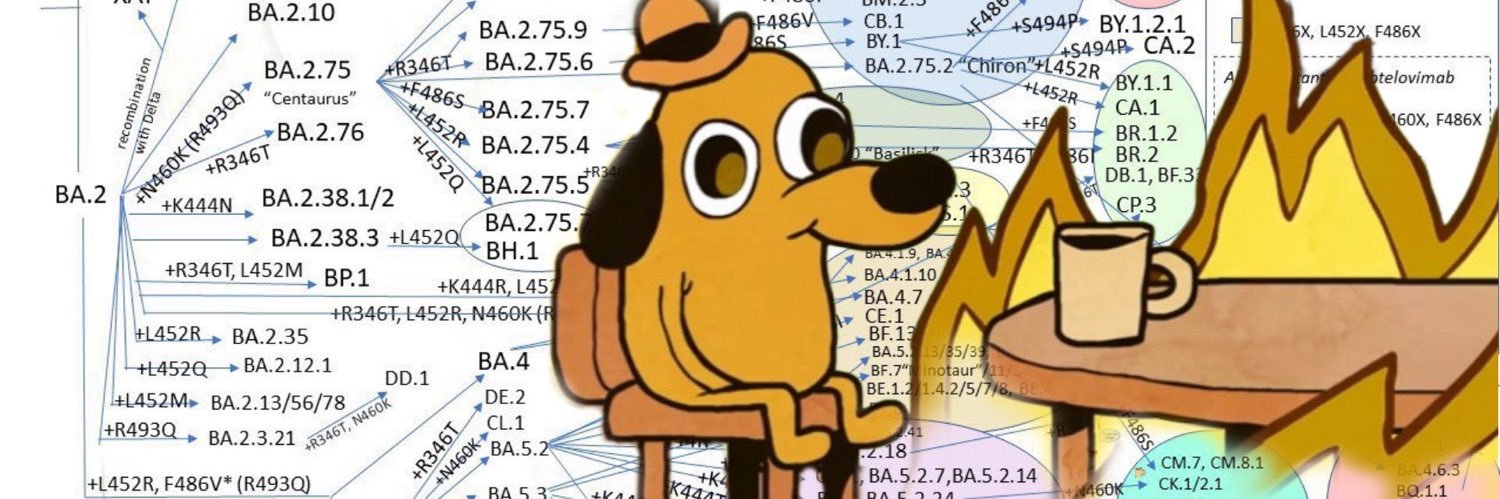
“… Están surgiendo a nivel mundial una gran cantidad de variantes que evaden la inmunidad, y los investigadores creen que estas variantes originarán una ola de otoño-invierno.” #BQ11#BA2752#Covid#SarsCov2 https://t.co/tloykgu3wF
Combined food policies, including labelling and advertising bans, have real-world impact on reducing child obesity, first evidence plausibly shows.
Read more in The Lancet: https://t.co/CV8cL16L2u
A new study finds the dementia drug Donepezil helps treat Long COVID fatigue and depression. The virus triggers a protein that drops brain acetylcholine; Donepezil restores it to clear brain inflammation and symptoms.
https://t.co/RKaTjOq2f0
Un estudio en >500.000 personas observa una reducción del 24% en el riesgo de demencia en adultos vacunados con la vacuna recombinante del herpes Zoster.
https://t.co/B8vv25NOs9
Se descubre un biomarcador formado por 14 proteínas que predice el cáncer de pulmón 5,6 años antes de que se diagnostique, incluso en no fumadores.
https://t.co/nyVxxIG1qx
Lifestyle intervention was associated with lower multimorbidity burden than placebo, while #metformin showed no difference, among older adults with prediabetes followed for 21 years.
#Diabetes#Multimorbidity
https://t.co/ZZn8VPodB9
Within our body, different cell types exhibit a varying pace of aging. Discovery of how that can be tracked by cellular proteomics, from a tube of blood, and what that means for health outcomes, For example, the clock of brain astrocytes and development of Alzheimer's disease. @NatureMedicine@wysscoray
This takes organ clocks to the next level!
https://t.co/7k296L8tGw
Brazil has suspended its rollout of the world’s first single dose dengue vaccine, after two healthcare workers died after receiving the vaccine and 42 unexpected adverse events were reported
https://t.co/ovtPqXAxXG
La vacunación contra herpes zóster podría tener beneficios más allá de prevenir culebrilla y neuralgia posherpética. Un estudio publicado en @AnnalsofIM encontró que recibir la vacuna se asoció con menor riesgo de diagnóstico de demencia a 4 años. https://t.co/PiKu4zybOS
Concerning story about #COVID, #LongCOVID and cancer risk. Dovetails with the work we have been been doing with @drmfreire's team showing that persistent SARS-CoV-2 antigen found in the GI tract of pwLC is pro-inflammatory and oncogenic:
https://t.co/0jCfaCXQj0
Stay safe 🙏
There are 19 types of cancer associated with obesity. But only a limited number have a very strong association. Two excellent review papers today @NatMetabolism
https://t.co/y1M5b9dtQd
https://t.co/YOlQ3PtRSC
BA.1/NB.1.8.1 recombinant uploaded today from Portugal, collection date January 2026. There were two BA.1 collected in Dec 2025 from Michigan uploaded last month as well.
BA.1 not entirely finished with us yet, over 4 years after it disappeared from circulation.
In a randomized trial of people with prediabetes, lifestyle improvement vs metformin or placebo, lifestyle was best for prevention of chronic conditions
@JAMA_current
https://t.co/sELQFMcKiG
Key human defenses against pathogens were forged billions of years ago in microbial battles with viruses.
Learn more: https://t.co/NqwQk38nzX @NewsfromScience
As we age, especially after 60 years, there is a marked accumulation of mutations in our mitochondrial DNA. These are undetected (cryptic) until they expand into clones and, while associated with clonal hematopoiesis (CHIP), they may independently have an impact on health outcomes @Nature
https://t.co/fO9xmSIbDc
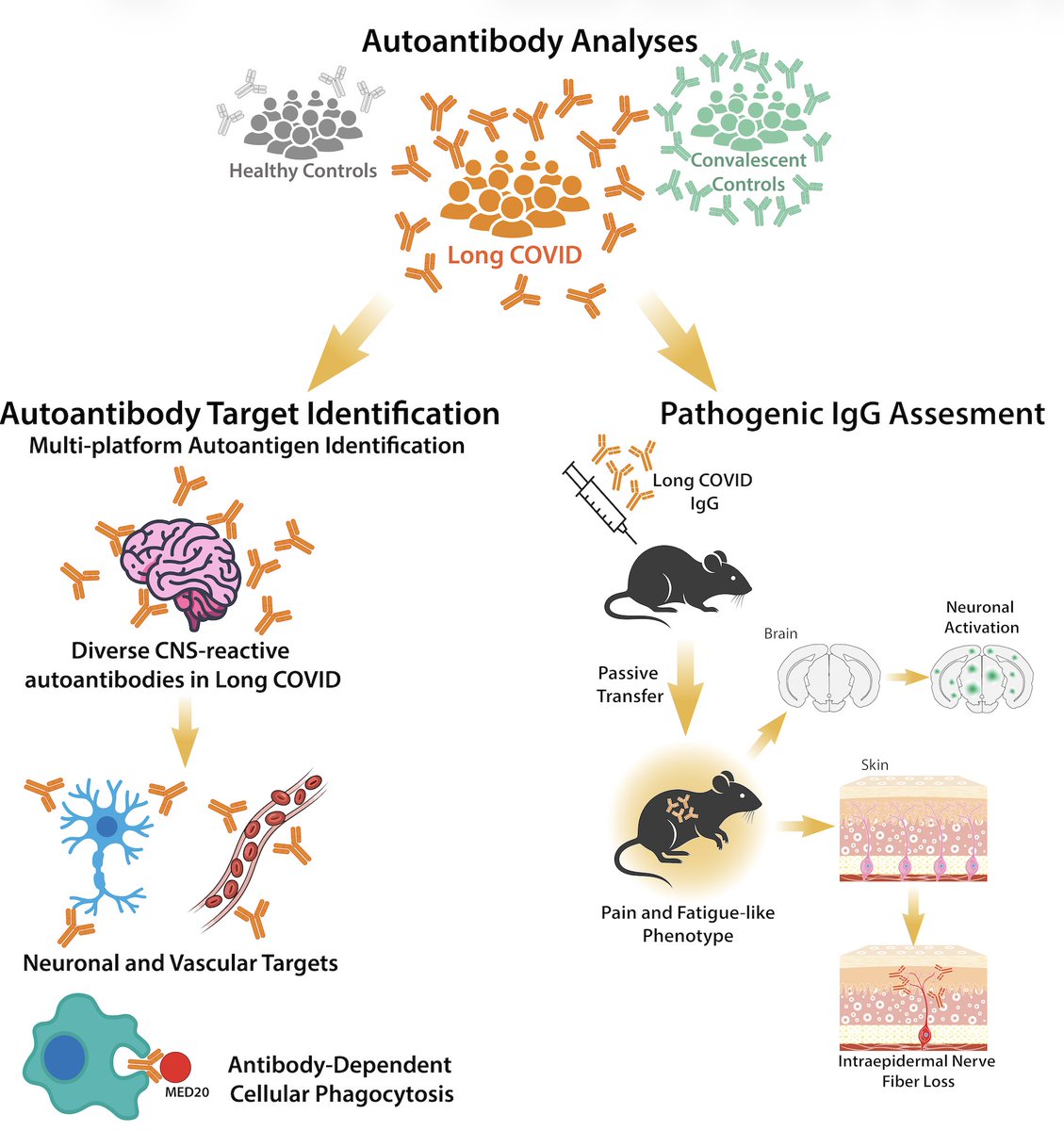
Excited to share our study by @keylas3 et al. on pathological autoantibodies in people with Long COVID. We asked whether IgG in patients with Long COVID bind to human tissues/antigens and cause pathologies when transferred into mice. With @PutrinoLab
https://t.co/tcowCufWyf
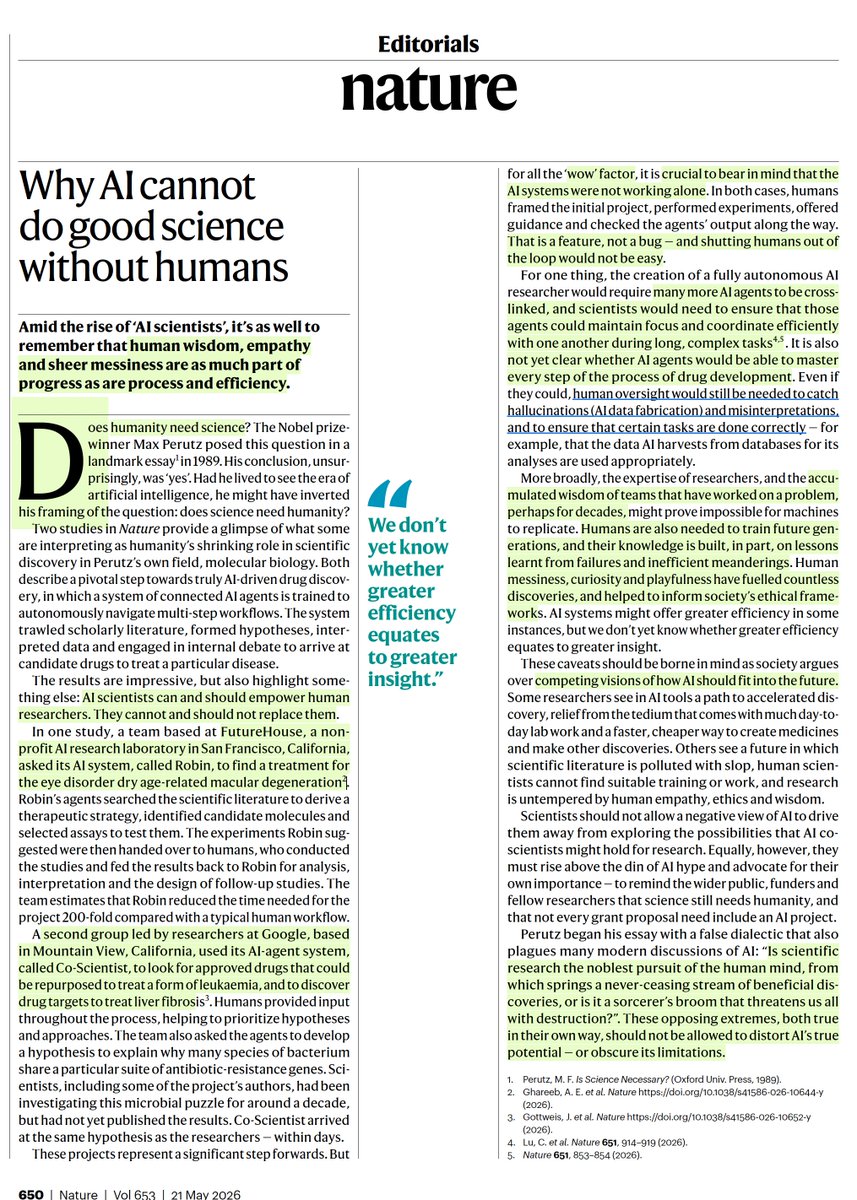
Important editorial @Nature on the new "AI-scientist" papers
"AI scientists can and should empower human
researchers. They cannot and should not replace them."
https://t.co/CZQUrMV8D1
New #BMJResearch: Calcium, vitamin D, or combined supplements offer little to no clinically meaningful benefit on fracture and fall prevention in most older people, finds in-depth review of the latest evidence
https://t.co/jsgwQ2Rlvy
Linked commentary
https://t.co/yPXnwXgTPY
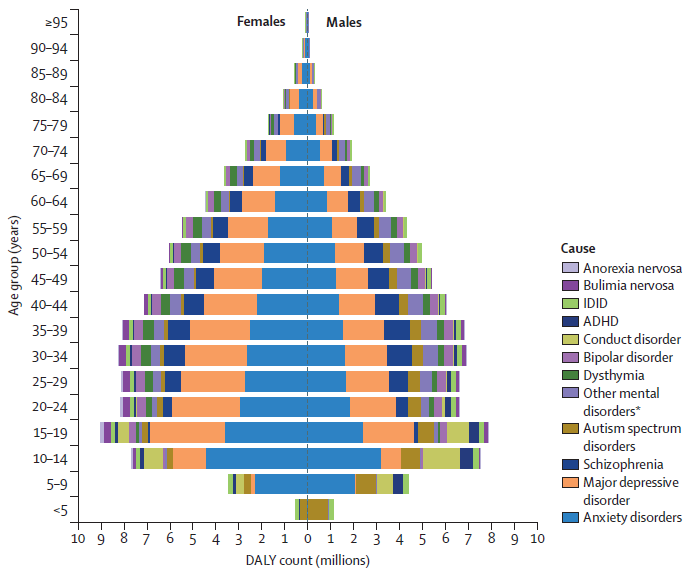
There are nearly 1.2 billion people living with mental health conditions worldwide, according to a new #GBD analysis.
Explore the research ➡️ https://t.co/R38rPUnI55 @IHME_UW
Stanford Medicine researchers and their colleagues invented a new vaccine that shows potential to protect against respiratory viruses, bacteria and allergens — the closest yet to a universal vaccine.
https://t.co/ypukWUmJKv
La declaración de una nueva ESPII por #Ébola hoy por parte de la OMS es un evento epidemiológicamente importante y vale la pena entender por qué, y que desafíos tiene en salud global. Aquí mi resumen:
Una ESPII significa una “Emergencia de Salud Pública de Importancia Internacional”, el máximo nivel de alerta sanitaria internacional bajo el Reglamento Sanitario Internacional. Es apenas la octava ESPII declarada desde 2005 y la tercera relacionada con Ébola.
Algo extraordinario es que esta es la primera vez que la OMS declara una ESPII antes de reunir formalmente un Comité de Emergencias. La decisión fue tomada directamente por el Director General, algo poco habitual y que refleja el nivel de preocupación sobre la complejidad potencial del brote y el riesgo de expansión regional.
El epicentro está en Ituri, en el noreste de República Democrática del Congo (RDC), cerca de las fronteras con Uganda y Sudán del Sur. Los principales focos identificados hasta ahora incluyen Bunia, Mongbwalu y Rwampara. Además, ya se confirmaron casos en Kampala, la capital de Uganda, en viajeros provenientes de RDC.
Según el informe oficial de la OMS del 17 de mayo de 2026, hasta el 16 de mayo se habían reportado 8 casos confirmados por laboratorio, 246 casos sospechosos y 80 muertes sospechosas en Ituri. También se reportaron al menos 4 muertes de trabajadores de salud, lo que aumenta la preocupación por transmisión dentro de hospitales y clínicas.
Aunque la confirmación oficial ocurrió esta semana, la OMS considera probable que el brote lleve varias semanas circulando sin ser detectado plenamente. La existencia de múltiples conglomerados de muertes comunitarias y la alta positividad de las muestras iniciales sugieren que el número real de casos podría ser considerablemente mayor.
El Ébola se transmite por contacto directo con fluidos corporales de personas infectadas o fallecidas y también por objetos contaminados. No se transmite por el aire como COVID o influenza, pero puede expandirse rápidamente en hospitales con medidas deficientes de control de infecciones y durante cuidados familiares o funerales.
Uno de los aspectos más preocupantes es que el brote parece estar causado por Bundibugyo ebolavirus, una especie distinta de Zaire ebolavirus, responsable de la mayoría de grandes brotes recientes. Para Zaire hoy existen vacunas y tratamientos específicos aprobados. Para Bundibugyo todavía no.
Eso significa que la respuesta depende principalmente de salud pública clásica, incluyendo detección temprana, aislamiento, rastreo de contactos, entierros seguros, protección del personal sanitario y fuerte trabajo comunitario.
La preocupación internacional también tiene contexto histórico. La primera ESPII por Ébola ocurrió en África Occidental entre 2014 y 2016, principalmente en Guinea, Liberia y Sierra Leona, y terminó con más de 28.000 casos y más de 11.000 muertes. En ese momento todavía no existían vacunas aprobadas.
La segunda ocurrió entre 2018 y 2020 en las provincias de North Kivu e Ituri, en el este de RDC, en medio de conflicto armado activo. Ese brote acumuló aproximadamente 3.470 casos y 2.287 muertes, pero allí sí pudieron utilizarse vacunas y terapias específicas contra Zaire ebolavirus.
El brote actual preocupa porque combina varias de las condiciones más difíciles de ambos escenarios previos, incluyendo transmisión transfronteriza, inseguridad regional, afectación urbana y ausencia de herramientas médicas específicas.
Las otras ESPII declaradas por la OMS desde 2005 fueron Influenza H1N1 (2009), Polio (2014), Ébola en África Occidental (2014), Zika (2016), Ébola Kivu-Ituri (2019), COVID-19 (2020) y Mpox (2022).