Investing paradox: Knowing too much can be harmful.
Companies are *always* a mix of good and bad, and when the stock declines, the warts look bigger, tempting you to sell at precisely the wrong time.
“Charlie Munger points out that in a commodity business or a business earning substandard returns all of the advantages from great improvements are going to flow through to the customers - the people who sell the machinery and by and large even the internal bureaucrats urging you to buy the equipment and it isn’t that the machines weren’t better. It’s just that the savings didn’t go to you. The cost reductions came through all right. But the benefit of the cost reduction didn’t go to the guy who bought the equipment.”
--- Peter Bevelin
“Munger is rarely without a compound rate of return table.”
"Understanding both the power of compound return and the difficulty getting it is the heart and soul of understanding a lot of things" - Charlie Munger
Founders this will be the most valuable short form video on hiring you will see.
The five questions to ask every potential new recruit with @m_franceschetti@eightsleep
Amazing show coming tomorrow 👇
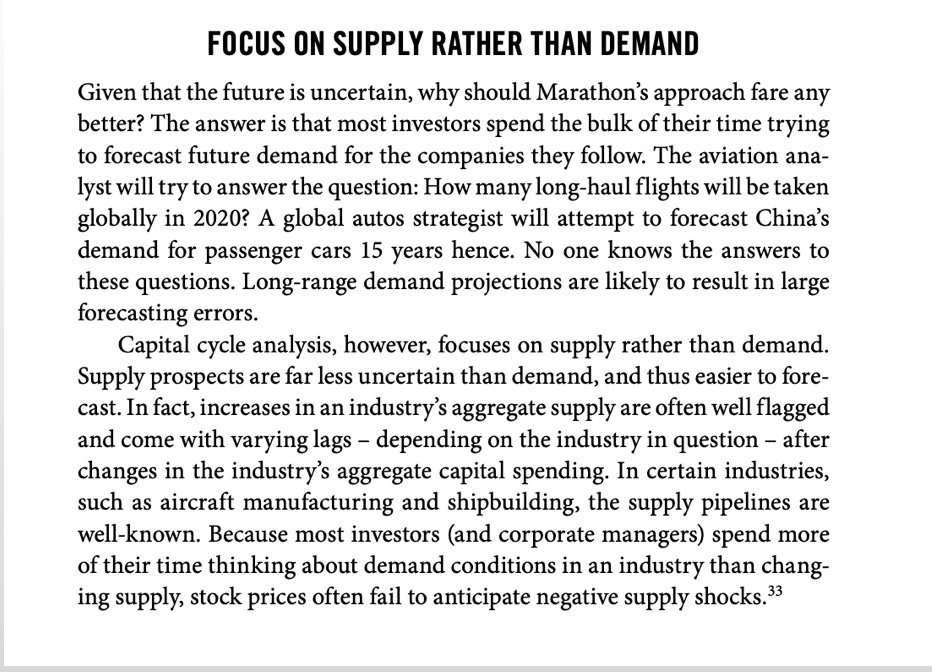
Focus on Supply Rather Than Demand
Anyone interested in commodity/hard asset investing should print this paragraph out and frame it on their desk.
Source: Capital Returns
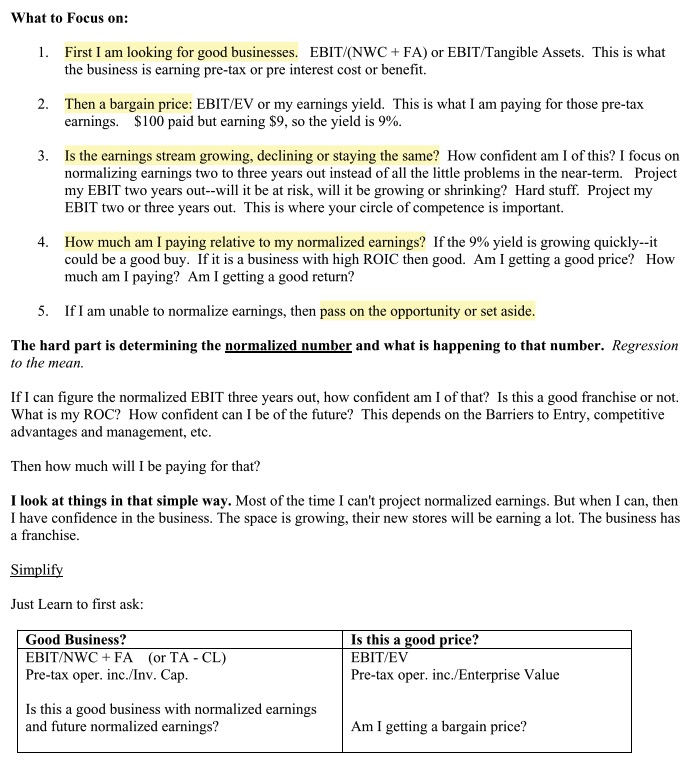
Joel Greenblatt on What To Focus On:
• Look for a good business
• Then a bargain price
• Ask: "Are earnings growing, declining, or stagnating?"
• Determine: How much am I paying relative to normalized earnings?
I love the way Greenblatt simplifies process.
From Warren Buffett's 1985 shareholder letter:
"A good managerial record is far more a function of what business boat you get into than it is of how effectively you row."
François Rochon runs Giveryn Capital which has returned 15.7% annually since 1993.
During his talk at Google, he listed the stock selection process he uses.