A curious #DigitalMarketer | Right Brain Inclined | Optimistic | An Ambivert | Ambitious |
#Caffeine + #kindness
Working towards becoming the healthiest ME!✌🏻
With multiple schools of thoughts hovering around LSI, @randfish thanks for pointing out LSI is old school. Related queries is something we should be looking for! Nicely articulated WBF - What Does It Mean to "Write for SEO" in 2018? https://t.co/rEvOURkeO2 via @moz#seo2018
AI search is exploding, creating a massive blind spot for website traffic. While clicks are shifting, visibility shouldn't ✖️
GA is introducing automated AI Assistant traffic measurement. Track & trend human traffic from top chatbots directly in reports → https://t.co/9bwQ0yBLsY
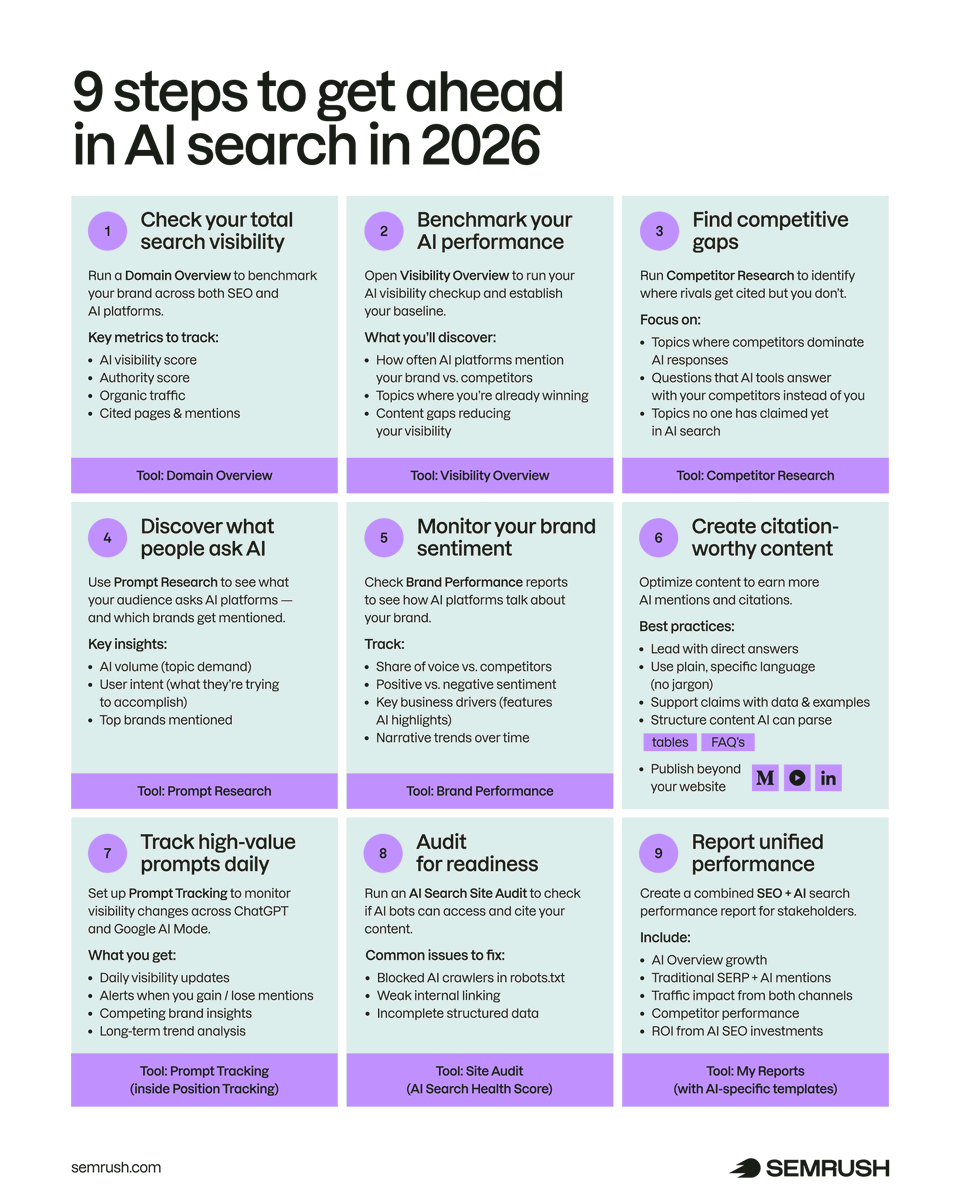
The question every brand faces today: can AI find, trust, and cite them?
This 9-step workflow helps teams answer that question with data, not assumptions. From AI visibility benchmarking to unified SEO + AI reporting, this is how modern search strategy begins 👇
https://t.co/r4NOHVK78I.
Most websites don’t need more content.
They need better visibility into what they already have: old pages, forgotten pages, orphaned pages no one has touched in years.
Your next traffic lift is already in your library. You just haven’t surfaced it yet.
That’s where Semrush SEO Toolkit becomes a real unlock showing you exactly which pages to refresh, fix, interlink, or prioritize.
Try it out now: https://t.co/Pdlhc0jtLd.
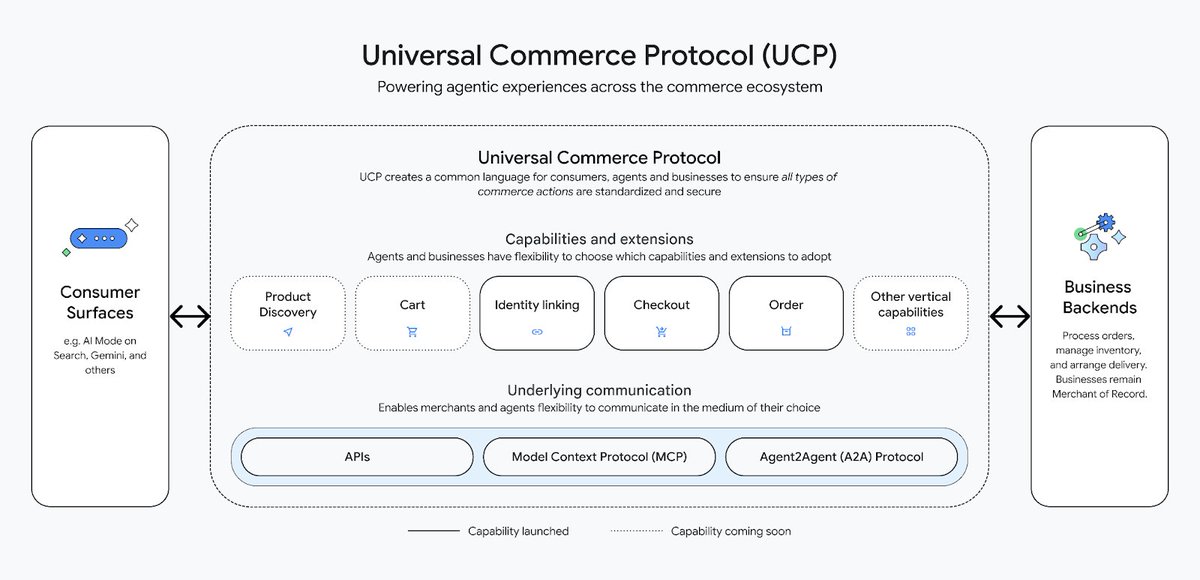
Google released a major update to the Universal Commerce Protocol (UCP) in March 2026.
UCP is an open standard that enables AI agents to communicate with ecommerce platforms and complete purchases on behalf of users.
For example, when a user asks Gemini, “Find the best running shoes under $100,” the AI agent can run a search, browse products across retailers, and present relevant options. With user approval, it can then complete the purchase – all enabled by UCP.
The March 2026 update introduces new capabilities, including cart support and access to product catalogs. Google has also simplified onboarding through Merchant Center to attract more retailers. UCP-powered checkout is currently available to eligible U.S.-based merchants, with global expansion planned throughout 2026.
Here's how to prepare your business now: https://t.co/NI1rDr06I6.
Testing GSC’s new automated branded/non‑branded filters. Still seeing branded queries show up in the “non‑branded” view. Helpful feature in theory, but segmentation is nowhere near clean enough for reporting yet. @googlesearchc@searchliaison
SEO is no longer just about ranking in Google. In 2026, it also means being visible in AI-driven search surfaces like Google’s AI Overviews and ChatGPT.
This SEO checklist covers tasks that can help you gain visibility no matter where your audience is searching 👇
https://t.co/fyUtf9faFr.
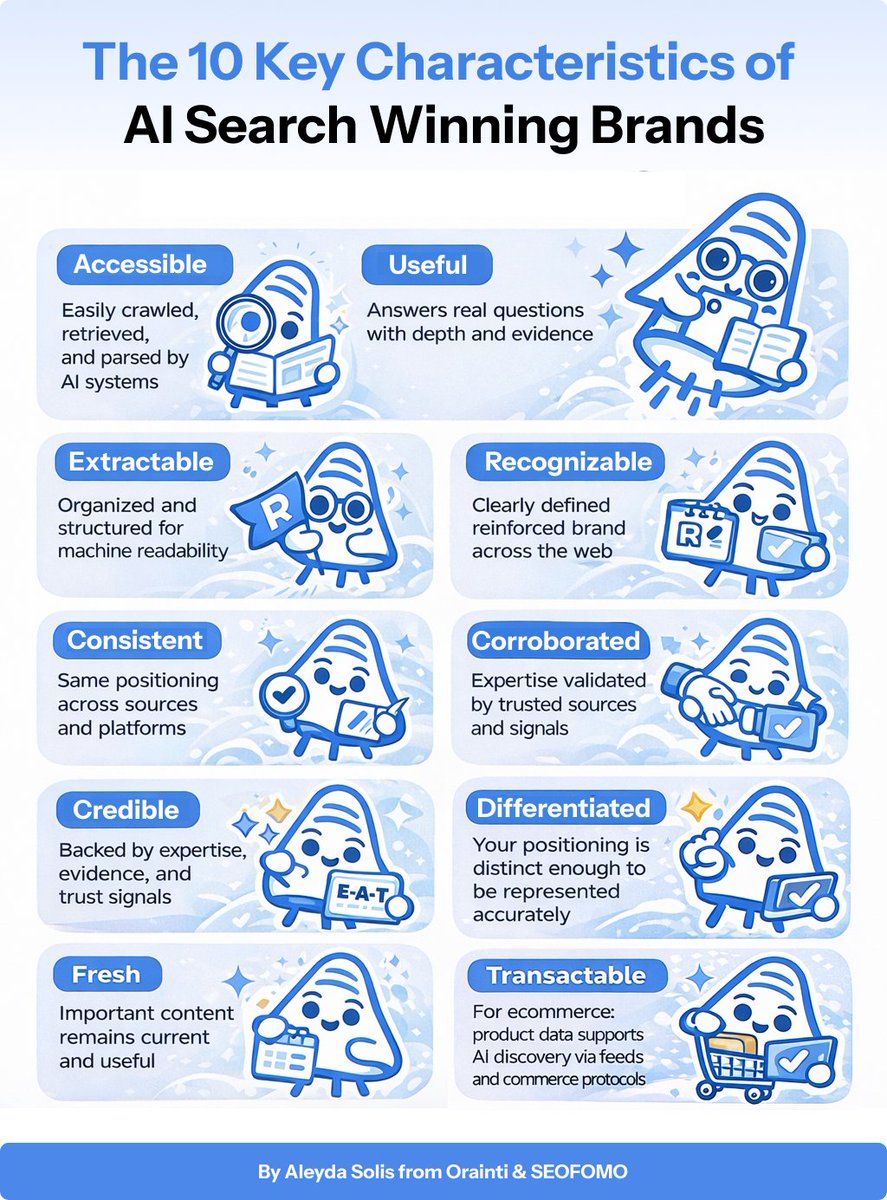
🤖 The 10 Key Characteristics of (Long-Term) AI Search Winning Brands 👇
What makes a brand consistently show up and get recommended across AI search platforms? After analyzing the patterns, these are the 10 characteristics that AI search winning brands share:
1. Accessible
AI systems can only cite what they can reach. If your content can't be crawled, retrieved, and parsed by AI platforms, nothing else matters.
2. Useful
AI systems tend to surface content that demonstrates clear utility beyond keyword relevance. If your content doesn't add genuine value, it is less likely to be surfaced.
3. Recognizable
The stronger and more consistently reinforced your entity is across the web, the more likely AI systems are to identify and represent your brand accurately.
4. Extractable
Your content needs to be organized in ways that machines can reuse, since many AI systems retrieve and process information in chunks. If your key insights are buried, they're unlikely to be surfaced.
5. Consistent
AI systems build confidence through repeated and aligned signals across sources. The same positioning, terminology, and brand facts need to appear across all your digital touchpoints: your site, third-party profiles, directories, social platforms, and earned media.
6. Corroborated
Independent sources need to validate your expertise and claims. Repeated references across credible sources strengthen the likelihood of inclusion.
7. Credible
Visibility in AI search is supported by real expertise, evidence, and trust signals, not just claims. Brands with consistently negative sentiment or weak trust signals may be less likely to be recommended.
8. Differentiated
If your positioning is indistinguishable from competitors, AI systems have fewer signals to select and represent your brand as a distinct recommendation.
9. Fresh
Important content needs to remain current and useful. Freshness can play a role in AI citation selection, particularly for time-sensitive or evolving topics, as many systems incorporate retrieval mechanisms that consider recency.
10. Transactable
For ecommerce brands specifically, product data needs to support AI-driven discovery, comparison, and, where supported, purchase flows.
Read more: https://t.co/gTHC70m75c
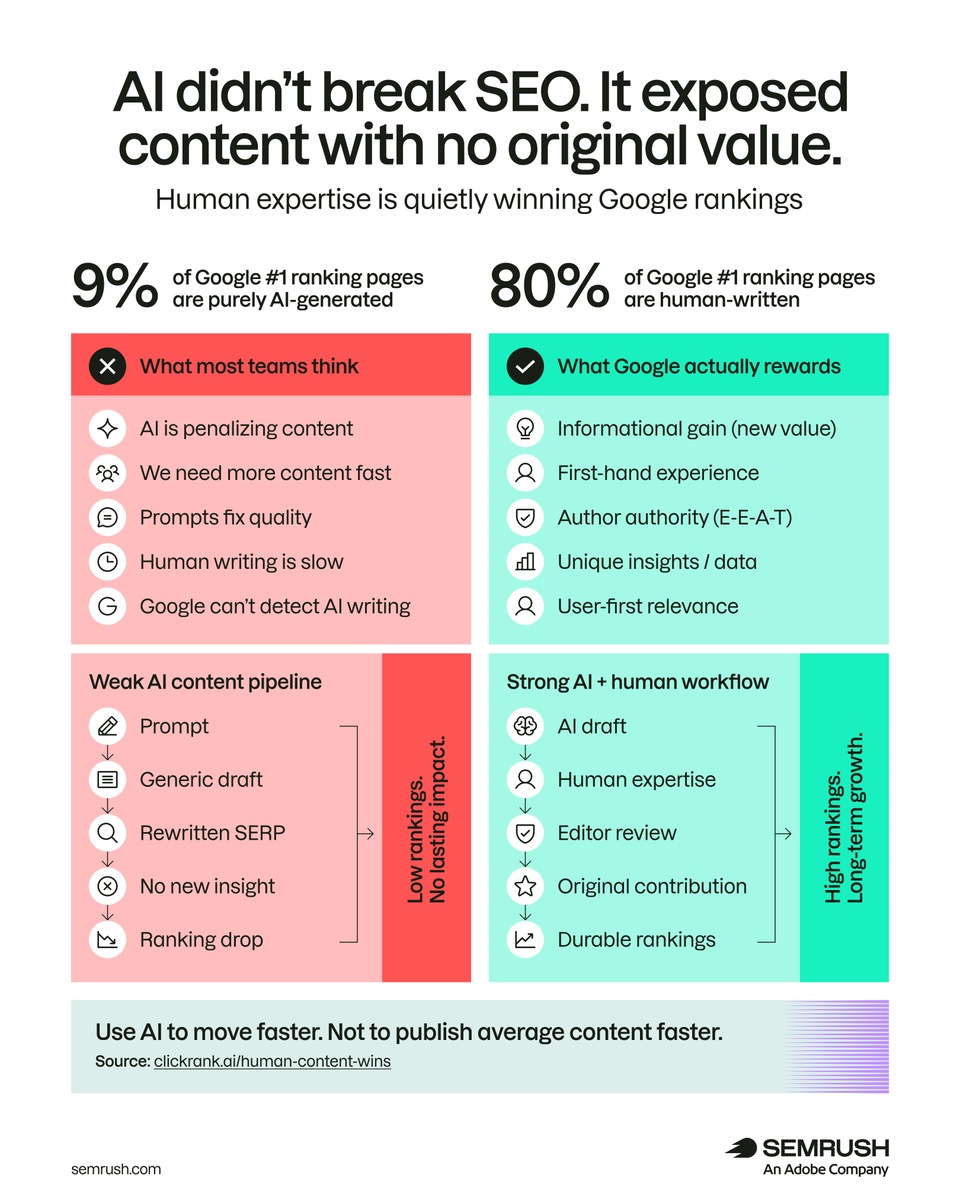
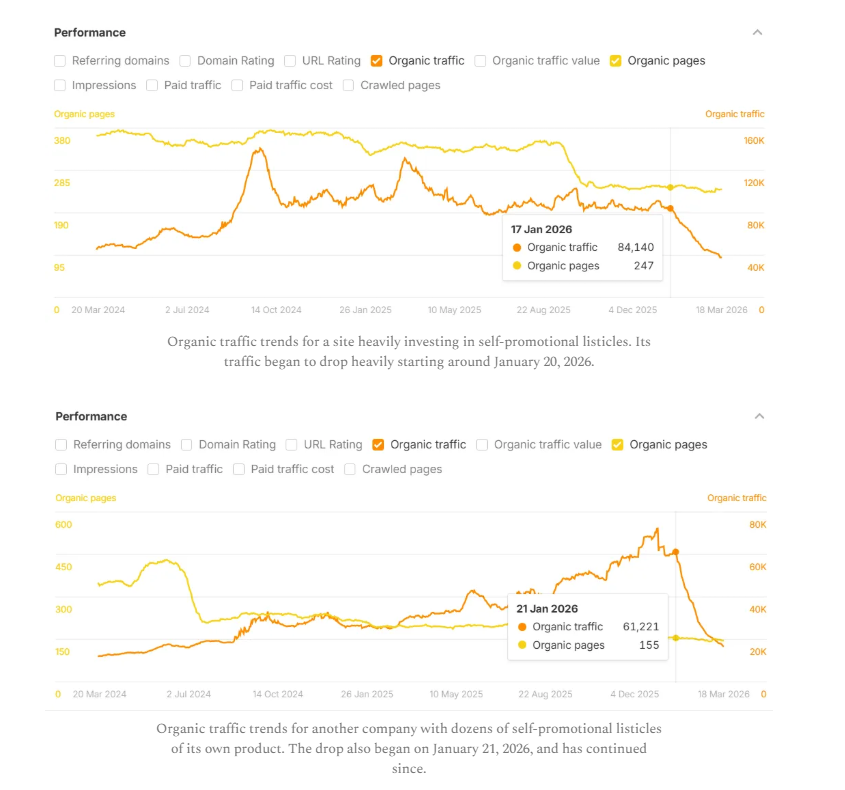
Amazing new post from Lily. Don't destroy your SEO by implementing a bunch of GEO tactics that get you in trouble. And ironically, as you drop in organic search, you'll drop in AI Search.
A great quote from the article:
"These (GEO) case studies typically fall into one of two traps. The first is relabeling longstanding SEO tactics - structured data, FAQ schema, optimized headlines, bullet points, TL;DRs, directly answering questions, etc. - as novel GEO innovations, when these approaches have been core SEO best practices for years. The second, and more misleading, is claiming GEO credit for AI search visibility that was almost certainly driven by organic rankings the site already had before any GEO strategy was implemented."
And: "This is fundamentally a correlation problem. A brand with years of established authority, strong backlink profiles, many brand mentions, and strong organic rankings starts appearing in ChatGPT responses and Gemini citations - and concludes that their new GEO campaign is working. But the more plausible explanation is that their existing SEO visibility is what got them into the search indexes feeding those AI products in the first place."
And then there's the visibility trending based on GEO case studies published. The case studies only show the surge of Mt. AI and not the drop. You can see the full picture below, including the drop... BEWARE:
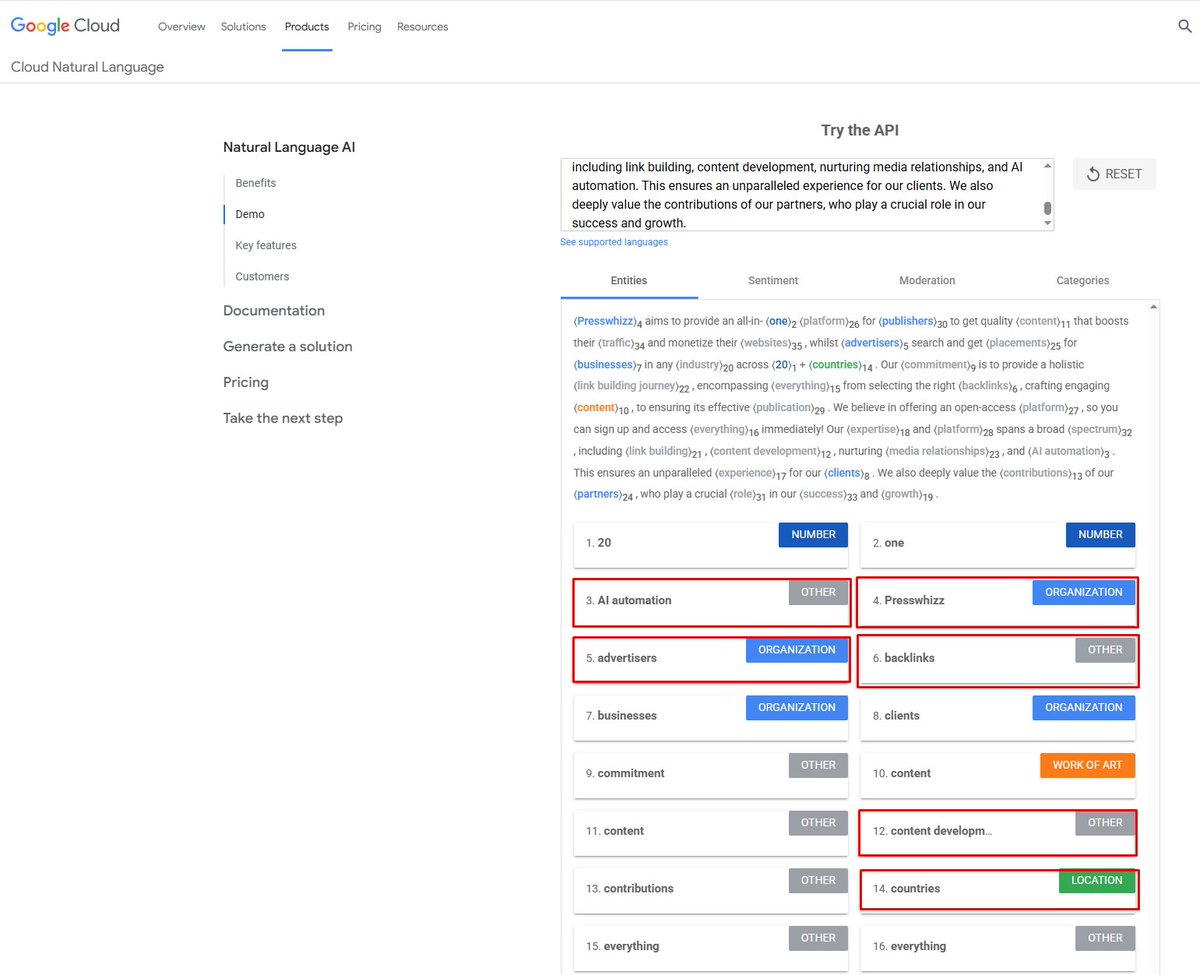
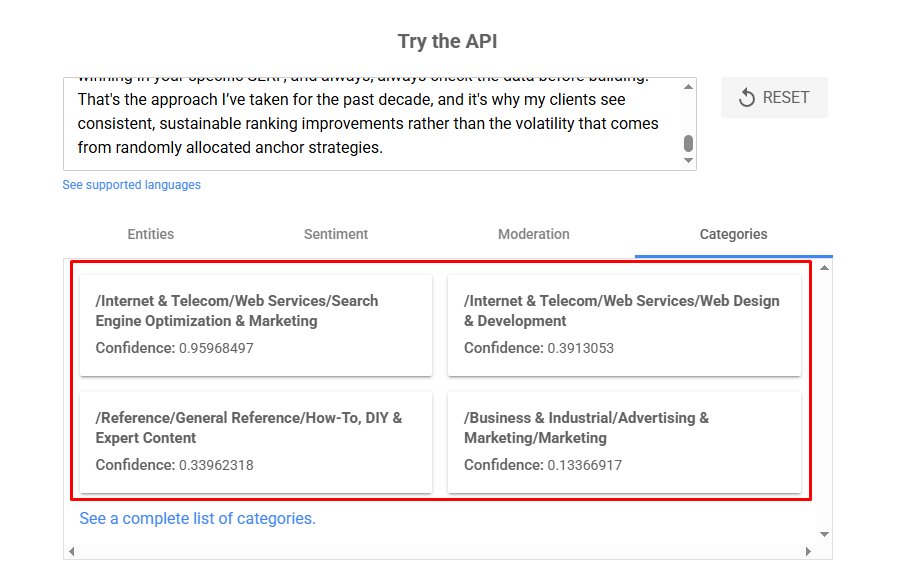
Google has a FREE tool that shows you EXACTLY how it reads your content, it was around before ChatGPT and most SEOs have never even opened it..
Go to: https://t.co/f9x9vVw2Kl and scroll to the "Try the API" box, then paste in your page content and click "Analyze"
Google will show you:
- Every ENTITY it detected (people, places, brands, concepts)
- The SALIENCE score for each (how important Google thinks that entity is to your page)
- The CATEGORY it assigned your content to
Now do the same thing with the #1 ranking page for your keyword...
Compare the two. You'll see:
- Entities they mention that you don't (add them)
- Their top entity has 0.85 salience, yours has 0.3, you need to mention your primary topic more prominently and earlier in the content
- How Google categorizes the pages (e.g. My piece is categorized as SEO, HowTo/Expert Content, Marketing and Web Design/Dev, I want it to be the same categorization as the other ranking pages.
You can also just save both of the outputs (Save the page or print as a PDF) and ask AI to compare the two for you with recommendations!
This is literally Google telling you what it thinks your page is about vs what it thinks the page that's outranking you is about. The gap between those two outputs IS your content optimization checklist.
You don't need ANY expensive subscriptions, it literally takes a few minutes per page, and it's the closest thing to seeing your content through the eyes of the algo that exists because it IS Google's own NLP model.
We launched Gmail on April Fool’s Day in 2004. 20+ years later, we’re bringing Gmail into the Gemini era.
AI Overviews, Suggested personalized replies, Proof read, AI Inbox with new streamlined views and suggested topics to catch-up on and loads more, read the full details here: https://t.co/oq3jYKyvF1
Semrush is being acquired by @Adobe! While we have our sights on big changes in the future, nothing changes in the near-term – you can expect the same @Semrush experience as well as improvements as we join forces with Adobe.
https://t.co/GXKFR1PX8v
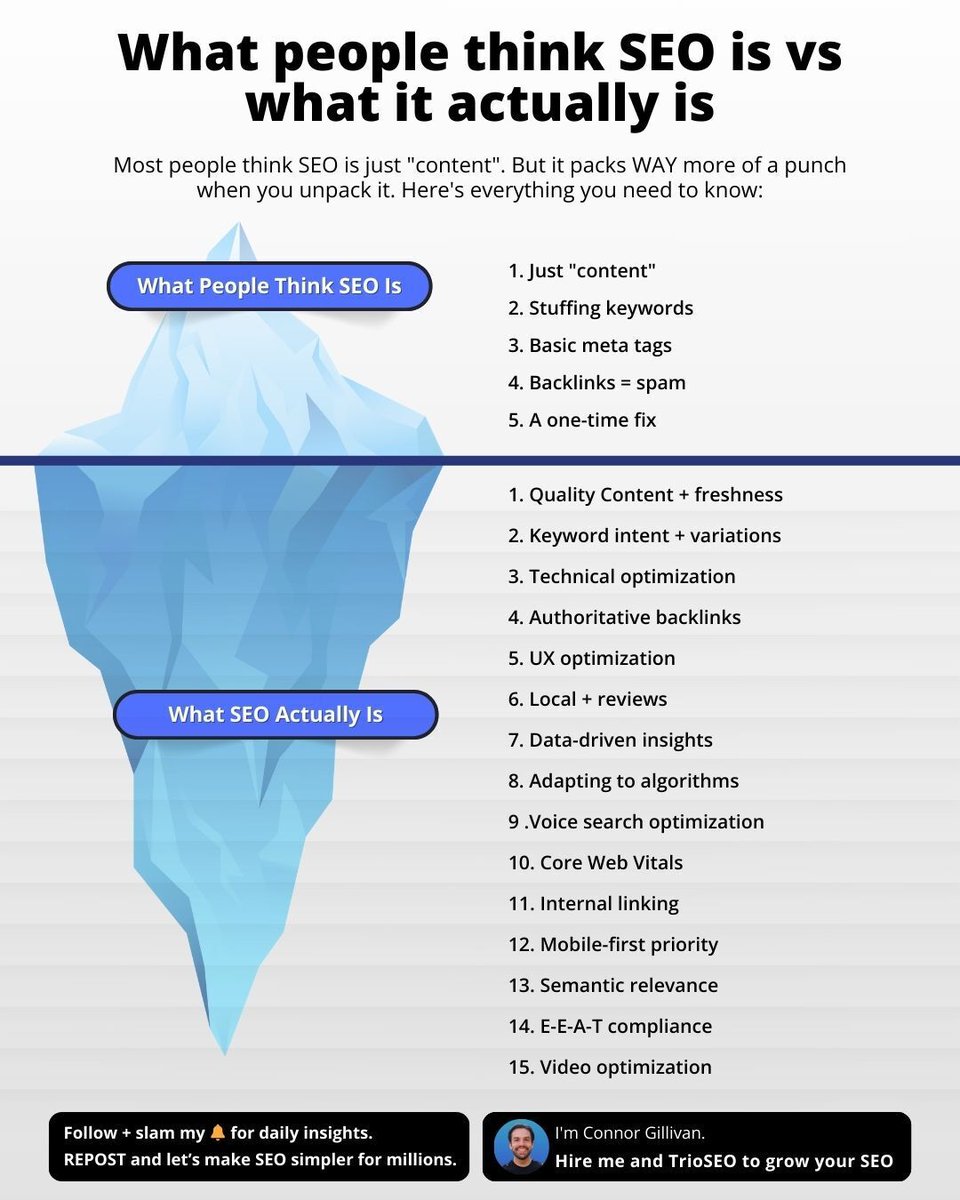
Most people think SEO is just "content".
But it packs WAY more of a punch when you unpack it.
Here's everything you need to know:
What People Think SEO Is:
- Just "content"
- Stuffing keywords
- Basic meta tags
- Backlinks = spam
- A one-time fix
What SEO Actually Is:
1. Quality Content + freshness
2. Keyword intent + variations
3. Technical optimization
4. Authoritative backlinks
5. UX optimization
6. Local + reviews
7. Data-driven insights
8. Adapting to algorithms
9. Voice search optimization
10. Core Web Vitals
11. Internal linking
12. Mobile-first priority
13. Semantic relevance
14. E-E-A-T compliance
15. Video optimization
---
See the difference?
♻️ REPOST if you agree with me.
P.S. This is why I started TrioSEO. To grow your SEO traffic & leads w/ our all-inclusive High Intent SEO system. DM me "Audit" for a personalized SEO analysis.