Researching regenerative FinTech for African remittances | Amsterdam University of Applied Sciences | How Senegal profits from sustainable & inclusive flows.
Incredibly contradictory with the reality of true African history. I can’t tell you about all African languages but in many African languages they have the verb writing in use forever. In my own language, we have very specific words for Writing, Reading, Teacher and Scholar. They were not invented for decoration. They had a purposeful use and application.
@Fulani2021@W1L33DAU Ok I see, it’s an entirely different meaning. Nothing to do with Ham or Hamitic descendants. Thanks! I will research “Haneer”, I never heard of them.
@W1L33DAU@Fulani2021 North Africa mostly for sure. Some southern Arabia too. Probably not the majority because many Fulanis are nowadays mixed with other African ethnic groups but some of us do have Southern Arabian DNA.
Interesting. I ‘m familiar with the Macina Fulbe in Mali. But I was not aware of Algerian Macina Fulanis claim as being Ham descendants. It’s not too far-fetched though. I read that the name Futa is derived from Phut, son of Ham. They could be Ham’s descendants through his son Phut. Considering this theory, it seems that Phut’s descendants carried this name with them as they established new kingdoms throughout Africa, such as Futa Toro or Futa Djallon. Who knows! It’s a very complex history for sure and it’s hard to pinpoint one specific origin because different clans moved and spread all over the world and adopted different origin story.
@Fulani2021@W1L33DAU I won’t be quick to dismiss this theory. Most Fulanis DNA trace back to Southwestern Arabia which itself was part of the ancient Sabean kingdom of Saba (Or Sheba). Geographically, this is the modern day Yemen. It might be true.
@CuriosityonX Ha awesome! We humans and trees share similarities in genetic codes. We share fundamental DNA and biochemistry with trees, plants, mushrooms, butterflies, sharks, birds..etc DNA doesn’t llie. Hello long-lost cousins. At last.
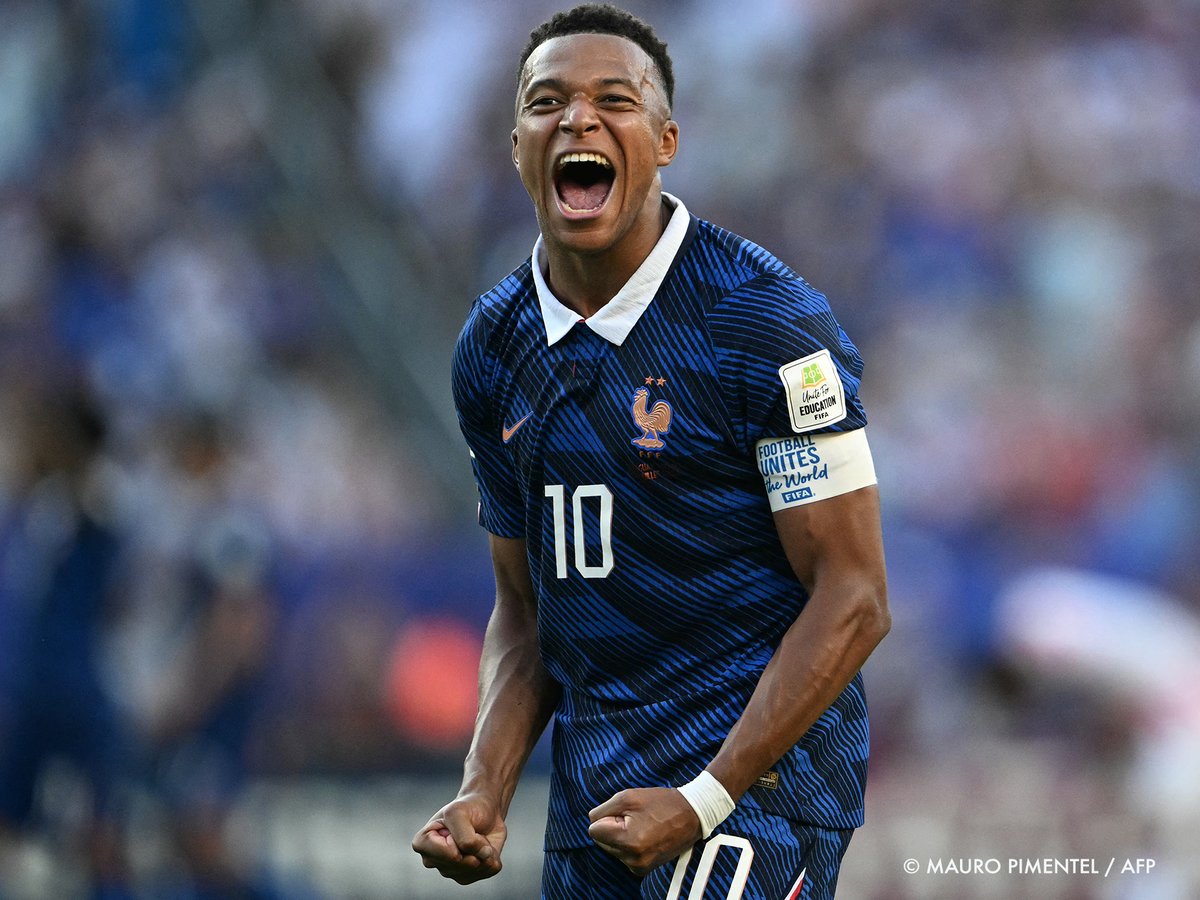
The racist, dehumanising remarks against @KMbappe by Paraguayan Sen. Celeste Amarilla are despicable, regrettably not isolated.
States & sports organisations must prevent acts of racism & discrimination, and ensure independent and effective accountability. Social media must also prevent and address racial discrimination on their platforms.
https://t.co/TVawwmw3Qo
Oh well. Coming from a family of siblings and nephews with bachelor’s, master’s, and PhD degrees mostly in mathematics and computer science we grew up speaking at least two European languages plus our native African ones. Born and raised in Africa. That being said, average group differences in IQ test scores have been documented in many studies, but the causes, genetics, nutrition, education quality, health, culture, and environment are still a hot debate and not settled science. Also, for the sake of God it’s quite obvious that a kid in a war zone in Congo who is starved to death would score much lower than a kid of the same age in Amsterdam. We also know that twin/adoption studies and the Flynn effect (rising scores over generations) highlight how much IQ scores are malleable.
Ultimately, pride in skin color or blanket claims of inherent racial superiority add nothing. True superiority and impressiveness comes from character, moral consistency, and contributions when no one’s watching not pseudoscientific bigotry that ignores overlap and context. Shall we focus on individuals scores, not group averages? Because I know of many African currently in Africa who would scores high these tests with flying colors. Besides, I suspect most people who take pride in these claims have little experience with proper research and would struggle with basic terms like ���methodology,” “bias,” and “statistical analysis” in a research context. Intelligent and less intelligent people exist across all races. Attributing intelligence or its absence to one specific group is one of the dumbest positions imaginable. It speaks of the intelligence of the one making the claim.
Africans are starting to explore Africa in earnest.
Nigerians in Benin for long weekends.
Ivorians in Dakar on holiday.
Ghanaians touring Victoria Falls.
The continent is becoming aspirational — to those who live on it.
When that happens at scale, everything changes — from integration to investment to identity.
This @NYTimes write-up from Gambian journalist @Saiks2 offers an early signal worth paying attention to.
Archived version here ➜ https://t.co/UTquw9xADj