We’ve acquired Orchestra Bio, a platform that helps biopharma teams coordinate the complex process of drug development.
Together, we’ll build on Rosalind, our AI models and tools for life sciences research, to streamline those operations and help new treatments reach patients sooner.
Welcome @ashokaraj_ and team!
https://t.co/vi51OhznQn
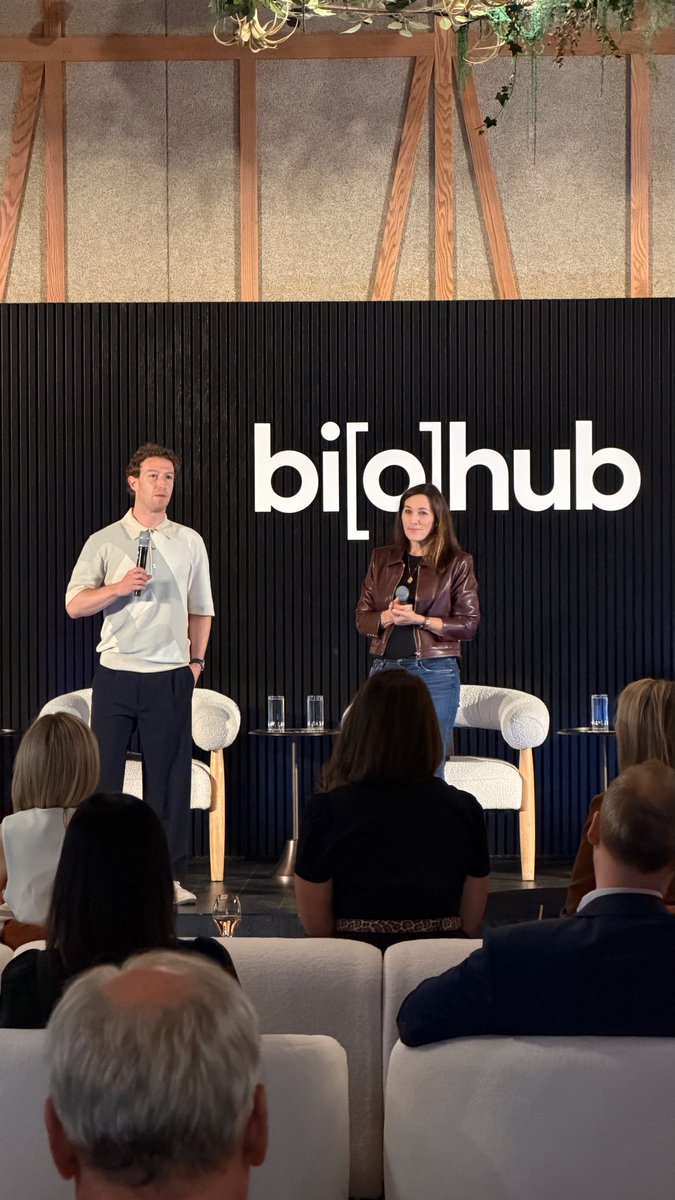
BREAKING: The U.S. government, Google, Meta & Zuckerberg-backed @biohub are launching a $1.8B push to build the data layer for AI biology.
The goal is to create the largest open, AI-ready biological dataset ever assembled, giving models the data needed to better predict how biology works & ultimately help treat disease.
The coalition is massive:
› Biohub committed $500M
› DOE is investing $500M+ across measurement, modeling & compute
› NIH is bringing $500M+ of federally funded datasets & repositories
› Meta, Google DeepMind & @IsomorphicLabs are jointly investing another $300M
This is effectively an infrastructure buildout for AI biology.
Instead of just building bigger models, they’re attacking one of the biggest bottlenecks in biology AI today, generating standardized, high-quality biological data at massive scale & making it openly available to researchers.
$1.8B committed to turning biology into something AI can increasingly model, predict & engineer.
@owl_posting sad but perhaps finally every one of your readers will catch up to your abundant and generous bibliography - you write faster than most read 🫶
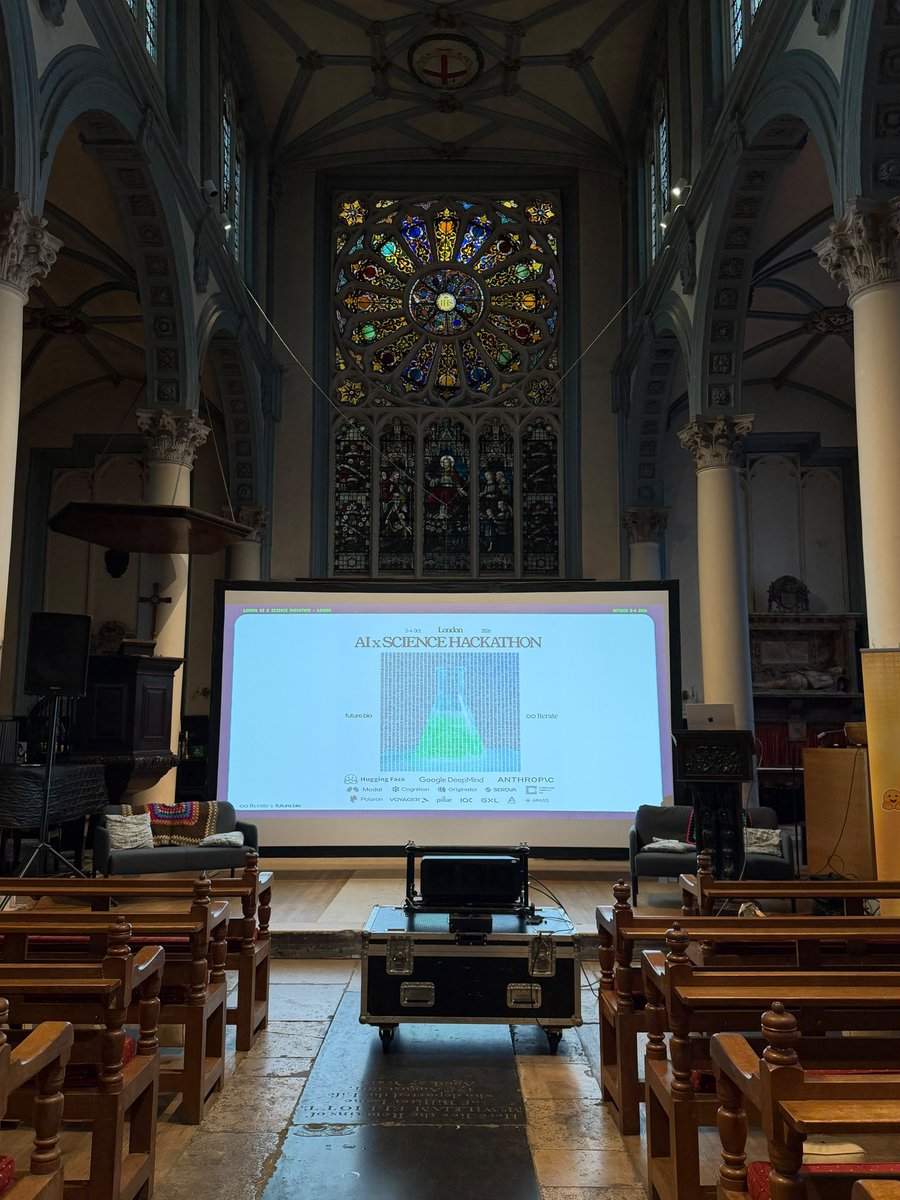
We're hosting a small event to discuss the latest advances in AI and biology this Friday evening, featuring @arcinstitute researchers and others. Apply if interested! https://t.co/Esdvf4td1F
We’ve heard a lot of moonshot ideas on this podcast, but this week’s guest may have the most impossible one yet: making tech more cultured.
In this episode, I sat down with @TheAnnaGat , a Hungarian philosopher, playwright, and founder of Interintellect, a platform for hosting intellectual conversations online. She calls herself “the bridge” between the humanities, academia, and the tech world, which in practice means getting engineers to read Goethe.
Gát grew up on a TV set in communist Hungary. Her parents made the country’s biggest shows in an era when there was one channel available on Saturdays. In 2015, a family crisis left her starting over in London with two suitcases, one of them for books. She rebuilt her life on Twitter, DM’d Sam Altman, and got him as her first meeting on her first trip to America.
Before Interintellect, Gát did just about every wordcel job you can do: playwright, screenwriter, script doctor. She holds graduate degrees in philosophical aesthetics and linguistics, currently splits her time between SF and NYC. The company that would become Interintellect began in London in 2016 as an AI tool for helping “humans have categorically better conversations.” On the side, she angel invests in aerospace.
We get into why X was once the French café that could publish you and is now a place you can’t get discovered from, why the East Coast’s healthiest, wealthiest people are so convinced the future is doomed, and the duty AI builders have to explain themselves. Gát also admits, on the record, that she’s a sucker for Elon Musk’s syntax. I try to convince her that kids don’t read books anymore. She tries to convince me Silicon Valley should fund symphonies.
Thx to @brexHQ and @sendcutsend for making the Core Memory podcast possible. #BrexPartner
TIMESTAMPS
— Intro
— The science of dialogue
— Growing up famous
— Nobody saw 1989 coming
— Losing everything in 2015
— Silicon Valley as the new Ellis Island
— Balaji's DAO campaign
— Elon's syntax
— Why does America hate tech?
— Engineers took over the world
— Have LLMs solved language?
— Are books dying?
— No Pop-Tarts
— Who funds culture?