!!!!!ALERTA DE SPOILER!!!!!
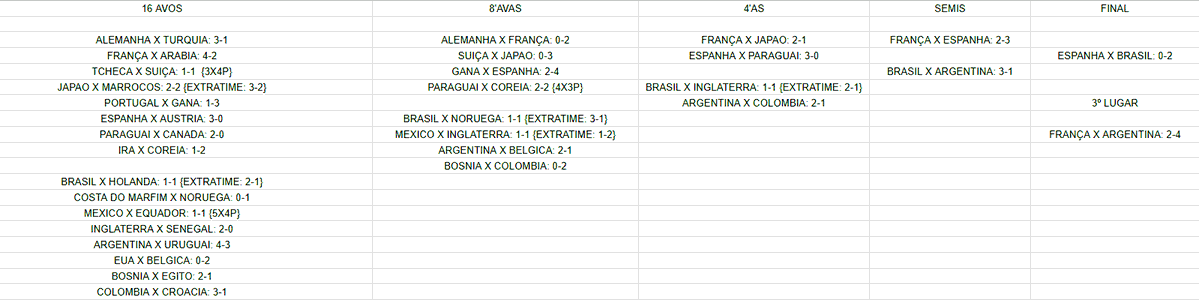
vazou o script da copa!
simulei todos os jogos da Copa do Mundo da FIFA 2026™ e trago todos os resultados oficiais que realmente acontecerão. aproveitei também para destacar os melhores jogos da fase de grupos. eis o gabarito:
{usem com moderação}
@ProfeAlejoT@JuanPGuanipa@MariaCorinaYA Profesor Alejandro, saludos. Estoy interesado en leer completa su tesis “Venezuela Estado #51”, escrita en junio de 2025. ¿Sería posible que me comparta el PDF o el enlace oficial donde pueda revisarla completa? Muchas gracias.
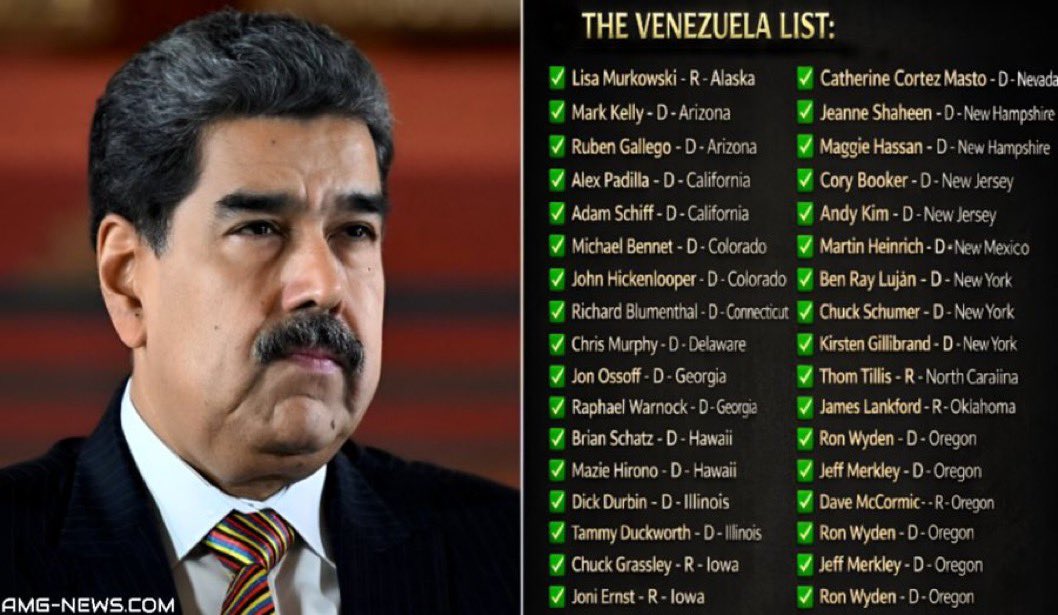
🚨 BREAKING: EXPLOSIVE REPORT – “VENEZUELA LIST” EXPLODES – Maduro Links 60 U.S. SENATORS to Multi-Million Bribe Allegations (FULL LIST & DOCUMENTS)
🔥 A political firestorm explodes as the “Venezuela List” alleges 60 U.S. Senators are tied to millions in bribes — sparking outrage and raising urgent questions about truth, power, and influence.
🔥 THE GENERAL WHO TURNED ON HIS OWN REGIME
FOLLOW ME, THE NEXT DROP WILL BE SHOCKING.
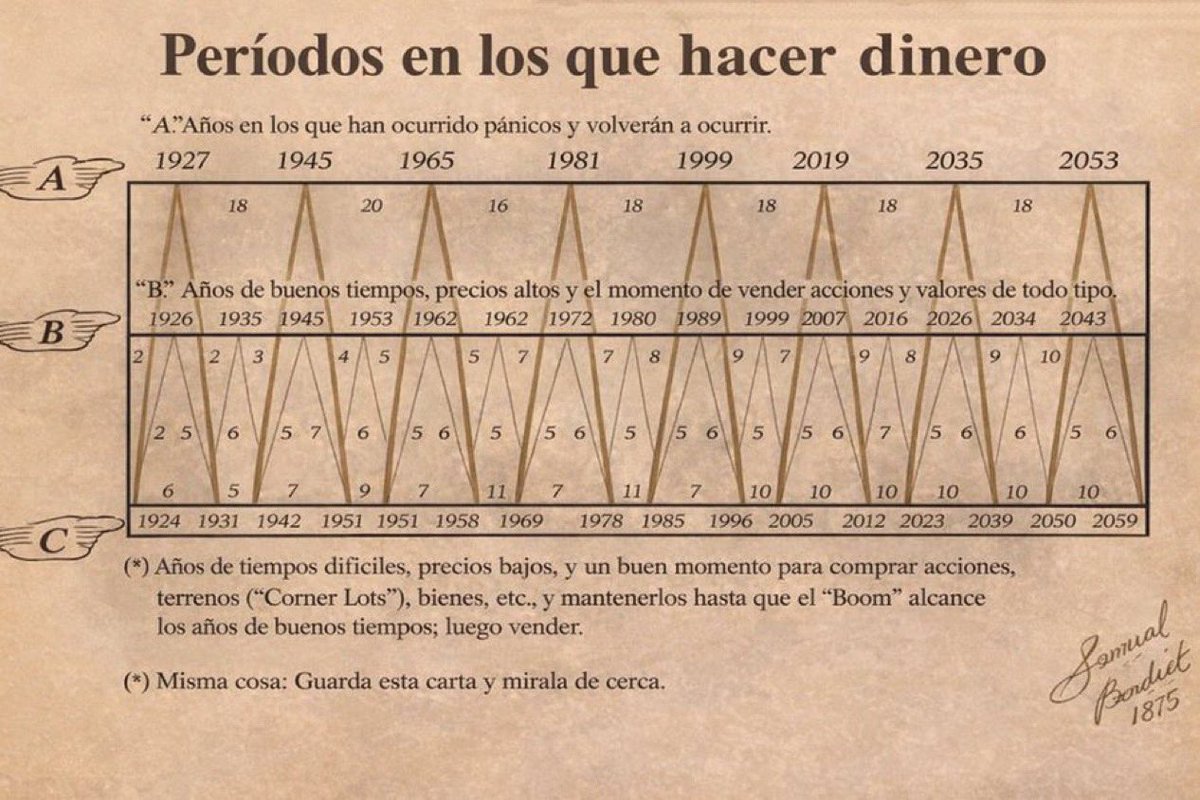
Este gráfico fue creado en 1875.
Hace 150 años.
Sin internet.
Sin Reserva Federal moderna.
Sin redes sociales.
Y aún así predijo:
2000 — burbuja tech
2008 — colapso financiero
2020 — pánico pandémico
2023 — acumulación silenciosa
Ahora viene lo importante:
2026 = EUFORIA
(precios disparados, todos comprando por miedo a perderse el tren)
2035 = ANIQUILACIÓN
(corrección brutal, pánico vendedor masivo) Es el mismo ciclo de siempre.
El dinero no se crea.
Se transfiere. De los impacientes que venden en el miedo o compran en la cima, a los disciplinados que acumulan en silencio cuando nadie quiere tocarlo.
Hoy acumulas (oro físico, mineras de calidad o ETFs a precios "razonables" en correcciones).
En 2026…
Ellos te comprarán mucho más caro (o te venderán en pánico si ya estás posicionado).
Y en 2035…
Volverán a suplicar por salir a cualquier precio.
La historia no se repite.
Pero rima.
🚨 NEXT WEEK'S SCHEDULE IS INSANE FOR MARKETS
MONDAY → FED PRINTS $5.058 BILLION
TUESDAY → BOJ INTEREST RATE DECISION
WEDNESDAY → FED INTEREST RATE DECISION
THURSDAY → FED BALANCE SHEET
FRIDAY → U.S. GDP REPORT
GET READY FOR THE MOST VOLATILE WEEK OF 2026!!
Extraoficial. Por exigencias del FMI y Banco Mundial, el Banco Central de Venezuela tendría listas las cifras oficiales que nunca se entregaron en los 13 años del régimen de Nicolás Maduro y con efectos comparativos desde 1999 hasta 2025. BCV reconoce una deuda externa de 160 mil millones de dólares. Los venezolanos ahora debemos casi 5 veces más por habitante. Las reservas de oro se las robaron casi en su totalidad
***
Los resultados son demoledores sobre Venezuela entre 1999-2026
*PIB Per Cápita Nominal*
- para Febrero 1999: $4.133 USD
- para Enero 2026 (Est.): $3.088 USD
- Cambio Relativo: -25,2%
Fuente: Banco Central de Venezuela (BCV) / Banco Mundial
Nota de JVS: Está cifra es obviamente falsa, porque la caída de PIB es mayor a la señalada.
*Salario Mínimo*
- para Febrero 1999: $203 USD
- para Enero 2026 (Est.): $0,36 USD
- Cambio Relativo: -99,8%
Fuente: Gaceta Oficial / SELA, Banco Central de Venezuela (BCV)
*Deuda Externa*
- para Febrero 1999: $28.000 millones USD
- para Enero 2026 (Est.): $160.000 millones USD
- Cambio Relativo: +571%
Fuente: Banco Central de Venezuela (BCV), Transparencia Venezuela / IIF
*Deuda Externa Per Cápita*
- para Febrero 1999: $1.173 USD
- para Enero 2026 (Est.): $5.970 USD
- Cambio Relativo: +408%
Fuente: Banco Central de Venezuela (BCV), Transparencia Venezuela
*Reservas Internacionales*
- para Febrero 1999: $14.334 millones USD
- para Enero 2026 (Est.): $10.320 millones USD
- Cambio Relativo: -27,9%
Fuente: Banco Central de Venezuela (BCV), Transparencia Venezuela
*Reservas en Oro* (Toneladas)
- para Febrero 1999: 317 toneladas
- para Enero 2026 (Est.): 52 - 60 toneladas
- Cambio Relativo: -81%
Fuente: Banco Central de Venezuela (BCV)/World Gold Council / Reuters
*Producción Petrolera (bpd)*
- para Febrero 1999: 3.120.000 barriles de p/día
- para Enero 2026(Est.):1.142.000 barriles de p/día
- Cambio Relativo: -63,4%
Fuente: OPEP / PDVSA
*Inflación Anualizada*
- para Enero 1998-1999: 29,5%
- para Enero 2025-2026(Est.): 540% - 629%
- Cambio Relativo: +1.800%
Fuente: BCV/BM/FMI
*Pobreza Extrema*
- para Febrero 1999: 11,4% - 15,0%
- para Enero 2026(Est.): 67,5% - 76,6%
- Cambio Relativo: aproximadamente 500%
Fuente: CEPAL / Instituto Nacional de Estadística - INE, ENCOVI / HumVenezuela
*Canasta Alimentaria*
- para Febrero 1999: $124 - $130 USD
- para Enero 2026(Est.): $535 - $550 USD
- Cambio Relativo: +423% - 431%
Fuente: CENDAS-FVM / BCV, Observatorio Venezolano de Finanzas (OVF) / Ecoanalítica
*Poder Adquisitivo*
- para Febrero 1999: 1,6 Canastas
- para Enero 2026(Est.): 0,25 Canastas (con bonos)
- Cambio Relativo: Caída del 85%
Fuente: CENDAS-FVM, OVF / CENDAS
*Presupuesto Universidades*
- para 1999: $1.150 millones USD
- para 2026: $518 millones USD
- Cambio Relativo: Reducción del 55%
Fuente: Banco Central de Venezuela (BCV) / Memoria y Cuenta Ministerio de Educación 1999, Ley de Presupuesto 2026 AN / OBU
*Presupuesto Militar*
- para 1999: $945 millones USD
- para 2026: $1.096 millones
- Cambio Relativo: el doble del asignado a las Universidades. Sin contar Ley Especial de Endeudamiento
Fuente: Stockholm International Peace Research Institute (SIPRI), Ley de Presupuesto 2026
*Inversión por Estudiante Universitario*
- para 1999: $1.850 /año
- para 2026: $210 /año (Aprox.)
- Cambio Relativo: Caída drástica de la calidad educativa.
Fuente: Banco Central de Venezuela (BCV) / Memoria y Cuenta Ministerio de Educación 1999, Ley de Presupuesto 2026/OBU
*Sueldos Profesores Universitarios*
- para 1999: $493,63 - $1.307,34 USD MENSUALES
- para 2026: $0,73 - $1,41 USD MENSUALES
- Cambio Relativo: -99,89 al -99,85% de reducción
‼️El Barça pagó:
– 8,4 M€ a Negreira por
neutralidad arbitral.
– 4,7 M€ a Tebas por neutralidad institucional.
– 7,2 M€ a periodistas por neutralidad mediática.
Y Tebas pagó 139 M€ a la prensa para tapar el hedor de un sistema corrupto que nada tiene que ver con la neutralidad.
Resumiendo,
el Barça compra al que pita y al que manda,
el que manda los encubre a los dos,
y entre todos compran el silencio de los que deberían denunciarlos a los tres.
Pero el precio por denunciar que el fútbol español está en venta...
lo está pagando el Real Madrid.
#LaLigaMugrientaNegreira
🇺🇸 PRESIDENT TRUMP HAS JUST APPROVED A MASSIVE U.S. STIMULUS PACKAGE
AROUND $2.5 TRILLION SET TO FLOW INTO THE ECONOMY OVER THE NEXT 12 MONTHS
LIQUIDITY IS BACK… MARKETS ABOUT TO GO PARABOLIC https://t.co/YkOYnAhztG
🚨 BREAKING
🇺🇸 FED TO RELEASE AN EMERGENCY PPI REPORT TODAY AT 8:30 AM.
IF PPI > 0.8% → MARKET GOES PARABOLIC
IF PPI = 0.7–0.8% → MARKET STAYS FLAT
IF PPI < 0.7% → MARKET DUMPS HARD
EXPECT HIGH VOLATILITY TODAY!!
🚨 BREAKING
FED WILL INJECT $40,462,000,000.00 INTO THE MARKETS OVER THE NEXT FEW WEEKS!
THEY'RE OFFICIALLY CONTINUING QE AND TURNING THE MONEY PRINTER BACK ON!
GIGA BULLISH FOR MARKETS!
🚨 THE FED IS NOW PRIVATELY PREPARING FOR A POSSIBLE $2 TRILLION CREDIT MARKET COLLAPSE.
For the first time in over a decade, the Fed has started directly asking U.S. banks to hand over their exposure numbers to the private credit market.
This is the exact move regulators make when they stop trusting public numbers and start preparing for real stress.
Bloomberg reported on April 11 that the Fed has formally reached out to major U.S. banks for detailed information on how much risk they're carrying from private credit firms, and whether stress inside that sector could spread into the wider financial system.
Here's why this is happening now.
Over the past few weeks, three of the largest private credit funds in the market have limited investor withdrawals:
- Blue Owl Capital restricted redemptions on its $14B fund
- BlackRock capped withdrawals on its $26B HPS Corporate Lending Fund after investors requested $1.2B in redemptions
- Cliffwater capped withdrawals on its $33B fund after investors tried to pull 14% and only 7% was allowed to exit
Three of the biggest names in the industry, all hitting redemption limits within a short period. That's not random. That's investors trying to get out faster than the funds can return their money.
At the same time, Apollo executive John Zito publicly said private equity marks are wrong across the board. He said he "literally thinks all the marks are wrong."
His estimate: loans to a typical mid size software company bought between 2018 and 2022 could recover only 20 to 40 cents on the dollar in a slowdown. That implies losses of 60 to 80 percent.
So the pattern:
- Investors trying to withdraw from private credit funds
- Funds blocking those withdrawals
- A senior Apollo executive saying valuations across the industry aren't real
- The Treasury calling a meeting with insurance regulators this month to discuss the $2T private credit market
- The Fed directly asking banks for their exposure numbers
Now here's why this matters far beyond the U.S.
Private credit has grown to around $2T over the past decade, but it's not isolated. It sits in the middle of the global financial system. Pension funds, insurance companies, sovereign wealth funds, and foreign banks all have money parked in these funds because they were marketed as higher yielding and more stable than public bonds.
If valuations are revised down the way Apollo's own executive is suggesting, the losses don't stay with a handful of U.S. firms. They flow directly into:
- Public and private pension funds across Europe, Canada, Japan, and the Gulf that allocated heavily to private credit for yield
- Insurance companies, some of the largest buyers of private credit whose solvency ratios are tied to these valuations
- Banks in the U.S., Europe, and Asia that lend to the private credit firms themselves, which is exactly what the Fed is now trying to measure
Most people miss this part. A private credit fund limiting withdrawals isn't just a problem for that fund. The banks lend to the funds. The funds lend to private equity. Private equity owns thousands of mid sized companies. Those companies employ millions.
When valuations at the top are wrong, the entire chain underneath is mispriced.
The exposure also ties directly into the AI infrastructure buildout. Blue Owl alone is behind some of the largest AI infrastructure deals in the world:
- $27B joint venture with Meta in Louisiana
- $15B deal with Crusoe in Texas
- $5B backing CoreWeave
Oracle now carries over $100B in debt, much tied to AI infrastructure that will take years to generate returns. Companies like CoreWeave, Crusoe, and others are funding their buildouts through private credit rather than public bond markets.
The structure works as long as AI revenue grows fast enough to service the debt.
If it slows, the stress doesn't stay in tech stocks. It moves straight into the credit side of the system, which is the exact part the Fed is now trying to get a clearer picture of.
Globally, this is also colliding with:
- Japan dealing with the weakest yen in decades and rising bond yields
- Europe trying to manage weak growth and stretched sovereign balance sheets
- China still working through its own property and local government debt problems
- A U.S. consumer already showing signs of strain at the lower end
The world financial system has been running on elevated debt and loose valuations for years. Private credit is one of the largest and least transparent parts of that system.
If the valuations are wrong, if redemptions keep accelerating, and if AI revenue assumptions disappoint, losses could cascade through pensions, insurers, and banks across multiple countries at the same time.
Fed Chair Jerome Powell said last month he doesn't currently see private credit issues infecting the wider financial system. St. Louis Fed President Alberto Musalem said stress is "largely limited" to the sector.
But the fact the Fed is now pulling exposure numbers directly from banks suggests the central bank wants to verify that for itself rather than take those statements at face value.
And this happens when regulators are no longer comfortable being surprised by what they find later. If stress inside this $2T market turns into actual losses, it won't stay inside the U.S., and it won't stay inside one sector.
It will move through pensions, insurers, banks, and AI infrastructure debt across the global system at the same time.
🚨 WARNING: TOMORROW WILL BE THE WORST DAY OF 2026!!
The U.S.-Iran peace deal just got officially CANCELLED.
When the market opens on Monday, it won’t be “just macro pressure” anymore.
There’s a geopolitical trigger building underneath it all.
Stocks will dump.
Metals will dump.
Crypto will take the hardest hit.
Smart money is already exiting.
They’re not taking profits.
They’re building cash positions because something deeper is starting to break.
The dollar is weakening in real time.
This is not a one-day shock.
This is pressure building across multiple fronts at the same time.
And now there’s another layer being added:
U.S.-Iran peace deal just got officially cancelled.
After 5 days of negotiations, both sides walked away with no agreement.
That changes everything.
Because when diplomacy fails, uncertainty becomes IMMEDIATE.
And markets don’t price “possibility.”
They price escalation.
There are only a few ways this plays out from here, and they are NOT equal:
1⃣ SOFT OUTCOME
Backchannel talks resume, tensions cool, markets stabilize after initial volatility.
2⃣ ESCALATION PHASE
No progress, tensions build, and markets begin pricing prolonged conflict risk.
3⃣ HARD BREAK
Situation deteriorates rapidly, and the market reprices oil, risk, and global stability in hours.
That last one is where things get dangerous.
Because this isn’t happening in isolation.
At the same time:
→ Bonds are being sold aggressively
→ Yields are rising fast
→ The dollar is losing stability
→ Liquidity is tightening
Now connect the dots.
When geopolitical risk collides with a fragile financial system, reactions don’t stay contained.
They COLLAPSE.
Oil doesn’t move slowly.
It reprices violently.
Capital doesn’t rotate calmly.
It rushes to safety all at once.
And risk assets?
They don’t “dip.”
They DUMP HARD.
This is how chain reactions begin.
Because once markets start pricing duration instead of shock, everything changes.
Inflation expectations rise.
Central banks get trapped.
And policy responses come too late.
That’s when the real damage happens.
This could still pass as a short-term scare.
But if markets start pricing escalation into next week,
This is no longer noise.
This is a regime shift.
Not a pullback.
Not a buying opportunity.
A STRUCTURAL CHANGE in how risk is priced across the system.
Pay attention to flows.
Watch oil.
Watch bonds.
Watch volatility.
Because once this accelerates, it doesn’t give you time to react.
I’ve spent years tracking macro turning points and market reactions like this.
When the next move becomes clear, I’ll share it.
Follow and turn notifications on.
Because by the time it hits the headlines, it’s already too late.
Piyasa bu haftayı çok konuşacak.
PAZARTESİ - FED ACİL AÇIKLAMA YAPACAK
Fed acil açıklama dediğinde şaka yok.
Son kez böyle bir şey olduğunda BTC %8 sallandı.
Ne söylenecek bilmiyoruz ama bir şey biliyoruz: piyasa o gün oynak.
SALI 1 ÜFE VERİSİ GELİYOR
Herkes TÜFE’ye bakar, asıl sinyal ÜFE’den gelir.
Fabrika çıkış fiyatları yükseliyorsa enflasyon bitmiş değil demektir.
Düşüyorsa?
Faiz indirimi hayali tekrar canlanır.
ÇARŞAMBA - EKONOMİ RAPORU
Fed’in sahadan gelen istihbarat raporu.
12 bölgeden “ekonomi nasıl gidiyor” özeti.
Burada resesyon kelimesi geçerse piyasa titrer.
Geçmezse rahat nefes alınır.
PERŞEMBE - İŞSİZLİK BAŞVURULARI
Haftalık iş başvuru sayısı.
Rakam yükselirse ekonomi yavaşlıyor, Fed’in eli zayıflıyor.
Düşük gelirse sıkılaştırma devam mesajı.
CUMA - FED YÖNETİM KURULU ÜYESİ KONUŞACAK
Haftanın son sürprizi.
Faiz kararını veren 7 kişiden biri mikrofona geçecek.
“Enflasyonda ilerleme var” derse ralliye kapı açılır.
“Daha fazla sıkılaştırma gerek” derse cuma akşamı kırmızı kapanır.
¡BOMBA MUNDIAL!
El presidente Donald Trump acaba de lanzar una propuesta que nadie esperaba:
Estados Unidos e Irán podrían formar una empresa conjunta para proteger y asegurar el Estrecho de Ormuz, la arteria vital del petróleo mundial.
Las fuerzas estadounidenses se mantienen en la región, pero ahora con un enfoque totalmente distinto.
> “Es algo hermoso”, declaró Trump en entrevista con ABC News.
> “Estamos pensando en hacerlo como una empresa conjunta. Es una forma de asegurarlo… y también de protegerlo de un montón de otras personas.”
De amenazas de guerra a una posible alianza pragmática para estabilizar el flujo de energía global.
¿Un giro histórico? ¿Realpolitik en su máxima expresión?
Nadie te dijo que las aerolíneas tienen dos precios para cada vuelo. El precio que te muestran. Y el precio que esperan que nunca encuentres. Vuelo de $1,190. Pagado $141. Diferencia de $1,049. Mismo asiento. Mismo día. Aquí están los 7 prompts que lo encontraron:
(Guarda esto antes de que desaparezca).