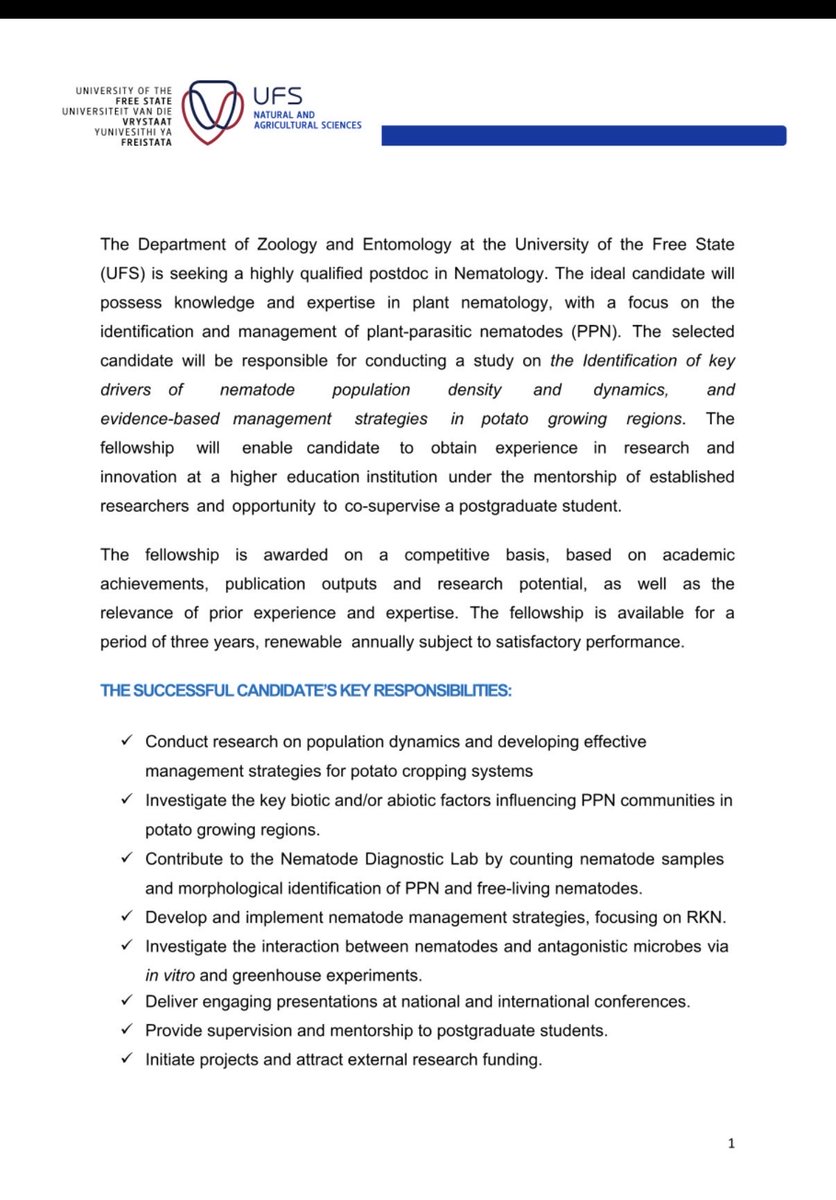
Postdoctoral Opportunity. We are seeking one or more NIH/NIGMS funded postdoctoral researchers to work on host–nematode interactions.
Deadline: Feb 28, 2026
Start: Flexible (Summer–Fall 2026)
More details here: https://t.co/YMA9nkRxai
Apply by emailing [email protected]
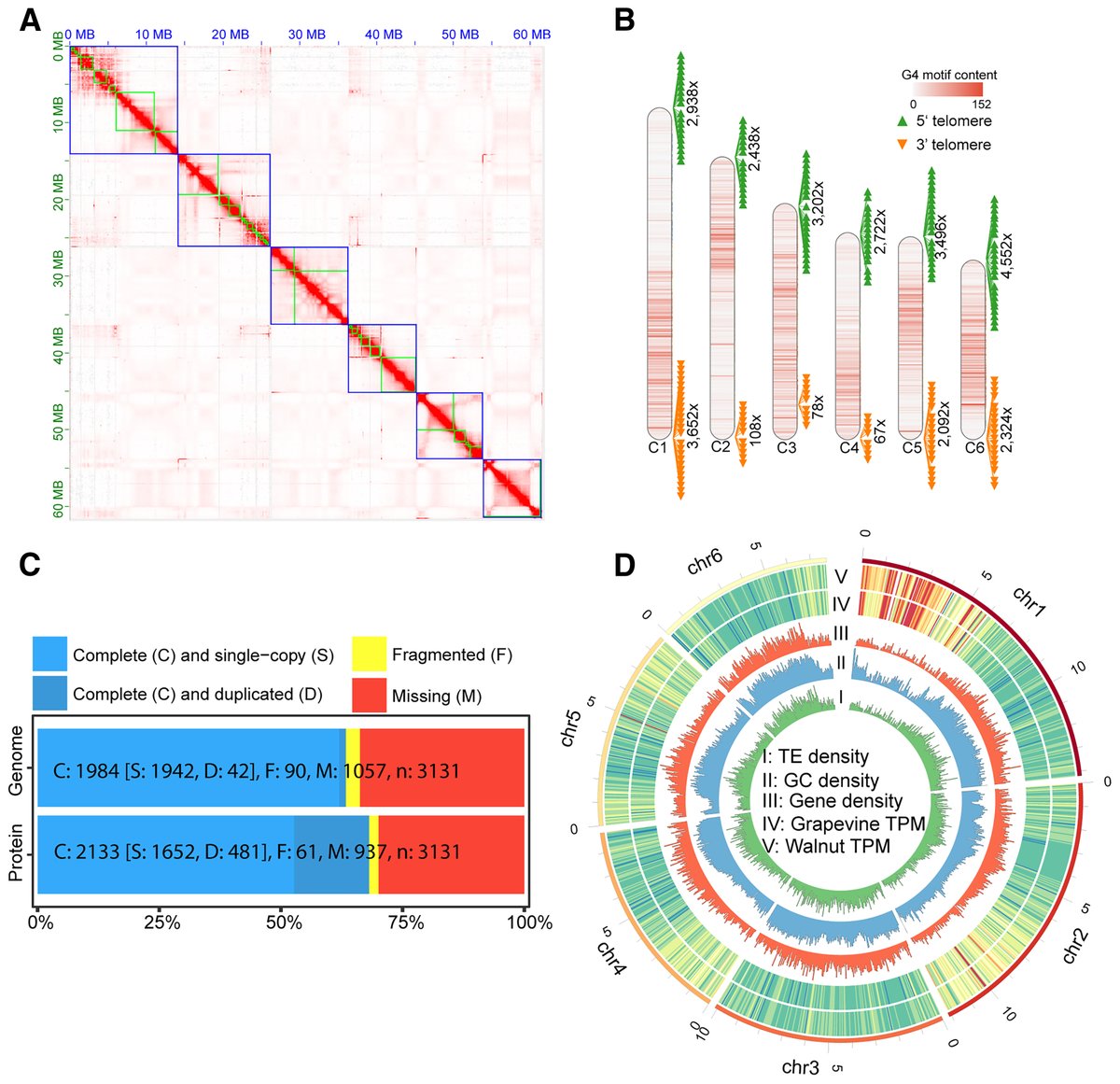
The root-lesion nematode #Pratylenchus vulnus parasitizes a wide range of hosts, including woody perennials such as walnut and grapevine, significantly damaging roots and reducing yields. Dadong Dai et al. present a high-quality, chromosome-level genome assembly of P. vulnus: https://t.co/bjQoyUu58Z @NemaPlant
Plant-parasitic nematodes (PPNs) are a serious threat to global food security, with estimated annual losses exceeding $173 billion. Beyond their direct damage, interactions between PPNs and other phytopathogens can lead to synergistic relationships, referred to as disease complexes, which result in more severe symptoms than either pathogen alone. @AlisonCBlundell et al. discuss specific aspects of PPN life cycles that may facilitate disease complex formation. Read the Interactions Review to learn more: https://t.co/EQnRNtbZcW @NemaPlant
Check out our latest work! AlphaFold 3 revealed a transient immune receptor complex that eluded biochemical studies for almost a decade🤯 We describe a conserved structural logic underlying sensor–helper communication in an NLR immune receptor network 🧵👇
https://t.co/H55EMmrtZn
Final version of our NRG1 MS is out!
We uncover a surprising mechanism: the helper NLR NRG1 targets organellar membranes to trigger immunity
Great collaborations with @KamounLab, @JiorgosKourelis, @jonathandgjones, @AdamWu9527, and the @Phil_Carella labs!
https://t.co/P9OMT7NgtR
You’ve seen it @biorxivpreprint but here is the latest version—a twist in #NLRbiology—the TIR-NLR to NRG1 pathway channels calcium from organelles.
Besides the cool science, I love it how several @TheSainsburyLab alums collaborated on the project. #TEAM#CelebratingAlumni 😍 😎
🧵New preprint alert! How do plants cope with fundamentally different types of belowground attack? We challenged Arabidopsis with three nematode species — one migratory, two sedentary — and the answers surprised us.
https://t.co/yYvOcB2sVU
Happy to see this in biorxiv 🎉. Really proud of how it started and ended. Very first report of new peptide class “ PSK” encoded by parasitic nematodes. This makes me to think that nematodes are getting more smarter than we can imagine. 🎉 Congrats to all authors 🙏
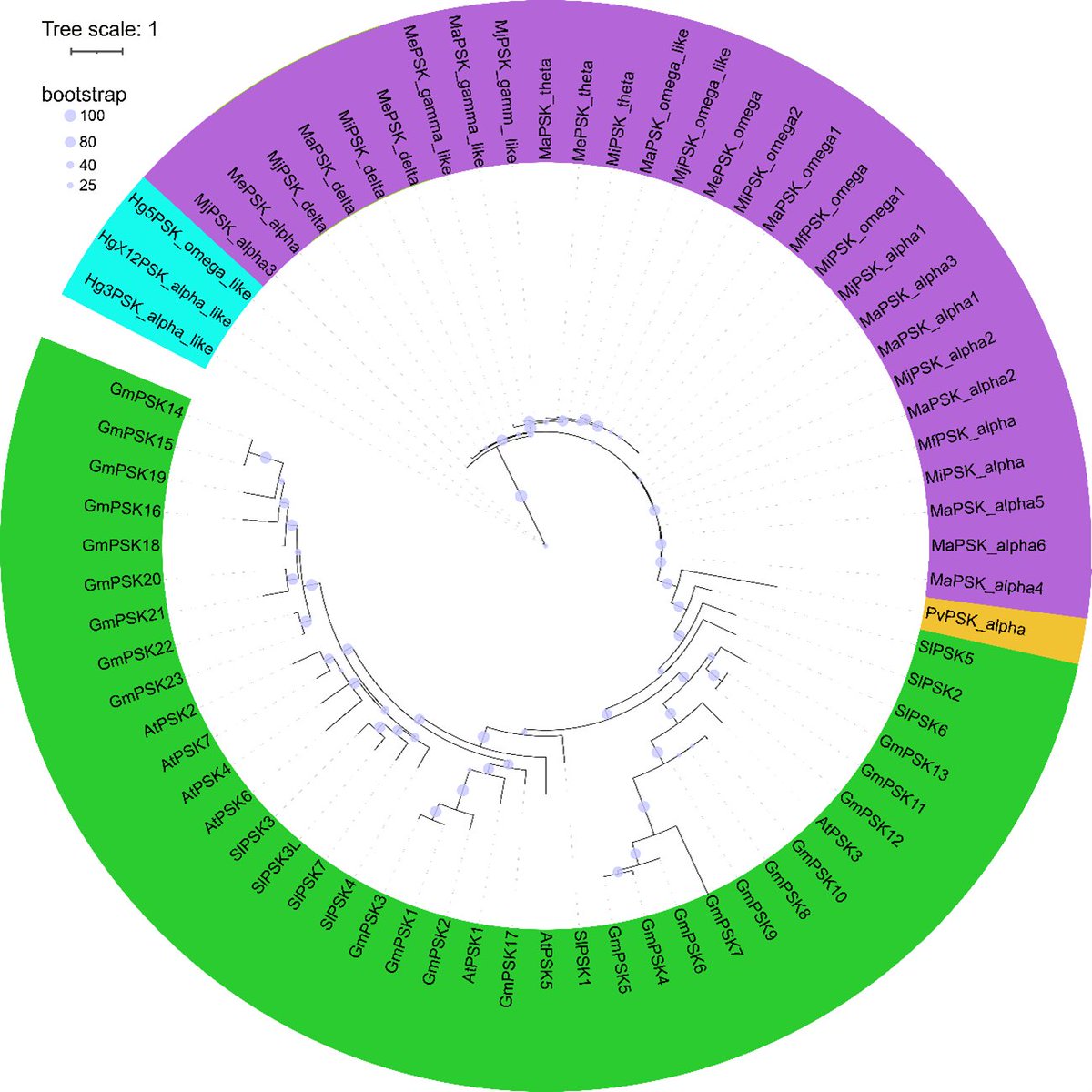
New results: Root-knot nematodes produce PSK peptide mimics to help establish feeding sites in host roots. We identify five PSK-like classes, including two previously undescribed ones. Preliminary version for now; more data soon. https://t.co/YSpQ01v0C5
Excited to share our PNAS commentary, “A nematode-built conduit for cross-kingdom biotrophic interaction,” on a fascinating recent discovery in root-knot nematode biology from @MitchumLab .
Please take a look : https://t.co/SyJ93495TQ
We are hiring a Junior Specialist in our lab at UC Davis! Great opportunity to gain hands-on research experience in plant & nematode biology. Please share.
Apply here:
https://t.co/gPg2orkAqA
Breaking News: key discovery on how a plant-parasitic nematode, the Northern root-knot nematode, is able to infect such a wide range of organisms, from monocots and dicots to annual crops an woody plants. #ucdavis nematologists, international team https://t.co/nl68tHwutQ
🔬 PhD opportunity alert! Join us at the @CropSciCentre@camplantsci to decode sensor–helper NLR communication mechanisms in plant immunity. Apply by 14th November! 🔍 More info 👉 https://t.co/RwM3TMiWaR #PhD#PlantScience#Biology Please RT