🧬 The final paper of my PhD is out as a preprint on @biorxivpreprint!
Do sister fungal antagonists elicit the same early response in the pinewood #nematode❓ Partly: at 1 h, Esteya floridanum elicited nearly 2× more DEGs than E. vermicola.
https://t.co/xGBZvJRFPG
If pathogen suppression alone may not reliably predict plant outcomes, how should we screen and rank biocontrol candidates?
Free full text: https://t.co/tx7ZlWn8Ot
#PlantPathology#Biocontrol
Two nematophagous Esteya fungi significantly reduced pinewood nematode reproduction in maritime pine seedlings. Only E. floridanum also significantly improved survival over time vs nematode-only controls.
Symptoms were another story. 🧵
https://t.co/n3FzAcv0pi
Neither fungus significantly reduced symptom severity relative to nematode-only controls.
One complication: even without nematodes, more than half of control seedlings showed chlorosis. Environmental stress likely contributed, limiting what symptom scores alone can tell us.
Deepak Haarith, Ann E. MacGuidwin, and Andrew F. Bent report that Rhg1 can hinder the parasitism of the root lesion nematode #Pratylenchus penetrans, which is commonly found along with the soybean cyst nematode in northern U.S. soybean fields. Learn more: https://t.co/5ev3aS1qZM
In case you missed our fascinating second Road to Jeju Rising Stars 2 Webinar, you can watch the whole Webinar for free on youtube or go to our society webpage. https://t.co/Yw4Kq7D9rl
Happy Monday, everyone! 🎉🦗
What a way to start the week! We woke up to see our work featured on the cover of the November issue of Annals of the @EntsocAmerica ! 🤩
Another stunning photograph by our colleague Joseph Moisan-De Serres, highlighting Abraão Almeida Santos’ work on the changing pest status of leafhoppers in Québec! 🇨🇦
Be sure to check out this issue, packed with fascinating research! 👏
🔗 Read our study here: https://t.co/Ge4IFMUKps
@NSERC_CRSNG@FRQ_NT@RqradQc@LeafHopeCan
Now in print 🌲
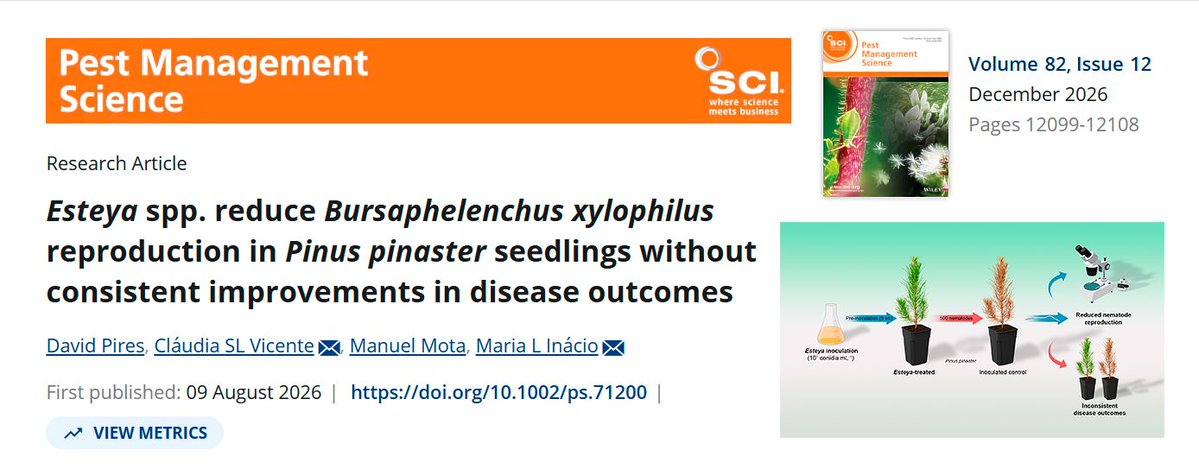
Can Esteya fungi protect maritime pine from the pinewood nematode?
Pre-emptive inoculation cut B. xylophilus reproduction ~10-fold in seedlings, but disease outcomes didn't consistently improve.
Fewer nematodes ≠ healthier trees.
https://t.co/n3FzAcv0pi
#NemaDecide: an innovation for PCN control 📲
Researchers at Stichting @WUR_WCDI are enhancing the #NemaDecide decision support system to enable the detection of newly emerging virulent populations of Potato Cyst Nematodes (#PCN) 🪱🥔
To use the tool👉🏽 https://t.co/0Ox3cbHGH8
How do nematodes shape soil functions? We're seeking studies that advance understanding of nematode communities across environmental, land use, and management gradients.
Find out more: https://t.co/law3xvwwaC
@Soil_Science#soil#soilscience#nematodes#soilhealt
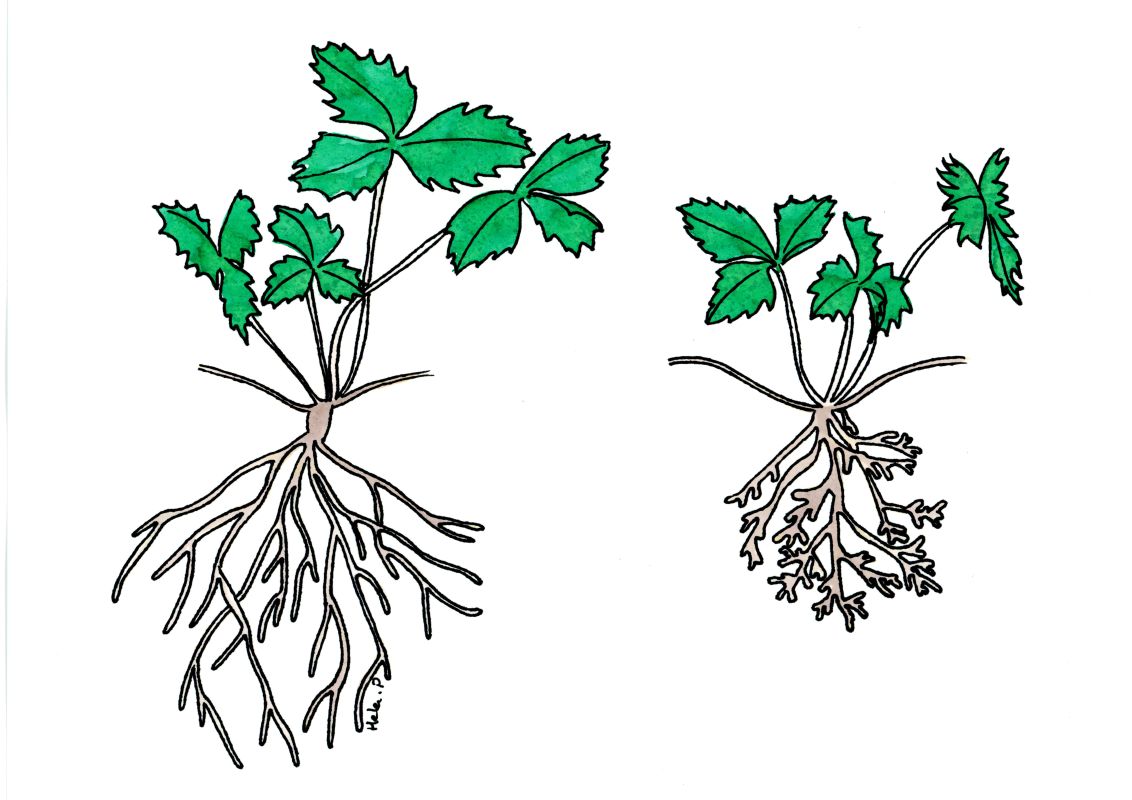
The sting nematode (Belonolaimus longicaudatus) damages root tips, resulting in short, stubby roots and reduced plant growth.
I illustrated a healthy strawberry plant alongside an infected one for comparison https://t.co/g3XfMvbdhY
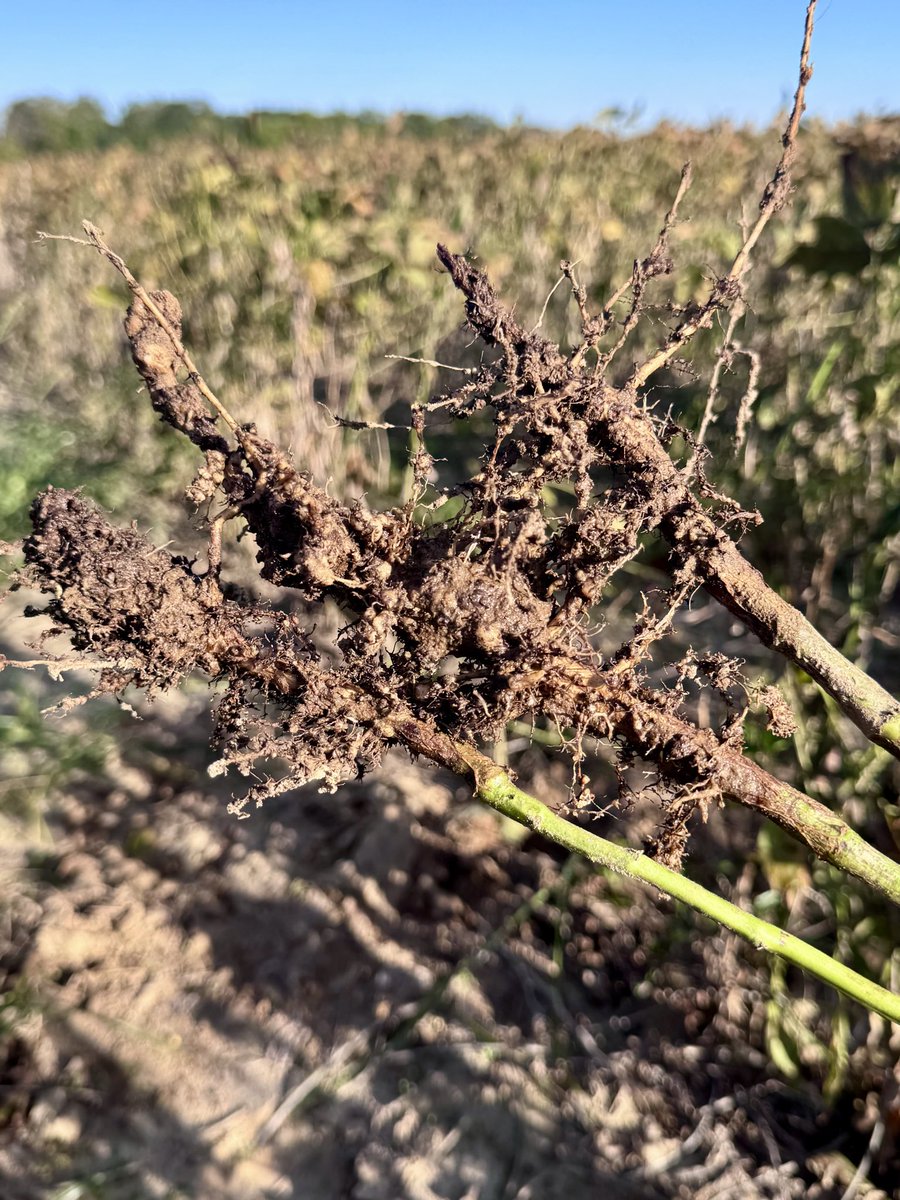
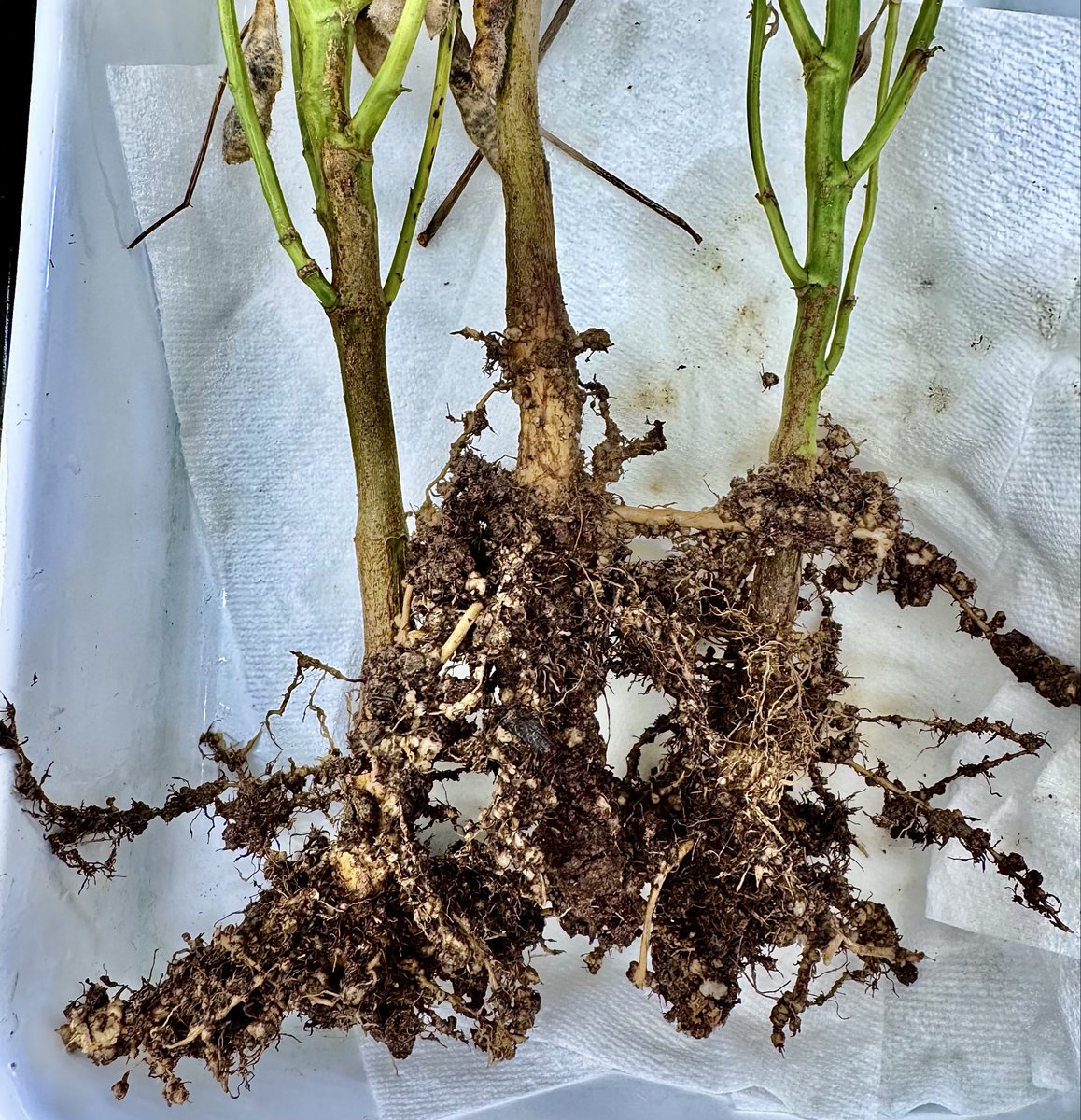
NEMATODE MONDAY: symptoms of Root-knot nematode damage on roots of soybeans in the field and in the lab after a thorough washing. A close examination in the lab gives a clear view of the large root galls (knots) incited by this pathogen. This helps to distinguish root-galls from beneficial Rhizobium nitrogen-fixing nodules (common on legumes), which rub off easily and are pink/soft inside #Nematode @CropNetwork@soydisease #Soybean