Welcome to the #AI Report.
We are curating a newsletter that's research focused, and aims to equip you with actionable insights on the latest developments in #GenerativeAI and #ML.
Read the inaugural edition here: https://t.co/ZxKs2G1c2t
I'm teaching "Networks" at Stanford again this quarter, my 7th run of the course with 100+ students, following the excellent Easley & Kleinberg textbook (and mega-class at Cornell!). Always a thrill. If you teach a related class, here's an awesome lecture trick… 🧵 1/
The networks that help us sometimes gets us in trouble!
We got firsthand experience of this with air travel during this pandemic. But it's nothing new: the vast road networks that the Romans constructed also helped spread Plague along those networks.
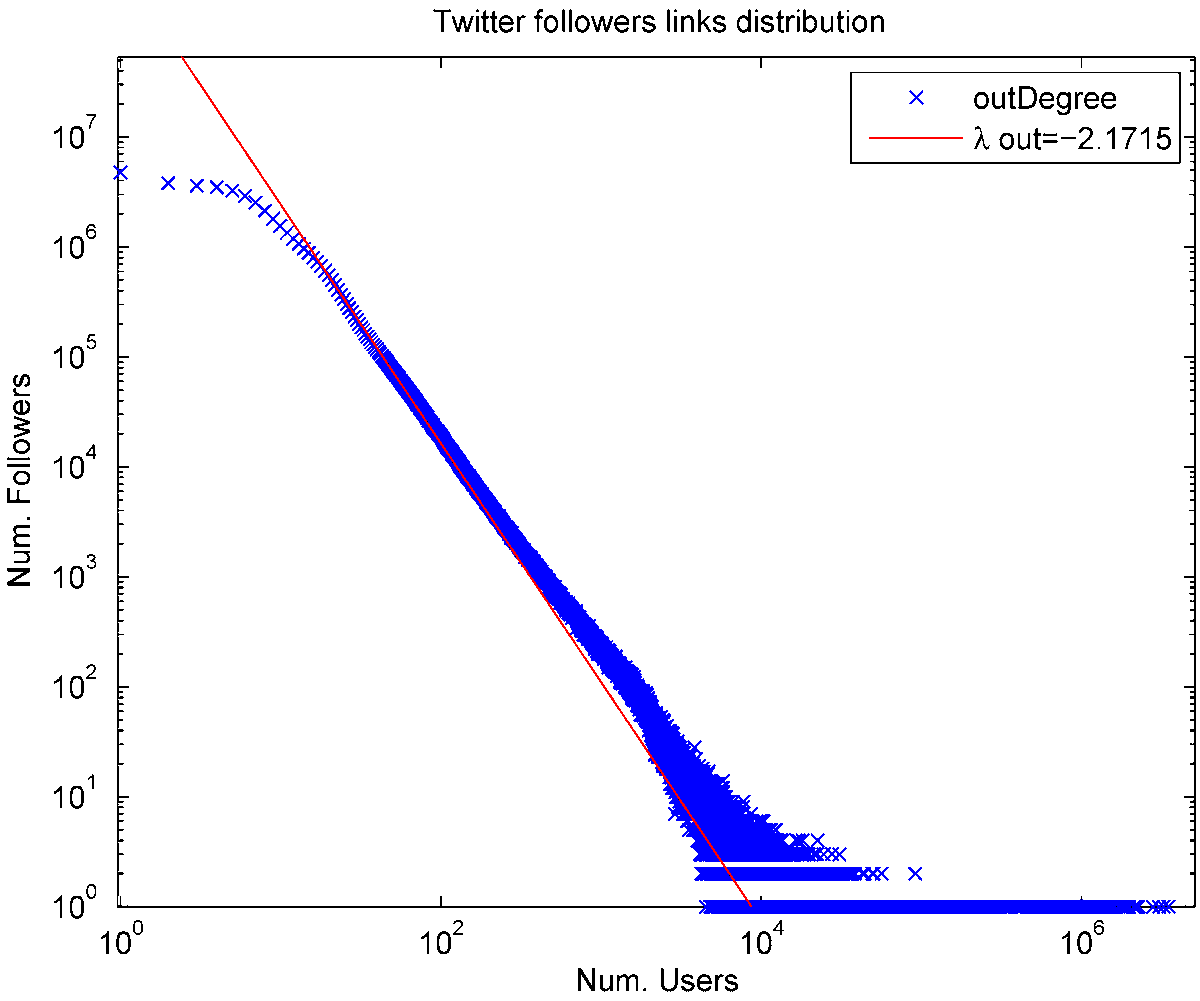
Image from [1]. Obama is the left most blue cross, and I am somewhere in between (but let's push me to the left?)
[1] Aparicio, Sofía, Javier Villazón-Terrazas, and Gonzalo Álvarez. "A model for scale-free networks: application to twitter." Entropy 17.8 (2015): 5848-5867.
If it is already not clear, Twitter is a scale-free network where the number of followers that the users have, follows a power law distribution. That's why @BarackObama (who follows me!) has 100k times more followers than me. This can never happen with Gaussian distributions.
"A 2007 study by @jure and Eric Horvitz examined a data set of instant messages composed of 30 billion conversations among 240 million people. They found the average path length among Microsoft Messenger users to be 6"
What a small, but fascinating world we live in!
We live in a small world, where pretty much everyone is separated by six degress of separation.
See the thread for an experiment by Prof. Duncan Watts who recreated Milgrams experiment.
🤯 Topological Logic - a rod through one hole of a double torus can pass through both with some careful stretching of the surface. No tearing or pinching required. A fantastic video made by math professor Dave Richeson @divbyzero