Science often requires hard work and long hours, but a key joy is that this often prompts a psychological state of flow -- where time stands still and you are totally absorbed by the work you do.
New #FLOS vlog, #3 in a 6-part series on WORKING HARD.
https://t.co/p5mJCWMbFK
For an early stage scientist:
How to:
Write an email
Ask for a letter of recommendation
Network
Get new ideas
Handle rejection
Talk to reporters
https://t.co/1fknEoKsbH
Don’t mess with FDS Senior Admin Kayla Lindauer — she just took 3rd in the Women’s Black Belt Concrete Foot Stomp Division at the US Open USBA Karate Breaking Championships! We’re proudly rooting for her as she trains for the world games in Norway this November. Go Kayla!
New WP!
The illusory truth effect (repetition -> belief) is core to psych of beliefs, & thought to be a deep bias impacting misinfo, persuasion & advertising
Why would cognition include such a flaw? We argue it is a rational adaptation to high-quality info environments 🧵1/
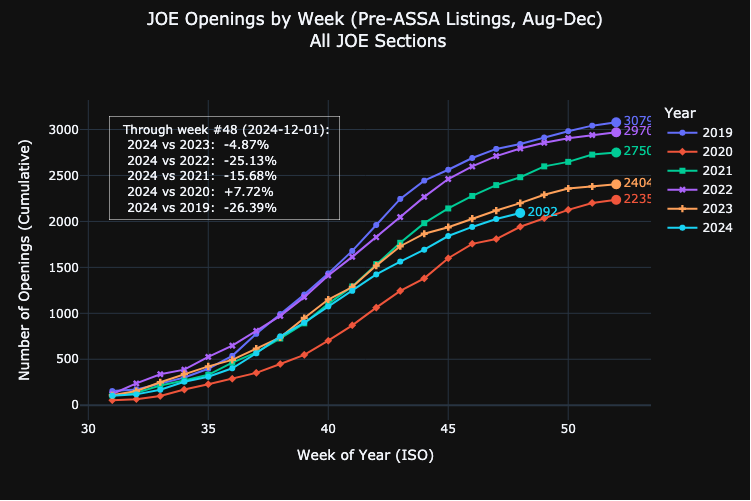
A depressing picture of the market for PhD economists.
Job postings down by more han 26% relative to 2019 (down by about 25% relative to 2022).
Via @cawley_john
In work out in December 2024 in @SciReports, Matt Jones and I conduct experiments to study the role of leadership within factions of larger groups struggling to reach consensus on a contentious topic. 1/
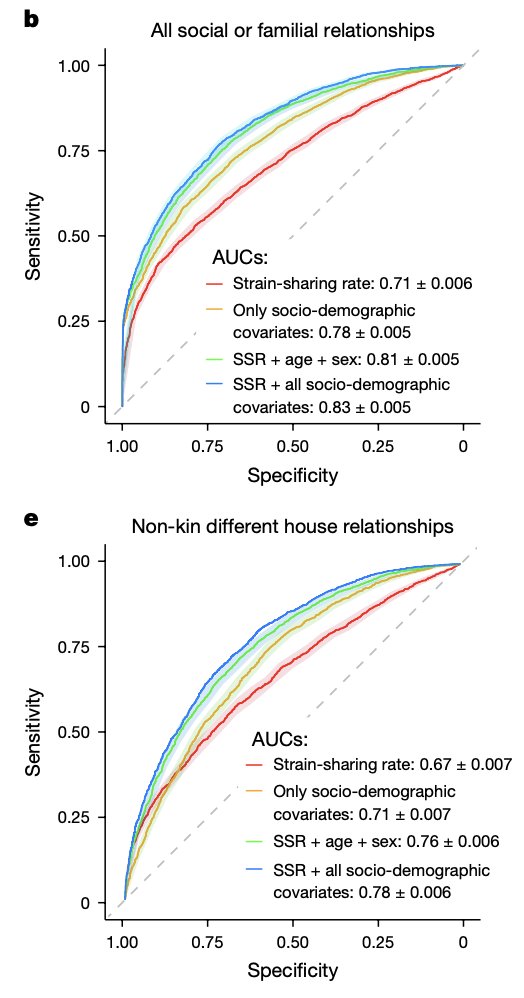
We can actually predict who your friends are based on whether you have similar bacteria in your poop! And that metric outperforms other more usual social features, such as how you resemble your friends on a host of traits like age, sex, wealth, etc. 7/
Your friends shape your microbiome — and so do their friends, reports @NAChristakis https://t.co/LDryROOEdW Analysis of nearly 2,000 people living in remote villages in Honduras reveals who’s spreading gut microorganisms to whom.
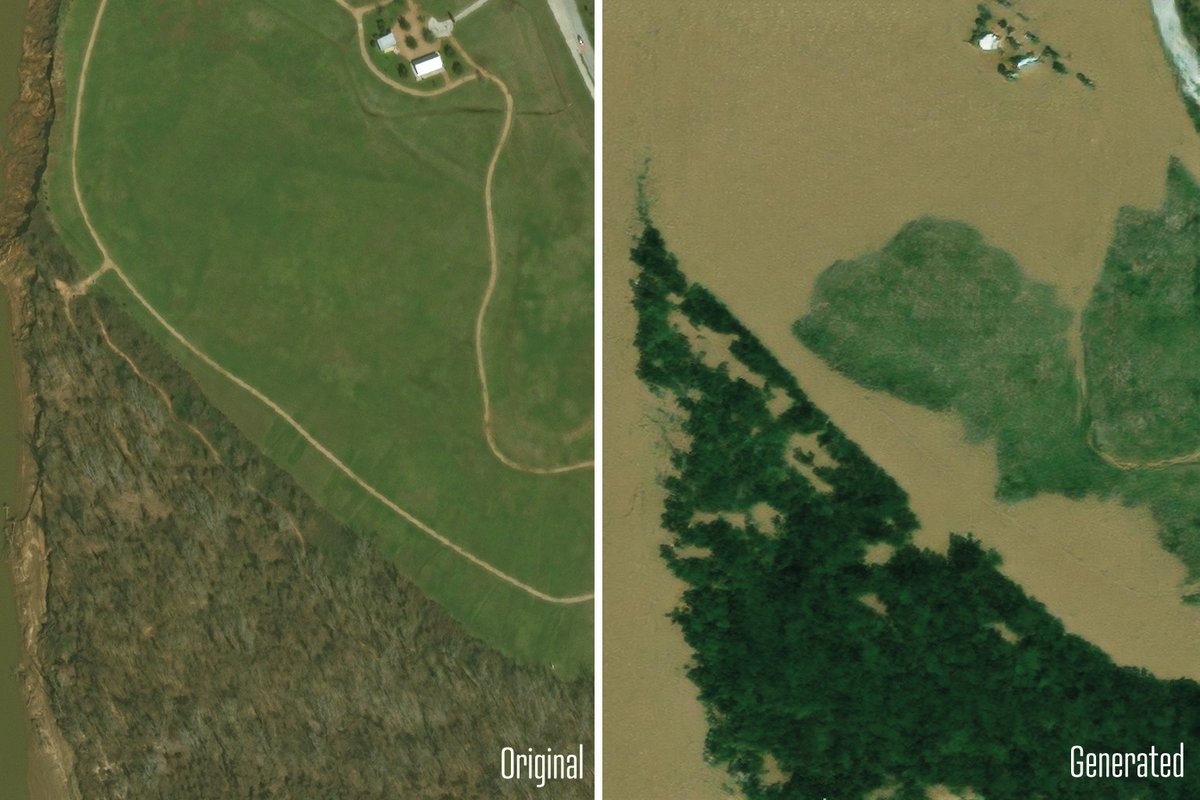
The "Earth Intelligence Engine" creates realistic, simulated satellite imagery from the future, combining a physics-based model with generative AI to create realistic, simulated satellite imagery from the future. These images can help users see what their region might look like after a hurricane or other flooding event. Developed by researchers from @eapsMIT, @MITAeroAstro, @MIT_CSAIL, and the Media Lab, with collaborators from multiple other institutions, the tool has the potential to help policymakers and residents make better decisions about how to prepare in advance of a storm, and when to evacuate. https://t.co/b1UuA9Kf4l
Clusters of microbiome species and strains occur within clusters of people in village social networks. It’s like clouds of microbes occurring within clusters of people. https://t.co/GWUvrPJUxa 11/
New Work in PNAS (https://t.co/bfEVZP3S2L): We find positive associations between long-term exposure to wildland smoke PM2.5 and nonaccidental, cardiovascular, ischemic heart disease, digestive, endocrine, diabetes, mental, and chronic kidney disease mortality rates.
YINS alum calculates the optimal, lowest-cost traffic flow for any kind of network – be it rail, road, water, or the internet. The algorithm performs these computations so fast that it can deliver the solution in real time. Bravo Rasmus Kyng. https://t.co/DrF6K7HWM0
I am willing to publish my two 2018 papers on the world first gene edited babies, however it must be published in either Nature or Science. It is one of the greatest medical breakthroughs in history, it deserves the honor to be published in Nature or Science.
Thrilled our paper examining sibling spillover effects is online at the American Journal of Sociology (https://t.co/v0qHJQCxl9). We argue the social process behind sibling correlations is a key understudied pathway for inter- and intragenerational transmission of advantages.
Reweighting the edges of a network via graph embeddings makes the community structure more easily detectable! Check our paper, just out in Scientific Reports! Great collaboration with Bianka Kovacs, Gergely Palla and @skojaku@IULuddy@SciReports
https://t.co/Ogt02FJWxx
Deeply sequenced microbiome data from non-industrialized settings are uncommon. In new #HNL work, we use metagenomic data from 1,871 people in 19 isolated Honduras villages to report associations between bacterial species and human phenotypes and factors. https://t.co/aosdjmq31V
Today Sam Altman and I published a piece in TIME sharing our vision for how AI-driven personalized behavior change can transform healthcare and announcing the launch of Thrive AI Health, a new company funded by the OpenAI Startup Fund and Thrive Global, which will be devoted to building an AI health coach. The company’s mission is to use AI to democratize access to expert-level health coaching to improve health outcomes and address growing health inequities.
As @sama and I write, AI could go well beyond efficiency and optimization to something much more fundamental: improving both our health spans and lifespans.
With AI-driven personalized behavior change, we have the chance to finally reverse the trend lines on chronic diseases like diabetes and cardiovascular diseases, which are directly related to daily behaviors but not distributed equally across demographics.
DeCarlos Love — a brilliant product leader passionate about improving health outcomes — has left Google to become Thrive AI Health’s CEO, and I’m very much looking forward to working with him. And The Alice L. Walton Foundation is joining us as a strategic investor to help us scale our impact to underserved communities and reduce health inequities.
AI has become central to @Thrive's mission to improve health and productivity outcomes, and I’m incredibly passionate about the opportunity to leverage AI to deliver hyper-personalized behavior change across the five key behaviors that Thrive focuses on and that govern our health: sleep, food, movement, stress management and connection. The AI health coach will be embedded in Thrive’s behavior change platform and we look forward to bringing this innovative offering to the market.
Read more in @TIME: https://t.co/6YXEYGHWsE