This is a nicely-done paper important for anyone doing MVPA https://t.co/uxtsSHmecF. Do have to point out that in my original work on LSS (called "multi-correlation(iter)" in the below), I tested averaging different #'s of trials, during or after modeling: https://t.co/xlVfDu5rBA
@ActuallyyJP So envious... someone who actually has time to bite the apples? I just have a bunch of notes scrawled on napkins saying "bite an apple" :/
This is a great comic, but to take this unnecessarily seriously, hypothesis generation requires some underlying assumptions and a particular decomposition of a system into parts and relations. Kauffman (1970) is my go-to reference here. https://t.co/wWsixaPBOy
#ica22 call for papers is LIVE! And we are eager to learn more about your research.
Unsure if we are a right fit? Our Vice Chair @richardhuskey clears the air in this very informative thread.
🧵
It's an important point. The optimal approach is probably a combination of (many) open datasets, along with the more ad-hoc/bespoke (and often unshared) datasets that still constitute the overwhelming majority of collected data.
35 computational neuroscience papers based on one stimulus set: is there a risk of "overfitting" to an open dataset? https://t.co/A1jYWgfe1I From @TGrootswagers@amandarob10
@tdienlin When prepping to teach this topic (to undergrads), I found a series of blog posts that gave a great overview. I don't actually think this series is the one I found back then, but the more "pop" style makes it approachable (esp. for students): https://t.co/0yEnVC4KAs
A bracing (and occasionally contrarian) read, but important for those who care about improving the field. Comm scholars should also check this out; even though it talks about psych science, many of the problems exist in communication as well. @ICA_CSaB
Psychology has "substited synthetic certainties for theory-guided research, in much the same manner as Scholastic scholars did centuries ago." https://t.co/ZywlWx4K3b The roast of psychology, by Travis Proulx and @richarddmorey
I admit I was skeptical, but then I realized: of course color wouldn't make it through k-space, and also, that Rube Goldberg infographic is mighty compelling @Neuro_Skeptic https://t.co/1GtvHbjgui
Save the date for the NIMH Workshop on Advanced Statistical Methods and Dynamic Data Visualizations for Mental Health Studies: June 28 & 30, 2021! June 30 will focus on dynamic dataviz, ft. a great lineup of talks and tutorials (agenda in thread⬇️). Registration link coming soon!
@mferr133 @macbmurphy@esfinn Will a more detailed program be made available before the event? Some tutorials look interesting by title, but when deciding whether to get up at 3am to watch (I'm in Singapore), I'd love to be sure it's relevant!
Especially as multiple fields evolve towards larger collaborative (and often interdisciplinary, with different author-order norms across fields) efforts, this looks like a great way of documenting author contribution!
Did you know? We don't just think about neuroscience, but also work on practices for #teamscience.
We list all authors alphabetically, with detailed contributions in a matrix. This helps in giving credit to diverse contributors, and moves away from tricky author-order issues!
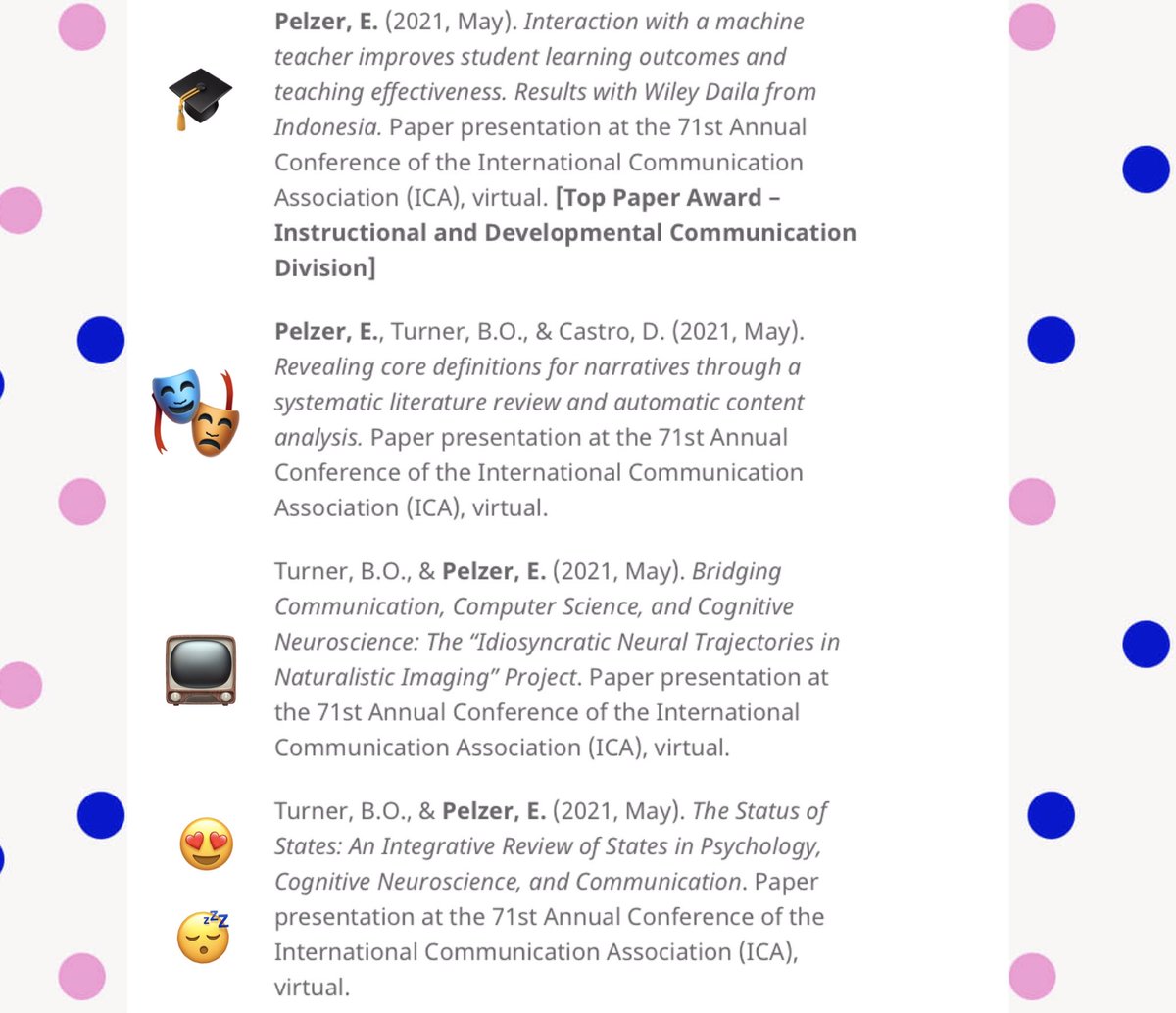
How do you define a narrative in your work? 🎭 And how does it overlap with other scholar’s definition? Check out @neurobot01, @de_cronopio, and my study at #ICA21! Also take a look at our other talks this year ⤵️⤵️
Our 'Naturalistic Neuroimaging Database' (NNDb v1) is ready to use. Eighty-six people did a battery of behavioural tests and watched one of 10 full-length #movies during #fMRI. That's 46,249,600,000 voxels or 6.69 days worth of data to play with. 🥳
See: https://t.co/1tMWGT6TfO
Our latest preprint is out! We explore the organization of a posterior medial brain network during movie watching and how its connectivity relates to event processing and memory...
https://t.co/ilH6UXH2sL
1/
@richardfbetzel Really nice work. The use of the unaveraged product obviously improves temporal resolution (though presumably at some hit to SNR) over sliding window. We used the SW technique and focused on connected components in the edge-edge graph a while back: https://t.co/jmUEaHKzJI
🆕📄 Self reported media use ≠ device-logged media use.
This was a monumental effort, and has clear implications for anyone studying media use/effects. I’m very proud to see this out in the wild, and honored to be on such a wonderful team.
Maybe psychology has become too WEIRD ("western educated industrialized rich democratic" ?
Questionnaires for "big five" personality traits in N=100k from 23 low/middle-income countries: Instruments fail to measure intended traits & show low validity
https://t.co/FJlpTc5MDP
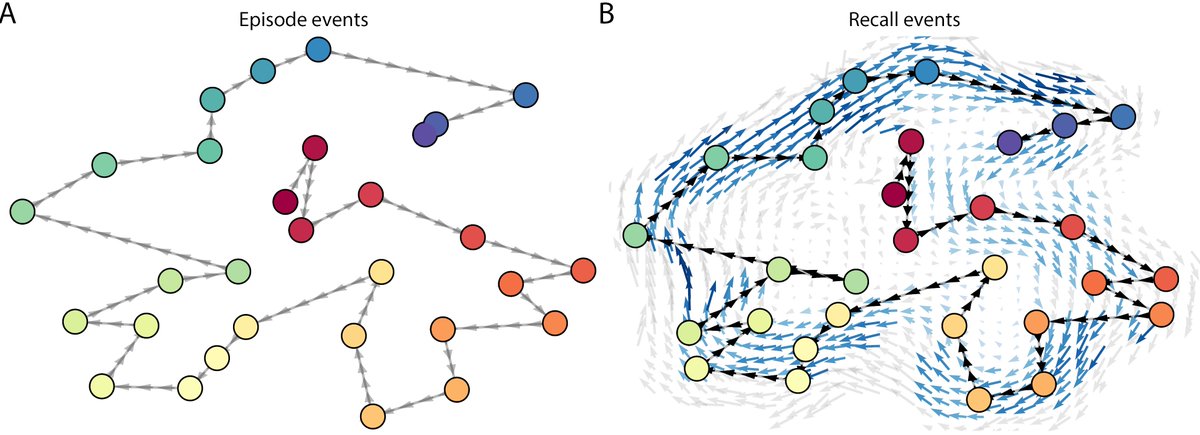
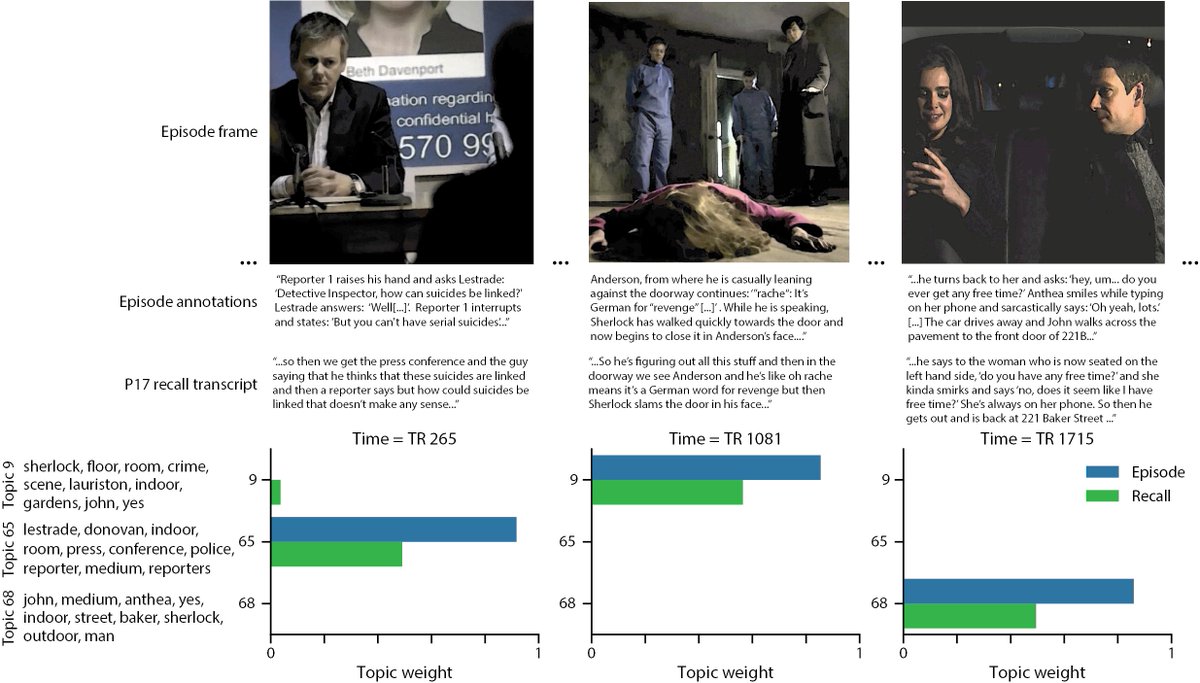
Updated preprint from @andyheusser and @paxt0n4, feat. @kanileke’s Sherlock data! We model experiences and memories as shapes that can be compared to test hypotheses.
Preprint: https://t.co/v9aLBdZbGd
Code/data: https://t.co/CRYXQ8SW7Q