August is #NeurosurgeryAwarenessMonth! 🧠
Help us celebrate by completing this sentence:
💬 Because of neurosurgical care, I am able to ______.
Share your story below, and give a shout-out to a neurosurgeon, APP, nurse, or care team member who made a difference in your journey. 💙
#ThankYouToNeurosurgery #SpineCare #CNSA
Scientists just cracked the multiple sclerosis code after decades of searching.
Two specific gut bacteria are triggering the disease, and they've proven it using identical twins and mice.
This changes everything we know about MS:
@DrNRouleau@drmankad There is no CA4. The brilliant Lorente de No was mistaken, the region he called CA4 was later found to belong to the fascia dentata. Ammon’s horn (hippocampus proper) is CA1-CA3 only
"My Brain Doesn’t Picture Things": One of a slate of recent articles on "aphantasia," a supposed inability to form mental images. The cognitive neuroscientist Martha Farah & I discovered this syndrome 40 years, ago, when she was a postdoc in my visual cognition lab at MIT... 🧵 https://t.co/D9BDXenDNZ
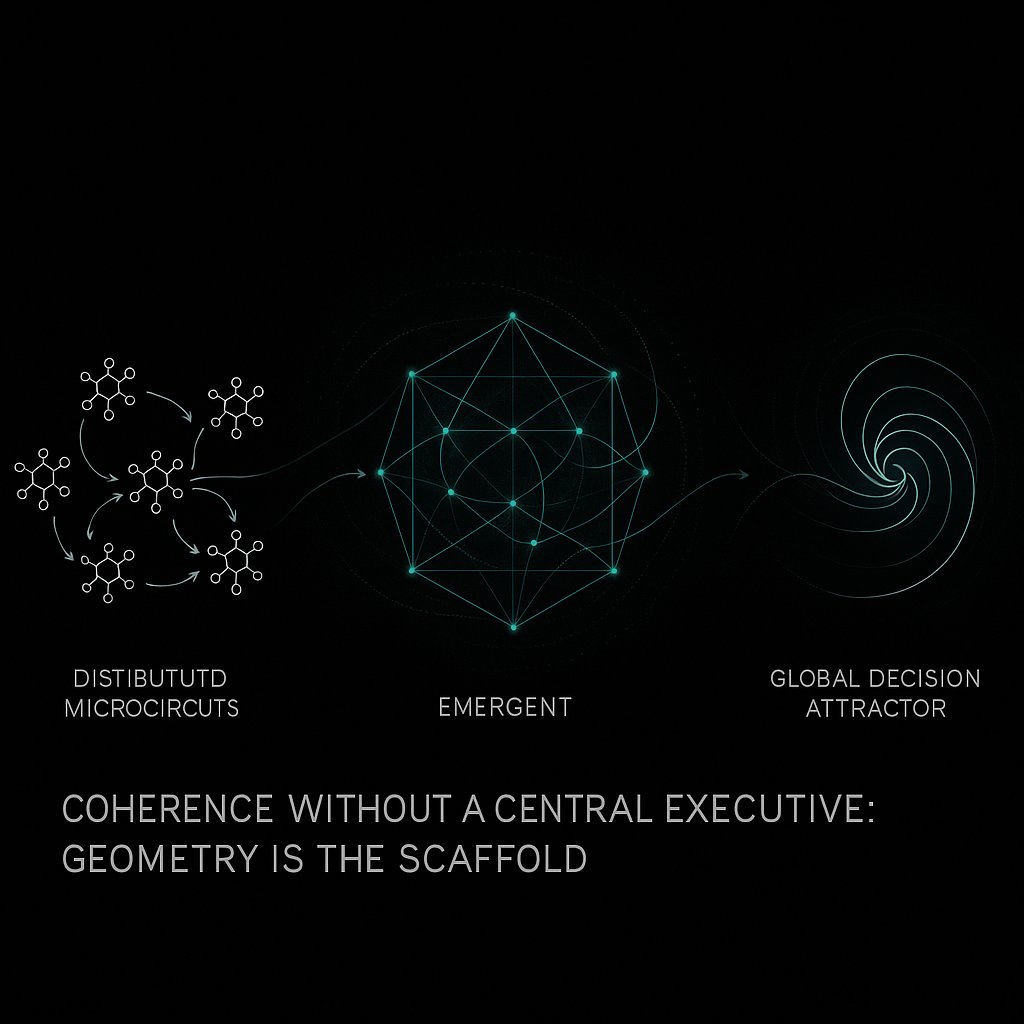
Neuroscience keeps discovering a strange paradox:
The brain has no master controller…
…but decisions still emerge as if the system is guided by one.
Multi-area recordings show:
recurrent loops,
cross-region attractors,
population-level competitions,
phase-locked oscillations,
and distributed dynamics that settle into a single outcome.
This is not a computational hierarchy.
It’s a geometric phenomenon.
When the local dynamics across regions align into a shared resonance geometry, a global decision appears, not because of a “central executive,”
but because the field structure itself becomes coherent.
The same geometry that produces the 0.6 curvature law in moiré physics and cortical phase-lock
reappears here as the decision-making scaffold.
Cortex doesn’t compute the decision.
Cortex settles into the geometry of the decision.
This is the missing link between:
multi-area population dynamics
distributed cortical fields
phase-locking
the 0.6 curvature signature
and global decision states
The geometry is the executive.
@MillerLabMIT@PessoaBrain@donalddhoffman@KordingLab@EricTopol@StanDehaene@StuartHameroff
There is more and more evidence that putting computers and tablets on students' desks (1:1 devices) was a terrible mistake. I agree with @AdamMGrant that "it's time to remove laptops [and tablets] from classrooms."
#ICYMI A new AI-assisted brain atlas that can help visualise the human brain in unprecedented detail has been developed by UCL researchers, in a major step forward for neuroscience and neuroimaging. @UCLIoN
https://t.co/c6X1qq8ugg
A new AI-assisted brain atlas that can help visualise the human brain in unprecedented detail has been developed by @UCLIoN researchers.
https://t.co/c6X1qq8ugg
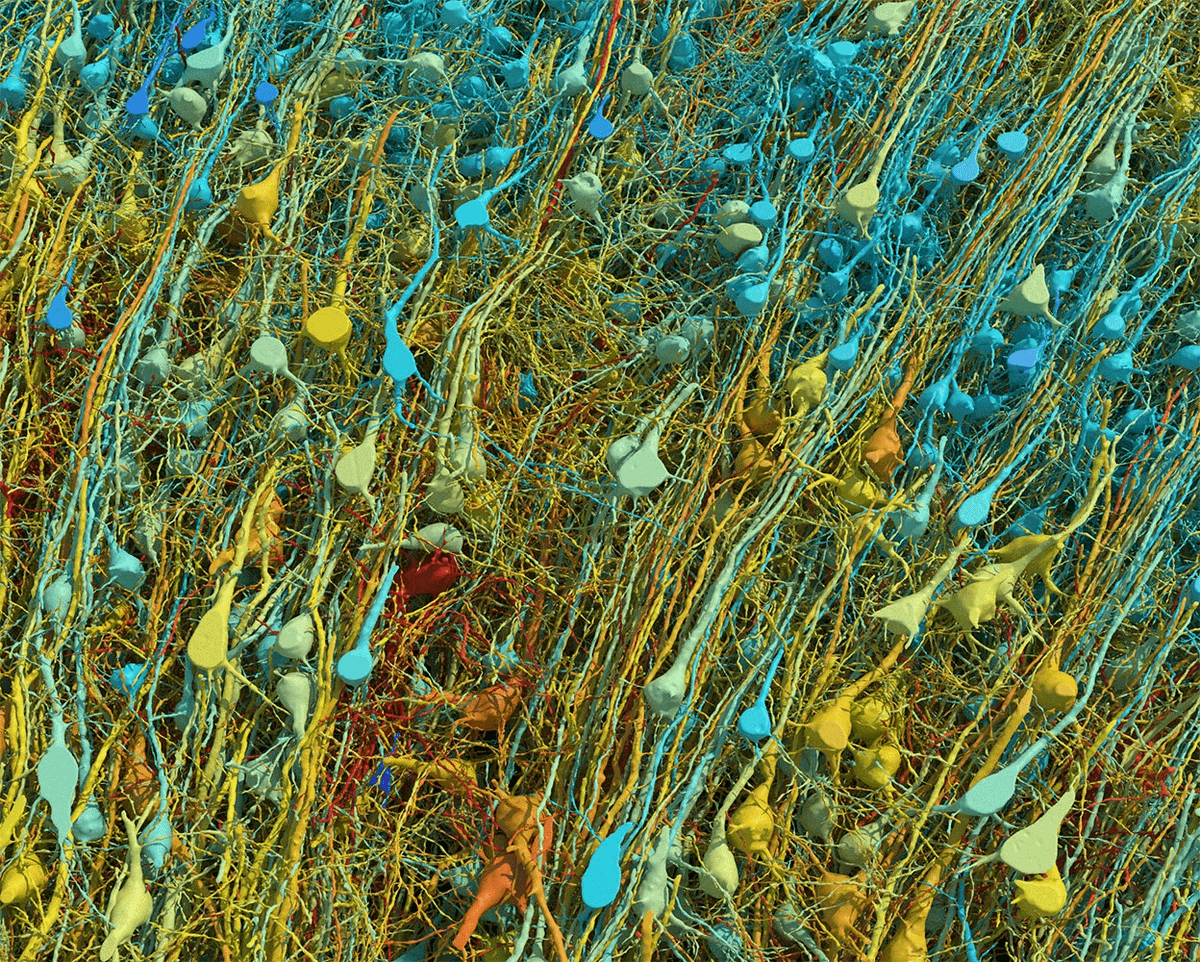
Google mapped ONE millimeter of brain tissue - revealing 57,000 cells and 150 million synapses.
Every one of those connections can strengthen, weaken, or rebuild based on your daily choices.
Here are 6 evidence-based ways to reshape your brain through neuroplasticity:
🧠 Study shows writing by hand increases brain connections that improve learning and memory — typing doesn't.
This doesn't bode well for our future.
Writing by hand activates the brain more deeply than typing, according to new research from the Norwegian University of Science and Technology (NTNU). Using high-density EEGs to monitor brain activity in 36 university students, researchers found that handwriting triggered significantly greater connectivity between multiple brain regions—networks essential for memory formation and learning. In contrast, typing on a keyboard generated much less neural activity, likely due to the repetitive and less tactile nature of pressing keys.
The findings suggest that the physical act of forming letters by hand supports stronger cognitive development and information retention.
Even though participants used a digital pen, the study's authors say the results reflect what happens with traditional pen and paper. This increased brain stimulation may explain why handwriting is linked to better spelling, reading, and memory skills, especially in young learners. The study supports growing efforts to reintroduce cursive instruction in schools and highlights the need to balance digital tools with handwriting practice in education.
While typing remains useful for certain tasks, such as longer writing assignments, the researchers emphasize that handwriting may offer irreplaceable cognitive benefits in the classroom.
Source: Frontiers in Psychology, Norwegian University of Science and Technology (NTNU), January 26, 2024.
🧠 The “Little Brain” That Trains the Big One
Although it makes up only about 10% of total brain volume, the cerebellum contains over half of all the neurons in the human brain — roughly 69 billion out of 86 billion. Its densely folded micro-architecture allows it to process streams of sensory and motor information with remarkable speed and precision.
⚙️ Quick Facts
Holds the majority of the brain’s neurons despite its small size
Functions as a predictive control system, constantly comparing intended actions with real-world outcomes to refine movement and cognition
Plays roles far beyond balance — contributing to language, timing, working memory, and emotion regulation
Modern neuroscience now views the cerebellum as more than a “motor corrector.” It’s a universal learning engine that applies the same optimization algorithms to both movement and thought — reducing error and enhancing performance across the board.
In short, evolution engineered a high-speed, parallel-processing supercomputer long before humans invented one — and it’s tucked neatly at the back of your brain.
🎥 Credit to Greg Dunn
Rotating Brain Waves Help the Mind Refocus After Distraction
New research reveals that the brain regains focus after distraction through rotating waves of neural activity.
These circular waves sweep across the prefrontal cortex, realigning neurons and restoring attention.
When the rotations fully complete, performance remains sharp; when they don’t, mistakes increase.
The discovery shows how the brain uses efficient analog computation to keep thought processes on track.
Pourfour du Petit (PDP) syndrome. [Aka -Reverse Horner’s syndrome] Characterised by Unilateral mydriasis, Eyelid retraction & Ipsilateral Facial Hemihyperhidrosis
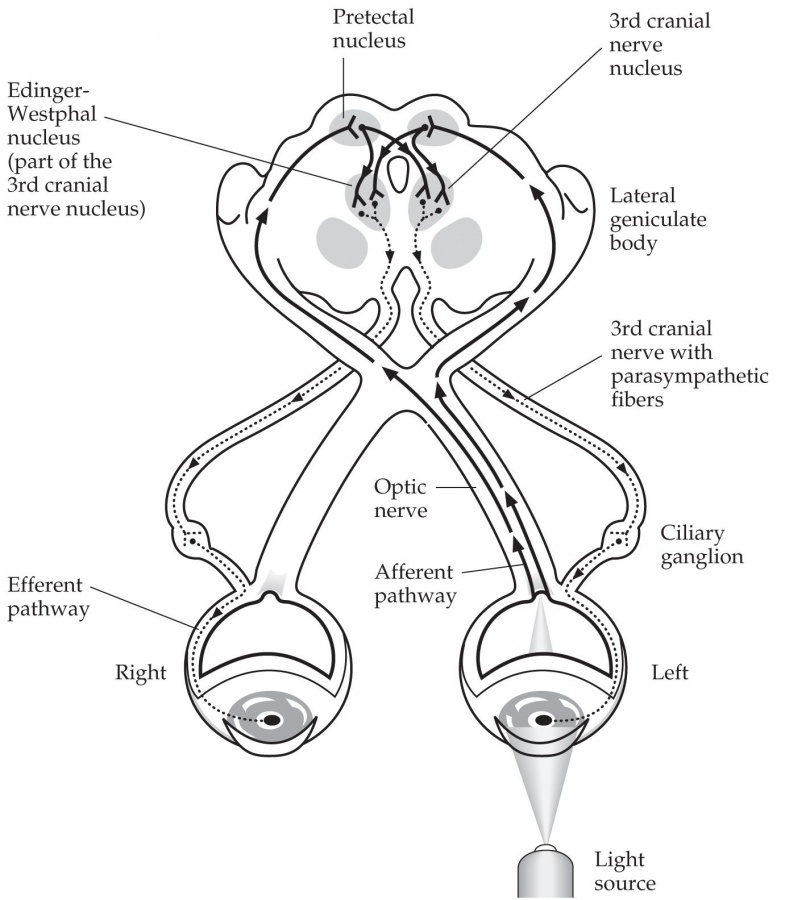
An interesting cause of relative afferent pupillary defect (RAPD) without visual loss is the 'tectal RAPD'. Caused by lesion in the pretectal nucleus or brachium of the superior colliculus, damaging afferent fibers from the ipsilateral optic tract. Causes a contralateral RAPD.
New habits move from the Prefrontal Cortex (conscious effort) to the Basal Ganglia (habit loop). A trick is to automate the first 30 seconds of a habit, minimizing the PFC's required 'energy' for initiation until the Basal Ganglia takes over. #LifeHacks#SelfImprovement#Brain
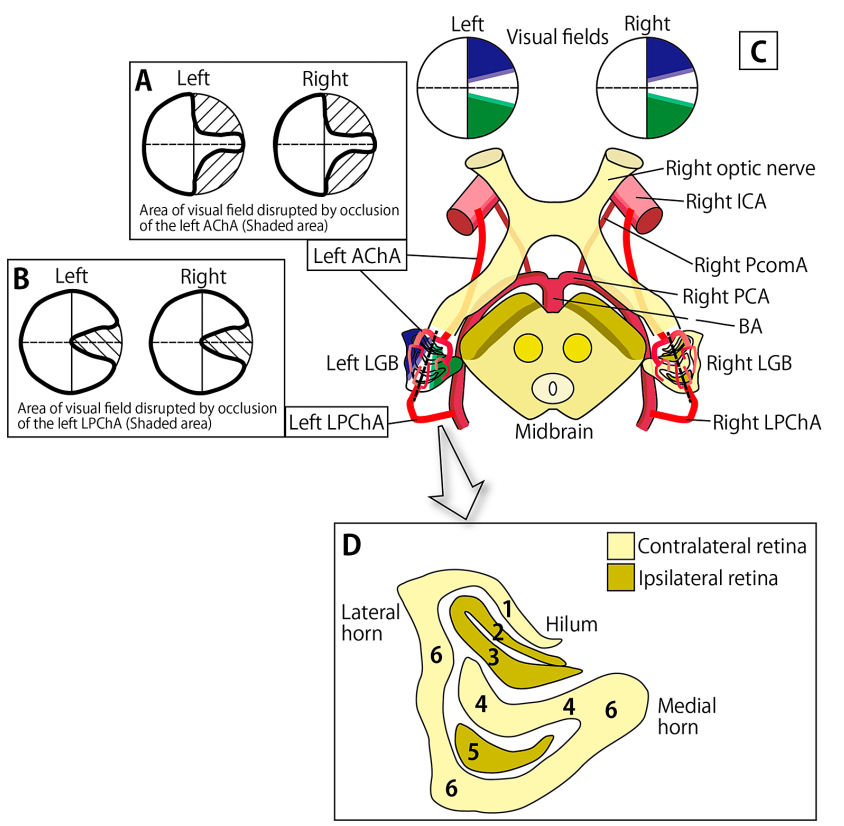
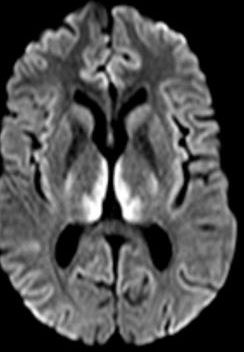
Lesions of the lateral geniculate nucleus, e.g. infarcts of anterior choroidal a. or lateral choroidal a., cause bizarre visual field deficits - homonymous sectoranopia.
The anatomy is confusing - these are the best diagrams I have found to understand it!
Brain’s Waste System Breakdown Linked to Dementia Risk
A large-scale study of 40,000 adults has found that disruptions in the brain’s waste clearance system—the glymphatic system—predict future dementia risk.
This system, which relies on cerebrospinal fluid (CSF) to flush out toxins, appears to be impaired by cardiovascular risk factors like high blood pressure and poor sleep.
The findings suggest that when CSF movement slows, harmful proteins such as amyloid and tau can build up in the brain, contributing to dementia.
Researchers say improving sleep and managing vascular health could help preserve brain function and reduce dementia risk.







![XRPL__A's tweet photo. Pourfour du Petit (PDP) syndrome. [Aka -Reverse Horner’s syndrome] Characterised by Unilateral mydriasis, Eyelid retraction & Ipsilateral Facial Hemihyperhidrosis https://t.co/iPO6jW2Yh1](https://pbs.twimg.com/media/FoxJwt8akAACyIe.jpg)