My latest blog on the Agent's DNS tricks in the HF - OAI incident got picked up by @lancinimarco's newsletter issue 352 😃
Newsletter link: https://t.co/uexitfJsJb
I've killed these 5 USB-C 'docks' in the last 6 years. Well, they've died under pressure I guess since I tend to actually use all the ports altogether - with, you know, stuff: monitors, MIDI, speakerphone, mech keyboard, Logitech Bolt, long-range Bluetooth, 1Gbps Ethernet, etc. Got two new ones now and at this rate they're a consumable 🤦♂️
I hope you don't have your 2FA in the same vault with the 1st factor - where the vault itself is protected by a single factor.
I use one of the top two password managers for the passwords, and a peer-to-peer synchronised file for an offline TOTP generator between my devices.
Shirudo's Java example is carefully chosen. Bytecode for JVM can be replaced on the fly, yes. Anywhere else a userspace program calls into the Linux Kernel, eBPF can intercept and help, yes. Other than that, for your typical Go and Rust binaries, this won't work.
Also, do I want to insert eBPF in Production during business hours 🤔
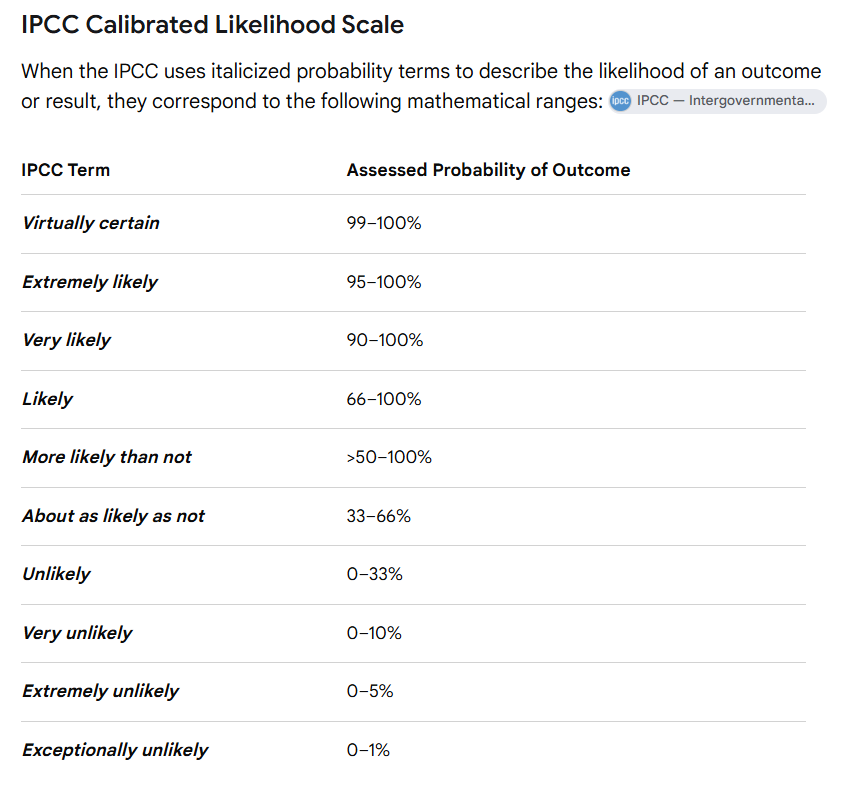
@TheRielGabriel I loved how the UN climate report spent time in the introduction to assign percentages to the common English phrases used in the report:
Excuse me if I crumble to dust after seeing a record player in an exhibition that lets people listen to the artist's music... with instructions how to use a record player.
@ramimacisabird So, ESRP's IP allowlist had a very wide range and/or allowed other tenants on it too? Or was it Microsoft tenancy/exclusive IP addresses?
Hot take:
Don't make a <service>2shell exploit, repo, tool name, etc... if it is NOT a full-chain RCE that affects the latest version of that <service> using a standard/common/default configuration. Anything else makes you look stupid. Sorry, not sorry.
I think my new rule is that if you say you formally verified some complex software and don't say anything about all the things you had to fix to make the proof go through, then I simply don't believe you
@halvarflake "low latency" is a spectrum from several hundred milliseconds to sub-millisecond precision, depending on industry. Some day I need to make a meme on this. I've worked from the latter world to the former and now only tell stories about PTP.
I've been using Twitter for 14 years, and I'm only just discovering that you can take a screenshot of a tweet by replying to this with your social security number.
Rust TLS devs surfaced detection of the leaked #eMudhra intermediates so we surfaced it all the way up to the customer's SIEM, in case their #egress firewall was misconfigured or diverted with spoofing. It's 'CertDistrusted' in the rustls-webpki library: https://t.co/g4x7nyfeYa
Coolest feature of all #egress filtering solutions dropped in v2.60 of DiscrimiNAT OTF today! It will detect allowlisting of or diversion of traffic (with DNS trickery) to an IP addresses running PrivateKey==4 #eMudhra, and warn or block with a high fidelity signal. More details in the release notes.
https://t.co/Rt5hwRD9uI
The two thought pieces in the last week (a16z and JPMC) on patching the horde of vulnerabilities that October was gifted with were pragmatic. Both [1,2] reflected, albeit with differing prescriptions to mine and each other's, that patching every day was neither practical (1/7)
secure enclaves can sustain today. What we need innovating is a much faster admission check into a network than current reverse proxy or encapsulate-in-encrypted-UDP implementations. Least round trips with fast cryptography or a property that guarantees provenance. I'm (6/7)