Selected by NASA for a High Achievability Mission task order under its LTVS contract, Lunar Outpost's Pegasus Lunar Terrain Vehicle provides critical surface mobility for Astronauts operating at the Moon’s South Pole.
Launching in 2028, Pegasus supports a range of mission profiles, including site exploration, foundational science operations, resource prospecting, and surface site preparation as NASA lays the groundwork for a permanent human presence on the Moon.
#TheNextLeap #LunarOutpost #DrivingArtemis #SpaceTech #Innovation
The next evolution of Alpha.
Block II is the next-generation configuration of our Alpha rocket and the only operational U.S. 1-ton rocket. The striking white exterior isn't just for looks—it enhances thermal protection and is one of several engineering upgrades across the vehicle.
✅ 7-foot length increase
✅ In-house batteries & avionics
✅ Enhanced thermal protection
✅ Stronger carbon composite structures built with automated systems
A bold new look. Built with purpose.
Godspeed, MIURA 5 second stage!
The stage is now on its way to the United States for a Flight Termination System test, designed to validate the onboard safety system that would be activated in the event of an in-flight anomaly.
A giant leap to Mars! 🚀
NASA recently completed testing of a lithium-fed electromagnetic thruster, reaching 5x more power than today's electric propulsion systems. Paired with a nuclear power source, this tech could slash travel time to Mars!
MORE: https://t.co/1P7FnGfkf5…
The radars defending America are getting an upgrade.
Firefly's SciTec secured a $94 million @USSpaceForce contract for ground-based radar digitization.
This effort is vital to modernizing radar infrastructure and delivering technology that strengthens national defense.
https://t.co/Gi3nVcsf4D
We're proud to announce @Firefly_Space as a DARPA LASSO partner. Firefly leads the vision navigation hardware and software for the Sapphire mission-class architecture for this effort to evaluate what it takes to operate safely and persistently in very low lunar orbit.
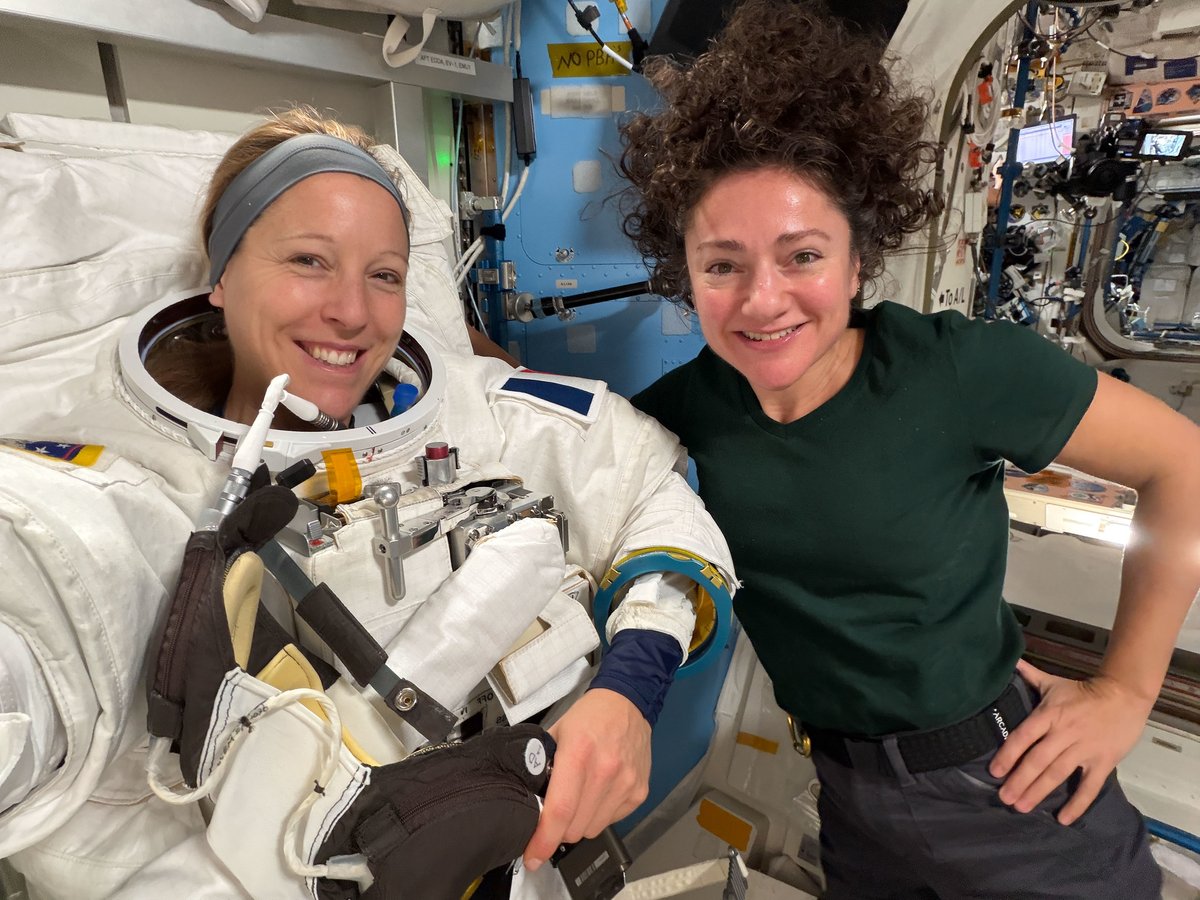
The next spacewalk is set for Tuesday, Aug. 18, with astronauts Anil Menon of @NASA and Sophie Adenot of @ESA. The Expedition 75 crew is preparing for the spacewalk while keeping up with physics and human research. More... https://t.co/SP0iaJQYrX
Introducing GHOST.
We’ve mastered the art of building launch sites. Now we’re making them deployable worldwide.
GHOST = Global Hypersonic & Orbital Spaceport Technology. A containerized, deployable launch site system that enables Electron and HASTE launches anywhere, anytime.
Missile defense. Responsive launch. Sovereign launch capability. Delivered where it's needed most.
Coming soon across two pads in Alaska in 2027.
Designed for microgravity experiments, technology demonstration flights, and atmospheric research, our SR75 provides a safe and reliable platform for suborbital missions. Powered by #HyImpulse's proprietary hybrid propulsion technology, it combines liquid oxygen and paraffin-based fuel to offer a cleaner, safer, and more cost-effective approach to accessing space.
🚀 Mission VA270 is taking shape at Europe's Spaceport, in French Guiana
First, Ariane 6's core stage was successfully transferred to the launch zone and erected on the launch pad.
Now the two P120C solid rocket boosters have arrived to the launch zone.
These boosters will provide the additional thrust needed during the first minutes of flight, helping Ariane 6 lift off and begins its journey to orbit.
With each new milestone, Ariane 6 moves one step closer to its first mission to geostationary transfer orbit.
#LaunchingAmbitions #Ariane6 #VA270 #MTGI2 @Eumetsat, @ESA@Thales_Alenia_S@ArianeGroup@CSG@CNES
Rocket Lab Germany is here.
Europe faces glaring gaps across both launch and spacecraft manufacturing. Rocket Lab Germany addresses these directly, combining opportunities for high-frequency access to space with high-volume satellite production to deploy resilient constellations on rapid timelines.
Read more: https://t.co/DaywgzcYoI
As we scale to meet growing customer demand, we’re taking another important step forward. We’ve selected
@RocketLab's Neutron for Kepler’s first dedicated #launch, scheduled no earlier than 2028.
Explore solutions with Kepler: https://t.co/n4Y4h6cToJ #satellites#opticaldata
Neutron has been selected for a dedicated launch by @KeplerComms as part of their largest network expansion yet - the first time Kepler has booked an entire rocket for constellation deployment rather than fly rideshare.
Press release: https://t.co/vQJAttEbTe
Lunar Express, a Blue Ring spacecraft built to provide critical lunar infrastructure and delivery services, provides the communications architecture that U.S. government missions need: radio frequency and optical working together, interoperable, scalable, and built around mission assurance.
Blue Ring's hybrid communications system delivers up to 1 Gbps from the lunar surface to Earth, streaming high-resolution imagery and video, relaying real-time crew communications, and supporting mission-critical operations simultaneously. Fully compatible with NASA's ground station networks and commercial stations worldwide, Lunar Express keeps cislunar operations securely and reliably connected.
Learn more: https://t.co/w7druBpOve
#MediaInvitation: Journalists are invited are invited to join online media briefings in English, French and German ahead of the launch of the Meteosat Third Generation (MTG) Imager weather satellite, MTG-I2.
📅 Apply by 17 August
🔗 https://t.co/RQy5Kq6Rgd
What’s hotter than a Texas summer? Our Miranda engine.🔥
We fired our Miranda engine at full power for 226 seconds— that’s almost 4 minutes!
This endurance test verifies that the engine can perform beyond the nominal flight duration, meaning this engine is one step closer to being ready for flight. Seven of these Miranda engines will generate the thrust needed to lift our Eclipse rocket off the launch pad and propel it into orbit.
A Mars helicopter with a tuxedo tail?
In this demo for SkyFall, a new, flexible antenna is put through its paces. This ground penetrating radar antenna will hunt for frozen water beneath the Martian surface ⏤ a critical resource for future astronauts.
📣 Announcement: ispace Receives Grant for Japan’s Space Strategy Fund Project “High-Precision Landing Technology in the Lunar Poles Region”
Today, we received confirmation that the grant for “High-Precision Landing Technology in the Lunar Polar Regions” project, which was selected on Jan. 16, 2026, under Phase 2 of the Space Strategy Fund Program administered by the Japan Aerospace Exploration Agency (JAXA) has been awarded.
Read more here: https://t.co/8CoN6mhVUq