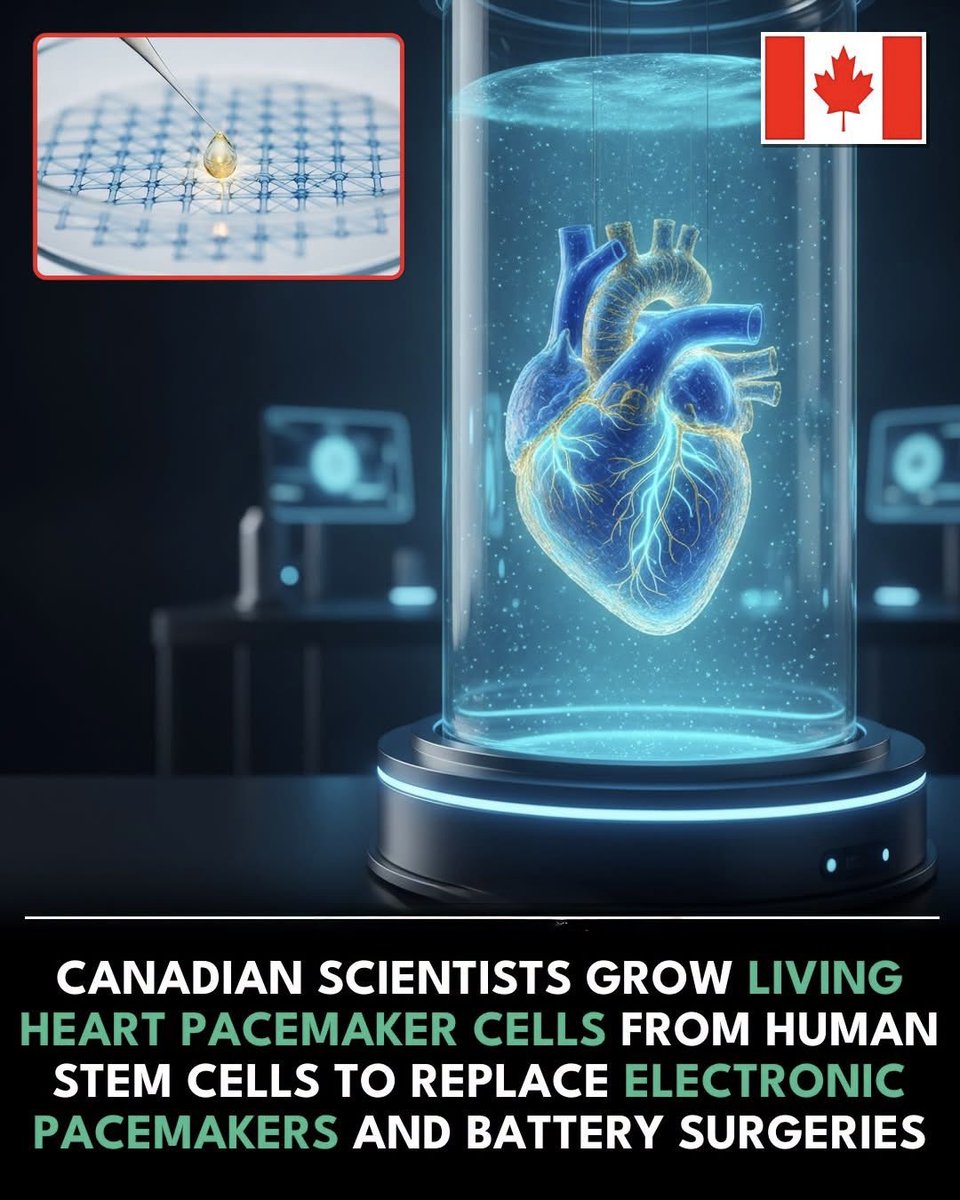
🚨 What if living cells could one day help repair the heart’s electrical system?
Your heart depends on tiny electrical signals to keep every beat in rhythm. But when those signals cannot travel properly between the heart’s upper and lower chambers, the condition is called heart block. Many patients need an electronic pacemaker to keep their heartbeat regular.
Now, researchers at Toronto’s McEwen Stem Cell Institute have made an exciting advance. In a study published in Cell Stem Cell in 2026, scientists developed specialized heart cells from human stem cells that can act like the heart’s natural electrical relay.
The goal is remarkable: instead of relying only on wires and batteries, doctors may one day be able to use living cells to help restore the heart’s electrical pathway.
In laboratory tests and animal models, these cells showed promising functions needed to safely guide electrical signals through the heart.
Could the future of pacemakers be biological rather than electronic? The discovery offers hope, but more testing is needed before this approach can be tried as a treatment in people. For now, it is a promising step—not a replacement for today’s pacemakers.
Source: Lohbihler, M., et al. (2026). Human pluripotent stem cell-derived atrioventricular node-like pacemaker cells exhibit biological conduction bridge properties. Cell Stem Cell.
🌌 In space, two pieces of metal can fuse together without heat, glue, or welding equipment. And the reason is stranger than you might think.
On Earth, two metal objects can touch without becoming one. But in the vacuum of space, under the right conditions, something remarkable can happen: **cold welding.**
Metal surfaces are usually covered with thin layers of oxide, dirt, and other contaminants that prevent their atoms from bonding directly. When two exceptionally clean metal surfaces come into contact in a vacuum, their atoms can form bonds across the boundary, joining the pieces together.
And this is not just a scientific curiosity. NASA's Galileo spacecraft experienced problems when its high-gain antenna failed to fully deploy in 1991. Cold welding was considered one possible explanation for the jammed mechanism, although the exact cause was not conclusively established.
Today, spacecraft engineers carefully design moving parts to reduce this risk using protective coatings, lubricants, and other techniques.
**Imagine a machine in space whose metal parts accidentally become one solid piece—not because they melted, but because their atoms bonded together.**
The universe follows some rules that seem almost impossible until science explains them.
Source:
NASA. (1992). *Galileo spacecraft mission and antenna deployment investigations.*
🧬 A Mother May Carry Her Child’s Cells for Decades After Birth
A mother’s connection to her baby may leave something behind that science is only beginning to understand fully. During pregnancy, cells can cross the placenta in both directions, allowing a small number of a baby’s cells to enter the mother’s body.
This fascinating process is called **microchimerism**. Some of these cells can remain in the mother’s tissues for decades after pregnancy, meaning that long after a child is born, a tiny number of their cells may still be present in their mother’s body.
But here’s where it gets even more interesting. Scientists are investigating whether these cells influence tissue repair, immune responses, and certain health conditions. Their exact roles remain unclear, and researchers are still working to understand whether they help or harm the body in different situations.
Think about that for a moment. A pregnancy can leave a microscopic biological trace that lasts long after those nine months have ended.
Science cannot measure the love between a mother and child, but it can reveal extraordinary details about their physical connection.
Source:
Bianchi, D. W., Zickwolf, G. K., Weil, G. J., Sylvester, S., & DeMaria, M. A. (1996). Male fetal progenitor cells persist in maternal blood for as long as 27 years postpartum. *Proceedings of the National Academy of Sciences, 93*(2), 705–708.
⏳ What if the past, present, and future all exist at once?
Could a past-life experience be a glimpse into another reality—or is our understanding of time still incomplete? What do you think?
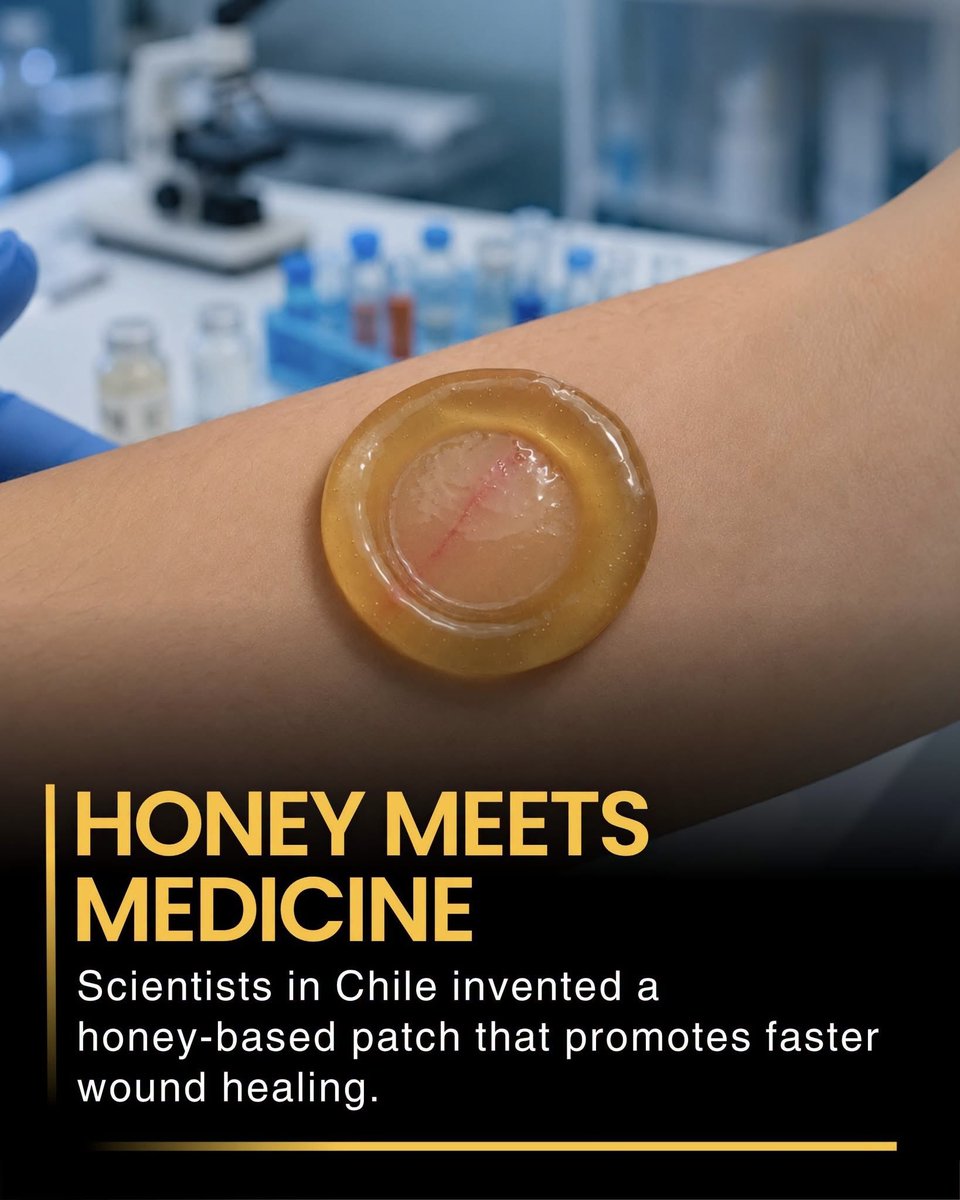
🚨 Honey Patch Could Revolutionize Wound Healing
Scientists in Chile are developing a new honey-based patch that may help heal difficult wounds and burns faster. Made with ulmo honey, a Chilean honey known for antibacterial and anti-inflammatory properties, the patch keeps healing compounds in contact with damaged tissue.
Researchers are testing this innovative material to see if it can support tissue regeneration.
While regular honey should not be used on wounds, this project shows how nature-inspired solutions could shape the future of medicine.
Source: Universidad Técnica Federico Santa María. Research on ulmo honey-based biomaterials for wound healing.
Scientists 3D-printed a heart using human cells — and the results could change medicine forever!
Imagine a future where damaged hearts could one day be replaced with organs grown from a patient's own cells. Scientists at Tel Aviv University in Israel took an important step toward that possibility in 2019.
Using human cells and biological materials from fatty tissue, researchers created a miniature, 3D-printed heart complete with chambers and blood vessels. The technology even allowed them to use materials derived from the same patient, potentially helping reduce the risk of immune rejection.
But there's a catch. The tiny heart was not yet capable of pumping blood like a healthy human heart. Scientists still needed to overcome major challenges before such technology could produce fully functional replacement organs.
The ultimate goal? To develop personalized hearts that could one day help address the shortage of donor organs.
Could doctors eventually print a replacement heart for someone who needs one? The breakthrough offers a fascinating glimpse into what future medicine might make possible.
Source:
Cohen, J. (2019, April 15). Scientists create world's first 3D-printed heart using human cells. NBC News.
🚨 Reheated rice can pose a serious risk of food poisoning if it is not stored properly after cooking.
When cooked rice is left at room temperature, Bacillus cereus bacteria can multiply and produce toxins that are not destroyed by reheating.
This illness is often referred to as “fried rice syndrome” and can cause vomiting and diarrhea within hours.
To reduce the risk, rice should be cooled quickly and placed in the refrigerator within one hour of cooking.
When reheating, make sure the rice is steaming hot all the way through and consume it within one day of refrigeration.
This tiny pill can flip itself upright inside your stomach!
Imagine swallowing a pill instead of facing daily insulin injections. MIT engineers developed a remarkable capsule inspired by the leopard tortoise, whose dome-shaped shell helps it turn upright when flipped over.
But here’s the fascinating part: once swallowed, the capsule can automatically position itself against the stomach wall. It then delivers insulin through a tiny needle made from compressed insulin itself. Because the stomach lining lacks pain receptors, the researchers believe the injection could happen without the patient feeling it.
In animal tests, the technology successfully delivered insulin in pigs. Could this unusual invention one day make insulin treatment easier for millions of people with diabetes?
The future of medicine might be smaller than you think!
Source:
Abramson, A., et al. (2019). An ingestible self-orienting system for oral delivery of macromolecules. *Science, 363*(6427), 611–615.
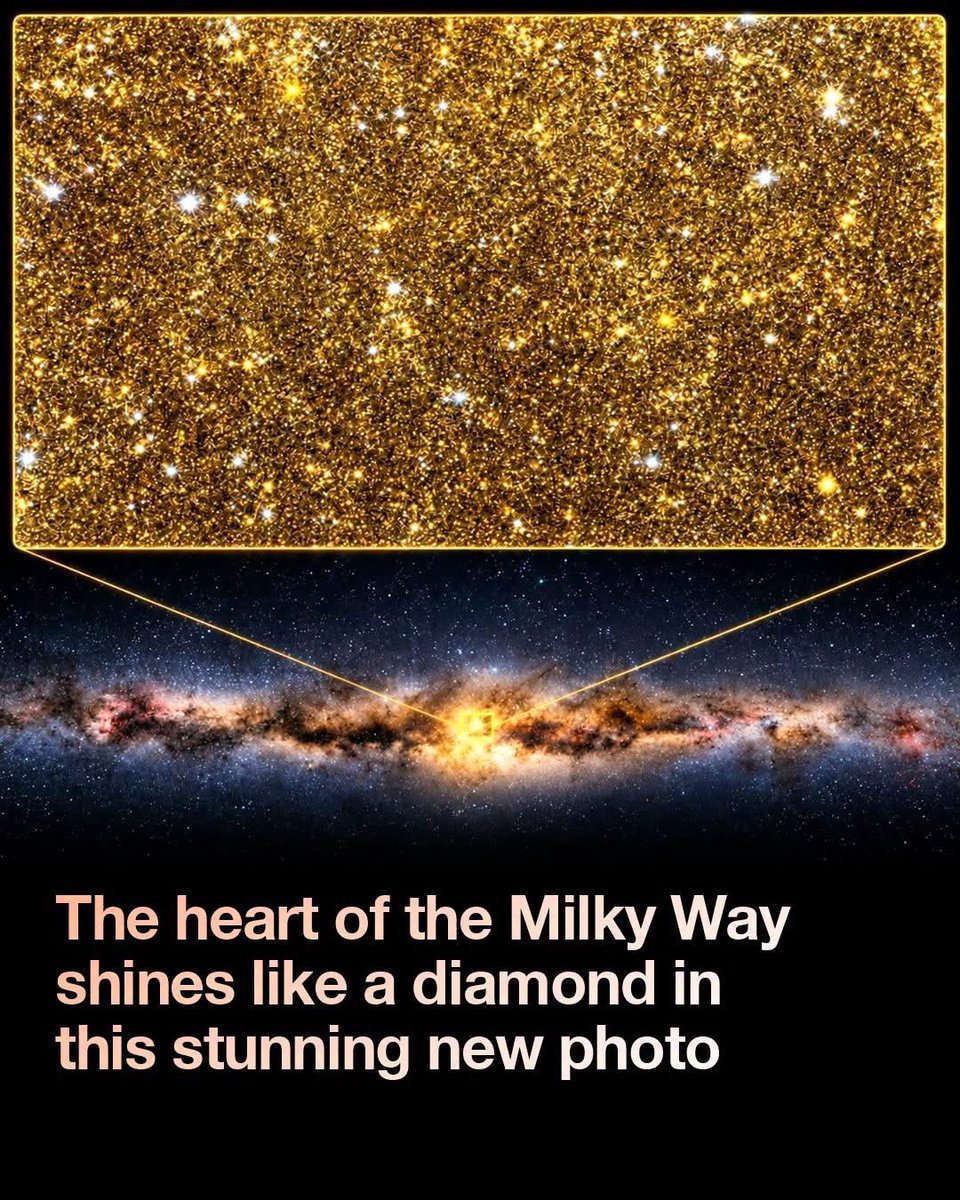
✨ Zoom Into the Heart of the Milky Way, and Watch It Turn to Gold
From millions of tiny points of light to a breathtaking sea of stars, the center of our galaxy holds a beauty that's almost impossible to imagine.
What looks like a soft, golden glow from far away transforms into a dazzling field of countless stars when you zoom in. Each tiny speck is a distant star, packed into an incredibly crowded region of space.
And here's the most amazing part: we live inside this galaxy, yet its heart remains hidden from our everyday view.
The universe is far more spectacular than we can ever see with our own eyes. 💫
⚡ In 1896, Nikola Tesla Captured an Image That Seemed Almost Like Science Fiction
Imagine seeing the bones inside a human hand without making a single cut. More than a century ago, this incredible possibility was beginning to emerge.
Nikola Tesla, the inventor famous for his groundbreaking work with electricity, was also experimenting with a mysterious new technology called **X-rays**. He developed his own equipment to produce them and called his images *shadowgraphs*.
One of his experiments revealed the bones of a human hand beneath the skin. Another showed a human foot inside a shoe, demonstrating how these invisible rays could reveal structures hidden from ordinary sight.
At the time, X-ray photography was a revolutionary discovery. Tesla’s experiments helped capture the excitement surrounding a technology that would transform medical imaging forever.
Today, doctors use X-rays to examine broken bones and detect certain medical conditions. What once seemed almost magical has become an essential part of modern medicine.
Sometimes, the greatest scientific breakthroughs begin with simply trying to see what the human eye cannot.
Sources:
Nikola Tesla Museum. (n.d.). *Nikola Tesla Museum collections.*
Kuban, D. A., & Martin, J. E. (1997). The history of radiology. *RadioGraphics, 17*(6).
When doctors' bonuses depend on vaccination rates, what happens to patient choice?
Behind the scenes of healthcare, financial incentives can influence how medical practices operate. Some programs have rewarded doctors and clinics for reaching childhood vaccination targets, with payments linked to their performance.
But here's where the story gets complicated. When money depends on meeting specific targets, could the pressure to achieve those numbers affect conversations between doctors and parents?
Research has shown that financial bonuses can increase recorded vaccination rates, although some improvements may reflect better recordkeeping rather than more vaccinations.
Critics worry that rigid targets could put pressure on healthcare providers and weaken meaningful discussions with families. Should medical decisions be driven by performance targets, or should informed consent and individual patient needs always come first?
The bigger question is how healthcare systems can encourage preventive care without compromising trust between doctors and families.
See the comments for research on how financial incentives have influenced childhood vaccination programs.
Source: Butts, G. C., & Wolfe, B. L. The impact of physician bonuses, enhanced fees, and feedback on childhood immunization coverage rates. American Journal of Public Health, 89(2), 171–175.
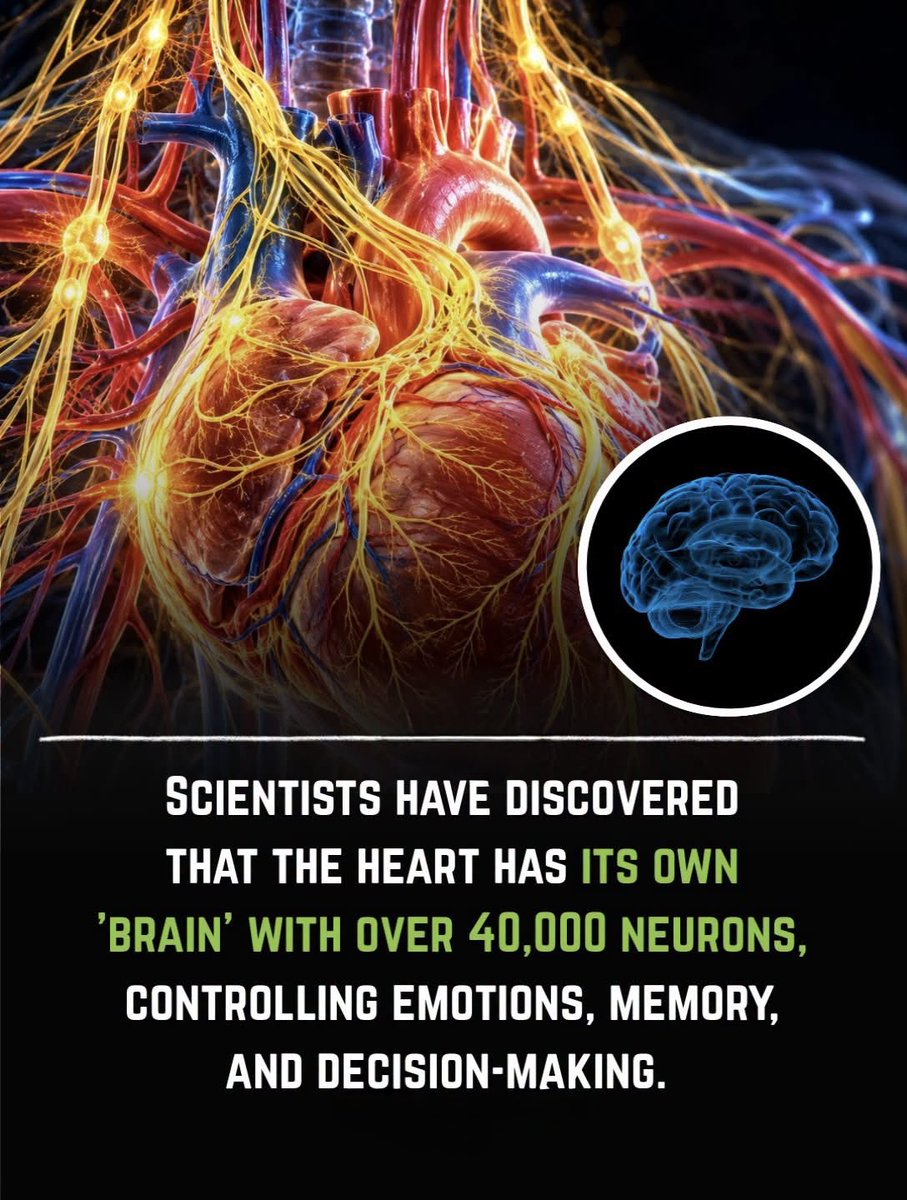
❤️ Your Heart Has Its Own Tiny Network of Neurons — And Scientists Are Still Exploring Its Secrets
Your heart is more than a simple pump. Hidden within it is a network of neurons called the intrinsic cardiac nervous system, sometimes nicknamed the heart’s “little brain.”
These specialized nerve cells help regulate your heartbeat, respond to changes inside your body, and communicate with your brain through a complex network of nerve signals.
But here’s where the mystery deepens: Does your heart actually have a mind of its own?
Not quite. Although this neural network can process certain signals locally and help control heart function, it does not independently create thoughts, store personal memories, or make decisions like your brain does.
The real wonder is the connection between your heart and brain. They constantly communicate, working together to help your body respond to stress, exercise, and changes in your surroundings.
Sometimes, the science behind your body is even more fascinating than the myths!
Scientific source:
Hafez, O. A., & Chang, R. B. (2025). Regulation of cardiac function by the autonomic nervous system. Physiology, 40(3)
🚨 You Thought of Them… and Then Their Name Appeared on Your Screen
Have you ever thought about someone you haven’t spoken to in days, only to receive a message from them moments later? For a second, it can feel as if something invisible connected you. The timing is extraordinary, especially when that person holds a special place in your heart.
But could it be more than coincidence?
Our brains constantly recognize patterns, remember familiar habits, and make predictions without us even realizing it. Sometimes, we notice the moments when our thoughts match reality while forgetting the countless times we think of someone and nothing happens.
Some people connect these experiences to quantum physics, but there is no reliable scientific evidence that quantum entanglement allows people to transmit thoughts or emotions across distances. A powerful feeling is real as an experience, but it doesn't automatically prove a mysterious physical connection.
✨ Perhaps the most beautiful part is that you don't need quantum physics to explain why someone matters to you. Sometimes, a familiar name appearing on your screen is simply a wonderful reminder of the human connections that make life meaningful.
Have you ever thought of someone just before they contacted you? Coincidence, intuition, or something we don't fully understand yet?
🚨 The Darker The Banana… The More Powerful It May Become
Scientists discovered that overripe bananas contain natural compounds that showed the ability to attack cancer cells in laboratory studies. Even more surprising? Healthy cells were mostly left unharmed.
Researchers say this is still early research — not a cure — but it reveals how everyday foods may hold hidden powers we are only beginning to understand.
Maybe those brown bananas are worth a second look…
Source: Shimizu, M., et al. “Banana Extracts and Biological Activity Research.” Food Science and Technology Research.
Dr. Steven Greer claims that advanced alien civilizations are visiting Earth peacefully and that secret human programs, not aliens, are behind many reported encounters.
He alleges hidden military projects have studied alien technology, used advanced weapons against UFOs, and even conducted experiments involving alien-human genetics.
There is no scientific evidence supporting these claims, but they continue to fuel debate about UFOs, secrecy, and the possibility of extraterrestrial life.
🧠 *This Simple Breathing Technique May Help Calm Your Mind in Just One Minute.
What if one of the simplest ways to manage stress was already with you all along? Your breath may hold a surprising secret.
Researchers have studied a technique called **cyclic sighing**, which involves taking two inhales through your nose—the second shorter than the first—followed by one long, slow exhale through your mouth.
*Why might it work?*Slow, controlled breathing can influence your body's stress response and help you feel more relaxed. In a 2023 study, researchers at Stanford University found that people who practiced structured breathing exercises for five minutes daily reported improvements in mood, with cyclic sighing showing particularly promising results.
Try it gently:** Breathe in through your nose, take a second, smaller inhale, then slowly breathe out through your mouth. Repeat comfortably for a few rounds without forcing your breath.
The important detail? Although some people may feel calmer quickly, the technique does not guarantee instant relief or replace professional care for ongoing anxiety.
Sometimes, a small change in the way you breathe can make a meaningful difference in how you feel.
*Source:
Balban, M. Y., Neri, E., Kogon, M. M., Weed, L., Nourber, S., Jo, B., Holl, G., Zeitzer, J. M., Spiegel, D., & Huberman, A. D. (2023). Brief structured respiration practices enhance mood and reduce physiological arousal. *Cell Reports Medicine, 4*(1), 100895.
🧠 *Obesity May Be Linked to Twice as Much Brain Damage.
What if excess body fat affected more than your waistline? Scientists are uncovering a concerning connection between obesity and changes deep inside the human brain.
A study reported by researchers found that different patterns of body fat were linked to lower brain volume, changes in brain tissue, and signs of faster brain aging. Some patterns were also associated with a higher risk of cognitive decline.
🔬 **But here is what makes this discovery important:** It may not be just how much fat you carry, but also WHERE your body stores it. Fat around internal organs, known as visceral fat, has been linked to changes in brain health.
Scientists believe inflammation and problems with blood sugar regulation may help explain this connection. However, these findings do not prove that obesity directly causes brain damage, and researchers are still investigating the relationship.
The encouraging news is that healthy habits, including regular physical activity, balanced eating, and managing blood pressure and blood sugar, can support both brain and overall health.
**Your brain and your body may be more closely connected than you ever imagined.**
Source:
Nield, D. (2026, February 8). *Hidden patterns of body fat could be shrinking your brain, study finds*. ScienceAlert.
🚨 These Tiny Berries May Help Protect Your Cells From the Effects of Aging.
What if some of nature’s most powerful cell-protecting compounds were hiding inside tiny berries?
Blueberries, blackberries, and other dark-colored berries contain special plant compounds called **anthocyanins**, which give them their rich colors. These compounds have antioxidant properties that may help protect your cells from oxidative stress, a process linked to cellular damage and aging.
But here’s the fascinating part. Scientists are still investigating how these compounds affect the aging process and whether their benefits can meaningfully slow age-related changes in humans.
Adding a handful of berries to your daily diet is a simple way to get more antioxidants, fiber, and valuable nutrients.
Sometimes, the smallest fruits contain some of nature’s most interesting secrets.
Source:
Stote, K. S., Burns, G., Mears, K., Sweeney, M., & Blanton, C. (2023). The effect of berry consumption on oxidative stress biomarkers: A systematic review of randomized controlled trials in humans. *Antioxidants, 12*(7), 1443.
🚨 YOUR SALIVA HAS A “NATURAL SOAP SYSTEM” — BUT THERE’S A CATCH
When coconut oil mixes with saliva, its fatty acids can interact with compounds in your mouth and may help reduce certain bacteria and plaque.
But the viral claim that this “sucks toxins” from your gums and protects your heart **isn’t supported by strong scientific evidence**.
Oil pulling may have some oral-health benefits, but it’s **not a replacement for brushing, flossing, or dental care.**
Sometimes, the truth is less dramatic—but still fascinating.
Source:
Sezgin, Y., et al. (2024). *The effect of oil pulling on oral health: A systematic review and meta-analysis.* International Journal of Dental Hygiene.
🚀 Scientists Shape Light Like a DONUT — Could This Rewrite Wireless Communication?!
What if light wasn’t just a straight beam, but could twist and loop in space like a glowing donut? Scientists have now built a device that creates and controls these ring‑shaped light patterns — known as toroidal vortices — and they stay stable even when disturbed. These unusual light structures could carry more information and be switched on demand between different states, hinting at a future where wireless data might travel faster and more reliably than ever before.
The idea sounds almost magical… but it’s solid peer‑reviewed physics that engineers are already thinking could change how we use light to send data without wires.
Zhang, X., Niu, L., Shen, Y., & Han, J. (2025). Electric‑magnetic‑switchable free‑space skyrmions in toroidal light pulses via a nonlinear metasurface. Optica.