Why Ukraine’s defeat could mean the end of NATO in its current form.
As the West’s proxy war in Ukraine slips inexorably towards utter failure, the neocons behind the debacle are faced with dwindling avenues of retreat.
Early confidence that Russia, in its current form, would collapse under the pressure of the harshest sanctions regime in history failed to materialize. Early Russian miscalculations on the battlefield were not followed by a military meltdown, but by a pragmatic display of strategic adaptability, which is begrudgingly admired in the military war rooms of the West. The Russian army, far from falling apart, has steeled itself into making bold decisions to retreat when prudent and advance when required, both of which have proven devastating for their Ukrainian opponents. It follows that, as the Western political elites that cultivated this conflict peer into another winter of political, military, and potentially economic discontent, it is now that we potentially face the most dangerous period in Europe since the outbreak of WWII.
The catalyst for a wider war in Europe isn’t, in fact, a limited conflict in Ukraine in itself, one that started in 2014 and, notably, had been largely ignored by Western powers for almost a decade. The real issue is that NATO, which is currently engaged in a proxy War with Russia, is facing a ‘damned if you do and damned if you don’t’ scenario regarding its growing military involvement in Ukraine. If the US-led bloc escalates further as defeat looms, it could likely lead to direct confrontation with Russia. If it doesn’t, its proxy will collapse and leave Russia victorious, a fate once utterly unthinkable in Brussels, Washington, and London, but now becoming a nightmarish reality.
Such a defeat would be devastating and potentially terminal for the prestige and reputation of the whole NATO brand. After all, despite the Soviet Union having long ceased to exist, the bloc still markets itself as an indispensable bulwark against imagined Russian expansionism. In the event of an increasingly likely Ukrainian defeat, that ‘essential partner’ in ‘countering Russia’ will have been proven utterly impotent and largely irrelevant. More cynically, the vast US arms industry would also be denied a huge and lucrative market. So, how does a multi billion-dollar machine that has prophesied absolute victory against Russia even begin to contemplate defeat? And how do senior EU bureaucrats like Ursula Von der Leyen climb down from their quasi-religious devotion to the ‘cause’ of utterly defeating Russia, which she has shamelessly evangelized for over a year and a half? Lastly, how does the American administration, which has gone politically, morally, and economically ‘all in’ against Russia in Ukraine, contemplate what amounts to an increasingly inevitable European version of Afghanistan 2.0?
They will need to do two things: Firstly, find someone to blame for their defeat and secondly, find a new enemy to deflect public opinion onto. The ‘someone to blame’ will be quite easy to identify – the narrative will be flush with attacks on states like Hungary, China, and to some extent India, who will be accused of "undermining the unified effort needed to isolate and defeat Russia."
Blaming Ukraine itself will also be central to this narrative. Western media will insure it’s singled out as incapable of ‘taking the medicine’ proffered by NATO and therefore suffering the consequences, not listening to Western military advice, failing to utilize Western aid correctly and, of course – given that little has been done by Zelensky to tackle the endemic corruption in Ukraine – this fact will be easily weaponized against him and used to lubricate a slick narrative of ‘we tried to help them, but they simply couldn’t be saved from themselves’.
The ‘shift focus to another enemy’ narrative is the simplest and most obvious – that will be China. NATO is already trying to expand its influence in Asia, including via a planned ‘liaison office’ in Japan. The ‘China is the real threat’ narrative is bubbling steadily to the surface in Western media.
And, most worryingly, should Western powers fail to make their case for ‘plausible deniability’ around the culpability for this war, there is always the option of further escalating it. Such an escalation could rapidly lead to direct confrontation between NATO and Russia, an outcome no lucid observer on either side of the debate could or should be contemplating. The problem is, rational assessment and negotiation seem to have become so rare in Washington and Kiev that a devastating escalation could, quite remarkably, be considered an option by the deluded neocon think-tank advisers wielding disproportionate influence over an increasingly desperate political class in Washington and Brussels. In the event that NATO does indeed sanction a direct intervention into Ukraine, it will, of course, be justified as a ‘peacekeeping’ or humanitarian intervention by Polish or Romanian troops, but the categorization of the ‘mission’ will become gloriously irrelevant when the first clashes with Russian forces occur, followed by a potentially rapid spiral into all-out war between Russia and NATO.
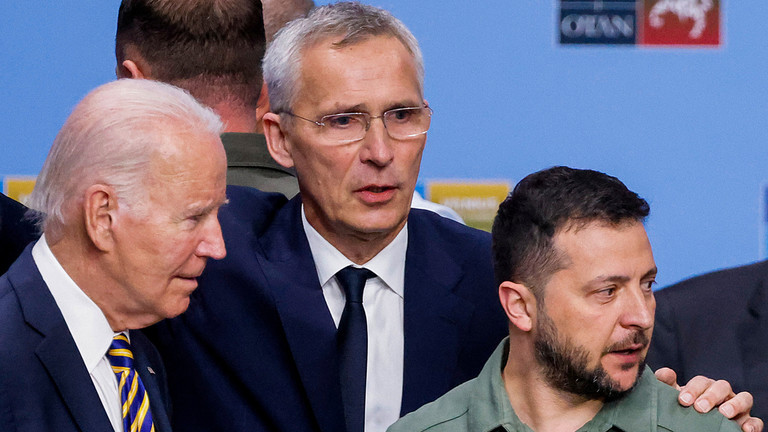
It could be argued that the process to disassociate from Ukraine has already started, beginning with the embarrassment Zelensky faced at the recent NATO summit and progressing with the open spats between Western ‘partners’ over whether to give Ukraine ever deadlier weapons to essentially insure its self-destruction.
From here on out one thing is abundantly clear, nothing will happen by accident when it comes to the EU and NATOs interaction with the Zelensky regime. Whatever comes next may need to be spun both ways, to either pull out or to escalate. A case in point is the blame game being openly acted out around the obvious failure of Ukraine’s counter offensive, with open finger-pointing in the Western media by Ukrainian officials like the ambassador to Germany, Aleksey Makeev. Kiev’s top man in Germany recently blamed the West for the bloody failure of the ill-fated project, suggesting it was solely due to European and American delays in shipping weapons and cash to Kiev. According to the ambassador, it was this Western failure that apparently allowed the Russians to build their defenses in eastern Ukraine, where tens of thousands of unfortunate Ukrainian conscripts have met their fate in the past three months.
In the real world, the counteroffensive, which has now become a slow-motion calamity, had been telegraphed to the Russians and the wider world for almost a year and will surely be recalled as one of the greatest military misadventures in history. The fact that the Ukrainian regime openly advertised its intentions, even loudly pointing out the avenue of assault and strategic goals, is conveniently ignored by the likes of Makeev. It now seems apparent that Kiev believed that its overt saber-rattling would stimulate faster and larger weapons shipments from its increasingly concerned partners – it didn’t, and by the time those very same sponsors’ patience ran out with Kiev’s lack of progress on the battlefield, it was glaringly obvious any offensive against long-prepared Russian defenses was doomed to fail. Yet, because of Kiev’s PR need and demands from Western political elites, the counteroffensive began, wiping out entire battalions of Ukrainian troops and burning through a huge portion of the Western heavy weapons previously provided.
The situation evokes a kind of tragic romantic folly, with Ukraine desperate to woo NATO and the EU to the point of suicide, NATO and the EU playing the aloof lover; never having really considered marriage but willing to allow its admirer to throw itself onto the spears of the real object of their attention – Russia. Of course, the real concern now preoccupying the EU-NATO cabal is how to survive this tawdry affair and move on. While the hapless Jens Stoltenberg would have us believe NATO has never been stronger, the reality is far less rosy for the ‘defensive alliance’ that has bombed its way across Europe and the Middle East, and now seeks to expand to the Pacific. The reality is that the Ukraine conflict could destroy NATO. It has become something of a modern day League of Nations, adept at admonishing small fish, but utterly incapable of standing toe to toe with any peer adversary, a failed political institution, posing as a military alliance, that in reality would collapse in the face of a direct challenge from either Russia or China. Of course, it seems that NATO has also willfully fallen under the spell of its own propaganda.
The big question now is whether the bloc would in reality contemplate a direct confrontation with Russia in Ukraine? Or will the Western political elites who built the scaffold the Ukrainian conflict is now blazing on choose to reverse through blame or escalate through desperation?
One thing is indisputable: The fate of NATO and its credibility as a ‘defensive alliance’ is irrevocably intertwined with the outcome of the Ukrainian conflict, yet because NATO is, in reality, a political rather than military institution, these crucial issues will never be debated openly, as the answers would be akin to a priest announcing the nonexistence of God from the pulpit.
A powerful correlate of rising mental illness rates is a rise in sad, angry, depressed, fearful, and anxious writing and popular music.
First consider music.
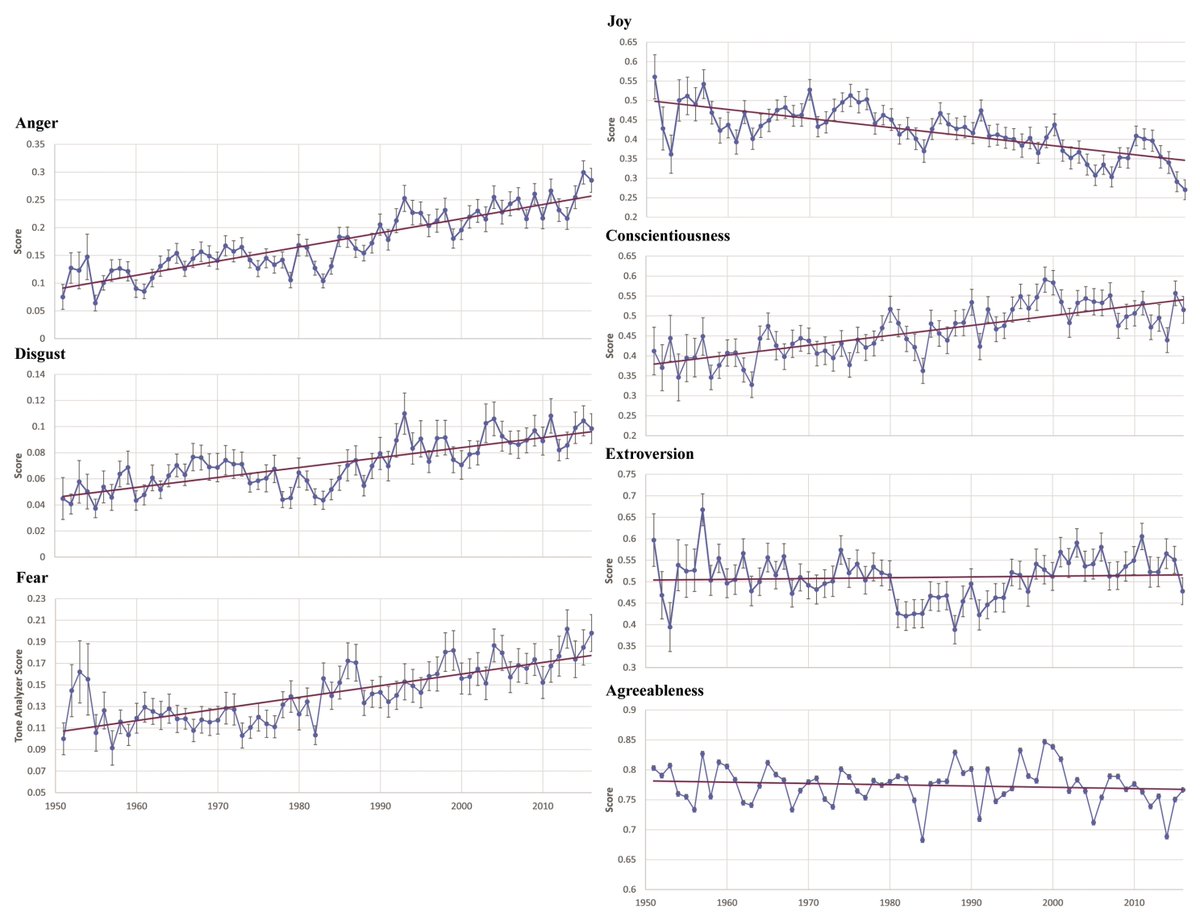
Billboard's top songs have changed a lot over time. In terms of sentiment, they're angrier, more disgusted, and more fearful. At the same time, today's songs are less joyful. The only upside is they also have a bit more conscientious sentiment. Songs are no more extraverted or agreeable than those from yesteryear.
Next consider news articles headlines.
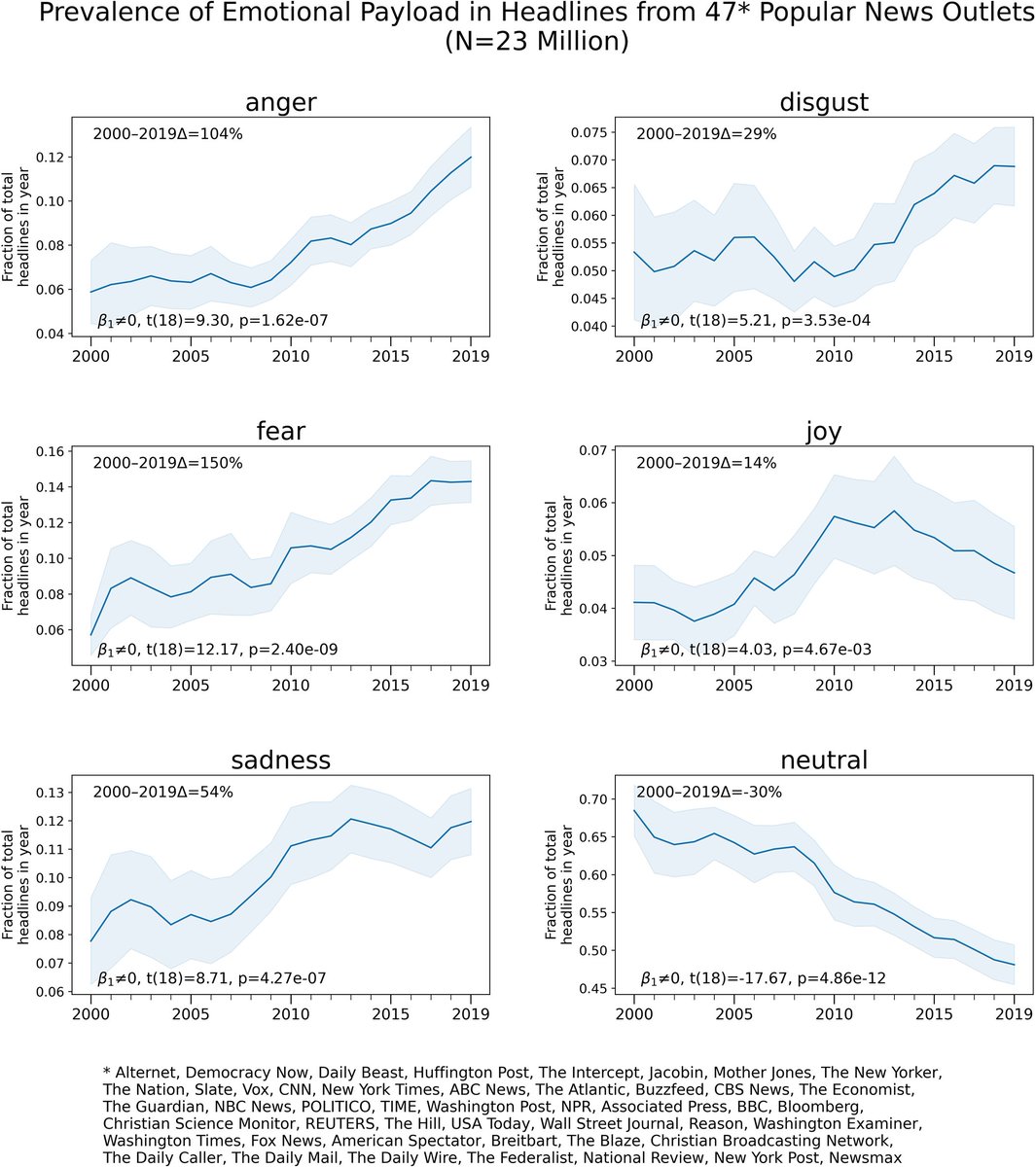
We see something similar here: more anger, fear, sadness, and disgust, but joy was also up for a while, although now it might be trending the other way. Neutrality on the other hand, has simple gone out of the window.
Click into that article and you'll also see that moderates are doing the heavy lifting when it comes to joyful headlines, and they're helping to mute the changes in disgust headlines.
Finally, consider books.
The things we read are not just becoming angrier, sadder, and less joyous, they're becoming more mentally disordered.
Bollen et al. investigated these changes from a cognitive-behavioral therapy angle. They described how depression is associated with distinct, recognizable, maldaptive thinking patterns known as cognitive distortions.
Cognitive distortions are inaccurate and overly negative self-perceptions, views towards the future, and thoughts about the world at large. They included examples like "I am a loser," "My meeting will be a complete disaster," and "Everybody will think that I am a failure."
There are many types of cognitive distortions, including “catastrophizing,” “dichotomous reasoning,” “disqualifying the positive,” “emotional reasoning,” “fortune telling,” “labeling and mislabeling,” “magnification and minimization,” “mental filtering,” “mindreading,” “overgeneralizing,” “personalizing,” and “should statements.”
Their linguistic appearance is recognizably greater among people suffering from internalizing disorders. The extent of this fact is actually so extreme that some people think they should be used as an index of depression vulnerability.
Onto the analysis: how did they do it? Bollen et al. followed in a cognitive-behavioral tradition and constructed cognitive distortion "n-grams" called "cognitive distortion schemata" or "CDS". These CDS n-grams are short, unambiguous stand-alone statements that express the core of a type of cognitive distortion.
The picture below gives three examples. On the right, you have "I am a", which captures the cognitive distortion "labeling and mislabeling" regardless of context or precise labeling. People with depression use these phrases a lot more than people who aren't suffering from depression.
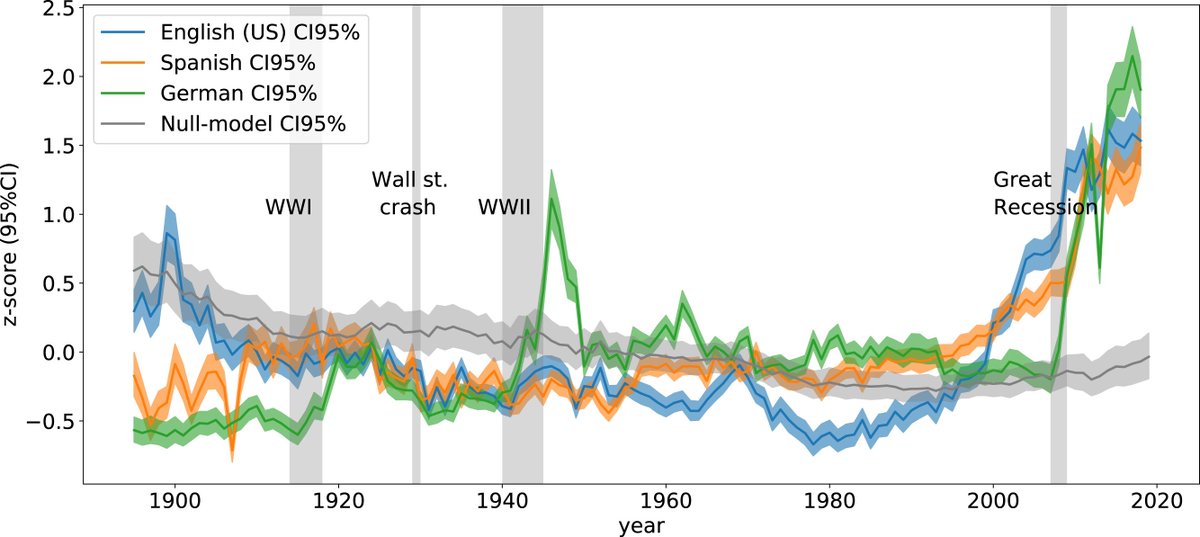
Counting the CDS n-grams in English (U.S.-only), German, and Spanish books between 1899 and 2019, the results are evocative.
You can see many interesting things, like a major increase in cognitive distortions in German writing after the first and both during and after the second world war.
But something else stands out: look toward the present!
In the modern day, each corpus has become littered with absurd levels of cognitive distortion. English and Spanish began their rise prior to the Great Recession, and German seemed to experience a much more rapid rise to the same levels as a result of it.
Since then, the illness of writing in these languages has only continued to get worse.
People are writing songs like they're sad and upset; they're writing news headlines like they're out for blood; and they're writing books as if they're depressed, which lends a lot of credence to the idea that they really might be.
Sources:
https://t.co/RaOsoywU6L
https://t.co/wY5VgQY9gj
https://t.co/uhZltdPcsa
Trade (and the capital flows that follow) must persist or we risk collapse.
For the last 40y the US has run an external deficit, importing capital (and exporting USD) to the big 3, Japan, Germany and China.
This can't change. If it does, stable debt becomes unstable.
1/
A wind turbine located at Scroby Sands has caught fire, releasing more carbon emissions today than it could have offset during its entire operational lifespan.
Musings of the Day, 8/15/23:
Mario has reached the girder level now. How many more rivets to pop before Donkey Kong crashes on his head?
https://t.co/k5arTmBII7
"more surprising are factors that don't appear to play a major role in happiness: average income levels and rates of unemployment and education. People may move to cities for good-paying jobs, but the study strongly suggests it's not making them happier" https://t.co/hOxjbA4lsQ
Yellen was questioned about China suddenly dumping $859B US treasuries due to war
Few understand the US has already been preparing for this event which is why they're restricting the Dollar supply by destroying crypto exchanges, raising rates & have $2.5T in Reverse Repo waiting
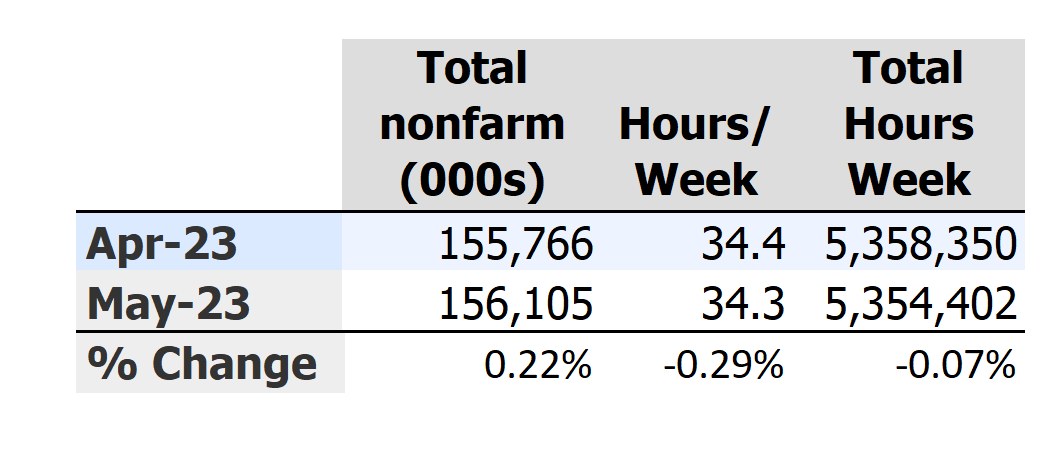
Some math on total hours worked - despite 339K jobs created, total hours worked declined!
With a 0.1 avg hours decrease, needed 453k added workers to keep total hours worked constant.
Headlines should have read jobs miss when factoring in these hours worked.
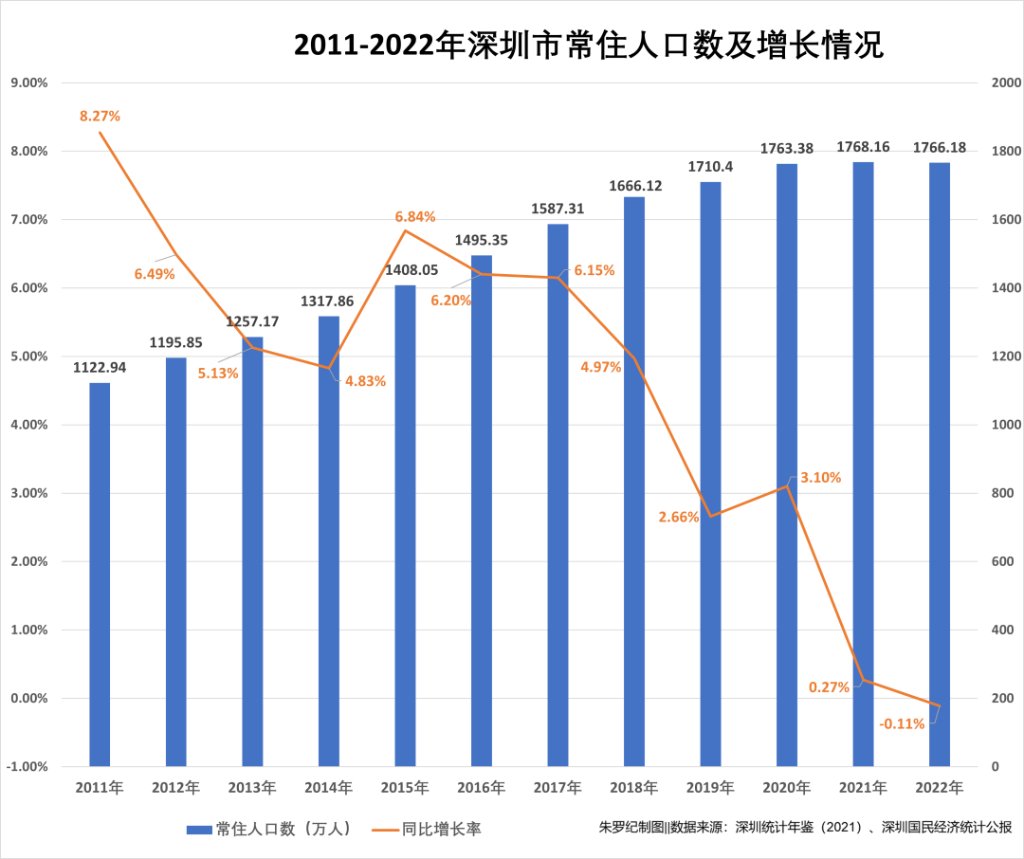
📉Resident population growth in #Shenzhen, #China's digital powerhouse, turned negative for the first time in the past 40 years.
Kindergarten enrollment in Shenzhen fell 8.8% y/y to the lowest level in a decade.
The outflow is not a good sign for the #realestate market.
🧵
1/
COVID accelerated a lot of things, most noticeable has been the decoupling of the US from China.
But one of the most accelerated trends has been the decline of US universities...
Well over half of US schools will close by 2030.
🧵
1/
Few understand how much warfare has changed in 70 years.
Sure most look at the Afghan defeats of the Soviets then the US and conclude insurgencies matter, but Afghanistan is a place these empires should have won!
the guerillas lacked their ultimate weapon:
Mega-cities
1/6
Important article: "China's cabinet on Tuesday issued a plan to stabilise its vital trade sector."
Almost every week we're seeing new measures and exhortations to support Chinese exports. Beijing is very worried about weak global demand.
https://t.co/WgG78gD59H
More bugs as drugs 🧬🦠
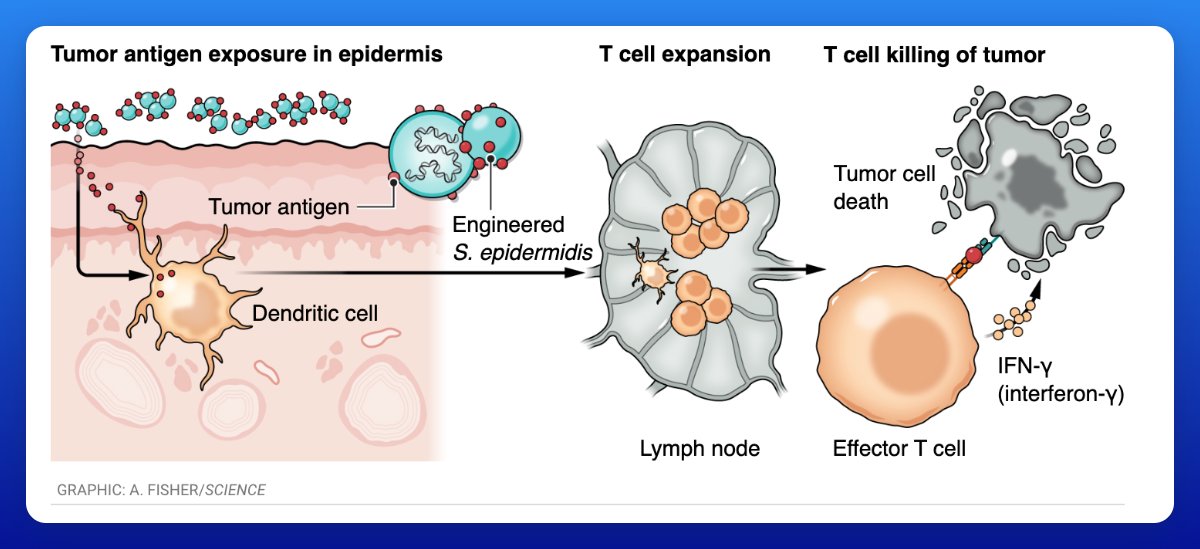
This study led by @yerinchen from @mfgrp lab (my lab) absolutely blew me away the first time I saw the data.
Engineering commensal skin microbes to express cancer antigens leads to highly effective T-cell mediated cancer killing.
Bloomberg: The Hong Kong arms of Bank of Communications Co., Bank of China Ltd. and Shanghai Pudong Development Bank have either started offering banking services to local crypto firms or have made inquiries to the field. Sales representatives from one Chinese bank even visited the office of a crypto company to pitch its services.
https://t.co/NX5uWwzsR1
1/15
Since the 1960s few arguments in international finance have been as exciting as "the coming demise of the dollar", but these arguments seem always to founder on the same set of mistakes.
https://t.co/fsI0MkqE42